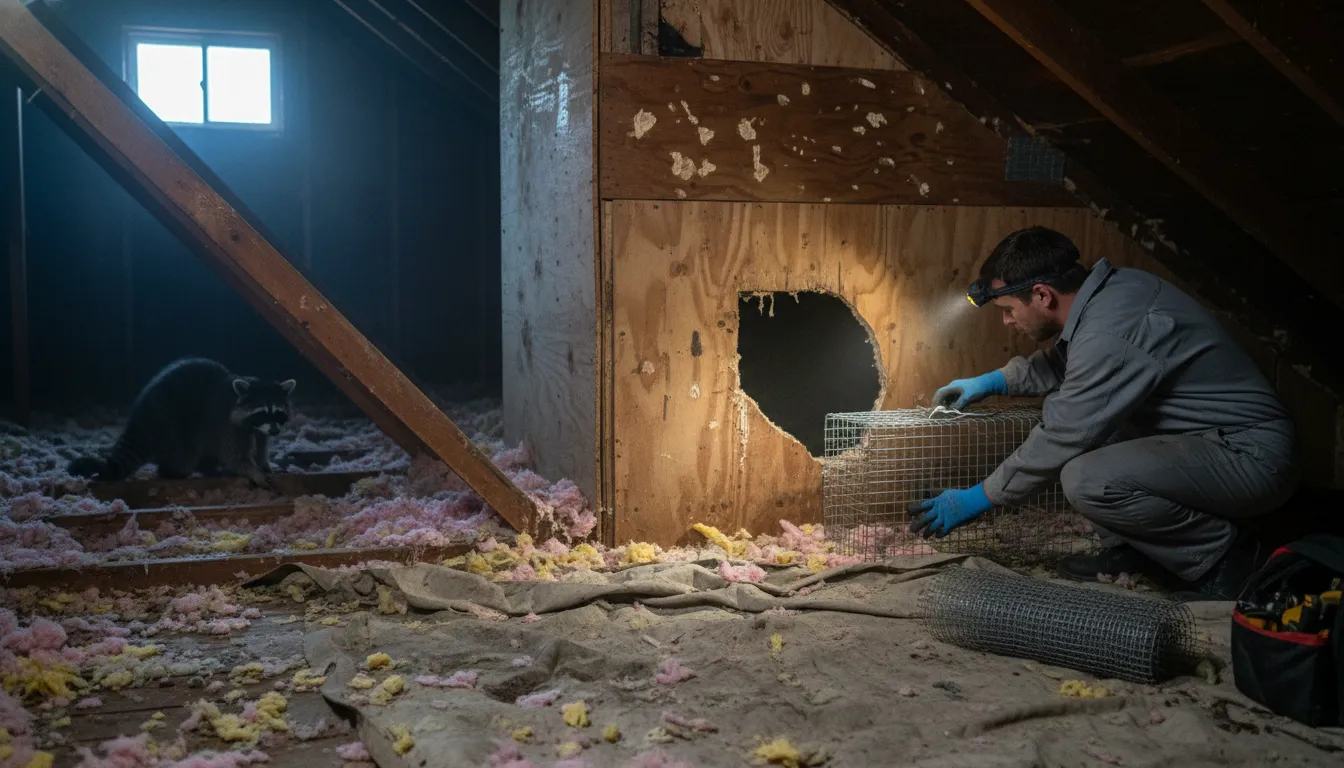
Find the Best Wildlife Removal Companies for Your Business
No obligation • Fast responses • Nationwide coverage

Why you can trust Pest Crews
Pest Crews is a leading U.S. resource for finding and evaluating residential and commercial pest control services. Our team researches providers, reviews treatment approaches, and organizes unbiased information to help you make informed decisions. Companies cannot pay to change our editorial content or influence how they appear.
Search providers near you
Top Wildlife Removal Companies in Mount Prospect, Illinois Ranked
Discovering a raccoon family in your attic, hearing squirrels scampering in your walls, or finding evidence of bats in your chimney can be unsettling and damaging to your Mount Prospect home. Professional wildlife removal and animal control services are essential for safely and legally resolving these conflicts. This guide explains the common nuisance species in our area, outlines Illinois' specific regulations, and helps you understand your options for humane eviction and long-term exclusion to protect your property.
D&K Pest Control and Wildlife Removal, LLC
Chicago, IL
D&K Pest Control and Wildlife Removal, LLC is a pest control and wildlife removal company serving Chicago, IL, and the western Chicago suburbs. They provide services for both residential and commercial properties, including pest inspections, one-time treatments, quarterly pest control plans, and custom wildlife exclusion solutions. Their work covers rodents, raccoons, squirrels, bats, birds, and common household pests. The company also offers structural repairs and long-term exclusion to prevent future infestations, combining pest removal with prevention efforts.
Landmark Pest Management
Chicago, IL
Landmark Pest Management provides science-based, environmentally-friendly pest control services in Chicago, IL, and surrounding counties. They handle a wide range of pests including ants, wasps, mice, mosquitoes, bed bugs, and wildlife, using humane and green methods. Founded in 1976 by a wildlife biologist, the company combines expertise from biologists and epidemiologists to deliver effective pest exclusion and control. Landmark offers a Complete Home Care program with year-round protection and 24/7 monitoring to maintain pest-free homes.
Effective Pest Solutions
Chicago, IL
Effective Pest Solutions provides comprehensive pest control services in Chicago, IL, serving both residential and commercial clients. Their offerings include treatment for bed bugs, ants, cockroaches, rodents, termites, and wildlife removal, with customized solutions for unique pest challenges. The company also supports institutions like schools and restaurants with pest management programs that comply with regulatory standards. They specialize in rodent control using trapping, monitoring, exclusion, and sanitation, and offer termite inspections and prevention plans to protect property integrity.
Aerex Pest Control
4301 E Wilmette Ave, Rolling Meadows, IL 60008
Aerex Pest Control is a family-owned pest control company serving Chicago, IL, and the Greater Chicagoland Area since 1948. They provide a wide range of pest management services including bed bug treatment, rodent control, termite inspections, mosquito control, and wildlife removal. With over 70 years of experience, Aerex Pest Control uses environmentally friendly methods and safe products approved by the Environmental Protection Agency to address both common and seasonal pests unique to the Chicago area. Their knowledgeable technicians apply targeted solutions that focus on long-term prevention and sustainability.
Rose Pest Solutions
270 Larkin Dr Suite A, Wheeling, IL 60090
Rose Pest Solutions is a pest control company serving Chicago, IL, and the Midwest. They provide comprehensive pest management services for homes and businesses, including cockroach, ant, rodent, termite, bee and wasp removal, and wildlife control. The company uses environmentally friendly methods and advanced technology to create long-term pest solutions. Established in 1860, Rose Pest Solutions has over 165 years of experience in pest control. They offer year-round protection plans with multiple visits and emphasize sustainable practices to protect both customers and the environment.
Common Nuisance Wildlife in Mount Prospect
The suburban landscape of Mount Prospect, with its mix of mature trees, parks, and residential properties, provides ideal habitat for a variety of wildlife. While these animals are a natural part of our ecosystem, they can become problematic when they seek food and shelter in our homes and yards.
The most frequent offenders for wildlife removal calls in our area include:
- Raccoons: Intelligent and dexterous, they often tear into attic vents, soffits, and chimneys to create dens.
- Squirrels: Both gray and fox squirrels chew on wood, electrical wiring, and insulation to enter attics and wall cavities.
- Bats: Small colonies can roost in attics or behind shutters; their presence raises specific health concerns due to the potential for rabies exposure.
- Skunks: Known for their defensive spray, they often burrow under decks, sheds, and foundations.
- Opossums: These nocturnal scavengers may take up residence under porches or in crawl spaces.
Other mammals like coyotes, woodchucks, muskrats, and foxes, as well as birds such as geese and woodpeckers, can also require professional intervention.
Illinois Wildlife Removal Laws and Regulations
In Illinois, wildlife is protected by state law, which strictly governs how nuisance animals can be handled. Understanding these rules is crucial before attempting any removal.
The Role of Nuisance Wildlife Control Operators (NWCOs) For most situations, hiring a licensed professional is not just recommended-it's legally required. The Illinois Department of Natural Resources (IDNR) licenses two main classes of NWCOs:
- Class A NWCOs: Licensed to trap and remove most mammals and game birds causing property damage.
- Class D NWCOs: Specifically licensed to handle protected migratory birds, such as woodpeckers or Canada geese 1.
It is illegal for homeowners to use poison, certain lethal traps (like deadfalls or spears), or to relocate trapped animals to public lands without explicit permission from the landowner 2.
When to Contact Animal Control For immediate public health threats, your first call should be to local animal control. The Village of Mount Prospect or Cook County Animal Control should be contacted for situations involving:
- A bat found in a room where people were sleeping.
- A skunk or other animal displaying signs of rabies (e.g., disorientation, aggression, daytime activity for nocturnal species).
- An injured or dangerously aggressive animal on your property 3 4.
The DIY Permit Option Homeowners can apply for a Nuisance Animal Removal Permit (NARP) from the IDNR to trap animals themselves. However, these permits are not issued for minor annoyances. You must demonstrate that the animal is causing "substantial property damage" or poses a "serious health or safety risk" 5 6. The process involves contacting an IDNR District Wildlife Biologist, who will assess your situation. For most homeowners, navigating permit requirements and safe handling makes hiring a professional NWCO the more practical and safer choice.
The Professional Wildlife Removal Process
A reputable wildlife control service follows a structured, humane, and effective process to resolve your issue permanently.
1. Inspection and Assessment A technician will conduct a thorough inspection of your property, inside and out, to identify the species involved, locate all entry points, and assess the extent of the damage and contamination. This initial consultation typically ranges from $100 to $250.
2. Humane Removal and Trapping Using state-approved methods, the professional will live-trap or employ one-way exclusion devices to remove the animals. The goal is humane eviction. They understand animal behavior and will implement strategies that comply with Illinois regulations.
3. Exclusion and Repair This is the most critical step for a lasting solution. Simply removing the animals leaves your home vulnerable to the next intruder. Professionals will seal all identified entry points with durable materials like hardware cloth, steel flashing, or commercial-grade sealants. They will also repair damage caused by the animals, such as chewed vents, torn soffits, or damaged insulation.
4. Cleanup and Sanitation Wildlife leaves behind droppings, urine, and nesting materials that can pose health risks, damage structures, and attract new pests. Professional cleanup involves disinfecting the area, removing contaminated insulation, and applying enzymatic treatments to eliminate odors that might attract future wildlife.
Find the perfect wildlife removal companies for your needs
Get personalized recommendations and expert advice
Prevention: What Mount Prospect Homeowners Can Do
While removal requires a professional, prevention is an area where homeowners can take proactive and effective steps to avoid conflicts.
Seal Entry Points (Exclusion) Conduct seasonal inspections of your home's exterior. Look for gaps, cracks, and vulnerable areas, especially where different building materials meet.
- Roof & Attic: Check for loose or rotten fascia boards, damaged roof vents, and gaps around chimneys.
- Soffits & Vents: Ensure all vent covers are secure and made of wildlife-proof materials. Soffits should be intact.
- Foundation & Siding: Seal cracks in the foundation and gaps where pipes or cables enter the home. Repair any holes in siding 7 8 9.
Eliminate Food Sources and Attractants A property without easy food is far less appealing.
- Secure Trash: Use locking lids on garbage cans or store them in a garage until pickup day.
- Manage Pet Food: Never leave pet food outdoors overnight.
- Bird Feeders: If wildlife is a persistent issue, consider removing bird feeders or using squirrel-proof models placed far from the house.
- Fallen Fruit: Regularly clean up fruit or nuts that fall from trees in your yard 10 11.
Modify Habitat Make your yard less inviting as a habitat.
- Trim tree branches back at least 6-8 feet from your roofline to prevent easy access for squirrels and raccoons.
- Keep woodpiles and dense brush away from the house foundation.
- Consider installing chimney caps and stovepipe vent guards.
Understanding Wildlife Removal Costs in Mount Prospect
The cost for professional animal removal and exclusion varies significantly based on the species, the extent of the infestation, and the repairs needed. Here's a general overview of what you might expect:
- Basic Removal (e.g., a single opossum or squirrel): $200 - $500+
- Raccoon Removal & Den Eviction: $300 - $800+
- Bat Colony Removal & Exclusion: A more complex job due to their protected status and small entry points, often ranging from $500 to $2,000 or more.
- Exclusion/Sealing Work: Critical for prevention, typically costing between $300 and $1,000+ depending on the linear footage and materials required 12 13 14.
Remember, the most cost-effective approach is a complete service that includes removal, exclusion, and cleanup to prevent a recurring problem, which can be more expensive to address repeatedly.
Frequently asked questions
Sources
Footnotes
-
Controlling Nuisance Mammals in Illinois - Deerfield, IL - https://deerfield.il.us/DocumentCenter/View/518 ↩
-
JUNE 29, 2020 17 ILL. ADM. CODE CH. I, SEC. 525 TITLE 17 - https://dnr.illinois.gov/content/dam/soi/en/web/dnr/adrules/documents/17-525.pdf ↩
-
Living with Wildlife in Illinois How to Prevent Problems with ... - https://www.chicago.gov/content/dam/city/depts/cacc/PDFiles/Welcome_to_Living_with_Wildlife_in_Illinois.pdf ↩
-
Squirrel - Cook County - https://www.cookcountyil.gov/sites/g/files/ywwepo161/files/service/squirrel.pdf ↩
-
Remove Nuisance Wildlife - https://wildlifeillinois.org/remove-nuisance-wildlife/ ↩
-
Request a Nuisance Animal Removal Permit from the Illinois Department of Natural Resources - https://wild.wildlifeillinois.org/narp ↩
-
ILLINOIS STATE WILDLIFE SERVICE | Animal Control Central IL - https://www.illinoisstatewildlifeservice.com/ ↩
-
Illinois Wildlife Control & Animal Removal Services - Critter Control - https://www.crittercontrol.com/office-finder/illinois/sw-illinois/ ↩
-
Evicting animals from buildings | Washington Department of Fish & Wildlife - https://wdfw.wa.gov/species-habitats/living/nuisance-wildlife/evicting ↩
-
Humane Animal Control | Animal Control | Mundelein, IL - https://www.countywildlifecontrolinc.net/humane-methods ↩
-
Who to Call for Wildlife Removal and How to Prevent Critters From Coming Back - https://www.angi.com/articles/who-can-i-hire-remove-animal-my-home.htm ↩
-
Hire a Wildlife Control Operator - https://wildlifeillinois.org/remove-nuisance-wildlife/hire-a-wildlife-control-operator/ ↩
-
THE BEST 10 Wildlife Control near MOUNT PROSPECT, IL - Yelp - https://m.yelp.com/search?cflt=wildlifecontrol&find_loc=mount%20prospect%2C%20il ↩
-
How Much Does Animal & Wildlife Removal Cost? (2025) - https://homeguide.com/costs/animal-and-wildlife-removal-costs ↩