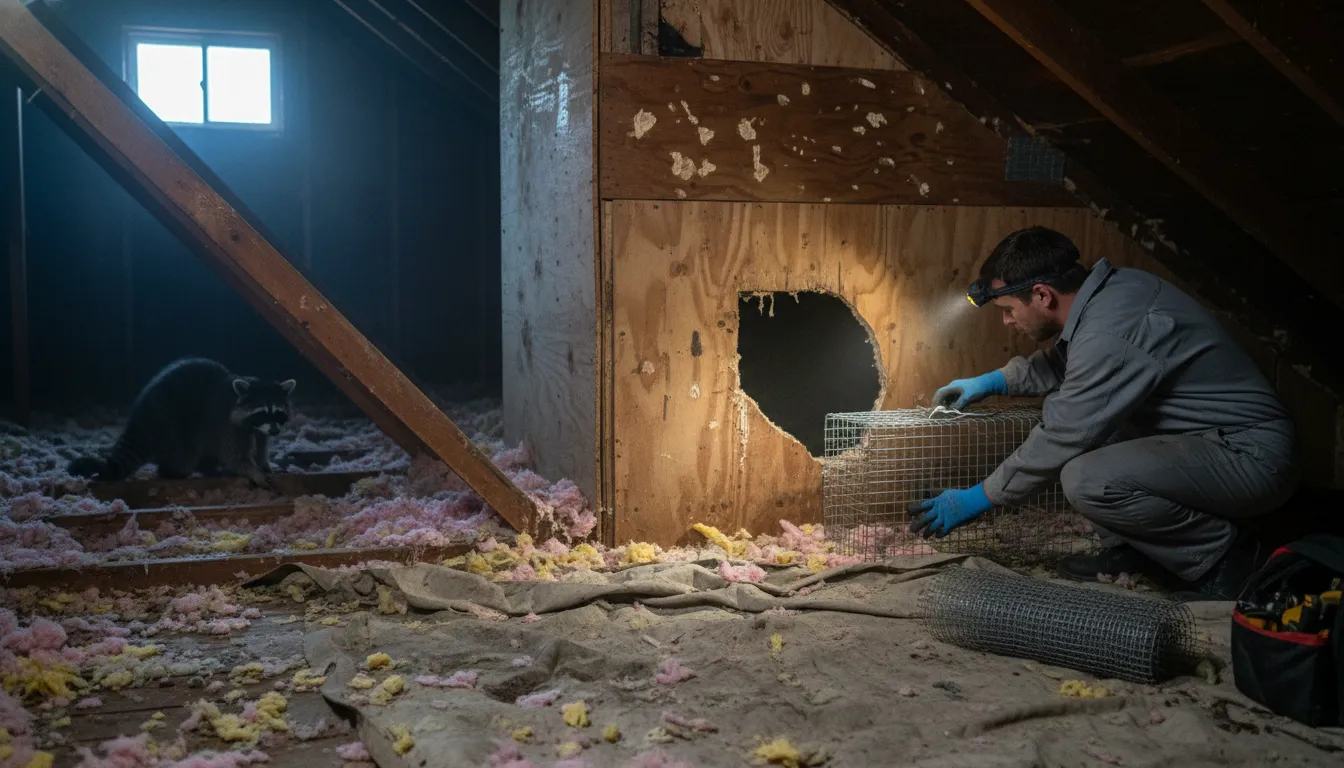
Find the Best Wildlife Removal Companies for Your Business
No obligation • Fast responses • Nationwide coverage

Why you can trust Pest Crews
Pest Crews is a leading U.S. resource for finding and evaluating residential and commercial pest control services. Our team researches providers, reviews treatment approaches, and organizes unbiased information to help you make informed decisions. Companies cannot pay to change our editorial content or influence how they appear.
Search providers near you
Top Wildlife Removal Companies in Orland Park, Illinois Ranked
When raccoons rummage through your trash or squirrels take up residence in your attic, it's more than a nuisance-it's a problem that requires a specialized solution. Wildlife removal is the professional service dedicated to safely and legally resolving conflicts with wild animals that have encroached on your property. In Orland Park, dealing with local wildlife is a common challenge, and knowing how to address it effectively is key to protecting your home, health, and peace of mind. This guide will help you understand the local wildlife issues, your options for resolution, and how to connect with qualified professionals who can handle the situation.
D&K Pest Control and Wildlife Removal, LLC
Chicago, IL
D&K Pest Control and Wildlife Removal, LLC is a pest control and wildlife removal company serving Chicago, IL, and the western Chicago suburbs. They provide services for both residential and commercial properties, including pest inspections, one-time treatments, quarterly pest control plans, and custom wildlife exclusion solutions. Their work covers rodents, raccoons, squirrels, bats, birds, and common household pests. The company also offers structural repairs and long-term exclusion to prevent future infestations, combining pest removal with prevention efforts.
Landmark Pest Management
Chicago, IL
Landmark Pest Management provides science-based, environmentally-friendly pest control services in Chicago, IL, and surrounding counties. They handle a wide range of pests including ants, wasps, mice, mosquitoes, bed bugs, and wildlife, using humane and green methods. Founded in 1976 by a wildlife biologist, the company combines expertise from biologists and epidemiologists to deliver effective pest exclusion and control. Landmark offers a Complete Home Care program with year-round protection and 24/7 monitoring to maintain pest-free homes.
Effective Pest Solutions
Chicago, IL
Effective Pest Solutions provides comprehensive pest control services in Chicago, IL, serving both residential and commercial clients. Their offerings include treatment for bed bugs, ants, cockroaches, rodents, termites, and wildlife removal, with customized solutions for unique pest challenges. The company also supports institutions like schools and restaurants with pest management programs that comply with regulatory standards. They specialize in rodent control using trapping, monitoring, exclusion, and sanitation, and offer termite inspections and prevention plans to protect property integrity.
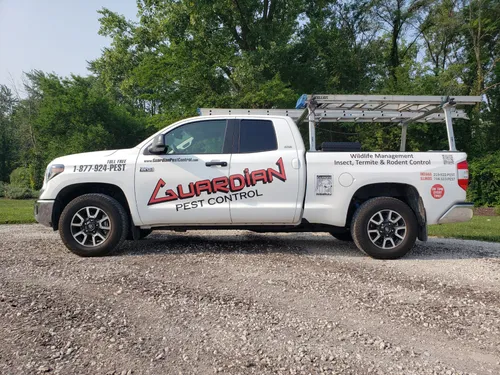
Guardian Pest Control
Chicago, IL
Guardian Pest Control provides residential and commercial pest and wildlife removal services in Chicago, IL, and the surrounding areas including Northwest Indiana. The company handles a wide range of pests such as bed bugs, cockroaches, ants, rodents, termites, mosquitoes, bees, wasps, and birds. Guardian Pest Control is licensed, bonded, and insured, with over 35 years of experience since 1987. They offer 24-hour emergency service without requiring contracts, allowing customers flexible treatment options.

Terminix
1552 W Fullerton Ave, Chicago, IL 60614
Terminix is a pest control company serving Chicago, IL, specializing in managing a wide range of pests including bed bugs, termites, ants, cockroaches, rodents, bees, wasps, and wildlife. Their local technicians are familiar with Chicago's unique pest challenges and provide customized inspection and treatment plans for both residential and commercial properties. Terminix offers termite protection systems and guarantees for termite damage repair, along with comprehensive pest control plans that cover interior and exterior treatments. The company is part of a nationwide network and focuses on seasonal and year-round pest management to address Chicago's climate and pest activity patterns.
Common Nuisance Wildlife in Orland Park
The suburban landscape of Orland Park, with its mix of homes, parks, and green spaces, is attractive to a variety of wild animals. Understanding which species are most likely to cause problems is the first step in addressing an infestation or preventing one.
Mammals:
- Raccoons: Intelligent and dexterous, raccoons are notorious for tipping over trash cans, tearing into soffits to access attics, and creating dens in chimneys or under decks. They can carry diseases like rabies and roundworm.
- Squirrels: Both gray and fox squirrels are common. They often enter attics to nest, where they can chew on electrical wiring (a significant fire hazard), insulation, and structural wood.
- Skunks: Known for their potent defensive spray, skunks dig under foundations, porches, and sheds to create burrows. Encounters with pets can lead to a very unpleasant and lingering odor.
- Bats: Small colonies of bats may roost in attics or wall voids. While beneficial for insect control, their droppings (guano) can pose health risks and cause odor issues. Special care must be taken due to wildlife laws protecting bats.
- Other Frequent Visitors: Homeowners may also encounter opossums, woodchucks (groundhogs), mice, rats, and occasionally coyotes on the fringes of developed areas.
Birds:
- Pigeons: Very common in Cook County, pigeons roost on rooftops, ledges, and in commercial structures. Their acidic droppings can damage property and their nests can clog gutters and drains.
- Other Problem Birds: Woodpeckers may drill into siding in search of insects or to create nesting cavities, while Canada geese can become a nuisance on lawns and golf courses, leaving behind large amounts of droppings.
Your Options for Dealing with Nuisance Wildlife
When you discover an unwanted animal on your property, you generally have three paths forward. The right choice depends on the species, the location of the animal, and the immediacy of the threat.
1. Contact Local Animal Control
For specific situations, your first call should be to Orland Park Animal Control, which operates under the Police Department's Administrative Services Division.
- When to Call: Contact them for injured or sick animals on public property or if a wild animal poses an immediate threat to public safety. They can provide guidance and may respond to certain situations involving public health.
- What They Don't Do: It's important to know that municipal animal control typically does not handle the removal of healthy nuisance wildlife from private property, such as a raccoon in your attic. For those situations, you will need to explore other options 1.
2. Do-It-Yourself (Limited Scope)
Illinois law strictly regulates the trapping and removal of most wildlife species. Residents cannot trap and relocate most animals without a permit.
- Legal Deterrents: You are generally allowed to use non-lethal harassment methods (like motion-activated lights or sprinklers) and habitat modification to encourage an animal to leave on its own.
- The Permit Requirement: To legally trap an animal causing damage, an Illinois resident must obtain a Nuisance Animal Removal Permit (NARP) from the Illinois Department of Natural Resources (IDNR). Critically, these permits are only issued for situations involving significant property damage or health risks-not for minor annoyances like animals eating from a garden or bird feeder 2.
3. Hire a Professional Wildlife Control Operator (NWCO)
This is the most effective and legally compliant route for most significant wildlife problems. Illinois licenses Nuisance Wildlife Control Operators (NWCOs), who are trained and permitted to handle these situations.
- Class A NWCO: Licensed to trap and remove most mammal species, including raccoons, squirrels, skunks, bats, and opossums.
- Class D NWCO: Specializes in the control of migratory birds, such as pigeons, geese, and woodpeckers, which are protected under federal law.
- Why Hire a Pro: Professionals correctly identify entry points, use species-appropriate trapping methods, understand state and federal regulations, and provide crucial follow-up services like exclusion and cleanup.
Find the perfect wildlife removal companies for your needs
Get personalized recommendations and expert advice
When to Call a Professional for Animal Removal
While a sighting in your yard may not always warrant immediate action, certain scenarios clearly indicate the need for professional wildlife control services:
- An animal is inside your living structure, such as in the attic, walls, basement, or chimney. This often requires specialized equipment for safe removal.
- There is ongoing property damage, like chewed electrical wires, torn insulation, gnawed structural beams, or holes dug under the foundation 3 4.
- You suspect a nesting site, particularly for animals like raccoons or squirrels, which can lead to a larger, more persistent problem.
- The animal is a species that poses health risks, such as bats (potential for rabies), skunks (rabies, spray), or raccoons (roundworm).
- You have a persistent bird problem, like pigeons roosting on your roof or woodpeckers damaging your siding, which requires legal, species-specific control methods.
The Professional Wildlife Removal Process
A reputable NWCO will follow a comprehensive process to solve your problem, not just remove the animal.
- Inspection and Assessment: The technician will perform a thorough inspection of your property to identify the species involved, locate all entry and exit points, and assess the extent of the damage and contamination. This initial assessment typically costs between $100 and $250.
- Removal and Trapping: Using humane and legal methods, the operator will remove the offending animals. This may involve live trapping, one-way exclusion doors, or other techniques. The cost for removal can range from $200 to over $600 per animal, with more complex removals (like a raccoon family) costing more than a single squirrel.
- Cleanup and Sanitation: After removal, it's essential to clean and disinfect the affected area. Animal droppings, urine, and nesting materials can harbor parasites, bacteria, and odors. Professional decontamination and waste removal can cost $150 to $400 or more 5.
- Repairs and Exclusion: This is the most critical step to prevent recurrence. The technician will seal all entry points with durable materials like steel mesh, hardware cloth, or chimney caps. They may also recommend habitat modifications. Exclusion work generally ranges from $200 to over $1,000, depending on the scale of the repairs needed 6 7.
Prevention: Keeping Wildlife Out
The best solution is to prevent animals from becoming a problem in the first place. Key strategies include:
- Secure Food Sources: Use locking lids on trash cans, remove pet food from porches at night, and clean up fallen birdseed from feeders 8.
- Seal Entry Points: Conduct seasonal inspections of your home's exterior. Look for gaps in soffits, rooflines, and foundations, and repair them promptly. Install chimney caps and vent covers 9.
- Modify Habitat: Trim tree branches that overhang your roof, keep woodpiles away from the house, and clear dense brush where animals can hide 10 11.
Frequently asked questions
Sources
Footnotes
-
Administrative / Technical Services Division | Village of Orland ... - https://www.orlandpark.org/departments/police/administrative-technical-services-division ↩
-
Request a Nuisance Animal Removal Permit from the Illinois Department of Natural Resources - https://wild.wildlifeillinois.org/narp ↩
-
Hire a Wildlife Control Operator - https://wildlifeillinois.org/remove-nuisance-wildlife/hire-a-wildlife-control-operator/ ↩
-
Top Rated Wildlife Removal Company for Orland Park, IL - https://grizzpest.com/service-area/orland-park-pest-control/wildlife-removal/ ↩
-
Wildlife removal cost: What you need to know - https://azbigmedia.com/lifestyle/wildlife-removal-cost-what-you-need-to-know/ ↩
-
How Much Does Wildlife Removal Cost? [2025 Data] - https://www.angi.com/articles/what-cost-animal-removal.htm ↩
-
How Much Does Wildlife Removal Cost? - https://www.bobvila.com/articles/wildlife-removal-cost/ ↩
-
Raccoon and Skunk Removal - Orland Park, Illinois - https://nuisancewildlifetrapping.com/orland-park-illinois-raccoon-and-skunk-removal/ ↩
-
Illinois Wildlife Control & Animal Removal Services - Critter Control - https://www.crittercontrol.com/office-finder/illinois/ ↩
-
Living with Wildlife in Illinois How to Prevent Problems with ... - https://www.chicago.gov/content/dam/city/depts/cacc/PDFiles/Welcome_to_Living_with_Wildlife_in_Illinois.pdf ↩
-
OutdoorIllinois August 2008 Living with Wildlife in Illinois (Web site) - https://dnr.illinois.gov/content/dam/soi/en/web/dnr/oi/documents/aug08livingwithwildlife.pdf ↩