Find the Best Wildlife Removal Companies for Your Business
No obligation • Fast responses • Nationwide coverage
Why you can trust Pest Crews
Pest Crews is a leading U.S. resource for finding and evaluating residential and commercial pest control services. Our team researches providers, reviews treatment approaches, and organizes unbiased information to help you make informed decisions. Companies cannot pay to change our editorial content or influence how they appear.
Search providers near you
Top Wildlife Removal Companies in Shawnee, Kansas Ranked
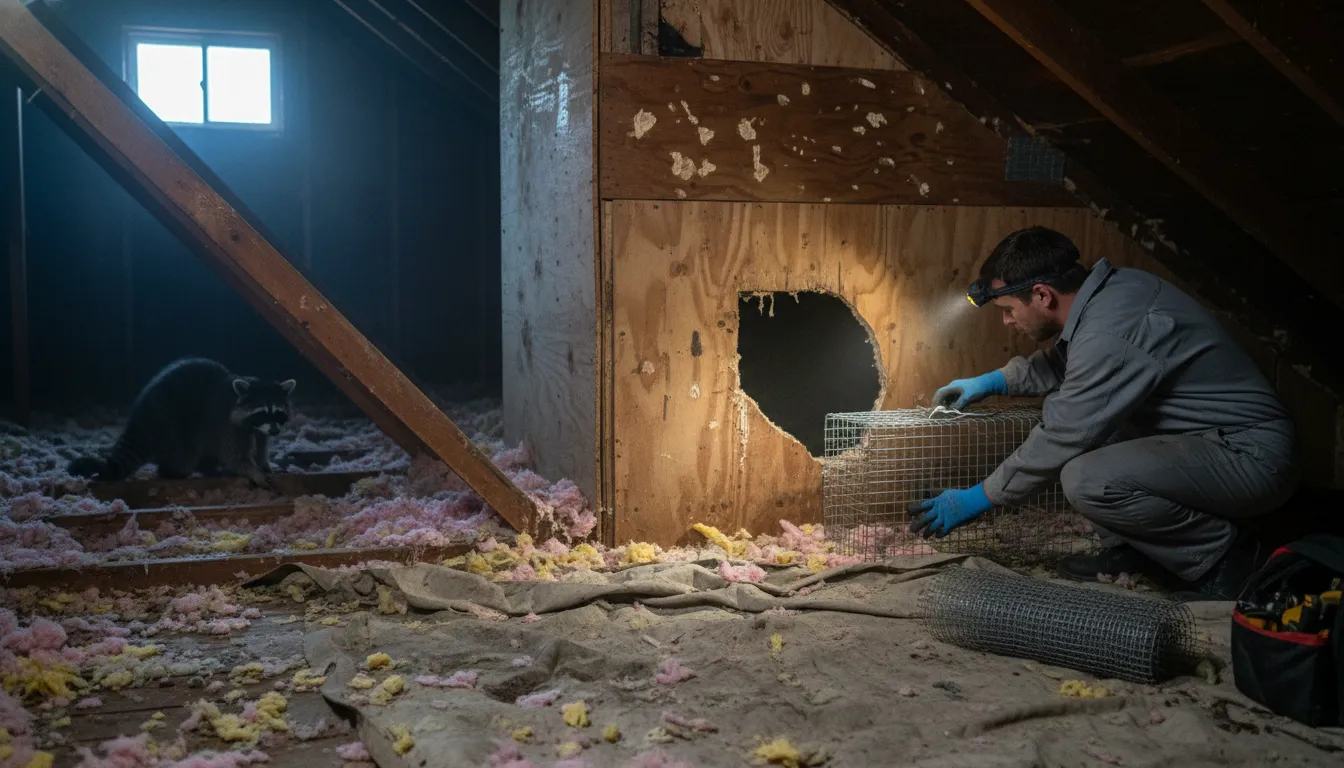
Discovering a raccoon family in your attic or a skunk under your deck can quickly turn a peaceful Shawnee home into a stressful situation. Nuisance wildlife control is the specialized service of safely and legally removing wild animals from homes and properties, addressing the damage they cause, and preventing their return. This matters because these uninvited guests can pose health risks, cause significant structural damage, and disrupt your peace of mind. For Shawnee residents, navigating this issue means understanding local regulations, knowing when to call for help, and finding qualified professionals who can resolve the problem effectively and humanely.
Common Wildlife Issues in Shawnee
Shawnee's blend of suburban neighborhoods, parks, and proximity to natural waterways makes it attractive to a variety of wildlife species. While observing animals in their natural habitat is part of the area's charm, conflicts arise when they seek food and shelter in our homes. Residents commonly encounter several species that become nuisances 1.
- Raccoons: Intelligent and dexterous, raccoons are notorious for tearing through roof vents and soffits to access attics, where they create dens, damage insulation, and leave behind hazardous waste.
- Squirrels: Both grey and fox squirrels can chew entry points into eaves and attics. Their constant gnawing can damage electrical wiring, posing a fire hazard 2.
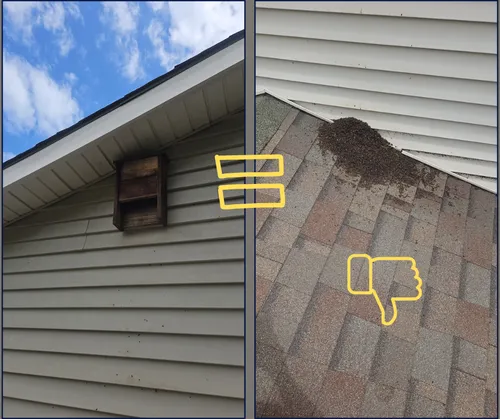
- Bats: Small colonies may roost in attics or wall voids. While beneficial for insect control, their guano (droppings) can accumulate, creating odor issues and potential health risks from histoplasmosis.
- Opossums & Skunks: These animals often seek shelter under decks, porches, or in crawlspaces. Skunks, of course, bring the added risk of a potent defensive spray.
- Rodents: Mice and rats are year-round pests that can squeeze through incredibly small gaps to enter homes, contaminating food and spreading disease.
- Snakes: Often found in yards or basements, snakes typically enter while hunting the rodents that are already present.
- Coyotes & Beavers: While less common in densely populated areas, coyotes may prey on small pets, and beavers can cause significant tree and property damage near waterways.
These animals are driven by basic needs: seeking a safe place to raise young, finding reliable food sources, and escaping harsh weather. Unfortunately, our homes often provide the perfect solution for them, leading to infestations that require professional animal removal services.
Health, Safety, and Legal Considerations
Attempting to handle wildlife yourself can be dangerous and is often illegal. It's crucial to understand the risks and regulations governing nuisance wildlife control in Kansas.
Public Health Risks: Many wild animals can carry diseases transmissible to humans and pets, such as rabies, leptospirosis, and parasites like ticks and fleas. Their droppings and urine can also contaminate insulation and air quality within a home.
Safety Hazards: A cornered animal will defend itself. Raccoons, squirrels, and even bats can bite and scratch. Furthermore, accessing attics or crawlspaces to attempt removal poses a fall or injury risk.
Legal Protections: Wildlife in Kansas is protected by a complex set of city, state, and federal laws. A critical rule is that the capture or killing of most migratory birds-including nestlings, eggs, and active nests-is prohibited by federal law without a permit 3 4. This includes species like swallows, woodpeckers, and raptors. The City of Shawnee also explicitly prohibits keeping wild animals like raccoons and skunks as pets 5.
When to Contact Authorities: The Shawnee Police Department's Animal Control unit handles specific situations. You should contact them via the non-emergency number (913-631-2155) for:
- Stray domestic animals (dogs and cats).
- Sick, injured, or dangerously aggressive animals that pose an immediate public safety or health risk 6 7.
- To inquire about the process for deer management permits, which require state authorization from the Kansas Department of Wildlife and Parks (KDWP) before a city permit can be issued for archery control during the open season 8 9.
For the vast majority of nuisance wildlife inside a structure-like animals in the attic, walls, or chimney-residents should hire a licensed professional nuisance wildlife control operator.
Find the perfect wildlife removal companies for your needs
Get personalized recommendations and expert advice
The Professional Wildlife Removal Process
A reputable wildlife control service follows a systematic approach often summarized as "Inspect, Remove, Restore, and Prevent." This ensures the problem is solved completely, not just temporarily.
- Inspection and Assessment: A thorough inspection is the critical first step. The technician will identify the animal species, locate all entry points, assess the extent of the infestation, and evaluate any damage. This inspection forms the basis for a detailed plan and quote 10.
- Humane Removal and Exclusion: The removal method depends on the animal and situation. For mammals like raccoons or squirrels, humane trapping and relocation in compliance with Kansas regulations is standard. For bats, professionals often install one-way exclusion devices that allow animals to leave but prevent re-entry. Crucially, this step includes sealing all identified entry points with durable materials like steel mesh or hardware cloth to prevent new animals from moving in.
- Cleanup and Restoration: After removal, the affected area must be sanitized. This involves removing contaminated insulation, droppings, and nesting materials. Professionals use specialized equipment like HEPA vacuums and enzyme cleaners to deodorize and disinfect, eliminating health risks and odors 11. Damaged insulation should be replaced, and any structural repairs (chewed wires, damaged vents) should be addressed.
- Prevention Advice: A good technician will provide recommendations for making your property less attractive to wildlife, such as securing trash cans, removing pet food, trimming tree branches away from the roof, and sealing other potential access points.
Understanding Costs for Wildlife Control
The cost of wildlife removal in Shawnee is not a flat fee; it varies based on several factors. Professionals typically provide free or low-cost inspections before giving a detailed quote 12 13. Key cost components include:
- Animal Type and Number: Removing a single squirrel differs in complexity and cost from evicting a family of raccoons or a colony of bats.
- Location and Accessibility: An animal in an easily accessed crawlspace is less expensive to remove than one in a high, steep attic or inside a wall.
- Extent of Damage and Needed Repairs: This is often the most significant variable. Costs can increase substantially if there is extensive damage to insulation, wiring, or ductwork that requires repair 14.
- Decontamination and Restoration Services: Attic cleanout, sanitization, and reinsulation are specialized services that add to the project cost but are essential for a complete solution 15.
For accurate pricing, Shawnee residents should contact local, licensed companies for an on-site assessment. Reputable providers like Catch-It Wildlife & Pest Control, Inc. or AAAC Wildlife Removal of Shawnee can provide transparent quotes based on your specific situation 16 17.
Preventative Measures for Shawnee Homeowners
While professional help is needed for active infestations, homeowners can take proactive steps to deter wildlife:
- Seal Entry Points: Conduct seasonal inspections of your home's exterior. Look for gaps in siding, loose roof vents, damaged soffits, and holes where utilities enter. Seal any openings larger than a quarter-inch.
- Secure Food Sources: Use locking lids on trash cans, store pet food indoors, and avoid leaving fallen fruit from trees on the ground. Consider bringing bird feeders in at night.
- Modify Habitat: Keep tree branches trimmed back at least 6-8 feet from the roofline. Store firewood away from the house and clear dense brush or debris piles where animals can hide.
- Use Deterrents Thoughtfully: For some yard pests like moles, the Johnson County Extension Office provides resources on trapping 18. However, for most animals, deterrents like lights or noise devices often provide only temporary relief if the animal is already seeking shelter inside.
Remember, if you find young wildlife (like fawns or fledgling birds), the best action is usually to leave them alone. The parents are likely nearby, and intervention often does more harm than good 19.
Frequently asked questions
Sources
Footnotes
-
Kansas Wildlife Animal Control - http://www.wildlifeanimalcontrol.com/kansas.html ↩
-
Wildlife Control - Exclusion - Removal - https://americanpestonline.com/nuisance-wildlife-control/ ↩
-
Nuisance Wildlife Control Operator Report | Missouri Department of ... - https://mdc.mo.gov/wildlife/nuisance-problem-species/nuisance-report ↩
-
Understanding Bird Laws in Kansas - Critter Control of Kaw Valley - https://www.crittercontrolofkawvalley.com/residential/understanding-bird-laws-in-kansas.html ↩
-
Permits - City of Shawnee - https://www.cityofshawnee.org/departments/city_clerk/permits ↩
-
Contact Animal Control - City of Shawnee - https://www.cityofshawnee.org/departments/police/i_want_to/contact_animal_control ↩
-
Contact Animal Control - City of Shawnee - https://www.cityofshawnee.org/departments/police/i_want_to/contact_animal_control ↩
-
Permits - City of Shawnee - https://www.cityofshawnee.org/departments/city_clerk/permits ↩
-
Wildlife Damage Control / Services / KDWP - https://ksoutdoors.gov/Services/Wildlife-Damage-Control ↩
-
Wildlife IPM | CALS - https://cals.cornell.edu/integrated-pest-management/outreach-education/whats-bugging-you/wildlife-ipm ↩
-
Wildlife Removal Shawnee - Kansas City - https://kansas.aaacwildliferemoval.com/service-area/shawnee ↩
-
Shawnee Wildlife Animal Control - Rat Skunk Raccoon Bird Bat - http://www.wildlifeanimalcontrol.com/Shawnee-KS.html ↩
-
Shawnee, Kansas Catch-It Wildlife & Pest Control - https://catchitwildlife.com/shawnee-ks-services/ ↩
-
How Much Does Rodent Removal Cost? - https://www.jamisonpest.com/blogs/how-much-does-rodent-removal-cost/ ↩
-
Wildlife Control Pricing Guide - https://www.michiganwildlifesolutions.com/about/wildlife-control-pricing/ ↩
-
Attic Insulation in Kansas City, Overland Park & Johnson County, KS | Catch-It Wildlife & Pest Control - https://catchitwildlife.com/attic-insulation/ ↩
-
Catch-It Wildlife & Pest Control Inc, Independence, MO 64055, US - https://www.mapquest.com/us/missouri/catch-it-wildlife-pest-control-inc-424346249 ↩
-
Nuisance Wildlife - Johnson County Extension Office - https://www.johnson.k-state.edu/programs/natural-resources/nuisance-wildlife/ ↩
-
Leave Wildlife Where It Belongs, Wild - KDWP - https://ksoutdoors.gov/KDWP-Info/News/News-Archive/2018-Weekly-News/4-12-18/Leave-Wildlife-Where-It-Belongs-Wild ↩