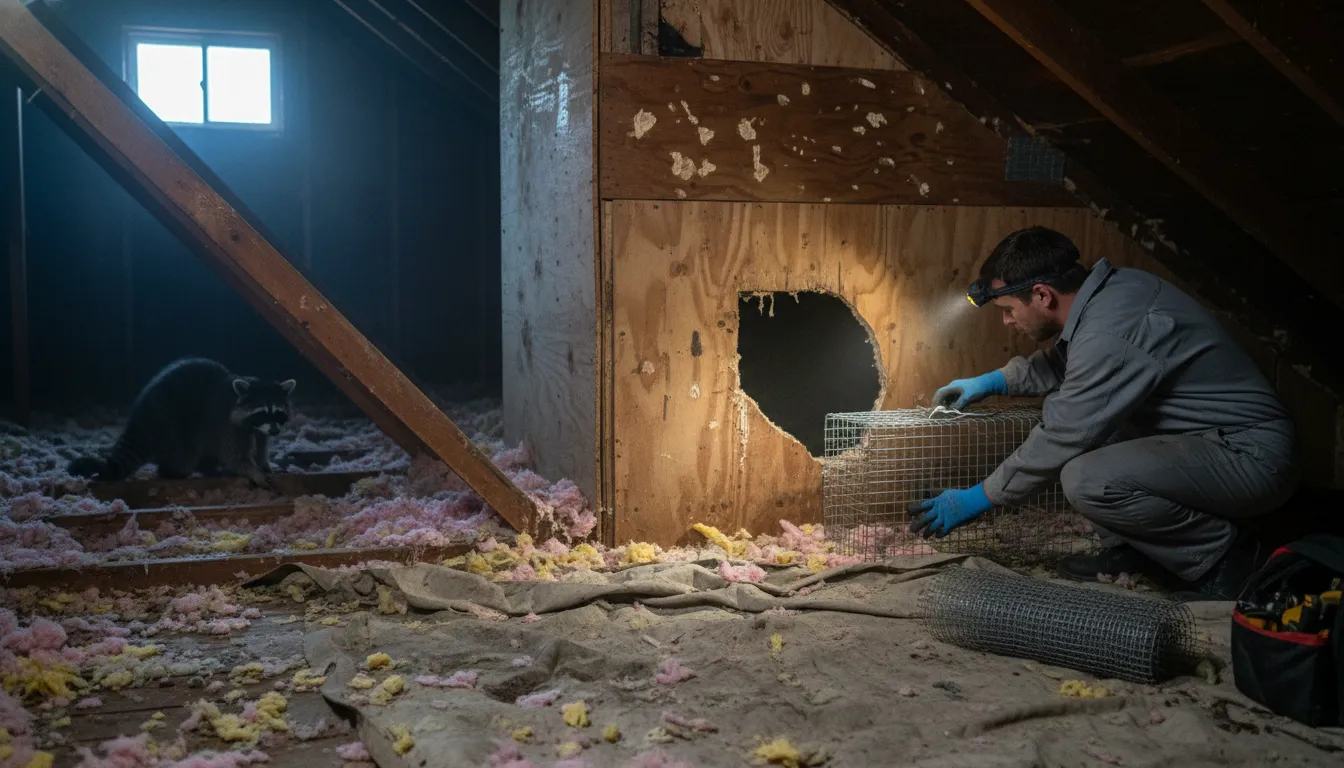
Find the Best Wildlife Removal Companies for Your Business
No obligation • Fast responses • Nationwide coverage

Why you can trust Pest Crews
Pest Crews is a leading U.S. resource for finding and evaluating residential and commercial pest control services. Our team researches providers, reviews treatment approaches, and organizes unbiased information to help you make informed decisions. Companies cannot pay to change our editorial content or influence how they appear.
Search providers near you
Top Wildlife Removal Companies in Topeka, Kansas Ranked
When raccoons rummage through your trash, squirrels nest in your attic, or bats find a way into your walls, it's more than a nuisance-it's a potential threat to your home's safety and your family's health. Wildlife removal is the professional service dedicated to humanely and legally resolving conflicts with wild animals that have encroached on your property. In Topeka, dealing with these unwelcome guests requires specific knowledge of local species and strict Kansas regulations. This guide will help you understand the common wildlife issues in the capital city, when to take action yourself, and how to find a qualified professional to protect your home.
Common Nuisance Wildlife in Topeka
Topeka's blend of urban spaces, riverfront areas, and nearby woodlands creates an ideal habitat for a variety of animals that can become problematic for homeowners. Knowing which species you're dealing with is the first step toward an effective solution.
Mammals: Raccoons are frequent culprits, known for tipping over garbage cans and seeking shelter in attics or under decks. Skunks often burrow beneath sheds or porches, while opossums are attracted to accessible pet food and trash. Rodents like mice and rats are common invaders, and squirrels can cause significant damage by chewing wires and insulation in attics. Other mammals include moles, groundhogs, and bats, which are a protected species in Kansas.
Birds: Various bird species can become a nuisance by nesting in attic vents, chimneys, or soffits. Their nests can block ventilation and their droppings can pose health risks 1.
Reptiles: Snakes, both venomous and non-venomous, may seek shelter in cool, damp areas of a property like basements, crawl spaces, or wood piles.
Understanding Kansas Wildlife Laws: Why Professional Help is Often Necessary
One of the most critical aspects of animal control in Topeka is compliance with state and federal regulations. Many species are protected, making it illegal for homeowners to trap, harm, or kill them without proper authorization.
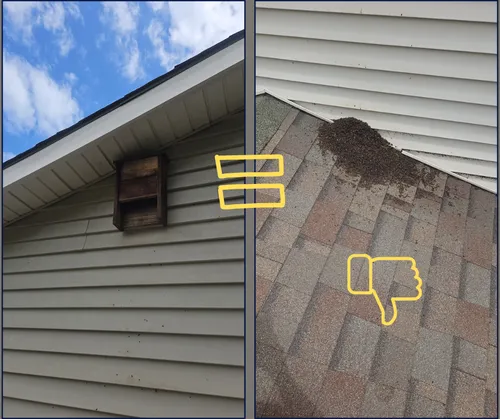
The Kansas Department of Wildlife, Parks & Tourism (KDWP) enforces laws that protect most wildlife, especially bats and migratory birds. For instance, bats are a protected species, and their removal requires specific techniques like exclusion devices, not simply trapping. Attempting DIY removal of protected animals can result in significant fines.
For most wildlife conflicts, you will need to contact a licensed Nuisance Wildlife Control Operator (NWCO). These professionals are trained and permitted by the KDWP to handle removal legally and humanely. The state agency provides resources and lists of approved operators to ensure residents find qualified help.
When to Handle It Yourself vs. When to Call a Professional
DIY Prevention and Minor Issues
Homeowners can safely address some aspects of wildlife conflict through prevention and non-invasive methods. These actions are not only allowed but encouraged as a first line of defense.
- Sealing Entry Points: Carefully inspect your home's exterior for cracks, holes, or gaps, especially around vents, rooflines, and foundations. Use appropriate materials like hardware cloth or steel wool to seal them.
- Securing Food Sources: Keep trash in sealed, animal-proof containers. Avoid leaving pet food outdoors overnight, and clean up fallen fruit from trees.
- Habitat Modification: Trim tree branches that overhang your roof to limit access for squirrels and raccoons. Keep woodpiles and dense brush away from your home's foundation.
- Clean-Up (with Precautions): If safe to do so, you can clean up minor droppings using proper protective gear like gloves and an N95 mask to avoid inhaling pathogens.
When You Must Call a Wildlife Removal Expert
There are clear situations where DIY efforts are insufficient, illegal, or unsafe. You should contact a licensed wildlife control professional for 2:
- Any Trapping or Physical Removal: The act of trapping and relocating wildlife is regulated and often requires a permit.
- Protected Species: Any incident involving bats, most birds, or other protected animals.
- Animals Inside Living Spaces: If an animal is inside your home, especially in walls or ceilings.
- Significant Damage or Infestation: Evidence of chewed wires, structural damage, or signs of multiple animals.
- Dead Animal Removal: Particularly if the carcass is inside a wall or an inaccessible area, where decomposition odors and fluids become a problem.
- Uncertainty: If you are unsure of the species, its protection status, or the safest removal method.
Find the perfect wildlife removal companies for your needs
Get personalized recommendations and expert advice
The Role of Topeka Animal Control
It's important to understand what local government services can and cannot do regarding wildlife. Topeka Animal Control primarily handles domestic animal issues and specific public health concerns.
You should contact Topeka Animal Control for:
- Deceased animals on public property like roads, parks, or sidewalks.
- Issues with domestic animals, such as stray dogs or cats.
- Rabies exposure concerns, such as a bat found in a room where people were sleeping or a wild animal acting strangely3.
For nearly all other wildlife conflicts on private property-including live animal removal, trapping, and exclusion-you will need to hire a private, KDWP-licensed Nuisance Wildlife Control Operator 4.
What to Expect from Professional Wildlife Removal Services
A reputable wildlife control company in Topeka will typically follow a multi-step process to ensure a complete and lasting solution.
- Inspection: A thorough inspection of your property to identify the animal species, entry points, and the extent of the damage or infestation.
- Humane Removal/Exclusion: Using legal and humane methods to remove the animals. This often involves one-way exclusion doors that allow animals to leave but not re-enter, rather than lethal trapping 5.
- Clean-Up and Decontamination: Removing nesting materials, droppings, and urine. This step is crucial for eliminating odors and health hazards, as wildlife waste can carry diseases.
- Repair and Exclusion: Sealing all entry points with durable materials to prevent future invasions. This is the most critical step for a permanent solution 6.
- Prevention Advice: Providing recommendations for habitat modification and ongoing prevention.
Understanding Wildlife Removal Costs in Topeka
The cost for animal control services in Topeka varies widely based on the job's complexity, the species involved, and the extent of damage. Most companies provide free inspections and estimates. Here is a general breakdown of potential costs7 8:
- Small Jobs ($100 - $200): This range typically covers the removal of a single dead animal from an accessible area or the removal of a non-venomous snake.
- Medium Jobs ($250 - $450): This includes standard trapping and removal of animals like raccoons or squirrels, minor exclusion work to seal a primary entry point, or situations requiring multiple service visits.
- Large/Complex Jobs ($500+): Comprehensive services fall into this category. This includes full attic or home inspections, removal of large infestations (like a colony of bats or rodents), extensive repair and exclusion work on multiple entry points, and professional decontamination/clean-up of affected areas.
Finding a Qualified Wildlife Removal Professional in Topeka
Your best resource for finding help is the official list of Nuisance Wildlife Damage Control Permittees maintained by the Kansas Department of Wildlife, Parks & Tourism (KDWP)9. Additionally, several established national and local companies serve the Topeka area, such as Critter Control of Kaw Valley, Trutech, and other local pest and wildlife specialists10 11. Always verify that the company is currently licensed by the KDWP, carries proper insurance, and offers guarantees on their exclusion work.
Frequently asked questions
Sources
Footnotes
-
Wildlife Removal Mission - Kansas City - https://kansas.aaacwildliferemoval.com/service-area/mission ↩
-
WILDLIFE DAMAGE CONTROL TRAINING MATERIALS - https://www.wildlife.k-state.edu/doc/wildlifemanualfull.pdf ↩
-
Topeka Wildlife Removal Pros | #1 Best Wildlife & Bat Control - https://www.pestwildliferemoval.com/kansas/topeka-wildlife-removal/ ↩
-
What to know about Topeka animal control, including what it can and can't do - https://www.cjonline.com/story/news/local/2024/12/04/what-to-know-about-topeka-animal-control-including-what-it-cant-do/76617195007/ ↩
-
Topeka Wildlife Control / Kansas Animal Removal - http://www.aaanimalcontrol.com/professional-trapper/city/KS-Topeka.htm ↩
-
Nuisance Wildlife Damage Control Manual - https://www.wildlife.k-state.edu/nuisance-wildlife.html ↩
-
Topeka Wildlife Animal Control - Trappers and Pest Removal - http://www.wildlifeanimalcontrol.com/Topeka.html ↩
-
Prices - Pest Animal Removal Topeka - http://www.topekapestanimal.com/prices.html ↩
-
Nuisance Wildlife Damage Control - KDWP - https://ksoutdoors.gov/Services/Wildlife-Damage-Control/Nuisance-Wildlife-Damage-Control ↩
-
Topeka, KS - Critter Control of Kaw Valley - https://www.crittercontrolofkawvalley.com/about/locations/topeka-ks.html ↩
-
Topeka City, KS Wildlife Removal | Trutech - https://www.trutechinc.com/ks/topeka-city-wildlife-removal/ ↩