Find the Best Wildlife Removal Companies for Your Business
No obligation • Fast responses • Nationwide coverage

Why you can trust Pest Crews
Pest Crews is a leading U.S. resource for finding and evaluating residential and commercial pest control services. Our team researches providers, reviews treatment approaches, and organizes unbiased information to help you make informed decisions. Companies cannot pay to change our editorial content or influence how they appear.
Search providers near you
Top Wildlife Removal Companies in Lexington, Kentucky Ranked
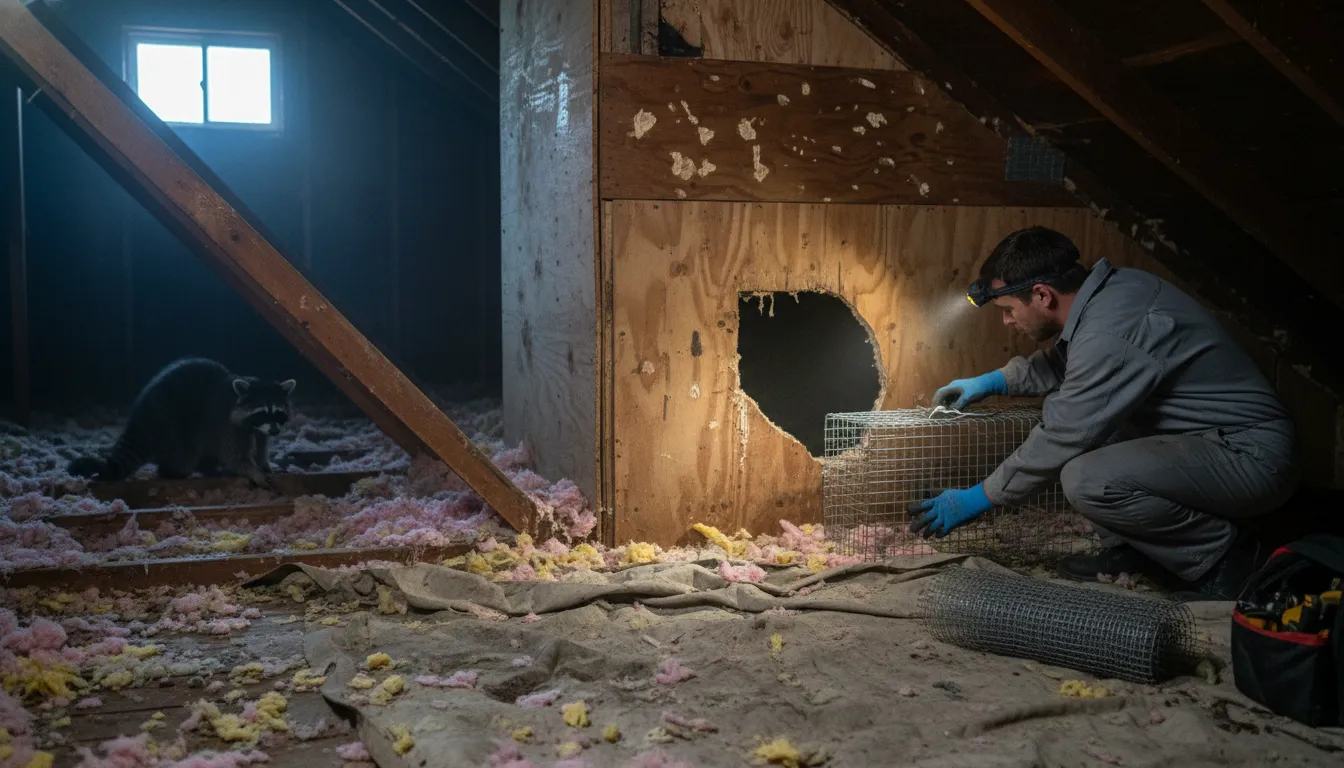
Discovering a raccoon in your attic or hearing squirrels scampering in your walls is a common experience for many Lexington homeowners. Wildlife removal is the professional service dedicated to safely and humanely resolving conflicts with nuisance animals that have entered your home or property. This process is crucial for protecting your home's structural integrity, preventing health hazards, and ensuring the humane treatment of local wildlife. This guide will help you understand your options, from effective do-it-yourself strategies to when it's essential to call a licensed professional, so you can find the right local solution for your specific situation.
Trifecta Wildlife Services
Lexington, KY
Trifecta Wildlife Services is a wildlife removal and damage management company based in Lexington, KY. They offer ethical and humane solutions for residential, farm, agricultural, and commercial wildlife issues. Their services include animal trapping, exclusion, damage repair, and wildlife inspections, addressing problems caused by squirrels, raccoons, bats, and other wildlife. The company emphasizes science-based and adaptive approaches, with degreed wildlife biologists on staff to ensure effective and responsible wildlife control. Trifecta Wildlife Services serves Lexington and surrounding counties, providing local, accountable service.
Berner Pest Solutions
Lexington, KY
Berner Pest Solutions is a family-owned pest control company based in Lexington, KY. Founded by an Associate Certified Entomologist with over 12 years of experience, the company provides pet-friendly pest management services for homes and businesses. They serve Lexington-Fayette and nearby communities including Winchester, Georgetown, Versailles, Nicholasville, and Richmond. Their services cover a wide range of pests such as ants, spiders, mice, termites, mosquitoes, bed bugs, and wildlife. Berner Pest Solutions emphasizes an Integrated Pest Management approach that focuses on targeted treatments and prevention, including rodent exclusion techniques. Established in 2023, the company offers personalized service without long-term contracts or cancellation fees.
Truly Nolen Pest & Termite Control
688 Grot Dr Suite A, Lexington, KY 40505
Truly Nolen Pest & Termite Control is a family-owned pest control company serving Lexington, KY, and the surrounding counties, northern Kentucky, and the greater Cincinnati, OH area. With over 55 years of experience, they offer a wide range of pest management services including insect control, rodent control, termite inspections, wildlife removal, and mosquito control. Their team includes state-certified technicians and a certified entomologist, providing expertise in identifying pest entry points and delivering long-term solutions. They also provide necessary documentation for real estate transactions and offer warranties on all work.
Orkin
805 Newtown Cir Ste 170, Lexington, KY 40511
Orkin provides residential and commercial pest control services in Lexington, KY. With over 120 years of experience, they handle common pests such as cockroaches, ants, rodents, termites, bed bugs, mosquitoes, and wildlife. Their termite control includes inspections and treatments like dry foam void filler and Sentricon® bait systems. Orkin offers 24/7 availability for pest control emergencies and uses science-backed methods tailored to seasonal pest behaviors in the Lexington area.
KYote Wildlife Control
312 Mariemont Dr, Lexington, KY 40505
KYote Wildlife Control is a wildlife and pest control company located in Lexington, KY. With over 28 years of experience, they handle a wide range of wildlife issues including bats, raccoons, squirrels, skunks, rodents, and more. They serve residential, commercial, and farm properties in Lexington and surrounding areas such as Versailles, Georgetown, Winchester, and Frankfort. Their services include wildlife trapping and removal, damage repair, exclusion, attic cleanup, and dead animal removal. They also offer a 24-hour wildlife surveillance system and use humane, non-conventional methods. KYote Wildlife Control operates 24/7 to assist customers with wildlife problems.
Common Wildlife Issues in Lexington Homes
The Bluegrass region is home to a diverse array of wildlife, and several species are particularly adept at finding their way into Lexington residences. Understanding which animals you're dealing with is the first step toward an effective resolution.
Mammals are the most frequent culprits. Raccoons are intelligent and dexterous, often tearing through roof vents or soffits to access warm attics for denning. Gray and flying squirrels can squeeze through incredibly small gaps to nest in wall cavities or attics, where they chew on wires and insulation. Bats, which are protected in Kentucky, may colonize attics or wall spaces, and their removal is strictly regulated. Skunks and opossums often seek shelter under decks, sheds, or porches, while rats and mice are perennial problems in basements and crawl spaces.
Birds also pose challenges. While songbirds are welcome in yards, species like starlings or sparrows can nest in vents or chimneys, creating blockages and fire hazards. It's important to note that all migratory birds are protected by federal law, and their removal requires specific permits that only licensed professionals hold.
When to Handle It Yourself vs. Call a Professional
Many minor wildlife conflicts can be managed through proactive, humane methods. However, knowing the legal and practical limits of DIY efforts is key to avoiding fines or worsening the problem.
Effective DIY Strategies (Habitat Modification & Exclusion): The most permanent solution is to make your property less attractive and accessible. This involves:
- Removing Food Sources: Secure trash cans with locking lids, bring in pet food at night, and clean up fallen fruit or bird seed 1.
- Sealing Entry Points (Exclusion): This is a critical step. Use materials like hardware cloth, steel wool, or metal flashing to seal gaps around rooflines, foundations, and utility penetrations. Remember, exclusion should only be done when you are certain no animals are inside, especially during spring and summer when young may be present 2.
- Using Deterrents: Motion-activated lights, sprinklers, or commercially available repellents can sometimes discourage ground animals from frequenting a specific area 3.
When You Must Call a Licensed Professional: Kentucky law and common sense dictate several scenarios where a Commercial Wildlife Control Operator (WCO) is necessary:
- An active infestation inside the home's structure (e.g., bats in the attic, squirrels in the walls).
- Dealing with protected species like bats or migratory birds.
- If the animal is sick, injured, or behaving aggressively. In these cases, you should contact Lexington-Fayette Animal Care & Control (LFACC), as they handle public safety threats from wildlife 4 5.
- For any commercial trapping and removal service. State law requires anyone performing wildlife control for payment to be a licensed WCO.
Find the perfect wildlife removal companies for your needs
Get personalized recommendations and expert advice
Understanding Local Laws and Regulations
Wildlife management in Lexington is governed by a mix of city ordinances and state regulations. Trapping and hunting within city limits are generally prohibited for residents 6. For removal, the key regulatory figure is the Commercial Wildlife Control Operator (WCO), licensed by the Kentucky Department of Fish and Wildlife Resources (KDFWR) 7. These professionals are trained in legal, humane, and effective removal techniques year-round.
Residents are allowed to live-trap some nuisance animals like squirrels or raccoons on their own property, but they must comply with state regulations regarding trap type, checking frequency, and release. Importantly, releasing an animal on another person's property, or on most public land, is illegal. "Relocating" an animal often simply moves the problem and can spread disease, which is why WCOs typically humanely euthanize non-releasable animals in accordance with state law 8 9. Special permits are required for species like deer, black bear, elk, and certain snakes 8.
The Professional Wildlife Removal Process
Hiring a licensed WCO ensures the job is done safely, legally, and effectively. A standard service call typically follows a multi-step process designed for a permanent solution.
- Inspection and Assessment: The professional will conduct a thorough inspection of your property's interior and exterior to identify the species, locate all entry points, and assess the extent of the damage or contamination.
- Humane Removal and Trapping: Using methods approved for the specific animal, the operator will remove the wildlife. This may involve one-way exclusion doors, live traps, or other specialized techniques. For bats, removal is often timed outside of the maternity season (roughly May through August) to avoid trapping flightless young inside.
- Clean-up and Sanitation: This is a vital step often overlooked. Droppings, urine, and nesting materials can pose serious health risks and attract new pests. Professionals will remove contaminated insulation, disinfect the area, and address odor issues.
- Exclusion and Repair: The core of permanent wildlife control is sealing the animal's entry points with durable materials like steel mesh, chimney caps, or vent covers to prevent re-entry. This service is often quoted separately from the removal itself.
- Restoration: After the animals and waste are gone, the final step may involve repairing chewed wires, damaged ductwork, or replacing insulation to restore your home's safety and energy efficiency.
What to Expect: Services and Costs
The cost of wildlife control in Lexington varies significantly based on the species, the infestation's severity, and the services required. Most professionals offer free inspections and estimates.
- Inspection and Basic Removal: For a single animal like a raccoon or a family of squirrels, removal services often range from $200 to $500+ 10 11. The price depends on the animal's location and the techniques needed.
- Exclusion and Repair Work: Sealing up a home to be wildlife-proof is a separate and crucial investment. Costs for comprehensive exclusion can range from $300 to over $1,000, depending on the size of your home and the number of entry points 12 13.
- Attic Clean-up and Decontamination: Removing contaminated insulation, sanitizing the area, and replacing insulation is a labor-intensive process and can cost several hundred to over a thousand dollars, based on the attic's square footage and contamination level.
The Kentucky Fish and Wildlife Department provides a helpful online tool to verify and find licensed Wildlife Control Operators in your area, which is a recommended first step in your search.
Preventing Future Wildlife Conflicts
Once your home is secured, ongoing vigilance is the best policy. Regularly walk the perimeter of your house each season, looking for new gaps or signs of chewing. Keep tree branches trimmed back at least six feet from your roofline to limit access for squirrels and raccoons. Ensure chimney caps are secure and vent covers are intact. By maintaining a well-sealed home and a yard free of easy food sources, you can enjoy Lexington's wildlife from a respectful and problem-free distance.
Frequently asked questions
Sources
Footnotes
-
Lexington Wildlife Removal, Kentucky Rat, Mouse, Raccoon, Animal, ... - http://wildliferemovalusa.com/Lexington-KY.html ↩
-
Lexington Wildlife Control / Kentucky Animal Removal - http://www.aaanimalcontrol.com/professional-trapper/city/KY-Lexington.htm ↩
-
Wildlife Control Methods | NWCTP - https://wildlifecontroltraining.com/training/wildlife-control-methods/ ↩
-
General Information - Lexington Fayette Animal Control and ... - https://lfacc.org/general-information/ ↩
-
Animal Care and Control | City of Lexington, Kentucky - https://www.lexingtonky.gov/government/departments-programs/public-safety/animal-care-control ↩
-
Local Laws on Wildlife Control in Lexington Kentucky - https://xitpest.com/local-laws-on-wildlife-control-in-lexington-kentucky/ ↩
-
Commercial Wildlife Control Operator - Kentucky Department of Fish ... - https://fw.ky.gov/Wildlife/Pages/Commercial-Wildlife-Control-Operator.aspx ↩
-
Title 301 Chapter 3 Regulation 120 • Kentucky Administrative ... - https://apps.legislature.ky.gov/law/kar/titles/301/003/120/ ↩ ↩2
-
Title 301 Chapter 3 Regulation 120 • Kentucky Administrative ... - https://apps.legislature.ky.gov/law/kar/titles/301/003/120/REG/ ↩
-
Wildlife Removal Lexington | Wildlife Control - https://lexington.aaacwildliferemoval.com/ ↩
-
Wildlife Removal Lexington, KY - https://www.animalsremoved.com/city/fayette-lexington ↩
-
Lexington, KY Wildlife Control & Removal - Critter Control - https://www.crittercontrol.com/office-finder/kentucky/lexington/ ↩
-
Wildlife Control | KDFWR - Kentucky Fish and Wildlife - https://app.fw.ky.gov/WildlifeControl/ ↩