Find the Best Wildlife Removal Companies for Your Business
No obligation • Fast responses • Nationwide coverage

Why you can trust Pest Crews
Pest Crews is a leading U.S. resource for finding and evaluating residential and commercial pest control services. Our team researches providers, reviews treatment approaches, and organizes unbiased information to help you make informed decisions. Companies cannot pay to change our editorial content or influence how they appear.
Search providers near you
Top Wildlife Removal Companies in St Paul, Minnesota Ranked
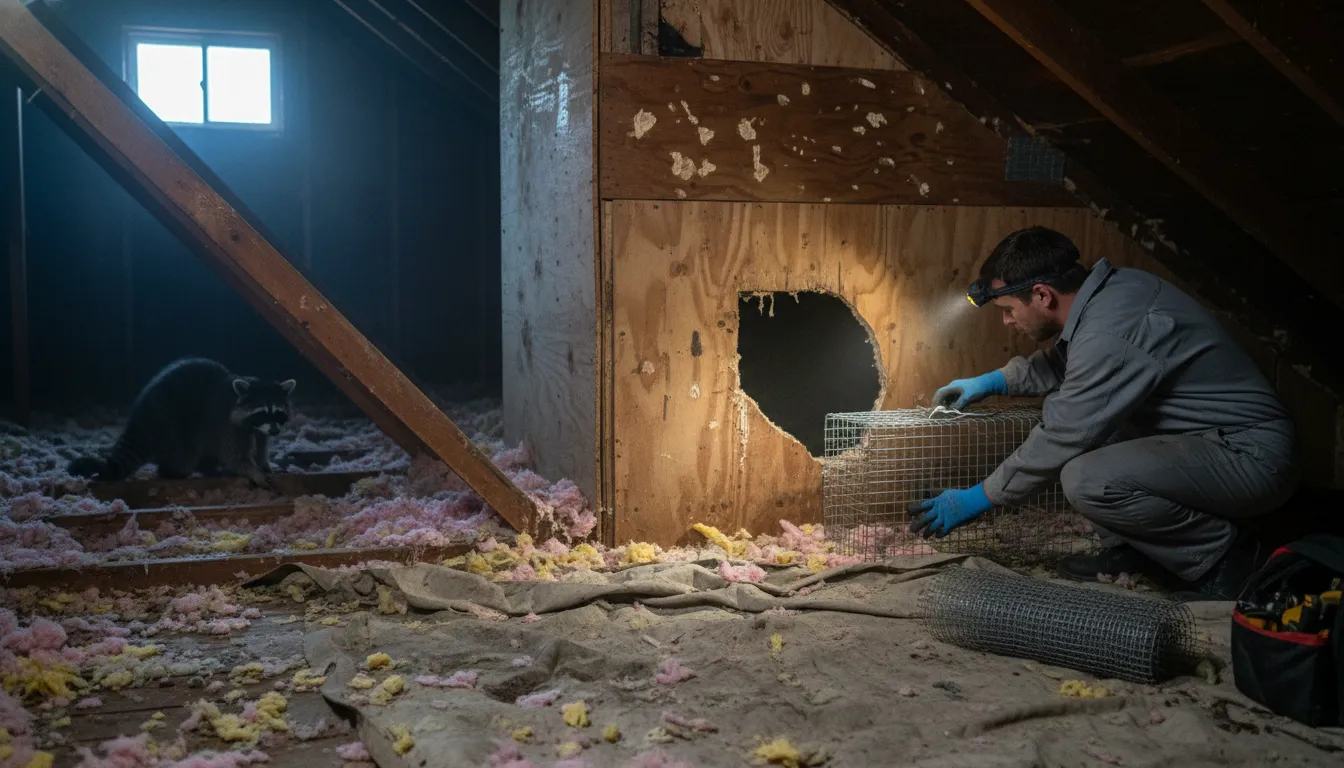
Finding an uninvited wild animal in your attic, chimney, or walls can be unsettling and potentially damaging. Wildlife removal is the professional service dedicated to safely and humanely resolving conflicts with nuisance animals on your property. In St. Paul, this involves not just trapping, but also understanding Minnesota's specific regulations, identifying entry points, and implementing long-term exclusion strategies to prevent a recurrence. This guide will help you understand the local wildlife issues, your legal options, and how to find qualified professionals for effective animal control and critter removal.
Rove Pest Control
7800 3rd St N # 1000, Oakdale, MN 55128
Rove Pest Control provides pest management services in St Paul, MN, and nearby communities including Oakdale and Woodbury. The company offers a range of pest control solutions such as bed bug extermination, rodent exclusion, wildlife removal, and general pest control for ants, cockroaches, and spiders. Rove Pest Control specializes in both residential and commercial pest control, tailoring treatments to local needs and providing seasonal prevention advice. The company recently partnered with Greenix Pest Control, which has over a decade of industry experience, enhancing their combined expertise and service reach across the Midwest.

Valor Pest Solutions
1406 Thomas Ave W, St Paul, MN 55104
Valor Pest Solutions is a pest control company based in Minneapolis, MN, specializing in customized pest management tailored to the region's extreme seasonal changes. They offer services for a variety of pests including ants, mice, wasps, spiders, mosquitoes, bed bugs, and rodents. Their approach begins with a thorough inspection followed by a tailored treatment plan that considers local conditions and seasonal pest activity. One notable capability is their comprehensive pest control process, which includes interior and exterior treatments, lawn care, and prevention measures such as de-webbing and nesting area elimination. Valor Pest Solutions understands the unique pest challenges in Minnesota and adapts their services accordingly.

Valor Pest Solutions
530 N 3rd St Unit C, Minneapolis, MN 55401
Valor Pest Solutions is a pest control company serving Minneapolis, MN, with over 30 years of local experience. They provide customized pest control services tailored to seasonal pest challenges common in Minnesota homes. Their expertise covers a wide range of pests including ants, mice, wasps, mosquitoes, bed bugs, and rodents. Valor Pest Solutions offers thorough interior and exterior treatments, including home perimeter and full yard services, with a focus on eco-friendly and pet-safe products. They specialize in rodent control by identifying nests and eliminating infestations effectively. Their knowledge of local pests and seasonal patterns supports targeted pest management throughout the year.
Abra Kadabra
1101 Pierce St NE, Minneapolis, MN 55413
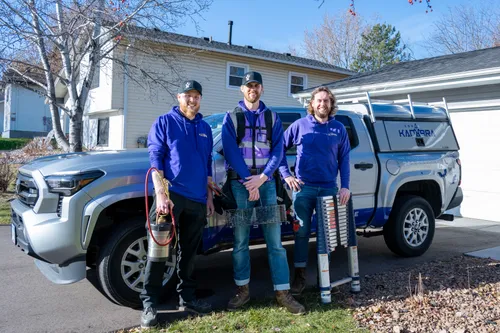
Abra Kadabra is a pest and wildlife control company serving Minneapolis, MN. They provide services for residential and commercial properties, including ant, rodent, mosquito, bee and wasp removal, bird and pigeon control, and wildlife removal. The company is licensed in Minnesota and employs NWCOA-certified technicians who use environmentally conscious methods. Abra Kadabra offers inspection, removal, and prevention services, such as rodent-proofing and animal-proofing homes to prevent future infestations. Their team stays current with industry knowledge and provides various service plans tailored to customer needs.
Capital City Pest Solutions
1749 Sheridan Ave W, St Paul, MN 55116
Capital City Pest Solutions is a pest control company based in Minneapolis, MN. They provide a range of extermination and pest management services including bed bug treatment, cockroach and ant control, rodent removal, termite inspections, mosquito control, bee and wasp removal, bird and pigeon control, and wildlife removal. Their services cover both residential and commercial properties, offering comprehensive pest solutions to address various infestations.
Common Wildlife Issues in St. Paul
St. Paul's blend of urban parks, riverbanks, and residential neighborhoods creates ideal habitats for a variety of adaptable wildlife. While seeing these animals in nature is enjoyable, they become a problem when they seek food and shelter in our homes and yards. The most frequent culprits for nuisance wildlife control calls in the area include mammals like squirrels, raccoons, skunks, and bats. Birds such as starlings, pigeons, and English sparrows are also common nuisance species that can nest in vents or eaves, causing noise and property damage.
Squirrels and raccoons are notorious for finding their way into attics and soffits, where they can tear up insulation, chew on wires, and create nests. Skunks often take up residence under decks or sheds, and their defensive spray is a significant concern. Bats, while beneficial for insect control, can form colonies in attics; their droppings (guano) pose health risks and they are protected by federal law, requiring special handling. Understanding which animal you're dealing with is the first step toward an effective solution.
Minnesota Laws and Homeowner Responsibilities
Before taking action, it's crucial to know the rules. Minnesota law allows homeowners to manage certain animals on their own property without a license if the animal is causing damage. This includes species like squirrels, rabbits, raccoons, and skunks. However, the law requires that if you take a protected species (which includes many birds of prey and other specific mammals), you must report it to a Department of Natural Resources (DNR) Conservation Officer within 24 hours.
If you choose to trap and relocate an animal, the DNR recommends taking it at least 10-15 miles away to prevent its return. It's important to note that relocation is not always the most humane or effective solution, as relocated animals often struggle to survive in unfamiliar territory. For bats, which are federally protected, or for any complex situation, contacting a licensed wildlife removal professional is strongly advised to ensure compliance with all regulations 1.
When to Call for Professional Animal Control
While some minor issues can be handled by a diligent homeowner, certain situations warrant an immediate call to a professional wildlife removal service or the authorities.
Contact Saint Paul Animal Control (SPAC) immediately for:
- A wild animal inside a living space of your home.
- An injured wild animal.
- A bite from a wild animal.
- An unusually aggressive animal that is threatening people 2.
Hire a professional wildlife removal company for:
- Bat infestations: Due to their protected status and the health risks associated with guano, professional exclusion (sealing them out at the proper time) is essential 3.
- Complex infestations: Large colonies, animals in hard-to-reach areas like inside walls, or multiple entry points.
- Exclusion and repair: Professionals don't just remove the animal; they find and seal all potential entry points and can repair damage like chewed wires, soiled insulation, or structural holes 4.
- When you're unsure: If you cannot safely identify the animal, the extent of the problem, or the relevant laws, a professional assessment is a wise investment.
Find the perfect wildlife removal companies for your needs
Get personalized recommendations and expert advice
Effective Prevention and DIY Tips
The best wildlife removal strategy is prevention. By making your property less attractive to animals, you can avoid conflicts altogether.
- Secure Trash and Compost: Use wildlife-resistant bins with secure locking lids. Raccoons are incredibly dexterous and can open simple latches.
- Seal Entry Points: Conduct a thorough inspection of your home's exterior. Look for holes in the foundation, loose vent covers, gaps in roof soffits, and spaces around utility lines. Seal any openings larger than a quarter-inch. Remember, a mouse can fit through a hole the size of a dime.
- Remove Attractants: Keep gardens tidy, pick up fallen fruit, and trim tree branches that overhang or touch your roof. Do not leave pet food outside overnight 5 6.
- Smart Trapping: If you are legally trapping a nuisance animal on your property, use live traps appropriate for the species. Check traps frequently (at least once every 24 hours) and have a plan for the animal's lawful and humane disposition. A critical expert tip: Avoid using poison for rodents. Poison often leads to animals dying in inaccessible wall voids or attics, creating severe odor problems and attracting insects, without solving the entry point issue.
Understanding Wildlife Removal Costs in St. Paul
The cost for professional critter removal in St. Paul varies significantly based on the type of animal, the complexity of the infestation, and the extent of repairs needed. Here's a general breakdown based on local service estimates:
- Basic Removal: For a single animal in an accessible location, like a raccoon in a chimney or a squirrel in an attic, you can expect costs to range from $150 to $400 7.
- Complex Cases: For bat colony removal, large-scale rodent infestations, or situations requiring extensive exclusion work, sanitization, and repair of damage, costs typically range from $300 to $800 or more 8 9 10. This higher cost reflects the labor-intensive process of installing one-way doors, sealing all entry points, and potentially replacing contaminated insulation.
Always request a detailed, written estimate that breaks down the costs for inspection, removal, exclusion, and any repairs. A reputable company will offer a warranty on their exclusion work.
The Professional Removal Process
Knowing what to expect from a professional service can help you choose the right provider. A comprehensive wildlife control process should include:
- Inspection: A thorough assessment of your property to identify the animal species, entry points, and the extent of the damage.
- Humane Removal: Using species-appropriate methods, which may include live trapping, one-way exclusion doors, or hands-on removal. Professionals will handle animals in compliance with state and federal laws.
- Exclusion: This is the most critical step. The technician will permanently seal all identified entry points with durable materials like steel mesh, hardware cloth, or specialized vent covers to prevent re-entry 11.
- Clean-up and Restoration: This may involve removing contaminated insulation, cleaning and disinfecting affected areas (particularly important with rodent droppings or bat guano), and making minor repairs.
- Follow-up: Many companies offer a warranty period and will schedule a follow-up visit to ensure the exclusion is holding and no new problems have arisen.
Frequently asked questions
Sources
Footnotes
-
Wildlife Control | Minnesota DNR - https://www.dnr.state.mn.us/livingwith_wildlife/taking.html ↩
-
St. Paul Wildlife Removal, Pest Animal Control MN - http://www.wildlife-removal.com/city/MN-St-Paul.htm ↩
-
FAQ - Wildlife Management Services - https://www.wmsmn.com/about/faq.html ↩
-
A All Animal Control of Minneapolis, St. Paul MN - https://aallanimalcontrol.com/minneapolis/ ↩
-
Wildlife in the City | Saint Paul Minnesota - https://www.stpaul.gov/departments/safety-inspections/animal-control/animal-field-services/wildlife-city ↩
-
Sec. 97B.655 MN Statutes - https://www.revisor.mn.gov/statutes/2010/cite/97B.655 ↩
-
Prices for St. Paul Wildlife Pest Control Animal Trapping - http://www.aaanimalcontrol.com/Professional-Trapper/prices/MN-St-Paul-prices.htm ↩
-
St. Paul Wildlife Animal Control - Critter Removal and Trapping - http://www.wildlifeanimalcontrol.com/St-Paul.html ↩
-
Saint Paul, MN Wildlife Removal - https://www.wmsmn.com/about/locations/saint-paul-mn.html ↩
-
How Much Does Animal & Wildlife Removal Cost? (2025) - https://homeguide.com/costs/animal-and-wildlife-removal-costs ↩
-
Minneapolis St. Paul MN Animal Exclusion, Wildlife Proofing, Home Seal Up - https://www.beastwildlife.com/minneapolis-st-paul-mn-animal-exclusion-wildlife-proofing ↩