Find the Best Wildlife Removal Companies for Your Business
No obligation • Fast responses • Nationwide coverage
Why you can trust Pest Crews
Pest Crews is a leading U.S. resource for finding and evaluating residential and commercial pest control services. Our team researches providers, reviews treatment approaches, and organizes unbiased information to help you make informed decisions. Companies cannot pay to change our editorial content or influence how they appear.
Search providers near you
Top Wildlife Removal Companies in Jefferson City, Missouri Ranked
Discovering an uninvited animal in your attic, walls, or yard can be unsettling. In Jefferson City, managing nuisance wildlife requires a blend of practical do-it-yourself strategies and knowing when to call in a professional. This guide explains the common wildlife issues in the area, outlines what you can legally and safely do yourself, and details when expert animal removal services are necessary. You'll find actionable information to help you address wildlife conflicts effectively and protect your home.
St Louis Pest Control
St Louis, MO
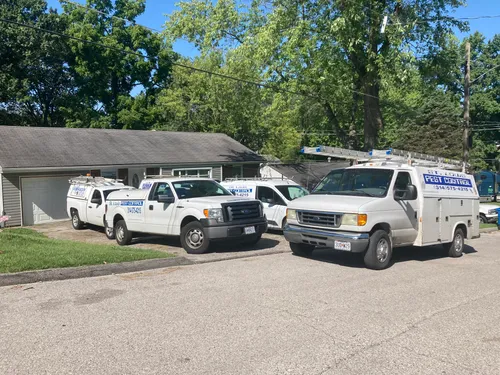
St Louis Pest Control provides pest control and wildlife removal services in St Louis, MO. They handle indoor and outdoor pests including bed bugs, ants, and cockroaches. The company also offers wildlife exclusion repairs to prevent pests from re-entering homes. Their certified technicians use chemicals designed to eliminate pests without damaging property. They follow up on bed bug treatments to ensure effectiveness and maintain communication with customers until the job is complete.
Wildlife Command Center - Kansas City
Kansas City, MO
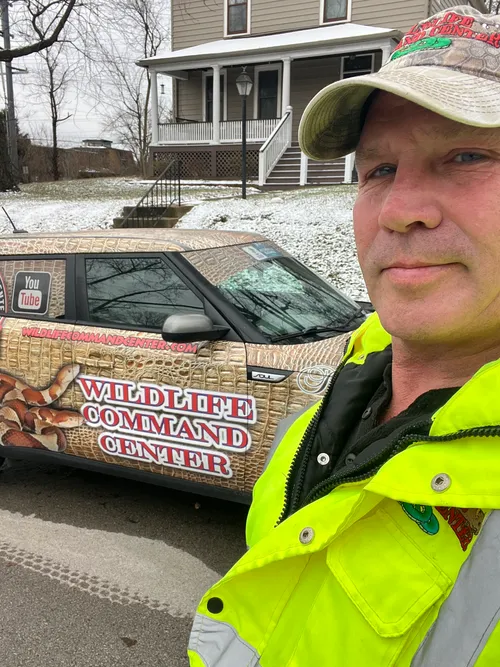
Wildlife Command Center - Kansas City provides rodent control and wildlife removal services in Kansas City, MO. The company handles a variety of animals including raccoons, squirrels, snakes, and birds such as owls and hawks. Their expertise includes safe trapping and removal techniques tailored to different wildlife species. The business is led by Michael Beran, who is actively involved in hands-on wildlife management and rescue.
Common Wildlife Issues in Jefferson City
Jefferson City's blend of urban spaces and proximity to natural habitats makes it a hotspot for various animals seeking food and shelter. Understanding which species are most likely to cause problems is the first step in managing them.
Mammals: The most frequent culprits for home intrusions are raccoons, squirrels, and bats. Raccoons are intelligent and dexterous, capable of prying open vents or loose siding to access attics, where they create dens and pose significant damage and health risks 1. Squirrels, particularly gray and fox squirrels, are agile chewers that can enlarge small gaps to enter soffits and attics, gnawing on electrical wires and structural wood. Bats, which are protected under Missouri law, often colonize in quiet attic spaces; their removal requires special care due to their protected status and associated health concerns like guano accumulation 1. Other common nuisance mammals include skunks, opossums, moles, and various rodents like mice and rats.
Birds: While many birds are welcome, species like Canada geese can become a significant nuisance in areas with ample grass and water, leading to property damage and unsanitary conditions 2. Birds may also nest in vents or chimneys, causing blockages and potential fire hazards.
What You Can Do: DIY Wildlife Control Strategies
For minor issues, homeowners in Jefferson City have several effective, legal options for wildlife control and exclusion. The Missouri Department of Conservation (MDC) provides clear guidelines for managing nuisance species on your property.
Habitat Modification and Exclusion: The most permanent solution is to make your property less attractive and accessible. This involves:
- Removing food sources: Secure trash cans with locking lids, bring in pet food at night, and clean up fallen fruit or bird seed.
- Eliminating water: Fix leaky faucets and ensure downspouts drain properly to remove standing water.
- Sealing entry points: Conduct a thorough inspection of your home's exterior. Look for gaps in the roofline, loose vents, and holes where utility lines enter. Use high-quality materials like hardware cloth, steel wool, or metal flashing to seal these potential entryways. This process, known as exclusion, is a critical step in preventing animals from getting inside in the first place.
Repellents and Frightening Devices: Commercial repellents (odor or taste-based) and devices that use motion-activated lights, sprinklers, or ultrasonic sounds can deter some animals. Their effectiveness varies by species and situation, and they often work best as part of a broader management plan 3.
Trapping (Proceed with Caution): Missouri residents may trap certain nuisance animals on their property. However, you must follow MDC regulations regarding trap types, placement, and legal seasons. It is highly recommended to consult MDC guidelines or contact them directly before attempting to trap any animal. Remember, you are responsible for humanely dispatching or relocating any trapped animal, and relocation is often illegal or impractical due to disease transmission and survival rates.
When to Call a Professional Wildlife Removal Service
While DIY methods work for prevention and minor issues, certain situations demand the expertise of a licensed wildlife control operator.
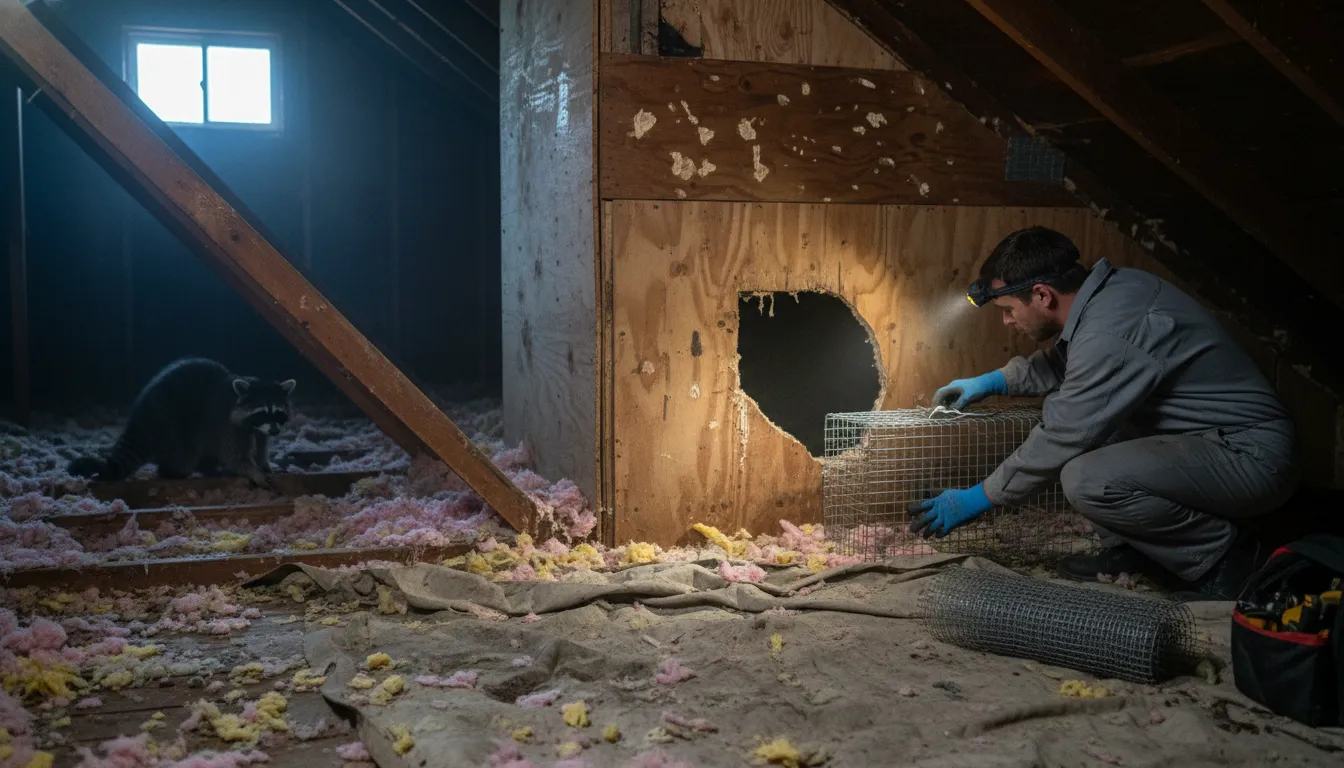
Complex Infestations: If you hear persistent noises in walls or ceilings, smell odors, or see signs of nesting (like shredded insulation), you likely have an established animal inside. Professional trappers have the tools and knowledge to safely remove the animals, including locating all entry points and ensuring young are not left behind.
Protected or Hazardous Species: Dealing with bats (which are federally protected), large raccoon families, or potentially rabid animals like skunks requires specific permits and safety protocols that professionals possess.
When Regulations Are Unclear: Missouri law has specific rules, such as the requirement to report the removal of certain species like raccoons to the MDC within 24 hours. Professionals handle this compliance for you.
Need for Permanent Solutions: A true fix involves not just removing the animal but also repairing the damage and sealing entry points to prevent recurrence. Professional services offer complete exclusion and repair work.
Understanding Local Resources: It's important to know who to call. Jefferson City Animal Control primarily handles domestic animals (stray dogs and cats) or dead animals on public property; they generally do not assist with wildlife inside homes or complex removal situations 4. For guidance on regulations or large-scale issues, the Missouri Department of Conservation (MDC) and USDA APHIS Wildlife Services (866-487-3297) are key state and federal resources.
Find the perfect wildlife removal companies for your needs
Get personalized recommendations and expert advice
The Professional Wildlife Removal Process
Hiring a professional ensures the job is done safely, humanely, and effectively. A reputable wildlife control service in Jefferson City will typically follow a multi-step process.
- Inspection and Assessment: The technician will perform a thorough inspection of your property's interior and exterior to identify the species, locate all entry points, and assess the extent of the damage and infestation 5.
- Humane Removal and Trapping: Using species-appropriate techniques and traps, the animals are removed from the structure. Professionals are trained in handling animals to minimize stress and risk 6.
- Clean-up and Sanitation: This crucial step involves removing contaminated insulation, droppings (guano), and nesting materials. Professionals use industrial-grade cleaners and disinfectants to eliminate health hazards and odors 7.
- Exclusion and Repair: All identified entry points are permanently sealed with durable materials to prevent re-entry. This may also involve installing one-way doors or other exclusion devices during the removal phase 8.
- Restoration: The final step is repairing any damage caused by the wildlife, such as chewed wires, torn ductwork, or damaged siding and insulation, restoring your home to its pre-infestation condition.
Understanding the Cost of Wildlife Control
The investment for professional wildlife removal in Jefferson City varies based on several factors, including the type of animal, the severity of the infestation, the accessibility of the nest, and the extent of repairs needed. It is a significant investment for a permanent solution 9 10.
- Simple removals (e.g., a single groundhog or opossum) may start in the lower hundreds of dollars.
- Moderate infestations (e.g., squirrels in an attic) often range higher due to the need for multiple traps, exclusion work, and clean-up.
- Complex jobs (e.g., a raccoon family in a hard-to-reach attic, or bat colony removal with full guano clean-up and exclusion) can cost over a thousand dollars 11 12.
Most reputable companies provide free, detailed inspections and quotes. When comparing estimates, ensure they include removal, clean-up/sanitation, exclusion repairs, and any necessary restoration work. The cheapest option may not address the root cause, leading to recurring problems and higher long-term costs.
Legal and Safety Considerations
Navigating wildlife laws is essential for both DIY efforts and when hiring a pro.
State Regulations (MDC): For many species, you may legally remove a nuisance animal on your property. However, specific rules apply. For example, if you shoot or trap a raccoon outside the normal hunting season, you are required to report the removal to the MDC within 24 hours and dispose of the carcass as directed 13 14. Always check the most current MDC Wildlife Control Guidelines before taking action 15.
Federal Laws: Migratory birds, their nests, and eggs are protected by federal law (Migratory Bird Treaty Act). You cannot disturb them without a federal permit. Endangered species are also fully protected. A licensed wildlife operator will understand these federal protections, particularly regarding birds and bats 16.
Safety First: Never attempt to handle a wild animal with your bare hands. Wildlife can carry diseases such as rabies, leptospirosis, and histoplasmosis (from bat guano). If you must dispose of a dead animal, wear heavy gloves and seal the carcass in plastic bags. When cleaning areas with droppings, wear an N95 respirator mask, goggles, and gloves to avoid inhaling spores or dust 17 18.
Frequently asked questions
Sources
Footnotes
-
Wildlife Removal in Mid-Missouri - Atkins Inc. - https://www.atkinsinc.com/residential-wildlife-removal ↩ ↩2
-
Nuisance & Problem Species | Missouri Department of Conservation - https://mdc.mo.gov/wildlife/nuisance-problem-species ↩
-
Solving Wildlife Damage Problems in Missouri | MU Extension - https://extension.missouri.edu/publications/g9425 ↩
-
Animal Control - Jefferson City - https://www.jeffersoncitymo.gov/government/animal_control/index.php ↩
-
Missouri Critter Control Offices - https://www.crittercontrol.com/office-finder/missouri/ ↩
-
Jefferson City Wildlife Control / Missouri Animal Removal - http://www.aaanimalcontrol.com/professional-trapper/city/MO-Jefferson-City.htm ↩
-
Kelly's Wildlife Control: Wildlife Removal in Mid Missouri - https://kellyswildlifecontrol.com/ ↩
-
Wildlife Control Methods | NWCTP - https://wildlifecontroltraining.com/training/wildlife-control-methods/ ↩
-
Prices for Jefferson City Wildlife Pest Control Animal Trapping - http://www.aaanimalcontrol.com/PROFESSIONAL-TRAPPER/prices/MO-Jefferson-City-prices.htm ↩
-
How Much Does Wildlife Control and Exclusion Cost? - https://www.terminix.com/wildlife-control/cost/ ↩
-
The Cost of Wildlife Removal: What You Need to Know - https://coastalwildlifeservices.com/cost-of-wildlife-removal/ ↩
-
How Much Does Wildlife Removal Cost? [2025 Data] - Angie's List - https://www.angi.com/articles/what-cost-animal-removal.htm ↩
-
Raccoon Control - Missouri Department of Conservation - https://mdc.mo.gov/wildlife/nuisance-problem-species/raccoon-control ↩
-
Nuisance Wildlife Control Operator Report | Missouri Department of ... - https://mdc.mo.gov/wildlife/nuisance-problem-species/nuisance-report ↩
-
Wildlife Control Guidelines | Missouri Department of Conservation - https://mdc.mo.gov/wildlife/nuisance-problem-species/wildlife-control-guidelines ↩
-
Solving Wildlife Damage Problems in Missouri - MU Extension - https://extension.missouri.edu/media/wysiwyg/Extensiondata/Pub/pdf/agguides/wildlife/g09425b.pdf ↩
-
Solving Wildlife Damage Problems in Missouri - MU Extension - https://extension.missouri.edu/publications/g9425 ↩
-
Jefferson City Wildlife Animal Control - Removal of - http://www.wildlifeanimalcontrol.com/Jefferson-City.html ↩