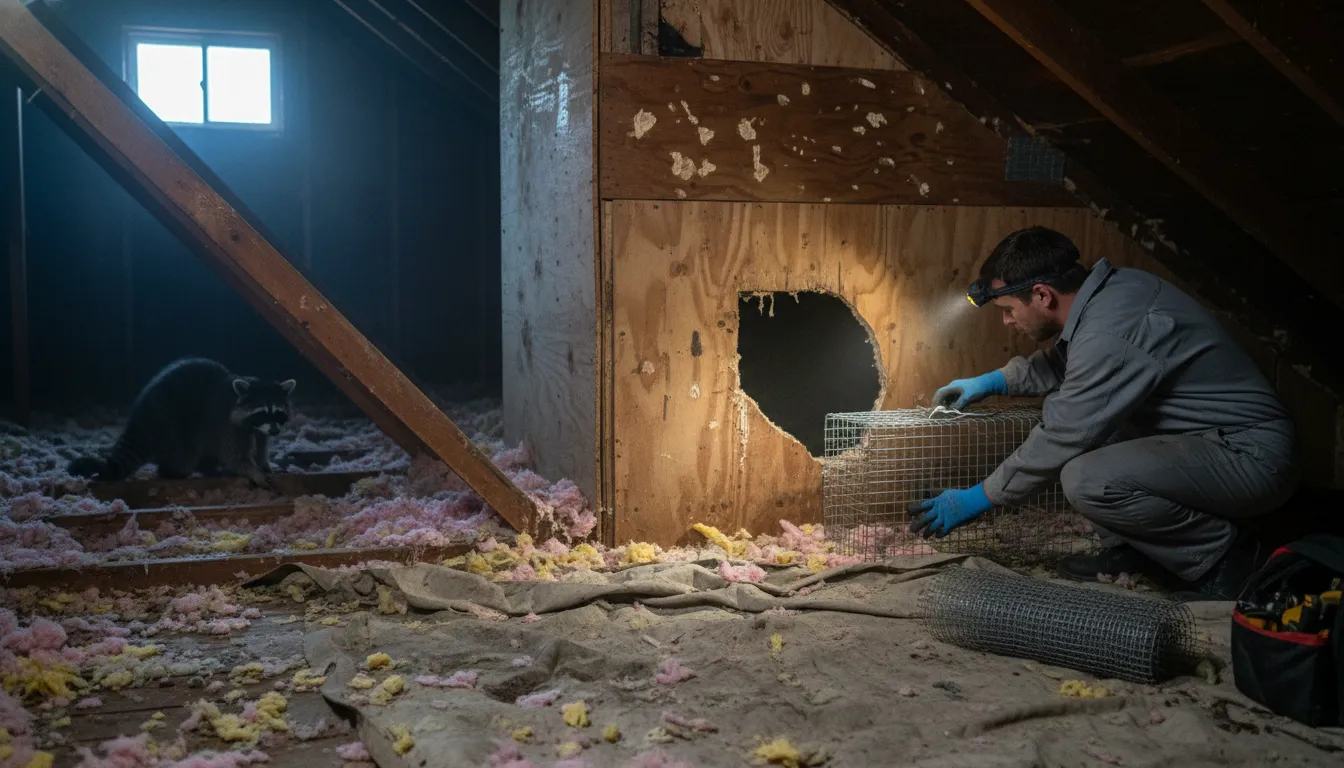
Find the Best Wildlife Removal Companies for Your Business
No obligation • Fast responses • Nationwide coverage

Why you can trust Pest Crews
Pest Crews is a leading U.S. resource for finding and evaluating residential and commercial pest control services. Our team researches providers, reviews treatment approaches, and organizes unbiased information to help you make informed decisions. Companies cannot pay to change our editorial content or influence how they appear.
Search providers near you
Top Wildlife Removal Companies in St Peters, Missouri Ranked
Dealing with uninvited wildlife on your property can be stressful and potentially hazardous. Wildlife removal is the specialized process of safely and humanely addressing conflicts with animals like raccoons, squirrels, and skunks that have become a nuisance or a threat to your home's safety. In St. Peters, understanding your options-from city-provided resources to professional animal control services-is key to resolving these issues effectively and legally. This guide will help you navigate the local regulations, practical steps, and available services for managing nuisance wildlife in our community.
STL Pest Control
2525 Hampton Ave, St. Louis, MO 63139
STL Pest Control is a family-owned pest control company serving St. Louis, MO, and the Greater St. Louis Metropolitan Area since 1989. They offer services for bed bug treatment, termite control, wildlife removal, and general pest management including cockroaches, rodents, and spiders. The company uses Integrated Pest Management (IPM), a sustainable and holistic approach that combines various methods to effectively manage pest populations while minimizing environmental impact. Owner Rick Isenmann leads the team and is the current president of the Greater St. Louis Pest Control Association.
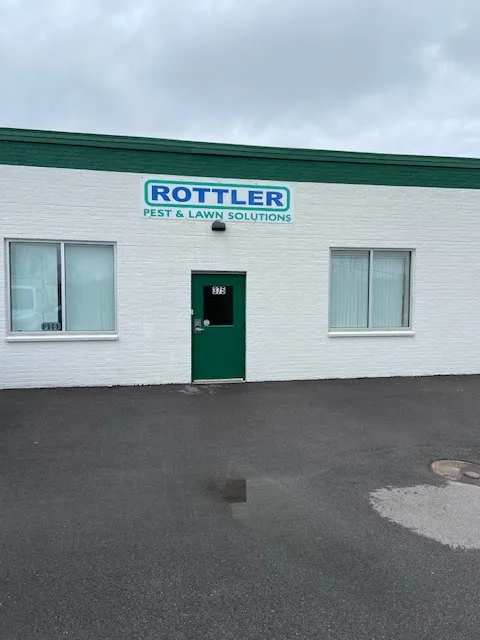
Rottler Pest Solutions
375 S Old Hwy 141, Fenton, MO 63026
Rottler Pest Solutions is a family-owned pest control company serving St Louis, MO, and the surrounding Midwest region since 1956. They provide residential and commercial pest management services, including bed bug treatment, ant control, rodent control, termite inspections, bird and wildlife removal, and commercial pest control. Their termite control offerings include advanced solutions like the Term-Alert™ system and the Sentricon® Termite Colony Elimination System, backed by a termite damage warranty. Rottler Pest Solutions operates 24/7 with same-day service availability and flexible scheduling to accommodate customer needs.
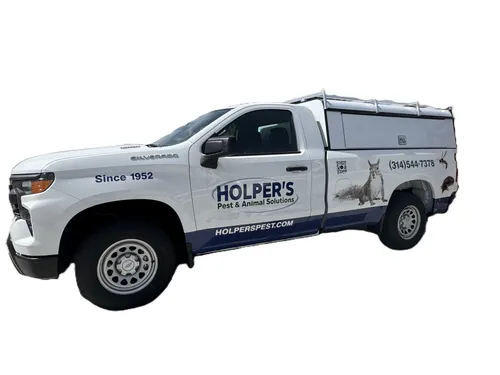
Holper's Pest & Animal Solutions STL
9223 Gravois Rd, St. Louis, MO 63123
Holper's Pest & Animal Solutions STL is a family-owned pest control company serving St. Louis, MO, and surrounding counties including Jefferson, St. Charles, and Franklin, as well as Southwest Missouri and Metro Illinois. They provide pest and wildlife removal services for both residential and commercial properties, focusing on thorough inspections and preventative treatments to eliminate infestations and block entry points. Established in 1952, Holper's has decades of experience and emphasizes personalized service tailored to each customer's needs. They offer same-day service to address urgent pest problems promptly.
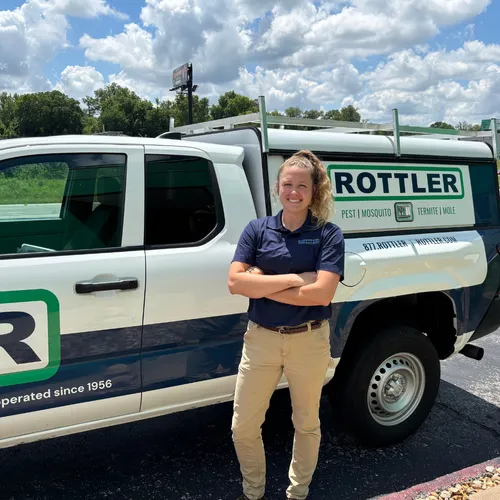
Rottler Pest Solutions
8625 St Charles Rock Rd, St. Louis, MO 63114
Rottler Pest Solutions is a pest control company based in St. Louis, MO, serving both residential and commercial clients. Established in 1956, the company offers a wide range of pest management services including bed bug treatment, rodent control, termite inspections and treatments, mosquito control, bird and wildlife removal, and commercial pest control. They use advanced, environmentally friendly products and provide year-round pest protection programs. Rottler Pest Solutions is known for its comprehensive termite solutions, including free inspections and a termite damage warranty, and offers 24-hour assistance with flexible scheduling to meet customer needs.
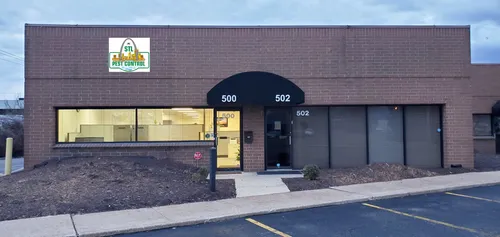
STL Pest Control
500 Rudder Rd, Fenton, MO 63026
STL Pest Control is a family-owned pest control company serving St. Louis, MO, and the Greater St. Louis Metropolitan Area since 1989. They offer services for bed bug treatment, termite inspections, wildlife removal, and general pest control including cockroach and rodent management. The company uses Integrated Pest Management (IPM), a sustainable and targeted approach that combines multiple methods to control pests effectively while minimizing environmental impact. Owner Rick Isenmann leads a team of licensed professionals and is active in the local pest control community.
Understanding Nuisance Wildlife in St. Peters
In Missouri, an animal is legally considered a "nuisance" when it causes property damage, poses a threat to human health or safety, or becomes a persistent annoyance. For St. Peters residents, the most frequent offenders are common urban-adapted species. Knowing which animals you're dealing with and the rules that govern them is the first step toward a solution.
Common Local Nuisance Species:
- Raccoons: Intelligent and dexterous, known for tipping over trash cans and seeking shelter in attics or chimneys.
- Squirrels: Can cause significant damage by chewing on electrical wires, siding, and roof vents to gain entry to attics.
- Opossums: Often attracted to pet food left outdoors and may take up residence under decks or sheds.
- Skunks: Notorious for their defensive spray, they dig for grubs in lawns and can den under structures.
State-Regulated and Protected Species: The Missouri Department of Conservation (MDC) manages wildlife populations and has specific regulations for certain animals. It is crucial to contact the MDC for situations involving:
- Deer and turkeys
- Black bears and mountain lions (rare but possible)
- Migratory birds, including geese (protected under federal law)
- Any endangered or threatened species 1
The City of St. Peters also has rules aimed at preventing conflicts, including an ordinance that prohibits the intentional feeding of wildlife, such as putting out bird feeders, as this can attract unwanted animals to your yard and your neighbors'.
Your First Steps: Prevention and DIY Management
Before a situation escalates, there are several effective, non-lethal strategies you can employ to make your property less inviting to wildlife. The MDC and St. Peters city officials emphasize prevention as the most effective long-term solution.
Habitat Modification and Exclusion:
- Remove Food Sources: Secure trash cans with tight-fitting lids or bungee cords. Never leave pet food outdoors overnight. As recommended, remove bird feeders if they are attracting raccoons, squirrels, or other pests 2.
- Seal Entry Points: Conduct a thorough inspection of your home's exterior. Look for loose vents, holes in soffits, gaps around utility lines, and broken screens. Seal these potential entryways with sturdy materials like hardware cloth, metal flashing, or concrete.
- Modify the Landscape: Keep tree branches trimmed back at least 6-8 feet from your roofline to prevent easy access for squirrels and raccoons. Clear away brush piles and woodpiles that can provide shelter for skunks and opossums.
Using City Resources: The St. Peters Trap Loan Program For common nuisance animals, the City of St. Peters offers a valuable resource to residents. If you have a valid Resident Privilege Card, you may borrow a live trap from City Hall for up to two weeks. It's important to contact Animal Control first to discuss your situation and ensure trapping is the appropriate course of action. If you capture an animal, you are required to check the trap frequently and report the capture to Animal Control, who will then collect the animal.
When and How to Seek Professional Wildlife Control
While DIY methods and city traps work for straightforward cases, many situations require the expertise of a professional wildlife removal service. These specialists have the training, equipment, and knowledge of state and local laws to handle complex or dangerous infestations safely and legally.
Signs You Need Professional Help:
- Animals are inside the living spaces of your home (walls, attic, basement).
- You hear persistent scratching, scurrying, or vocal noises, especially at night or in the early morning.
- You find droppings, nesting materials, or evidence of chewing on wires or wood.
- You suspect a mother with young is present, which requires careful relocation strategies.
- The animal involved is a state-regulated species like a bat colony or is acting aggressively.
- You've attempted exclusion but the animal keeps finding a way back in.
What Professional Services Include: A comprehensive wildlife control service does more than just trap the animal. A reputable provider will typically:
- Inspection: Identify the species, entry points, and the extent of the infestation.
- Humane Removal: Use appropriate, legal methods to remove the animals.
- Exclusion & Repair: Seal all entry points to prevent re-entry. This is the most critical step for a permanent solution.
- Cleanup & Sanitation: Safely remove contaminated insulation, droppings, and nesting materials, and apply disinfectants to mitigate health risks.
- Prevention Advice: Offer recommendations for ongoing property maintenance to avoid future problems.
Find the perfect wildlife removal companies for your needs
Get personalized recommendations and expert advice
Legal Guidelines and Reporting in Missouri
Missouri law provides some flexibility for property owners dealing with immediate damage. According to the MDC, you may shoot or trap most damage-causing wildlife on your property, even outside of hunting season, without a permit if the animal is in the act of causing damage or has recently caused damage. However, there are critical legal obligations:
- This does not apply to deer, turkeys, bears, migratory birds, or endangered species.
- You must report the taking of the animal to the MDC within 24 hours and follow their specific disposal instructions 3.
- Local firearm discharge ordinances (like those in St. Peters) still apply.
For all other situations, especially those involving regulated species or if you are unsure, always contact the authorities first:
- St. Peters Animal Control: Contact for assistance with the city trap program, to report a captured animal from a city trap, or for issues with common nuisance species like raccoons and squirrels.
- Missouri Department of Conservation (MDC): Contact for guidance on deer, bears, turkeys, geese, endangered species, or any state-regulated wildlife. They can provide technical advice or refer you to a licensed Nuisance Wildlife Control Operator 4 5.
Understanding Costs for Wildlife Removal
The cost for professional animal removal in St. Peters varies significantly based on the complexity of the job, the species involved, and the extent of repairs needed. Here is a general breakdown based on local service models:
- Small Jobs (e.g., removing a single opossum from a deck, yard trapping): Often start around $100+.
- Medium Jobs (e.g., removing squirrels from an attic, minor exclusion repairs): Typically range from $300+.
- Large/Complex Jobs (e.g., removing a raccoon family with deep attic infestation, major exclusion work, sanitization): Can be $500 or more, especially if multiple visits are required.
St. Peters residents have a potential advantage for common species: Utilizing the free city trap loan program for animals like raccoons or skunks can save on the initial removal cost. Professional services then become more valuable for the subsequent exclusion, repair, and cleanup work, or for situations where trapping is not advisable or legal 6 7.
Health, Safety, and Ethical Considerations
Wildlife conflicts aren't just about property damage; they involve real health and ethical concerns. Raccoons can carry rabies and roundworm, while rodent droppings can harbor dangerous pathogens like hantavirus. A professional understands these risks and uses proper personal protective equipment (PPE) during removal and cleanup.
Ethical wildlife control focuses on humane treatment and long-term coexistence. This means using humane traps when appropriate, relocating animals in accordance with state laws (which often have strict guidelines on relocation to prevent disease spread and ecological disruption), and prioritizing non-lethal exclusion methods. The goal is to solve the human-wildlife conflict, not to eliminate local wildlife populations, which play important roles in our ecosystem.
Frequently asked questions
Sources
Footnotes
-
Nuisance Wildlife Control Operator Report | Missouri Department of ... - https://mdc.mo.gov/wildlife/nuisance-problem-species/nuisance-report ↩
-
Make Your Home Less Appealing to Nuisance Animals - St. Peters - https://www.stpetersmo.net/DocumentCenter/View/400/Make-Your-Home-Less-Appealing-to-Nuisance-Animals-PDF ↩
-
Solving Wildlife Damage Problems in Missouri | MU Extension - https://extension.missouri.edu/publications/g9425 ↩
-
Wildlife Control Guidelines | Missouri Department of Conservation - https://mdc.mo.gov/wildlife/nuisance-problem-species/wildlife-control-guidelines ↩
-
Nuisance & Problem Species | Missouri Department of Conservation - https://mdc.mo.gov/wildlife/nuisance-problem-species ↩
-
Are you having trouble with nuisance wildlife? What is a ... - https://www.facebook.com/stpetersmohealth/posts/are-you-having-trouble-with-nuisance-wildlife-what-is-a-nuisance-an-animal-that-/617060717134135/ ↩
-
St Peters Wildlife Animal Control - Removal Company - http://www.wildlifeanimalcontrol.com/St-Peters.html ↩