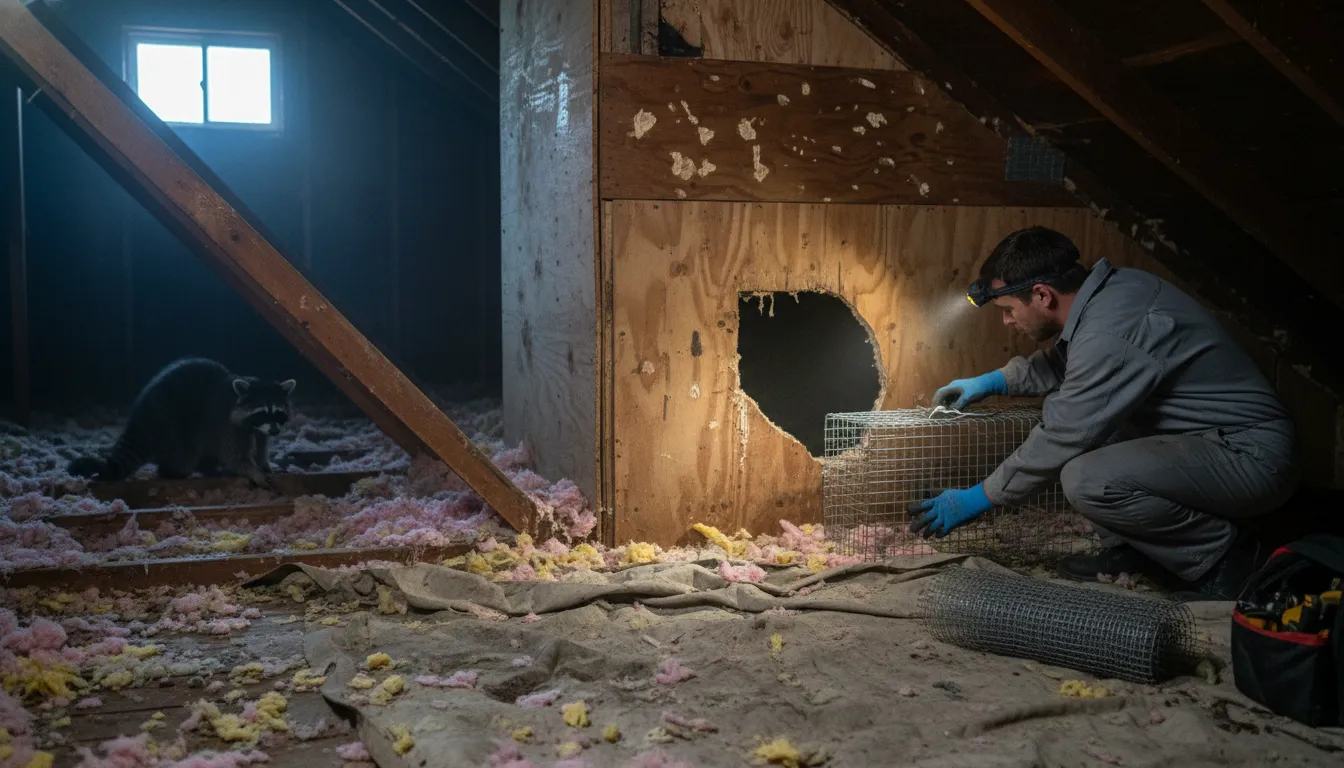
Find the Best Wildlife Removal Companies for Your Business
No obligation • Fast responses • Nationwide coverage

Why you can trust Pest Crews
Pest Crews is a leading U.S. resource for finding and evaluating residential and commercial pest control services. Our team researches providers, reviews treatment approaches, and organizes unbiased information to help you make informed decisions. Companies cannot pay to change our editorial content or influence how they appear.
Search providers near you
Top Wildlife Removal Companies in Evesham, New Jersey Ranked
Discovering an uninvited animal in your attic, under your deck, or burrowing in your yard can be unsettling. Wildlife removal is the professional service dedicated to safely and humanely resolving conflicts with nuisance animals, protecting both your property and the creatures involved. In Evesham, common visitors like raccoons, squirrels, and skunks require specific strategies that balance effective control with New Jersey's wildlife regulations. This guide explains the local wildlife issues, what you can and cannot do, and how to connect with licensed specialists who can provide inspections, humane exclusion, and removal services.
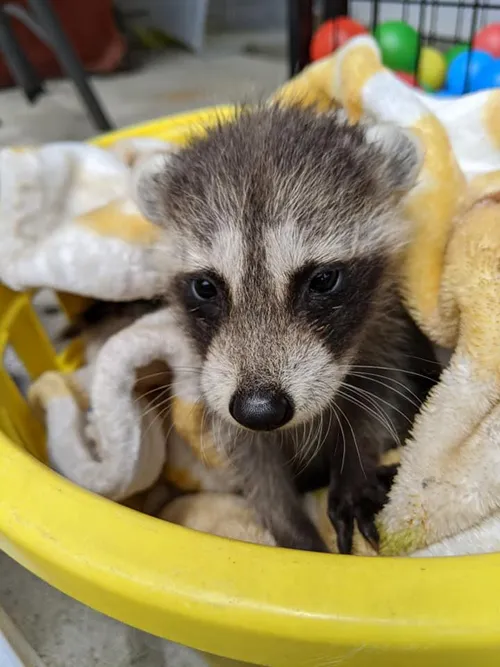
UFO Nuisance Wildlife Control, LLC
307 Hawkin Rd, Southampton Township, NJ 08088
UFO Nuisance Wildlife Control, LLC is a wildlife removal company serving Philadelphia, PA. They focus on humane capture and relocation methods to protect both animals and people. Their services include tailored inspections and exclusion work that adapt to seasonal changes in animal behavior to keep homes secure year-round. Owned by Jesse Miller and Joshua Chambers, the company combines experience in home repairs, animal handling, and volunteer work at local sanctuaries. Their team is available throughout the year to assist with wildlife management and removal needs.

Dynamite Pest Control
279 S 52nd St, Philadelphia, PA 19139
Dynamite Pest Control is a pest control company based in Philadelphia, PA, offering a wide range of extermination services including bed bug, cockroach, ant, rodent, termite, mosquito, bee and wasp removal, bird and wildlife control, and commercial pest management. They provide professional-grade do-it-yourself pest control products that are child-proof and pet-friendly. With over 50 years of experience since 1969, Dynamite Pest Control employs certified and background-checked technicians to ensure safe and effective pest control solutions. The company serves residential and commercial clients in Philadelphia and surrounding areas.
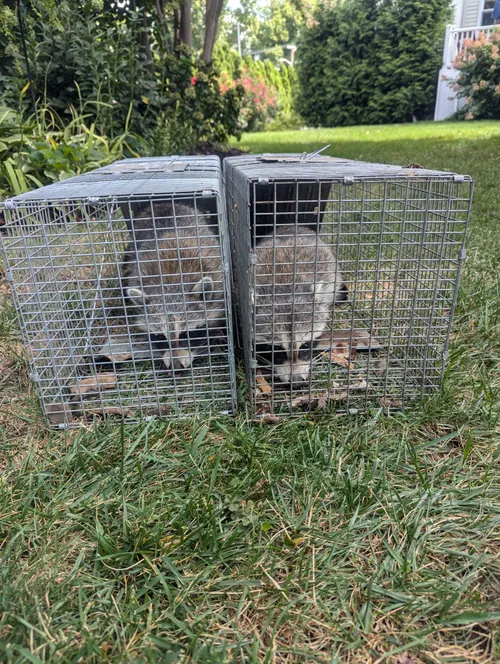
ProTrappers LLC
18 Warren Way, Burlington, NJ 08016
ProTrappers LLC is a wildlife removal and bird pigeon control company serving Philadelphia, PA. They specialize in removing nuisance animals from homes and businesses, including birds in vents and animals living under sheds or decks. Their process includes inspecting properties to identify problem animals and entry points, removing the animals, and sealing entry points to prevent future invasions. ProTrappers LLC focuses on making homes safe by addressing issues such as potential fire hazards from chewed wires and health risks from parasites. They have helped numerous families secure their homes from wildlife intrusions.
Guardian Preventative Termite & Pest Control
111 Palmwood Ave, Cherry Hill Township, NJ 08003
Guardian Preventative Termite & Pest Control is a locally owned pest management company serving Philadelphia, PA, and Southern New Jersey. They offer a range of pest control services including termite inspections, ant control, wildlife removal, and general pest management for both residential and commercial properties. Guardian also provides structural damage repair related to termite and wood-destroying insect damage, along with additional services such as gutter cleaning and power washing. Their integrated pest management approach uses mechanical control measures to address pest problems effectively.
PJ Mac Pest Control
905 W Sproul Rd #301, Springfield, PA 19064
PJ Mac Pest Control is a pest control company based near Philadelphia, PA, serving Springfield and surrounding areas. They offer a wide range of pest removal services including bed bug treatment, cockroach and ant control, rodent management, termite inspections, mosquito control, bee and wasp removal, bird and pigeon control, and wildlife removal. Their technicians conduct thorough inspections and use eco-friendly solutions to address various pest issues. PJ Mac Pest Control emphasizes reliable technicians and quality control in their service approach.
Common Nuisance Wildlife in Evesham
Evesham's mix of residential neighborhoods, wooded areas, and open spaces creates ideal habitats for several species that can become problematic for homeowners. Knowing which animal you're dealing with is the first step toward a solution.
Mammals:
- Raccoons: These intelligent foragers are notorious for rummaging through garbage and gaining access to attics or chimneys to create dens. They are also primary rabies carriers in the state.
- Squirrels: Both gray and flying squirrels commonly invade attics and eaves, where they chew on wires, insulation, and wood, creating fire hazards and structural damage.
- Skunks: Often found nesting under porches, decks, or sheds, skunks are drawn by shelter and food sources. Their defensive spray is a well-known nuisance, and they are another significant rabies vector.
- Groundhogs (Woodchucks): Their extensive burrow systems can undermine foundations, sidewalks, and retaining walls, causing serious property damage.
- Coyotes & Foxes: While more often seen in open spaces, they can prey on small pets and are attracted by unsecured food sources.
- Bats: Small colonies may roost in attics. While beneficial for insect control, their droppings (guano) pose health risks, and they are protected by specific regulations.
- Opossums: Generally less destructive, they may raid pet food or compost and take up residence under low structures.
Birds:
- Canada Geese: Large flocks can create problems on lawns and near ponds through aggressive behavior and significant accumulations of droppings 1.
What You Can and Cannot Do: NJ Laws & DIY Limits
New Jersey has clear regulations governing human-wildlife interactions to ensure humane treatment and public safety. Property owners have some rights to protect their homes but must operate within legal boundaries 2.
Allowed & Recommended Actions:
- Habitat Modification: This is the most effective long-term strategy. It involves sealing potential entry points with durable materials like hardware cloth or steel wool, repairing damaged vents, and installing chimney caps.
- Remove Attractants: Secure garbage cans with locking lids, bring in pet food overnight, clean up fallen birdseed, and manage compost piles properly.
- Use Deterrents: Motion-activated sprinklers, ultrasonic repellers, and visual scare devices can discourage some animals from settling in your yard.
Not Allowed or Highly Risky:
- Trapping and Relocating Without a License: In New Jersey, it is generally illegal for unlicensed individuals to trap and relocate most wildlife. Relocation can spread disease, doom the animal to starvation in an unfamiliar territory, and is strictly regulated by the NJDEP.
- Handling Animals: Never attempt to handle a wild animal, especially one that appears sick, injured, or aggressive. Raccoons, skunks, foxes, and bats are rabies vector species.
- Disturbing Active Nests: If young are present, separating them from adults is inhumane and often illegal. Professionals know how to handle these situations, sometimes implementing exclusion techniques that allow the mother to relocate her young naturally.
When to Call Animal Control vs. a Wildlife Professional
Knowing who to contact saves time and ensures the situation is handled by the appropriate authority.
Call Evesham Township Animal Control or your local police non-emergency line if:
- An animal is visibly sick, injured, or acting aggressively.
- A wild animal has bitten or scratched a person or pet.
- There is an immediate threat to human safety (e.g., a coyote in a schoolyard, a raccoon wandering in daylight and appearing disoriented).
Municipal animal control officers typically handle dangerous or sick animals and domestic stray issues. However, for most persistent nuisance wildlife problems-like animals in an attic, chronic digging, or burrowing-they will often refer homeowners to the New Jersey Department of Environmental Protection (NJDEP) or recommend licensed wildlife control professionals 3 4.
Contact a Licensed Wildlife Removal Professional for:
- An animal is living inside your home (attic, walls, chimney, under porch).
- You have a recurring issue despite your own deterrent efforts.
- You need entry points identified and sealed (exclusion).
- You require safe, legal, and humane trapping and removal.
- The situation involves protected species like bats.
- Cleanup of droppings or nesting materials is needed for health reasons.
Find the perfect wildlife removal companies for your needs
Get personalized recommendations and expert advice
Services Provided by Wildlife Control Experts
A comprehensive approach to wildlife management involves more than just removing an animal. Reputable professionals offer a full suite of services designed to solve the immediate problem and prevent future ones.
- Inspection & Assessment: A thorough inspection of your property's interior and exterior to identify the species, entry points, damage, and attractants.
- Humane Exclusion: The cornerstone of ethical wildlife control. This involves permanently sealing all potential entry points with professional-grade materials after ensuring no animals are trapped inside. This is the most effective long-term solution 5.
- Trapping & Removal: When necessary, professionals use regulated, species-appropriate traps. They follow NJDEP guidelines for humane handling and legal relocation or disposition of the animal.
- Cleanup & Sanitation: Removing hazardous waste like droppings, urine, and nesting materials. They may also apply antimicrobial treatments to mitigate health risks from parasites and diseases.
- Repair & Restoration: Repairing damage caused by wildlife, such as chewed wires, torn insulation, damaged soffits, or dug-up lawns.
- Preventive Advice: Providing recommendations for ongoing habitat modification to make your property less attractive to wildlife in the future.
Understanding the Cost of Wildlife Removal in Evesham
The cost for animal removal and exclusion services varies based on the species, the extent of the infestation, and the complexity of the work required. Simple jobs may start lower, but for a complete service-including inspection, removal, exclusion, and basic cleanup-homeowners should generally expect to invest several hundred dollars.
- Squirrel or Raccoon Removal & Exclusion: For a standard attic infestation with a few entry points, costs often range from $200 to $500 or more 6.
- Bat Exclusion: This is typically more complex and costly due to the need for specialized one-way exits and precise sealing of very small gaps. Prices can range from $500 to $1,500+ depending on the size of the colony and the structure.
- Groundhog or Skunk Removal: Trapping and exclusion for burrowing animals might be less than for attic invaders, but costs increase if foundation repairs are needed.
- Emergency or After-Hours Service: Most companies charge a premium for services required outside of normal business hours.
It's important to get detailed estimates from local providers. Companies serving the Evesham area may include Conscious Critter Removal, Critter Control, DelVal Wildlife, and others, all of whom can provide specific quotes based on an on-site evaluation 7 8.
Prioritizing Prevention and Professional Help
The most effective and cost-efficient strategy for dealing with wildlife is to prevent conflicts before they start. Conduct seasonal checks of your home's exterior, seal cracks and holes, and maintain your yard to reduce shelter and food. However, once wildlife has moved in, the safest and most legally compliant course of action is to hire a professional. They have the expertise, equipment, and licensing to resolve the issue humanely and permanently, ensuring the safety of your family, your pets, and the animals themselves 9 10.
Frequently asked questions
Sources
Footnotes
-
List Of Nuisance Animals And Their Wildlife Management | NJ Pest Control - https://4njpest.com/list-of-nuisance-animals-and-their-wildlife-management/ ↩
-
Wildlife Protection Laws and Removal - NY NJ Wild Life ... - https://nynjwildliferemoval.com/wildlife-protection-laws-and-removal/ ↩
-
I have nuisance wildlife in my home/yard. What should I do? - https://www.ewingnj.org/documents/files/file/Health/Animal%20Control/Nuisance%20wildlife.pdf ↩
-
Municipal Animal Control in NJ-Best Practices - http://www.njcacoa.org/Municipal_Animal_Control_in_NJ_Best_Practices.html ↩
-
Wildlife Control - MMPC - https://mandmpestcontrol.com/services/wildlife-control/ ↩
-
The Cost of Wildlife Removal: What You Need to Know - https://coastalwildlifeservices.com/cost-of-wildlife-removal/ ↩
-
Critter Control in New Jersey - Wildlife Removal & Animal Control - https://www.crittercontrol.com/office-finder/new-jersey/ ↩
-
THE BEST 10 WILDLIFE CONTROL near EVESHAM, NJ - Yelp - https://m.yelp.com/search?cflt=wildlifecontrol&find_loc=Evesham%2C+NJ ↩
-
NJ Wildlife Relocation Policy - NJ.gov - https://www.nj.gov/dep/fgw/pdf/relocation_policy.pdf ↩
-
Nuisance Wildlife Removal & Control Specialists | NJ Pest - https://4njpest.com/nuisance-wildlife-removal-control-specialists/ ↩