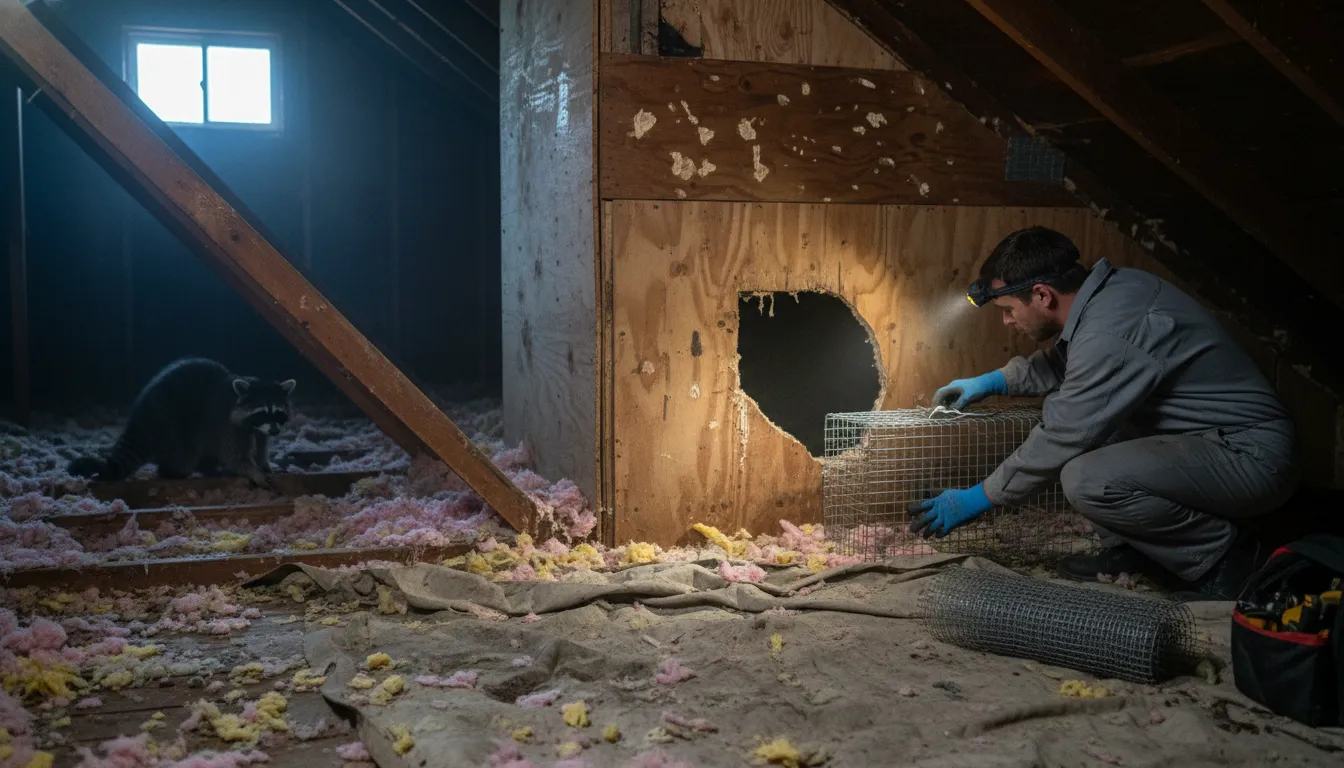
Find the Best Wildlife Removal Companies for Your Business
No obligation • Fast responses • Nationwide coverage

Why you can trust Pest Crews
Pest Crews is a leading U.S. resource for finding and evaluating residential and commercial pest control services. Our team researches providers, reviews treatment approaches, and organizes unbiased information to help you make informed decisions. Companies cannot pay to change our editorial content or influence how they appear.
Search providers near you
Top Wildlife Removal Companies in Franklin, New Jersey Ranked
Discovering an uninvited animal in your attic, under your deck, or rummaging through your trash can be unsettling. Wildlife removal in New Jersey involves the safe, legal, and humane management of nuisance animals that have entered human spaces. This service is crucial not only for protecting your property from damage but also for ensuring the health and safety of your family, as wild animals can carry diseases and create hazardous conditions. Whether you're dealing with a raccoon family in the chimney or groundhogs undermining your shed, understanding your options and local regulations is the first step to resolving the issue. This guide will help you navigate the process, from identifying common pests to knowing when to call a professional.
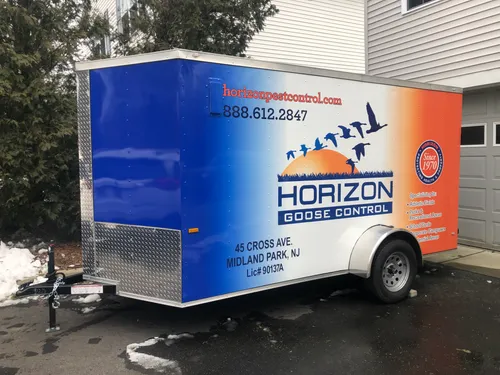
Horizon Pest Control
45 Cross Ave, Midland Park, NJ 07432
Horizon Pest Control is a family-owned pest control company serving New York, NY, and New Jersey. Established in 1970, they provide residential and commercial pest management services including bed bug treatment, ant control, rodent removal, termite inspections, mosquito control, and wildlife removal. Their licensed technicians use advanced, EPA-approved products to ensure safe and effective pest control. Horizon Pest Control offers comprehensive protection plans covering over 40 common pests and guarantees follow-up service if pests return. They serve multiple counties in New Jersey and New York, including Bronx, Manhattan, Brooklyn, and Queens.
New Day Pest Control
5402 Promenade Blvd, Fair Lawn, NJ 07410
New Day Pest Control is a locally owned pest control company based near New York, NY, serving Bergen County and surrounding areas in North Jersey. They offer a range of pest management services including rodent control, wildlife removal, and commercial pest control, using environmentally friendly and pet-safe methods. Their technicians are licensed and experienced, providing exclusion and prevention services along with emergency and same-day options.
Speights Pest Management
Yonkers, NY
Speights Pest Management provides pest control services in Yonkers, NY, specializing in the removal of insects, rodents, and small mammals. The company serves both residential and commercial properties, using licensed methods such as live traps for wildlife relocation, snap traps for rodents, and insecticides for bugs. They also offer mosquito control and eco-friendly treatment options. Speights Pest Management is locally owned and operated, fully licensed and insured, and serves the Yonkers area with a focus on effective pest management.
Viking Pest Control
585 Winters Ave, Paramus, NJ 07652
Viking Pest Control is a pest management company serving New York, NY, with a focus on controlling a wide range of pests including bed bugs, rodents, termites, mosquitoes, and wildlife. They provide year-round pest control services tailored to the local climate, addressing both indoor and outdoor pest issues. Viking Pest Control offers specialized capabilities such as wood destroying insect reports (WDIR) and comprehensive treatments to protect homes and businesses from structural damage and health risks associated with pests.
ALCO Animal & Pest Control
11 Red Maple Ave, Bloomfield, NJ 07003
ALCO Animal & Pest Control is a pest and animal control company serving New York, NY, and nearby areas in New Jersey. They offer a wide range of services including removal of squirrels, raccoons, mice, bees, and other pests, as well as commercial pest control. Their approach includes humane removal methods, releasing captured animals back into the wild away from homes. ALCO has many years of experience providing pest control solutions for both residential and commercial properties. They also provide same-day service for urgent pest and animal removal needs.
Common Nuisance Wildlife in New Jersey
New Jersey's diverse landscapes, from dense forests to suburban neighborhoods, provide ideal habitats for a variety of wildlife. When these animals seek food, shelter, or nesting sites, they often come into conflict with homeowners. Knowing which species are most likely to cause problems can help with identification and response.
- Raccoons: Intelligent and dexterous, raccoons are notorious for tipping over garbage cans, raiding pet food, and taking up residence in attics, chimneys, and crawl spaces. They can cause significant structural damage and pose a rabies risk.
- Squirrels: Both gray and flying squirrels commonly enter homes through small gaps in rooflines or vents. Once inside, they can chew on electrical wiring (a serious fire hazard), insulation, and wooden beams.
- Skunks: Known for their potent defensive spray, skunks often burrow under porches, decks, and sheds. The primary concerns are the lingering odor and the potential for them to dig up lawns in search of grubs.
- Groundhogs (Woodchucks): These large rodents are powerful diggers. Their extensive burrow systems can undermine foundations, sidewalks, and retaining walls, leading to costly structural damage.
- Opossums: Generally less destructive, opossums are scavengers that may take shelter under decks or in low crawl spaces. They can help control ticks and other pests but may still be considered a nuisance.
- Bats: Several bat species in New Jersey are protected due to their ecological role and declining populations. A colony in an attic requires careful, legal handling by a licensed professional, as they cannot be disturbed during maternity season (typically May-August) 1.
- Coyotes & Foxes: While less likely to enter homes, these predators can threaten small pets and livestock. They are often drawn to neighborhoods by accessible food sources like unsecured trash or pet food left outdoors.
New Jersey's Wildlife Regulations: What Homeowners Need to Know
Before taking action, it's essential to understand the legal framework governing wildlife control in the state. New Jersey has specific rules designed to balance humane treatment with effective nuisance control.
For Property Owners: Homeowners and businesses have the right to manage nuisance wildlife causing damage to their property. The New Jersey Division of Fish & Wildlife encourages habitat modification and exclusion as the first and most effective line of defense. This means making your property less attractive by securing food sources and sealing potential entry points.
Key Rules on Relocation and Euthanasia:
- Relocation: If you trap an animal, you cannot simply release it in a park or wooded area. State policy requires that young animals be located and released with their adults. If relocation is attempted, animals must be released on suitable habitat within the same municipality or adjacent township, provided you have the landowner's permission. For sick, injured, or orphaned animals, you must contact a licensed wildlife rehabilitator.
- Euthanasia: This is considered a last resort if relocation fails or is not feasible, and it must be performed humanely2.
Permit Requirements:
- Possession: A permit is generally required to possess any wild animal in New Jersey. This includes common nuisance species like raccoons. It is illegal to keep them as pets without proper authorization.
- Protected Species: Endangered and threatened species, such as certain bats and bobcats, are strictly protected and require special permits for any interaction.
- Exotic Animals: Owning non-indigenous animals (e.g., hedgehogs, certain snakes like boa constrictors) also requires a Captive Game Species permit from the NJDEP3 4.
Given these complexities, many residents find that hiring a licensed Wildlife Control Operator (WCO) is the most practical and legally compliant solution for anything beyond simple prevention.
Find the perfect wildlife removal companies for your needs
Get personalized recommendations and expert advice
The Wildlife Removal Process: Assessment to Exclusion
A professional and effective wildlife removal job is more than just trapping an animal; it's a multi-step process focused on long-term resolution.
- Inspection and Assessment: A thorough inspection is the critical first step. A trained professional will identify the species involved, locate all entry and exit points, assess the extent of the infestation, and look for damage. This service typically costs between $100 and $250+.
- Humane Removal: The appropriate removal method is chosen based on the species and situation. This may involve live trapping, one-way exclusion doors, or hands-on removal for young or trapped animals. Removal and relocation fees can range from $150 to $400+ per animal, often including an initial setup fee.
- Clean-up and Sanitation: After removal, the affected area must be cleaned. Droppings, urine, and nesting materials can harbor parasites and pathogens like histoplasmosis (from bat guano) or leptospirosis. Professional decontamination is highly recommended for health safety.
- Exclusion and Repair: This is the most important step to prevent recurrence. All identified entry points are permanently sealed with durable materials like steel mesh, hardware cloth, or chimney caps. Exclusion work varies in complexity and cost, generally ranging from $200 to $600+. For specialized jobs like bat exclusion or bird proofing, costs can be higher, from $400 to $1,000+.
- Restoration: Finally, any damage caused by the animals-such as chewed wires, torn insulation, or soiled ductwork-is repaired to restore the safety and integrity of your home.
Cost Factors for Wildlife Control in New Jersey
The total cost for wildlife removal is not a flat fee and depends on several variables. Understanding these can help you interpret estimates from professionals.
- Type of Animal: Larger animals or those requiring specialized techniques (like bats or birds) are more expensive to remove than a squirrel or mouse.
- Extent of Infestation: A single animal is less costly to remove than an entire family or colony.
- Location of the Problem: Animals in hard-to-reach areas like high attics, inside walls, or under concrete slabs require more labor and time.
- Amount of Damage: Significant damage requiring repair (e.g., replacing insulation, repairing chewed electrical lines) will add to the overall cost.
- Service Provider: Prices can vary between companies based on experience, licensing, insurance, and the comprehensiveness of their service (e.g., whether they include clean-up and minor repairs).
As a general guide, homeowners in New Jersey can expect total costs for a complete wildlife removal job-including inspection, removal, exclusion, and basic clean-up-to often fall between $200 and $500+, with more complex situations exceeding this range5 6.
DIY Prevention: Making Your Property Less Inviting
The best wildlife control is prevention. By proactively managing your property, you can avoid most conflicts.
- Secure Food Sources: Use locking lids on garbage cans, store pet food indoors, and clean barbecue grills after use. Consider bringing bird feeders in at night.
- Seal Entry Points: Conduct seasonal inspections of your home's exterior. Seal cracks in the foundation, install chimney caps, and cover attic vents with sturdy, animal-proof screening.
- Modify Habitat: Keep tree branches trimmed back from your roof. Store firewood away from the house and elevated off the ground. Fill in or fence off areas under decks and porches.
- Eliminate Water: Fix leaky outdoor faucets and ensure downspouts direct water away from the foundation to eliminate drinking sources.
When to Call a Professional Wildlife Control Operator
While some minor issues can be handled with DIY exclusion, there are clear signs that it's time to call a licensed professional:
- You hear persistent scratching, scurrying, or vocal noises in walls, ceilings, or chimneys.
- You see signs of damage like chewed wood, torn insulation, or dug-up landscaping.
- You notice a strong, musky odor, which can indicate an animal has died inside a wall or attic.
- You encounter a wild animal inside your living space.
- You are dealing with a protected species (like bats) or an animal that could be rabid (like a raccoon acting strangely).
- DIY trapping efforts have been unsuccessful.
A licensed WCO has the expertise, tools, and legal knowledge to resolve the situation safely, humanely, and in full compliance with New Jersey state regulations 7.
Frequently asked questions
Sources
Footnotes
-
New Jersey Chapter of NWCOA - https://njnwcoa.com/members/NJ_Nuisance_Wildlife_Regulations.pdf ↩
-
NJ Wildlife Relocation Policy - NJ.gov - https://www.nj.gov/dep/fgw/pdf/relocation_policy.pdf ↩
-
Fish & Wildlife | Captive Game Species Permit FAQs - NJDEP - https://dep.nj.gov/njfw/wildlife/captive-game-species-permit-faqs/ ↩
-
NJ exotic animals: Raccoons, emus and more are legal to own here - https://www.courierpostonline.com/story/news/local/south-jersey/2024/08/19/exotic-animals-legal-new-jersey/74828332007/ ↩
-
Need Wildlife Help? New Jersey Nuisance Wildlife Animals - https://4njpest.com/help-new-jersey-nuisance-wildlife-animals/ ↩
-
How Much Does Animal & Wildlife Removal Cost? (2025) - https://homeguide.com/costs/animal-and-wildlife-removal-costs ↩
-
Wildlife Control - MMPC - https://mandmpestcontrol.com/services/wildlife-control/ ↩