Find the Best Wildlife Removal Companies for Your Business
No obligation • Fast responses • Nationwide coverage

Why you can trust Pest Crews
Pest Crews is a leading U.S. resource for finding and evaluating residential and commercial pest control services. Our team researches providers, reviews treatment approaches, and organizes unbiased information to help you make informed decisions. Companies cannot pay to change our editorial content or influence how they appear.
Search providers near you
Top Wildlife Removal Companies in Gloucester, New Jersey Ranked
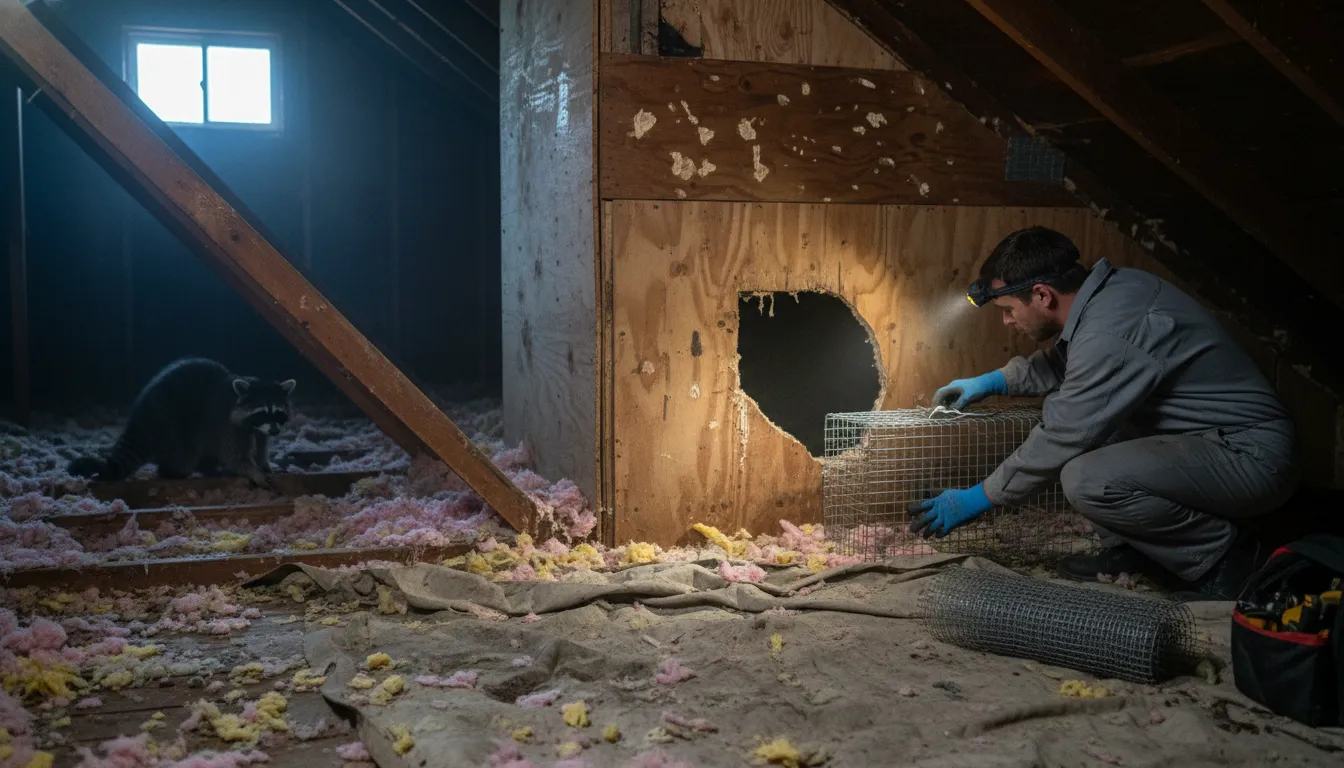
Living in Gloucester County means sharing our beautiful environment with a variety of native wildlife. While this is often a delight, it can become a significant problem when animals like squirrels, raccoons, or skunks decide your attic, walls, or yard is their new home. Professional wildlife removal and animal control services are essential for safely and humanely resolving these conflicts, protecting your property from damage, and ensuring the health and safety of your family. This guide will help you understand the local wildlife issues, your options for resolution, and how to connect with qualified experts in the Gloucester area who specialize in humane exclusion and nuisance wildlife management.
UFO Nuisance Wildlife Control, LLC
307 Hawkin Rd, Southampton Township, NJ 08088
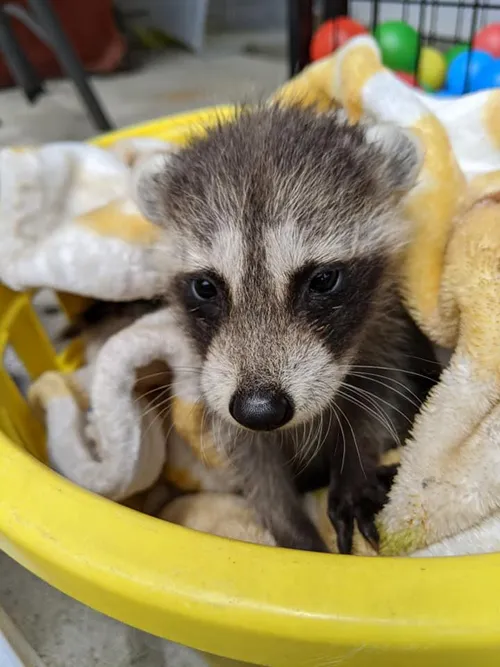
UFO Nuisance Wildlife Control, LLC is a wildlife removal company serving Philadelphia, PA. They focus on humane capture and relocation methods to protect both animals and people. Their services include tailored inspections and exclusion work that adapt to seasonal changes in animal behavior to keep homes secure year-round. Owned by Jesse Miller and Joshua Chambers, the company combines experience in home repairs, animal handling, and volunteer work at local sanctuaries. Their team is available throughout the year to assist with wildlife management and removal needs.

Dynamite Pest Control
279 S 52nd St, Philadelphia, PA 19139
Dynamite Pest Control is a pest control company based in Philadelphia, PA, offering a wide range of extermination services including bed bug, cockroach, ant, rodent, termite, mosquito, bee and wasp removal, bird and wildlife control, and commercial pest management. They provide professional-grade do-it-yourself pest control products that are child-proof and pet-friendly. With over 50 years of experience since 1969, Dynamite Pest Control employs certified and background-checked technicians to ensure safe and effective pest control solutions. The company serves residential and commercial clients in Philadelphia and surrounding areas.
ProTrappers LLC
18 Warren Way, Burlington, NJ 08016
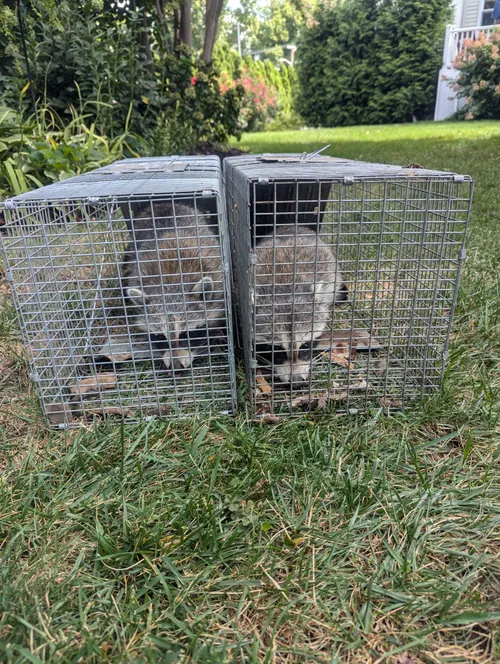
ProTrappers LLC is a wildlife removal and bird pigeon control company serving Philadelphia, PA. They specialize in removing nuisance animals from homes and businesses, including birds in vents and animals living under sheds or decks. Their process includes inspecting properties to identify problem animals and entry points, removing the animals, and sealing entry points to prevent future invasions. ProTrappers LLC focuses on making homes safe by addressing issues such as potential fire hazards from chewed wires and health risks from parasites. They have helped numerous families secure their homes from wildlife intrusions.
Guardian Preventative Termite & Pest Control
111 Palmwood Ave, Cherry Hill Township, NJ 08003
Guardian Preventative Termite & Pest Control is a locally owned pest management company serving Philadelphia, PA, and Southern New Jersey. They offer a range of pest control services including termite inspections, ant control, wildlife removal, and general pest management for both residential and commercial properties. Guardian also provides structural damage repair related to termite and wood-destroying insect damage, along with additional services such as gutter cleaning and power washing. Their integrated pest management approach uses mechanical control measures to address pest problems effectively.
Prodigy Pest Solutions
Philadelphia, PA
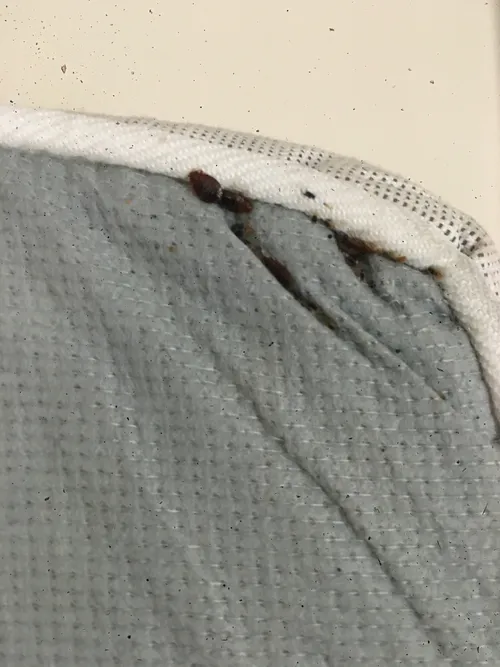
Prodigy Pest Solutions is a pest control company based in Philadelphia, PA, offering services for both residential and commercial properties. They specialize in treating bed bugs, cockroaches, ants, mice, wildlife, and other pests, with a focus on chemical-free bed bug elimination using heat treatments that are safe for children and pets. The company also provides pest-infected furniture removal and maintains discreet service with unmarked vehicles. Recognized by Philadelphia Magazine as the best bed bug removal service, Prodigy Pest Solutions is a member of several professional pest management associations.
Common Nuisance Wildlife in Gloucester
Gloucester County is home to a diverse array of mammals and birds that can become problematic for homeowners. Knowing which species you're dealing with is the first step toward an effective solution.
- Mammals: The most frequent culprits include squirrels, raccoons, skunks, opossums, foxes, coyotes, and woodchucks (groundhogs). These animals often seek shelter in attics, crawl spaces, under decks, and in chimneys, especially during breeding seasons or colder months 1.
- Birds: Species such as crows, grackles, and blackbirds can create noise and mess issues. It's important to note that specific state and federal regulations apply to bird management, making professional guidance crucial.
- Bats: Bats are a special concern. While they are beneficial for insect control, a colony in your attic poses health risks. If a bat is found in a living area, it is considered an immediate public health threat, and contacting local Animal Control is advised.
Why Professional Wildlife Control is Necessary
Attempting to handle a wildlife intrusion on your own can be ineffective, dangerous, and often illegal. New Jersey has strict regulations governing the humane treatment, trapping, and relocation of native species. Professionals bring the necessary expertise, equipment, and legal knowledge to the job.
- Health and Safety: Wildlife can carry diseases transmissible to humans and pets, such as rabies, leptospirosis, and histoplasmosis (from bat guano). Professionals use protective gear and proper techniques to mitigate these risks.
- Humane Practices: Licensed operators are trained in state-mandated humane removal methods. They understand animal behavior, which is critical for resolving situations without harming the animals, especially when young are present in spring and summer 2.
- Permanent Solutions: Simply trapping an animal is rarely enough. True wildlife control involves exclusion-identifying and sealing all potential entry points to prevent future intrusions. This is a specialized skill that forms the core of professional service.
- Legal Compliance: From permit requirements for certain species to laws against inhumane practices like drowning, professionals ensure the entire process complies with New Jersey Department of Environmental Protection (NJDEP) and Fish & Wildlife regulations 3.
Steps to Take When You Have a Wildlife Problem
1. Initial Assessment and Immediate Actions
Before calling for help, you can take some preliminary steps to assess the situation and make your property less inviting.
- Identify the Animal: Try to safely observe signs like noises (scratching, chirping), droppings, entry holes, or damage to gardens/structures.
- Remove Attractants: Secure trash in animal-proof cans with locking lids. Clean up fallen fruit, nuts, and birdseed. Manage compost piles carefully.
- Do Not Approach: Never attempt to handle, feed, or corner a wild animal, especially if it appears sick, injured, or orphaned. This is dangerous and may be against local ordinances, such as Gloucester Township's prohibition on feeding wildlife on public property 4.
2. Contact the Right Professional
Knowing who to call saves time and ensures the problem is handled correctly.
- For Sick, Injured, or Immediate Threats: Contact your local Animal Control Officer (ACO). This is the recommended step for animals that are a clear public health threat, such as a bat in a living room or a visibly rabid animal. ACOs can provide guidance or refer you to appropriate state resources.
- For Trapping, Removal, and Exclusion: Contact a licensed and insured wildlife removal operator. These specialists handle the active removal of animals from structures, perform necessary repairs to seal entry points, and often provide cleanup services for contaminated insulation or droppings.
- For Complex or Regulatory Guidance: The New Jersey Division of Fish & Wildlife can provide information on species-specific regulations and permit requirements for more complex situations 5 6.
Find the perfect wildlife removal companies for your needs
Get personalized recommendations and expert advice
Understanding Wildlife Removal Costs in Gloucester
The cost of wildlife control services varies significantly based on the species, the extent of the infestation, and the repairs required. It's always wise to obtain multiple quotes from licensed operators. Here are general estimates for common services in the region 7 8:
- Basic Rodent or Squirrel Exclusion: Removing animals and sealing primary entry points can range from $300 to over $800, depending on the accessibility and number of openings.
- Raccoon or Skunk Removal: These larger animals often require more complex trapping and exclusion work, with costs typically between $400 and $1,000+.
- Bat Removal and Exclusion: This is a specialized and meticulous process due to health risks and the small size of entry points. Comprehensive bat exclusion services often range from $500 to $2,000 or more.
- Cleanup and Sanitation: After animals are removed, attic restoration, decontamination, and insulation replacement may be necessary, adding $200 to $500+ to the total project cost.
These figures are estimates, and the final price will be determined by a site-specific inspection. Always ensure any quote includes a warranty on the exclusion work.
Prevention: Keeping Wildlife Out for Good
The most effective and cost-efficient strategy is to prevent wildlife from entering in the first place. A proactive approach combines habitat modification with physical exclusion.
- Seal Entry Points: Conduct a thorough inspection of your home's exterior. Look for gaps in the roof line, loose siding, uncapped chimneys, and holes where utilities enter. Use sturdy materials like hardware cloth, steel wool, or metal flashing to seal any openings larger than a quarter-inch 9.
- Secure the Perimeter: Repair damaged soffits, vents, and roof shingles. Ensure basement windows and crawl space doors are intact and latch securely. Trim tree branches that overhang or touch your roof to eliminate animal highways.
- Eliminate Food and Shelter: Keep yards tidy by removing wood piles, dense brush, and debris where animals can hide. Use raised, sealed containers for compost. Feed pets indoors and never leave pet food outside overnight 10 11.
By understanding the local wildlife, knowing when to call a professional, and implementing strong prevention measures, Gloucester residents can coexist peacefully with their wild neighbors while protecting their homes and families.
Frequently asked questions
Sources
Footnotes
-
List Of Nuisance Animals And Their Wildlife Management - https://4njpest.com/list-of-nuisance-animals-and-their-wildlife-management/ ↩
-
Effective Wildlife Removal in New Jersey - Amco Pest Control - https://amcopest.com/news-and-updates/effective-wildlife-removal-in-new-jersey ↩
-
N.J. Admin. Code § 7:25-5.22 - Wild animals; possession, killing - https://www.law.cornell.edu/regulations/new-jersey/N-J-A-C-7:25-5.22 ↩
-
Township of Gloucester, NJ Wildlife Feeding - eCode360 - https://ecode360.com/42577548 ↩
-
NJ Wildlife Relocation Policy - NJ.gov - https://www.nj.gov/dep/fgw/pdf/relocation_policy.pdf ↩
-
Veterinary Public Health | Animal Control - NJ.gov - https://www.nj.gov/health/vph/animal-control ↩
-
Gloucester County Wildlife Animal Control - Removal, Trapping - http://www.wildlifeanimalcontrol.com/Gloucester-County.html ↩
-
I have nuisance wildlife in my home/yard. What should I do? - https://www.ewingnj.org/documents/files/file/Health/Animal%20Control/Nuisance%20wildlife.pdf ↩
-
New Jersey Chapter of NWCOA - https://njnwcoa.com/members/NJ_Nuisance_Wildlife_Regulations.pdf ↩
-
News Flash • Gloucester County, NJ • CivicEngage - https://www.gloucestercountynj.gov/CivicAlerts.asp?AID=217&ARC=389 ↩
-
Need Wildlife Help? New Jersey Nuisance Wildlife Animals - https://4njpest.com/help-new-jersey-nuisance-wildlife-animals/ ↩