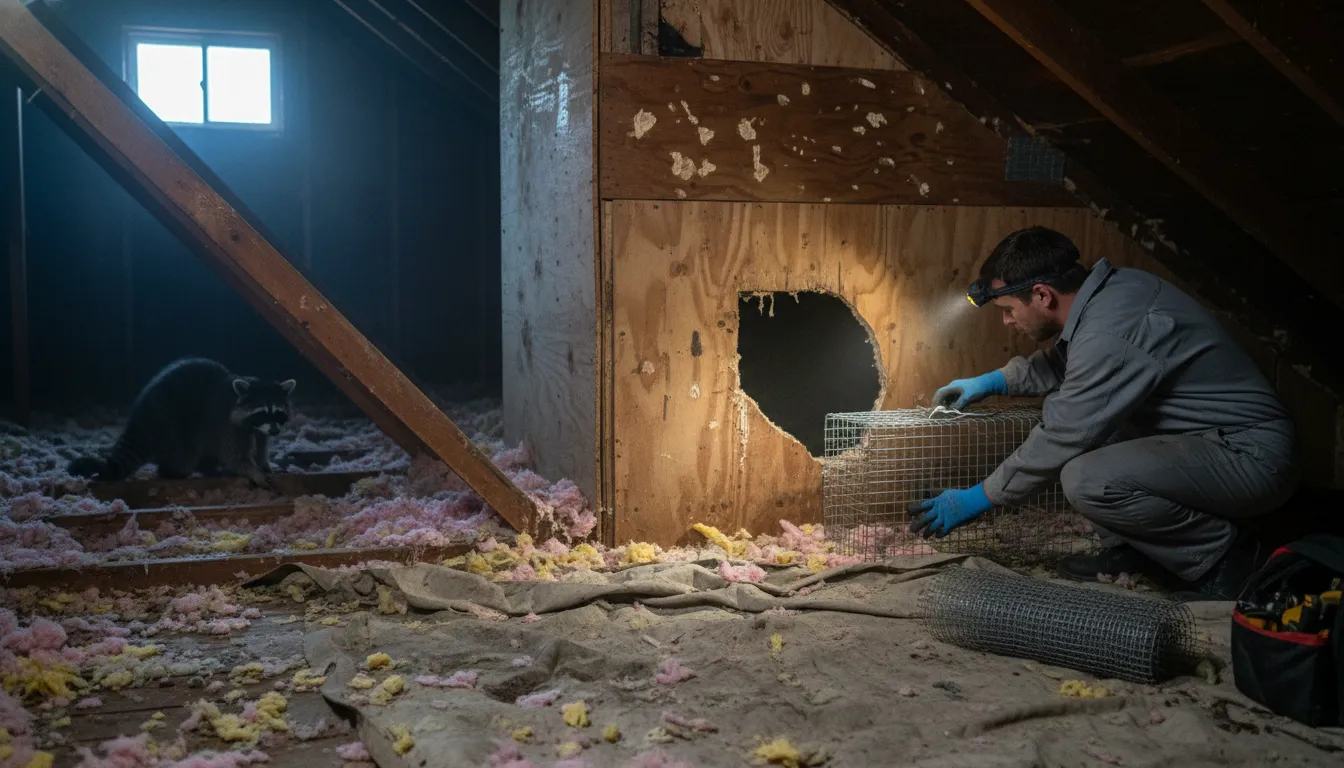
Find the Best Wildlife Removal Companies for Your Business
No obligation • Fast responses • Nationwide coverage

Why you can trust Pest Crews
Pest Crews is a leading U.S. resource for finding and evaluating residential and commercial pest control services. Our team researches providers, reviews treatment approaches, and organizes unbiased information to help you make informed decisions. Companies cannot pay to change our editorial content or influence how they appear.
Search providers near you
Top Wildlife Removal Companies in New Brunswick, New Jersey Ranked
Finding an uninvited animal in your attic, under your deck, or rummaging through your trash can be a startling and stressful experience. Wildlife removal is the professional service dedicated to safely and humanely resolving conflicts with wild animals that have become a nuisance or a threat to your property. In a city like New Brunswick, where urban spaces meet natural habitats, understanding when and how to address wildlife issues is crucial for protecting your home and ensuring the safety of both people and animals. This guide will help you navigate the process, from identifying common local species to choosing the right professional for the job.
Universal Pest Control
118 Locust St, Roselle, NJ 07203
Universal Pest Control is a family owned and operated pest control company serving Newark, NJ, and the surrounding Union County area. They offer a wide range of pest management services including cockroach, ant, termite, bee and wasp removal, as well as wildlife control. Their licensed and trained technicians use up-to-date methods to address pest infestations safely and effectively. With years of experience, Universal Pest Control provides free consultations and estimates to help customers find tailored solutions for their pest issues.
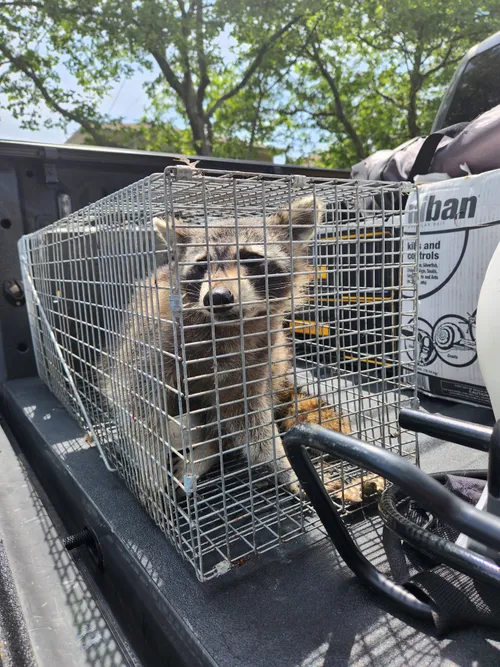
Recon Pest Control Inc
79 Escanaba Ave, Staten Island, NY 10308
Recon Pest Control Inc is a family-owned pest control company based in Staten Island, serving New York, NY, and nearby New Jersey. They offer a wide range of pest management services including bed bug extermination, termite control, rodent removal, mosquito reduction, bee and wasp removal, and wildlife relocation. The company also provides specialized solutions like the SolaTrim Pest Abatement Barrier to protect solar panels from pigeons and rodents. Recon Pest Control partners with Dad and Daughters Home Inspection, LLC to offer comprehensive home inspections and related services.
Uma Pest Control
200 W Milton Ave, Rahway, NJ 07065
Uma Pest Control offers a range of pest management services in New York, NY, including bed bug treatment, termite inspections, mosquito control, rodent removal, and bird control. They provide commercial, residential, and industrial pest control using green botanical products when preferred. Uma Pest Control is known for its one-day bed bug treatment that combines freeze, heat, and steam methods in a single visit, avoiding multiple follow-ups common with other providers. Their services also cover insect repellents, exclusion work, and wildlife removal for animals like bats and raccoons. The company operates from Rahway, NJ, and has been maintaining pest control services for several years.
All Platinum Termite & Pest Control
266 Wild Ave, Staten Island, NY 10314
All Platinum Termite & Pest Control is a family-owned and operated pest control company serving New York, NY, and the surrounding New Jersey area. They provide a wide range of pest management services including bed bug treatment, termite inspections, rodent and wildlife removal, mosquito control, and bird and bee removal for both residential and commercial clients. The company uses low-toxic, organic, and environmentally friendly products in compliance with state and federal regulations. With over 25 years of experience, All Platinum Termite & Pest Control is fully licensed and insured, offering 24/7 availability including same-day service.
Superb Pest Control
20 Commerce Dr, Cranford, NJ 07016
Superb Pest Control provides comprehensive pest control and extermination services in Newark, NJ, and surrounding areas including Woodbridge, Cranford, Clark, Westfield, Scotch Plains, and Springfield. They specialize in managing a wide range of pests such as bed bugs, rodents, cockroaches, ants, mosquitoes, bees, wasps, birds, and wildlife. Their approach includes Integrated Pest Management (IPM) to inspect, identify, and treat infestations in an environmentally responsible way. The company also offers a specialized six-month plan for controlling lanternfly infestations without harming vegetation or wildlife. Superb Pest Control serves both residential and commercial clients, including homes, restaurants, schools, hospitals, and manufacturing facilities.
Common Nuisance Wildlife in New Brunswick
New Brunswick's mix of residential neighborhoods, commercial areas, and proximity to the Raritan River creates an environment where human and animal territories often overlap. Several species are frequently involved in nuisance situations, each presenting unique challenges.
- Raccoons: Intelligent and dexterous, raccoons are notorious for tipping over trash cans, tearing up roofs to access attics, and creating dens in chimneys or under porches. They can carry diseases like rabies and roundworm.
- Squirrels: Both gray and flying squirrels commonly enter attics and wall voids, where they chew on wires (a significant fire hazard), insulation, and structural wood. Their constant gnawing and scurrying can be very disruptive.
- Opossums: These marsupials are often found under sheds, decks, or in crawl spaces. While they eat many pests like ticks and are less likely to carry rabies, they can create messes and damage insulation when denning.
- Skunks: Known for their potent defensive spray, skunks dig conical holes in lawns while searching for grubs and often take up residence under stoops, sheds, or decks. An encounter with a pet can lead to a very unpleasant situation.
- Groundhogs (Woodchucks): These large rodents are powerful diggers. Their extensive burrow systems can undermine foundations, sidewalks, and sheds, causing serious structural damage.
- Bats: Small colonies of bats may roost in attics or behind shutters. While beneficial for insect control, their guano (droppings) can pose health risks and create odors. Their entry points are often very small.
Understanding which animal you're dealing with is the first step toward an effective solution, as removal and exclusion techniques vary by species 1.
Wildlife Removal vs. Animal Control: Knowing Who to Call
A common point of confusion for homeowners is determining whether to call a wildlife removal professional or the local Animal Control agency. The distinction is important for getting a timely and appropriate response.
Call Animal Control for:
- A sick, injured, or visibly disoriented animal (e.g., a raccoon wandering in circles during the day).
- An aggressive animal that is posing an immediate threat to public safety.
- A restrained domestic animal, like a stray dog or cat 2 3.
Call a Licensed Wildlife Removal Professional (Wildlife Control Operator or WCO) for:
- Healthy wildlife living in your home (e.g., squirrels in the attic, raccoons in the chimney).
- Animals causing property damage but not acting aggressively (e.g., a groundhog digging under your shed).
- Situations requiring trapping, exclusion, or repair work. Crucially, municipal Animal Control services in New Brunswick and surrounding townships typically do not remove healthy nuisance animals from private property 4 5. Their primary mandate is public health and safety threats, not wildlife conflict resolution on private dwellings.
The Professional Wildlife Removal Process
When you engage a professional Wildlife Control Operator, they follow a systematic approach to ensure the problem is resolved completely and humanely.
- Inspection and Assessment: A technician will conduct a thorough inspection of your property, inside and out, to identify the species, locate all entry points, and assess the extent of the damage. This initial visit, which typically costs between $100 and $250, is essential for creating an effective plan and is often credited toward the total service cost if you proceed.
- Humane Removal and Trapping: Based on the assessment and New Jersey regulations, the professional will determine the best removal method. This may involve live trapping, the use of one-way exclusion doors that allow animals to leave but not re-enter, or, in the case of young animals, a carefully timed reunion strategy. It is illegal for unlicensed individuals to trap and relocate many wildlife species in New Jersey.
- Exclusion and Repair: Simply removing the animals is not enough. The most critical step is exclusion-permanently sealing all potential entry points with durable materials like steel mesh, hardware cloth, or specialized chimney caps. This prevents new animals from moving in. Repairs may also be needed for damaged insulation, wiring, or structural elements.
- Cleanup and Sanitation: If animals have been living in an attic or crawl space, droppings, urine, and nesting materials will need to be removed. Professionals use industrial-grade vacuums and apply enzymatic cleaners or disinfectants to eliminate odors and health hazards.
Find the perfect wildlife removal companies for your needs
Get personalized recommendations and expert advice
Prevention: Keeping Wildlife Out in the First Place
The most effective and cost-efficient wildlife control is prevention. By making your property less attractive and accessible, you can avoid most conflicts.
- Secure Food and Water Sources: Use tightly sealed, animal-proof trash cans. Keep pet food indoors and clean up fallen birdseed or fruit from trees. Ensure compost bins are fully enclosed.
- Seal Entry Points: Conduct seasonal inspections of your home's exterior. Look for gaps in the roofline, loose siding, unscreened vents, and openings where utilities enter. Seal any hole larger than a quarter-inch. Pay special attention to areas where different building materials meet 6.
- Remove Habitat and Shelter: Trim tree branches that hang within 6-10 feet of your roof. Clear away thick brush, woodpiles, and debris from the foundation. Secure the areas under decks, porches, and sheds with heavy-gauge wire mesh buried at an angle to prevent digging.
- Use Structural Modifications: Install chimney caps and vent covers. These are simple, inexpensive devices that block common entry points for raccoons, squirrels, and birds.
Remember, it is illegal to intentionally feed stray or wild animals in many New Jersey municipalities, including neighboring townships, as it creates nuisance situations and risks to public health 7 8.
Understanding Costs for Wildlife Removal
The cost for wildlife management in New Brunswick depends heavily on the species, the location of the problem, and the extent of the work required. Most companies provide free or low-cost initial inspections with a detailed quote.
- Inspection Fee: $100 - $250 (often applied as a credit).
- Removal/Trapping (per animal): $200 - $400+, plus any service fees for setting and monitoring traps.
- Exclusion and Repairs:
- For a yard, shed, or deck: $300 - $800+.
- For an attic, chimney, or complex structural repair: $500 - $1,500+ 9 10.
- Total Project Cost: A simple removal and minor exclusion might cost a few hundred dollars. A full-scale eviction, cleanup, and exclusion for a raccoon family in an attic can easily exceed $1,000 11.
Always ensure you receive a detailed written estimate that breaks down inspection, removal, exclusion, repair, and cleanup costs before work begins.
Legal and Ethical Considerations in New Jersey
Wildlife in New Jersey is protected by state law. Homeowners cannot arbitrarily trap or kill most nuisance species.
- Licensing and Permits: While a homeowner may control wildlife on their own property in some circumstances, trapping and relocation almost always require a permit or must be performed by a licensed Wildlife Control Operator. This is especially true for relocation, which is heavily regulated to prevent the spread of disease and ecological disruption.
- Relocation Challenges: The New Jersey Division of Fish & Wildlife has a strict wildlife relocation policy. Relocating an adult animal is often ineffective, as they have strong homing instincts and may not survive in a new territory. Furthermore, moving young animals without their mother is inhumane and typically illegal 12.
- The Professional's Role: Licensed WCOs understand these complex regulations. They employ integrated pest management (IPM) principles that prioritize humane, permanent solutions that are compliant with state and local laws, ensuring the problem is resolved responsibly 13.
Frequently asked questions
Sources
Footnotes
-
Need Wildlife Help? New Jersey Nuisance Wildlife Animals | NJ Pest Control ↩
-
Frequently Asked Questions - CivicPlus.CMS.FAQ - East Brunswick ↩
-
I have nuisance wildlife in my home/yard. What should I do? - Ewing Township ↩
-
How Much Does Animal & Wildlife Removal Cost? (2025) - HomeGuide ↩
-
Effective Wildlife Removal in New Jersey - Amco Pest Control ↩