Find the Best Wildlife Removal Companies for Your Business
No obligation • Fast responses • Nationwide coverage
Why you can trust Pest Crews
Pest Crews is a leading U.S. resource for finding and evaluating residential and commercial pest control services. Our team researches providers, reviews treatment approaches, and organizes unbiased information to help you make informed decisions. Companies cannot pay to change our editorial content or influence how they appear.
Search providers near you
Top Wildlife Removal Companies in Dayton, Ohio Ranked
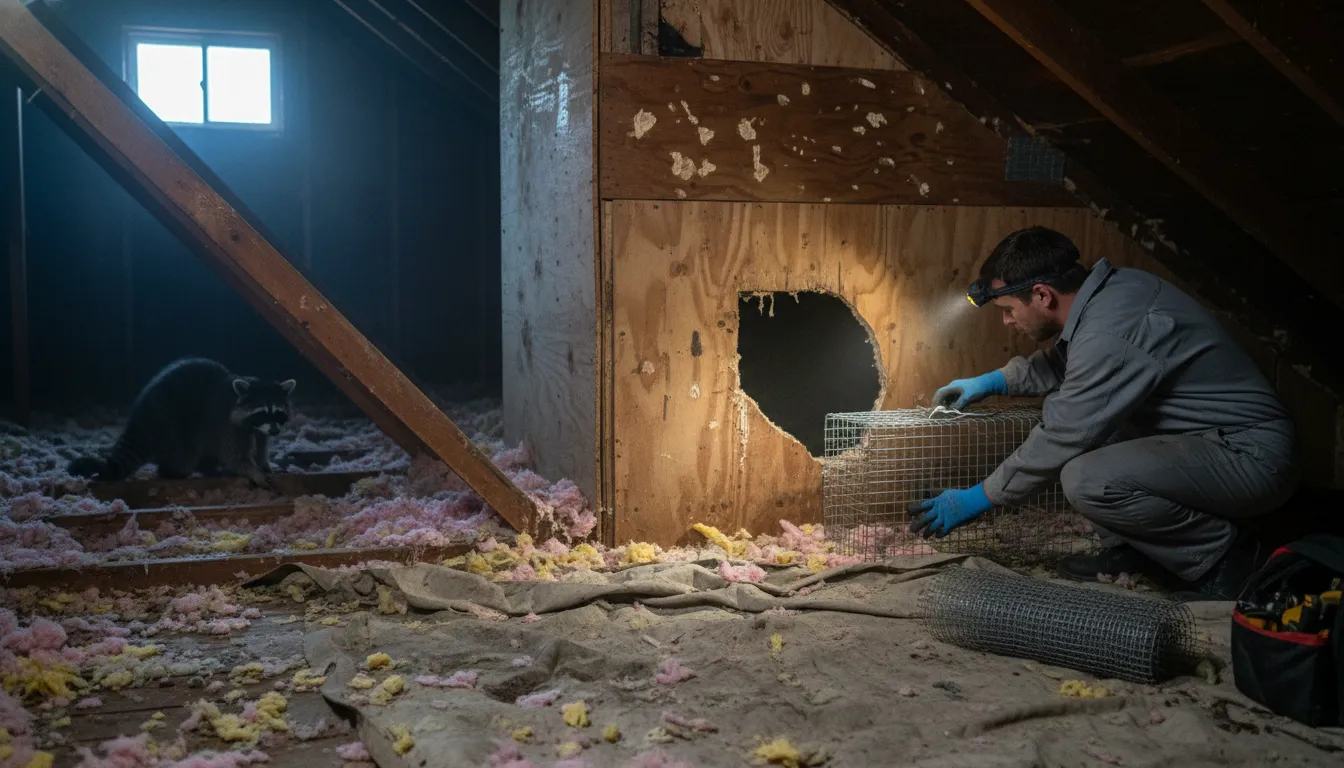
When raccoons rummage through your trash, squirrels nest in your attic, or bats take up residence in your eaves, you're facing a nuisance wildlife situation. In Dayton, resolving these conflicts is primarily the responsibility of the property owner, and it often requires the expertise of a state-licensed professional. This resource is designed to help you understand the common wildlife issues in the Miami Valley, navigate Ohio's specific regulations, and find qualified local experts for safe, legal, and effective animal control and exclusion.
Common Nuisance Wildlife in the Dayton Area
Dayton's mix of urban neighborhoods, suburban landscapes, and nearby rural areas creates ideal habitats for a variety of wild animals that can become pests. Knowing what you're dealing with is the first step. The most frequent offenders include:
- Raccoons: Intelligent and dexterous, they are notorious for tipping over garbage cans, tearing into soffits to access attics, and creating dens in chimneys or under decks.
- Squirrels: Both gray and fox squirrels are common. They chew entry holes into attics and eaves to build nests, and their constant gnawing can damage electrical wiring, posing a fire hazard 1.
- Bats: Several protected bat species inhabit Ohio. A colony in an attic or wall void can create significant noise and odor from guano (droppings), which also poses health risks 2.
- Skunks & Opossums: Often found under sheds, porches, or decks, skunks dig for grubs and can spray pets, while opossums, though generally less destructive, will raid pet food and garbage 3.
- Rodents: House mice and rats seek shelter indoors, especially in colder months, contaminating food and chewing through materials.
- Burrowing Animals: Groundhogs (woodchucks) can undermine foundations, sheds, and decks with their extensive tunneling, while other burrowers can damage lawns and gardens 4 5.
- Birds & Other Wildlife: Canada geese can create messy lawns, and woodpeckers may drum on houses, causing damage to siding. Occasional snake encounters also occur 6 7.
Ohio Wildlife Removal Laws and Regulations
Before taking any action, it's crucial to understand the legal framework. Wildlife in Ohio is managed by the Ohio Department of Natural Resources (ODNR) Division of Wildlife, and its regulations are strict, especially regarding relocation and protected species 8.
Homeowner Rights and Responsibilities: Ohio law allows a property owner or tenant to trap or take most nuisance wild animals on their own property without a permit, provided they have a legal plan for the animal's disposition. However, this comes with critical stipulations:
- Illegal Relocation: It is generally against the law to live-trap and relocate an animal off your property. This practice simply moves the problem to another property and can spread disease.
- Rabies Vector Species: For live-trapped raccoons, skunks, foxes, coyotes, and bats, the options are severely limited. These animals must either be released on the same property where they were captured or humanely euthanized. They cannot be transported and released elsewhere.
- Humane Trapping Standards: Any trap set on land must be covered and meet specific size requirements. Most importantly, traps must be monitored and animals removed at least once every 24 hours 9 10.
Special Rules for Protected Species: Bats in Ohio are protected. It is illegal to kill a bat unless there has been a potential rabies exposure (e.g., a bite) 11. Furthermore, bat exclusion work-sealing entry points after ensuring all bats are out-is governed by seasonal restrictions to protect maternal colonies. Excluding bats is generally prohibited from May 16 through July 31 if five or more bats are present, and from October 15 through March 31 if any bats are present, to prevent trapping bats inside during hibernation or when flightless young are present 11.
The Role of Licensed Professionals: Anyone who offers wildlife removal services for hire in Ohio must be a state-licensed Commercial Nuisance Wild Animal Control Operator (CNWACO) 12 13. These professionals are trained in legal, safe, and effective methods. They understand the complex regulations, including those for protected species like bats, and carry the proper insurance. Hiring a licensed operator ensures the job is done correctly and legally.
Who to Contact for Wildlife Issues in Dayton
Knowing the right agency to call saves time and frustration. It's important to note that Montgomery County Animal Control typically only handles domestic animals like dogs and cats 14.
- For Nuisance Wildlife on Private Property: Contact a private, state-licensed Commercial Nuisance Wild Animal Control Operator (CNWACO). You can find a list of licensed trappers through the Ohio Division of Wildlife's website.
- For an Injured or Orphaned Wild Animal: Contact the Ohio Division of Wildlife at 1-800-WILDLIFE (1-800-945-3543) or a licensed wildlife rehabilitator, such as the Brukner Nature Center or the Glen Helen Raptor Center 15.
- For a Potential Rabies Exposure: If a wild animal bites or scratches a person or pet, contact your local health department immediately 16.
Find the perfect wildlife removal companies for your needs
Get personalized recommendations and expert advice
The Wildlife Removal and Exclusion Process
Professional wildlife management is more than just trapping an animal; it's about solving the problem permanently. A comprehensive service from a licensed operator typically involves multiple steps.
- Inspection and Assessment: A technician will perform a thorough inspection of your property to identify the species, locate all entry points, and assess the extent of the damage and contamination.
- Humane Removal: Using methods appropriate for the species and situation (which may include one-way exclusion doors, live trapping, or other techniques), the animals are removed from the structure in compliance with state law 17.
- Exclusion and Repair: This is the most critical step for a long-term solution. All identified entry points are sealed with durable materials like steel mesh, hardware cloth, or chimney caps to prevent re-entry. Without proper exclusion, new animals will simply move into the now-vacated space.
- Cleanup and Restoration: Wildlife droppings, urine, and nesting materials can create health hazards and odors. Professionals can safely clean and sanitize affected areas like attics and crawl spaces. In cases of severe damage, restoration services may be needed to replace insulation, ductwork, or damaged wood.
Understanding the Cost of Wildlife Control in Dayton
Pricing for animal removal and exclusion varies significantly based on the species, the complexity of the infestation, and the scope of necessary repairs 18 19. Most companies charge for an initial inspection or service call. The total cost usually includes removal, exclusion work, and any cleanup or repairs.
- Removal Costs: Can range from a few hundred dollars for a simple job (like removing a snake from a garage) to over a thousand dollars for a complex situation, such as a raccoon mother with babies in an attic 20 21.
- Exclusion/Repair Costs: This is often the most substantial part of the investment. Sealing a home properly with high-quality materials is labor-intensive but essential. Costs depend on the number of entry points and the accessibility of the work area 22 23.
- Attic Restoration: If an attic has been heavily soiled, professional cleaning, decontamination, and reinsulation can add considerably to the project's total cost 24.
For an accurate estimate tailored to your specific situation in Dayton, it is recommended to contact local licensed companies for an on-site inspection 25.
Preventing Future Wildlife Problems
After your home has been secured, ongoing prevention is key.
- Secure Food Sources: Use locking lids on garbage cans, bring pet food indoors at night, and consider using feeders that are less accessible to squirrels and raccoons.
- Eliminate Shelter: Seal off crawl space openings, install sturdy vent covers, and use chimney caps. Keep tree branches trimmed back at least 6-8 feet from your roofline.
- Maintain Your Property: Regularly inspect your home's exterior for new gaps, holes, or signs of chewing, especially in the spring and fall when animals are most active seeking den sites 26.
Frequently asked questions
Sources
Footnotes
-
Squirrel Removal Dayton, Ohio - Voted #1 Best Squirrel Pros - https://barneswildlifecontrol.com/squirrel-removal/ ↩
-
Dayton Animal Removal - https://daytonwildliferemoval.com/dayton-animal-removal/ ↩
-
Animals - Critter Control of Dayton - https://www.crittercontrolofdayton.com/wildlife/animals/ ↩
-
Nuisance Species: Groundhogs - Ohio Department of Natural Resources - https://ohiodnr.gov/discover-and-learn/safety-conservation/wildlife-management/nuisance-wildlife/nuisance-groundhogs ↩
-
Ohio Wildlife Animal Control - http://www.wildlifeanimalcontrol.com/ohio.html ↩
-
Nuisance wildlife management - Wikipedia - https://en.wikipedia.org/wiki/Nuisance_wildlife_management ↩
-
Residential Wildlife Control in Davis County, UT. Thorn - https://thornservices.com/davis-county/residential-pest-control/wildlife-control ↩
-
Ohio Statutes | Animal Legal & Historical Center - https://www.animallaw.info/statutes/us/ohio?order=title&sort=desc ↩
-
Rule 1501:31-15-03 | Nuisance wild animal control. - Ohio Laws - https://codes.ohio.gov/ohio-administrative-code/rule-1501:31-15-03 ↩
-
Ohio Admin. Code 1501:31-15-03 - Nuisance wild animal control - https://www.law.cornell.edu/regulations/ohio/Ohio-Admin-Code-1501-31-15-03 ↩
-
Ohio Nuisance Wildlife Removal Laws and Regulations - Facebook - https://www.facebook.com/groups/397624567515232/posts/1735947837016225/ ↩ ↩2
-
Section 1531.40 | Nuisance wild animal removal ... - Ohio Laws - https://codes.ohio.gov/ohio-revised-code/section-1531.40 ↩
-
Commercial Nuisance Wild Animal Control Operator License - https://ohiodnr.gov/wps/portal/gov/odnr/buy-and-apply/regulatory-permits/commercial-wildlife-permits/nuisance-wild-animal-control-operator ↩
-
Dayton Animal Removal - https://daytonwildliferemoval.com/dayton-animal-removal/ ↩
-
Contact a Nuisance Trapper | Ohio Department of Natural ... - https://ohiodnr.gov/discover-and-learn/safety-conservation/wildlife-management/nuisance-wildlife/contact-nuisance-trapper ↩
-
Nuisance Species: Raccoons - Ohio Department of Natural Resources - https://ohiodnr.gov/discover-and-learn/land-water/issues-for-landowners/nuisance-raccoons ↩
-
Wildlife Removal & Damage Repairs - Barnes Wildlife Control ... - https://barneswildlifecontrol.com/ ↩
-
Chimney Animal Removal in Upper Arlington ,OH - https://www.chimcare.com/location/chimney-animal-removal-in-upper-arlington-oh/ ↩
-
Wildlife Control FAQs - https://www.michiganwildlifesolutions.com/about/faq/ ↩
-
The Pied Piper's Humane Wildlife Control & Removal Services - https://www.thepiedpiper.biz/wildlife-removal ↩
-
Michigan Wildlife Control Pricing - https://www.mibatcontrol.com/wildlife-control-pricing/ ↩
-
Lebanon Ohio Nuisance Wildlife | 3 Terrible Ruinous Critters - https://barneswildlifecontrol.com/lebanon-ohio-nuisance-wildlife/ ↩
-
Wildlife Removal Dayton Ohio | 100% Best Wildlife Control - https://www.wildliferemovaldaytonohio.com/ ↩
-
Dayton OH Wildlife Control: Bat, Squirrel, Raccoon Removal - https://www.crittercontrol.com/office-finder/ohio/dayton/ ↩
-
Dayton Wildlife Animal Control - Pest Removal Trappers - http://www.wildlifeanimalcontrol.com/Dayton.html ↩
-
How to Identify and Prevent Animal Damage to Roofs - https://fivepointsroofing.com/roofing-blog/how-to-identify-and-prevent-animal-roof-damage/ ↩