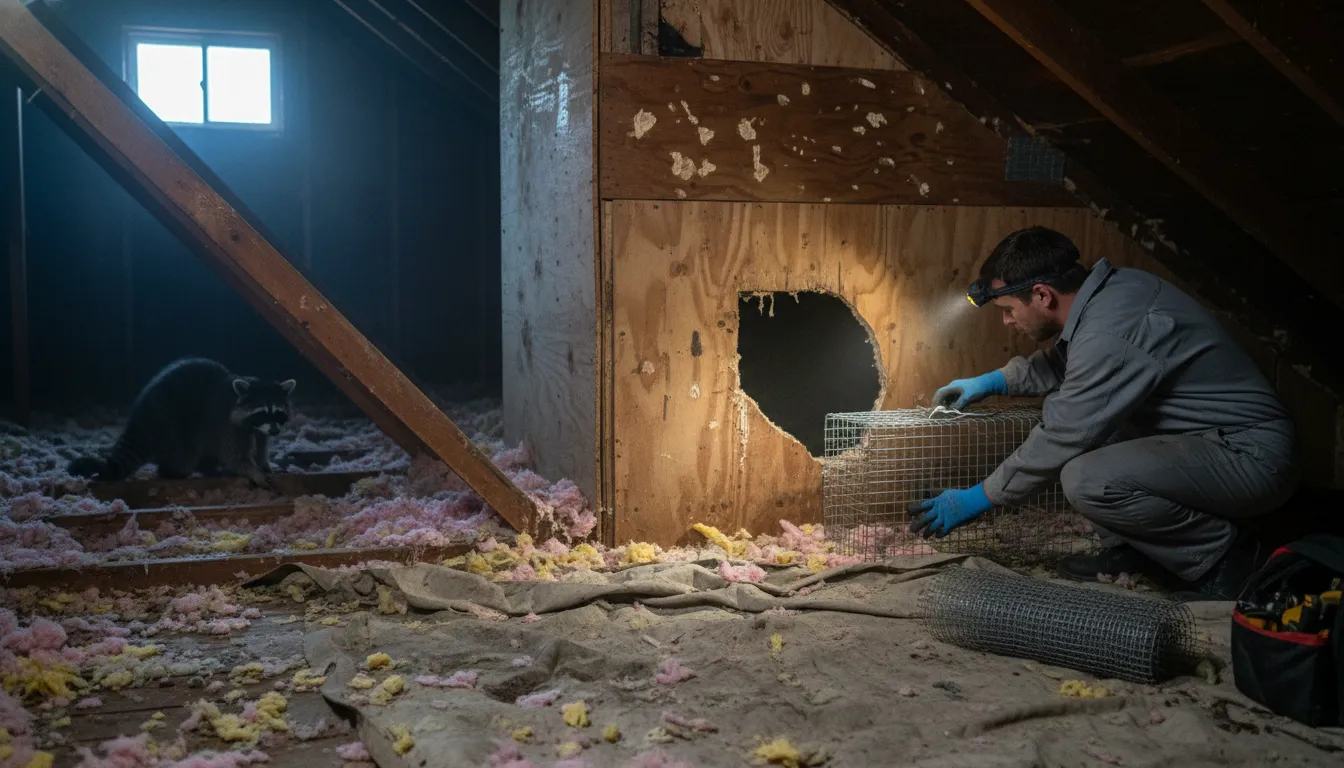
Find the Best Wildlife Removal Companies for Your Business
No obligation • Fast responses • Nationwide coverage

Why you can trust Pest Crews
Pest Crews is a leading U.S. resource for finding and evaluating residential and commercial pest control services. Our team researches providers, reviews treatment approaches, and organizes unbiased information to help you make informed decisions. Companies cannot pay to change our editorial content or influence how they appear.
Search providers near you
Top Wildlife Removal Companies in Youngstown, Ohio Ranked
When raccoons rummage through your trash or squirrels take up residence in your attic, you're dealing with a wildlife removal issue. These situations are more than just a nuisance; they can pose health risks, cause significant property damage, and create stressful living conditions. For homeowners and business owners in Youngstown, navigating Ohio's specific regulations for nuisance animal control is crucial. This guide will help you understand your options, from legal do-it-yourself steps to finding and vetting licensed local professionals who can safely and legally resolve your wildlife problem.
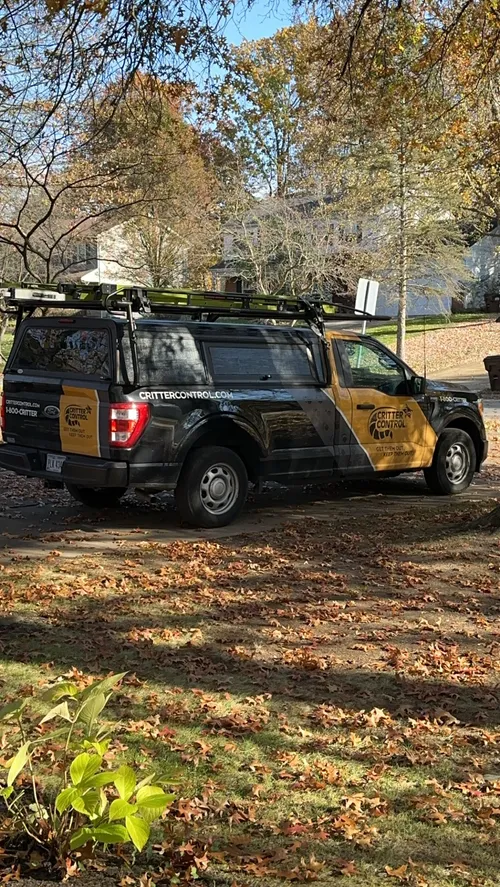
Common Nuisance Wildlife in Youngstown
The Mahoning Valley's mix of urban neighborhoods, wooded areas, and waterways creates ideal habitats for several species that frequently come into conflict with people. Knowing what you're dealing with is the first step toward an effective solution.
Mammals:
- Raccoons: Intelligent and dexterous, these masked bandits are notorious for tipping over garbage cans, tearing up roof vents to access attics, and creating dens in chimneys or under decks.
- Squirrels: Both gray and fox squirrels can cause extensive damage by gnawing on electrical wires, wood siding, and insulation inside walls and attics. Their constant activity is often heard as scratching or scurrying sounds during the day.
- Bats: Small colonies may roost in attics, soffits, or barns. While beneficial for insect control, their guano (droppings) can pose serious health risks, and their entry points are often very small.
- Skunks & Opossums: These animals often seek shelter under porches, sheds, or decks. Skunks, of course, present a potent defensive problem, while opossums may raid pet food left outdoors.
- Groundhogs (Woodchucks): Their extensive burrowing can undermine foundations, sidewalks, and sheds, creating tripping hazards and structural concerns.
- Mice & Rats: These rodents are a year-round concern, seeking food and warmth inside structures and capable of rapid reproduction.
Birds:
- Woodpeckers: They drum on siding and eaves, sometimes causing damage while searching for insects or establishing territory.
- Canada Geese & Swans: Primarily an issue for property owners near ponds or parks, where large numbers can create unsanitary conditions with their droppings.
Identifying the specific animal is key, as removal methods, legal considerations, and potential health risks vary significantly between species 1.
Understanding Ohio's Wildlife Removal Laws
Before taking any action, it's essential to understand the legal framework. Ohio has clear regulations administered by the Ohio Department of Natural Resources (ODNR) to ensure humane and responsible wildlife control.
Key Regulations for Homeowners:
- Trap Monitoring is Mandatory: If you choose to trap a nuisance animal like a raccoon or squirrel on your own property, Ohio law (OAC 1501:31-15-03) requires you to check the trap at least once every 24 hours. Leaving an animal trapped for longer is considered inhumane and is illegal.
- You Must Have a Disposal Plan: The law states you must have a plan for the legal dispatch and disposal of a trapped animal before you set the trap 2. This is a critical and often overlooked step.
- Relocation is Illegal: It is against Ohio law to live-trap an animal and release it elsewhere, such as in a park or forest. This practice is prohibited because it can spread disease, stress the relocated animal, and simply transfer the problem to another property owner.
- Licensing for Paid Services: Anyone who offers paid trapping, removal, or control services for nuisance wildlife must be licensed by the state as a Commercial Nuisance Wild Animal Control Operator (NWCO)3. Always verify this license.
When to Contact Authorities: The local ODNR Wildlife Officer is an excellent resource. You should contact them for guidance on your specific situation, to report aggressive or sick animals, or if you suspect the involvement of a protected species. For immediate threats to safety, contact your local animal control or police non-emergency line.
Find the perfect wildlife removal companies for your needs
Get personalized recommendations and expert advice
Effective Wildlife Control Methods
A permanent solution to a wildlife problem rarely involves just removing the animal. The most effective strategy integrates several methods to achieve lasting results.
1. Habitat Modification & Exclusion (The Best Defense) This is the cornerstone of long-term wildlife control. The goal is to make your property less attractive and accessible.
- Remove Food Sources: Secure garbage cans with tight-fitting lids or bungee cords. Stop feeding pets outdoors, or pick up food bowls immediately after meals. Use bird feeders that are less likely to spill seed.
- Seal Entry Points: This is the most critical step for animals already inside. Conduct a thorough inspection of your roofline, siding, vents, and foundation. Use sturdy materials like hardware cloth, steel wool, or sheet metal to seal any holes or gaps. Remember, a mouse can fit through a hole the size of a dime, and bats need only a 3/8-inch gap4 5.
2. Trapping Trapping is a common removal tool but must be done responsibly and legally, as outlined above.
- Choose the Right Trap: Live cage traps (e.g., Havahart) are common for raccoons and squirrels. The size and type of trap should be appropriate for the target animal.
- Strategic Placement: Set traps along travel paths, near entry points, or with effective bait. For squirrels in an attic, trapping is often done on the roof near the entry hole.
- Follow the Law: Adhere strictly to the daily check requirement and have your humane dispatch and disposal plan ready6 7.
3. Professional Removal & Cleanup For many situations, especially those involving attics, crawlspaces, or larger animals, hiring a professional is the safest and most efficient choice.
- Expert Assessment: Professionals can accurately identify the species, locate all entry points, and assess the full scope of damage and contamination.
- Humane & Legal Removal: Licensed NWCOs use methods that comply with all state regulations.
- Decontamination & Repair: After removal, proper cleanup is vital. Professionals will remove contaminated insulation, sanitize the area with enzyme cleaners, and perform exclusion repairs to prevent re-entry. This step is crucial for health reasons, especially with rodent droppings or bat guano8.
What to Expect from Professional Wildlife Removal Services
If you decide to hire a professional wildlife control operator in Youngstown, here's a general overview of the process and potential costs. Prices can vary based on the animal, the severity of the infestation, and the company.
Typical Service Process:
- Inspection: A technician will visit your property to identify the animal, locate entry points, and assess damage. This often involves an inspection or call-out fee, typically ranging from $100 to $250.
- Removal Plan & Quote: They will present a plan for removal, cleanup, and exclusion, along with a detailed cost estimate.
- Removal: Using traps or other legal methods, the animals are removed from the property. Removal costs are often per animal and can range widely: $150 to $400 or more. For example, removing a raccoon might cost $200-$350, while a squirrel removal might be $150-$3009.
- Cleanup & Sanitation: The affected area (e.g., attic, crawlspace) is cleaned, debris and contaminated insulation are removed, and the area is sanitized.
- Exclusion & Repair: The final and most important step is permanently sealing all entry points with durable materials. This prevents new animals from moving in. Exclusion and repair work is often quoted separately and can cost several hundred to thousands of dollars, depending on the extent of the work needed on your roof, siding, or foundation.
Choosing a Reputable Provider: Always ask for proof of their Ohio Commercial NWCO license. Check for insurance and ask for references. A reputable company will provide a written contract detailing the scope of work, warranty on exclusion repairs, and a clear fee structure.
Preventing Future Wildlife Conflicts
Once your immediate problem is solved, ongoing prevention is key.
- Maintain Your Property: Regularly inspect your home's exterior, especially after storms. Trim tree branches that overhang or touch your roof. Keep firewood stacks and brush piles away from the house.
- Be Mindful of Landscaping: Dense ground cover and shrubs right against the foundation can provide shelter for small animals. Maintain a clear perimeter.
- Chimney Caps and Vent Covers: Install sturdy, animal-proof chimney caps and wire mesh covers on attic and crawl space vents.
By combining knowledge of local wildlife, adherence to Ohio law, and a proactive approach to exclusion, you can protect your Youngstown home from unwanted animal visitors.
Frequently asked questions
Sources
Footnotes
-
Top 10 Common Nuisance Wildlife and How to Identify Them - https://www.crittercontrolofboston.com/top-10-common-nuisance-wildlife-and-how-to-identify-them/ ↩
-
Dispatching nuisance wildlife in Ohio requires a plan for disposal - https://www.facebook.com/groups/1198717086815772/posts/24074453385482151/ ↩
-
Section 1531.40 | Nuisance wild animal removal ... - Ohio Laws - https://codes.ohio.gov/ohio-revised-code/section-1531.40 ↩
-
Wildlife Control Methods | NWCTP - https://wildlifecontroltraining.com/training/wildlife-control-methods/ ↩
-
Resources | Geauga Nuisance Control - https://www.geauganuisancecontrol.com/homeowner-resources/ ↩
-
Rule 1501:31-15-03 | Nuisance wild animal control. - Ohio Laws - https://codes.ohio.gov/ohio-administrative-code/rule-1501:31-15-03 ↩
-
Nuisance Wild Animal Control | Ohio Department of Natural ... - https://ohiodnr.gov/wps/portal/gov/odnr/business-and-industry/business-activities/nuisance-wild-animal-control ↩
-
Nuisance Wildlife Control Operators - NWCO - http://www.aaanimalcontrol.com/Professional-Trapper/wildlifecontrol.htm ↩
-
Youngstown Wildlife Animal Control - Removal of - http://www.wildlifeanimalcontrol.com/Youngstown.html ↩