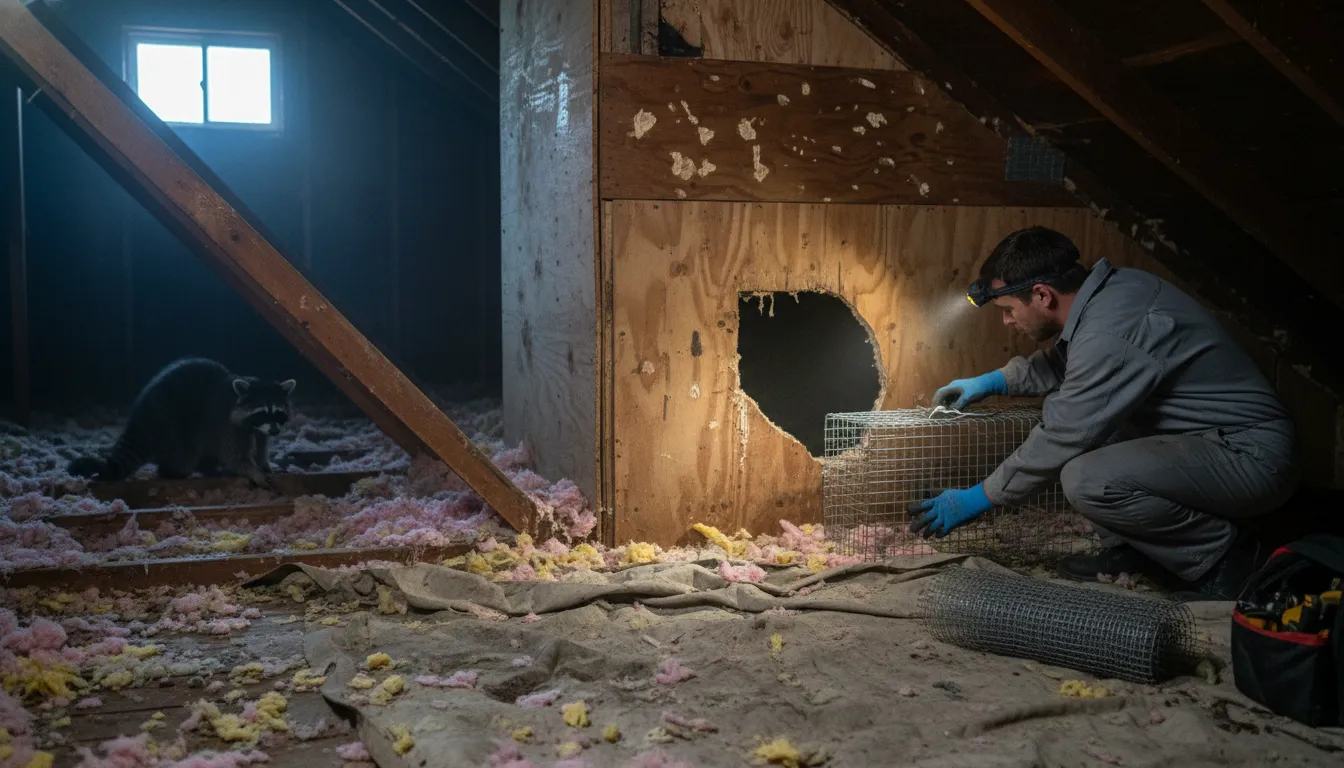
Find the Best Wildlife Removal Companies for Your Business
No obligation • Fast responses • Nationwide coverage

Why you can trust Pest Crews
Pest Crews is a leading U.S. resource for finding and evaluating residential and commercial pest control services. Our team researches providers, reviews treatment approaches, and organizes unbiased information to help you make informed decisions. Companies cannot pay to change our editorial content or influence how they appear.
Search providers near you
Top Wildlife Removal Companies in Cranston, Rhode Island Ranked
Discovering an uninvited animal in your attic, chimney, or under your deck can be unsettling. In Cranston, managing conflicts with local wildlife requires specific knowledge of Rhode Island's laws and the most effective, humane strategies. This guide provides Cranston residents with a clear understanding of how to handle nuisance wildlife, from simple prevention to when it's essential to call a professional. You'll find information on common problem species, legal do-it-yourself options, and how to connect with licensed experts for safe and permanent animal control solutions.
Debug Pest Control - Rhode Island
41 Cedar Swamp Rd Suite D, Smithfield, RI 02917
Debug Pest Control - Rhode Island is a locally owned pest management company based near Providence, RI, offering services for residential and commercial clients. They provide solutions for a wide range of pests including rodents, ants, termites, bed bugs, mosquitoes, and wasps. With over 30 years of experience, Debug Pest Control uses eco-friendly methods and integrated pest management strategies to effectively control and prevent infestations. Their service area includes Rhode Island, Connecticut, and Southeastern Massachusetts, and they offer same-day service when scheduled early in the week.
Assurance Pest Solutions
93 West St, Medfield, MA 02052
Assurance Pest Solutions is a family-owned pest control company serving Boston, MA, and surrounding areas in Massachusetts and Rhode Island. With over 40 years of experience, they provide residential and commercial pest management services including bed bug treatment, ant control, rodent control, termite inspection, mosquito control, bee and wasp removal, and wildlife removal. Their certified technicians use environmentally conscious Integrated Pest Management strategies to address infestations by targeting root causes such as entry points and nesting areas. The company also offers humane wildlife removal and exclusion services to protect properties while ensuring animal safety.
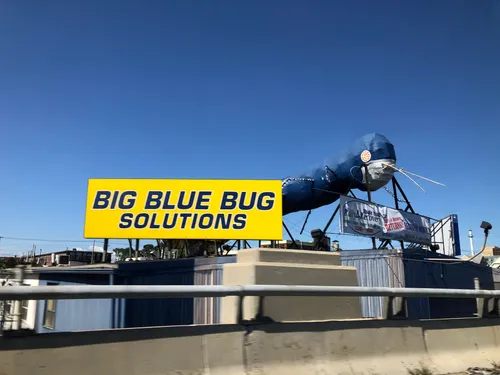
Big Blue Bug Solutions
161 O'Connell St, Providence, RI 02905
Big Blue Bug Solutions is a pest control company based in Providence, RI, serving homes and businesses across New England, including Rhode Island, Massachusetts, Connecticut, Vermont, Maine, and New Hampshire. The company offers comprehensive pest control services such as ant and rodent extermination, termite inspections, and wildlife removal. With over 90 years of experience since 1935, Big Blue Bug Solutions uses advanced techniques and maintains high standards of cleanliness and professionalism through its Blue Glove Service. They provide year-round pest protection and are available every day, all day, 365 days a year, ensuring continuous support for their customers.
Eliminate 'Em Pest Control Services, LLC
10 Dorrance St #700, Providence, RI 02903
Eliminate 'Em Pest Control Services, LLC is a family-owned pest control company serving Providence, RI, and surrounding areas. They specialize in bed bug treatment, ant control, rodent control, termite inspections, wildlife removal, and commercial pest control. The company offers 24/7/365 availability for urgent pest issues and uses safe, non-chemical solutions to protect homes and businesses. With over 35 years of experience, Eliminate 'Em focuses on humane pest control methods and long-term prevention by sealing entry points and providing advice to avoid future infestations.
Terminator Pest Control LLC
Providence, RI
Terminator Pest Control LLC provides pest control services in Providence, RI, specializing in residential and commercial pest management. Their services include rodent control, wildlife exclusion, and tailored solutions to address infestations at the source and prevent future issues. The company focuses on long-term results for both homes and businesses.
Common Wildlife Issues in Cranston Homes
Cranston's mix of suburban neighborhoods, wooded areas, and proximity to water creates an ideal habitat for many species that can sometimes come into conflict with people. Understanding which animals are most likely to cause issues is the first step in effective wildlife management.
The most frequent culprits for nuisance wildlife calls in the area include mammals like raccoons, squirrels (both gray and flying varieties), bats, skunks, and opossums. Rodents such as rats and mice are also common, along with woodchucks and moles that can damage lawns and gardens. On occasion, residents may encounter coyotes or have issues with birds like pigeons and starlings nesting in vents or on structures 1.
Rhode Island's Key Wildlife Regulation: No Relocation
One of the most critical rules for every Cranston resident to know is that it is illegal to capture and relocate wildlife in Rhode Island. An animal that is trapped must be released on the same property where it was caught or humanely euthanized by a licensed professional. This law exists for several important reasons: to prevent the spread of disease, to avoid placing undue stress on animals in unfamiliar territories where they cannot find food or shelter, and to stop people from simply moving a problem to a neighbor's yard or a public space 2 3. This regulation fundamentally shapes the approach to all wildlife control and animal removal in the state.
What Homeowners Can Do: DIY Prevention and Control
For minor issues, there are several effective steps Cranston property owners can take themselves. The cornerstone of all DIY wildlife management is exclusion and habitat modification.
Prevention is always the best and first line of defense. This involves making your property less attractive to wildlife by securing potential food sources. Use locking lids on garbage cans, avoid leaving pet food outdoors overnight, and clean up fallen fruit from trees. The next step is to seal potential entry points to your home. Carefully inspect your roofline, siding, vents, and foundation for gaps or holes. Use sturdy materials like hardware cloth, steel wool (for rodents), or metal flashing to seal these openings, especially in attics and crawlspaces.
For small mammals like mice and rats, homeowners can use snap traps or live traps. It's important to check these traps frequently. For animals like skunks or opossums under a deck, you may be able to encourage them to leave by placing a radio and a light in the space, then sealing the entrance once you are sure they have vacated. The use of repellents or rodenticides is regulated; always follow label instructions and be aware that poisons can pose risks to pets, children, and non-target wildlife 4.
Rhode Island law does allow a property owner to kill a furbearing animal (e.g., raccoon, skunk) if it is causing damage to property or livestock, provided legal means are used (firearms where permitted, not poisons or snares) 5 6. If you take this step, you are required by the Rhode Island Department of Environmental Management (RIDEM) to report the kill within 24 hours.
Find the perfect wildlife removal companies for your needs
Get personalized recommendations and expert advice
When to Call a Professional Wildlife Control Specialist
While DIY methods work for prevention and minor issues, certain situations absolutely warrant calling a licensed professional. Knowing when to make that call can save you time, prevent property damage, and ensure safety.
You should seek professional animal removal services when:
- An animal is actively living inside your home's structure, such as in an attic, wall void, or chimney.
- You are dealing with bats or birds (like pigeons in a vent), which require specialized exclusion techniques for permanent removal 7.
- There is a potential disease risk, particularly from species commonly associated with rabies like raccoons and skunks 8.
- Your own prevention and trapping efforts have failed.
- The situation involves complex trapping or the need for extensive exclusion work, such as installing one-way doors or chimney caps.
It's important to note that while the RIDEM oversees wildlife regulations and licenses the professionals, the state does not provide removal services itself9 10. For issues with domestic animals like stray dogs or cats, you should contact your local Cranston animal services.
Finding and Working with a Licensed Professional
In Rhode Island, professionals who handle nuisance wildlife are formally known as Nuisance Wildlife Control Specialists (NWCS). They are licensed by the RIDEM and are trained in humane capture, exclusion, and euthanasia methods 11.
When you contact a NWCS, they will typically conduct an inspection to identify the species, locate entry points, and assess the extent of the problem. Their solution should focus on permanent exclusion-sealing the animal out for good-rather than just trapping. For bats and rodents, exclusion is the only legal and effective permanent solution, as trapping alone leaves the entry point open for new animals to enter 12. A reputable specialist will also advise on cleaning and sanitizing affected areas, particularly if droppings are present.
Understanding Wildlife Removal Costs in Cranston
The cost for professional wildlife control and animal extraction in Cranston varies significantly based on the species, the severity of the infestation, and the complexity of the work required. Prices can range widely, but here are some general guidelines based on local service providers 13 14:
- Basic Trapping and Removal: For a single animal like a raccoon or skunk, services often start in the range of $200 to $400.
- Larger or More Complex Jobs: Situations involving bats, which require careful exclusion, or extensive attic invasions that necessitate cleanup and insulation repair, can cost $500 to $600 or more.
- Rodent Control: Solving a mouse or rat problem usually involves a combination of trapping and meticulous sealing of entry points, with costs varying based on the size of the home and extent of the work.
Always get a detailed, written estimate before work begins. The lowest price may not represent the most comprehensive, long-term solution.
Special Considerations: Bats, Birds, and Rodents
Some wildlife situations require extra care.
- Bats: Several bat species in Rhode Island are protected. They cannot be excluded during the maternity season (mid-May through mid-August) when flightless young may be trapped inside. A licensed NWCS will know these regulations and use proper exclusion devices that allow bats to leave but not re-enter.
- Birds: Nesting birds are often protected by federal law. A professional can advise on legal deterrents and exclusion methods that don't harm active nests.
- Rodents: A lasting solution for mice or rats is never just about traps. It requires a diligent inspection to find and seal every possible entry point, which can be as small as a dime for mice.
Frequently asked questions
Sources
Footnotes
-
250 R.I. Code R. 250-RICR-60-00-3.6 - Nuisance Wildlife Control ... - https://www.law.cornell.edu/regulations/rhode-island/250-RICR-60-00-3.6 ↩
-
Rhode Island Department of Environmental Management | Facebook - https://www.facebook.com/RhodeIslandDEM/posts/capturing-a-wild-animal-whether-in-your-backyard-or-elsewhere-and-releasing-it-i/2252019768371901/ ↩
-
Relocating Wildlife Is Prohibited in Rhode Island - https://dem.ri.gov/sites/g/files/xkgbur861/files/2024-03/norelok8.pdf ↩
-
Rules and Regulations Governing Nuisance Wildlife Control ... - https://rules.sos.ri.gov/regulations/part/250-60-00-3 ↩
-
Solving Issues with Backyard Wildlife - https://dem.ri.gov/media/36961/download ↩
-
Nuisance Wildlife - Rhode Island Woods - https://web.uri.edu/rhodeislandwoods/wildlife/nuisance-wildlife/ ↩
-
RI Cranston Bay State Wildlife - http://wildlifeanimalpest.com/location/ri-cranston-bay-state-wildlife/ ↩
-
Cranston Wildlife Removal, Pest Animal Control RI - Bay State ... - http://www.wildlife-removal.com/city/RI-Cranston.htm ↩
-
Relocating Wildlife Is Prohibited In Rhode Island - https://dem.ri.gov/sites/g/files/xkgbur861/files/programs/bnatres/fishwild/pdf/norelok8.pdf ↩
-
Learn about RI wildlife - https://dem.ri.gov/natural-resources-bureau/fish-wildlife/learn-about-ri-wildlife ↩
-
rules and regulations governing nuisance wildlife control specialist - https://dem.ri.gov/sites/g/files/xkgbur861/files/pubs/regs/regs/fishwild/f_wnusnc.pdf ↩
-
Rhode Island Wildlife Control and Animal Removal - http://www.aaanimalcontrol.com/professional-trapper/state/rhode-island.htm ↩
-
Cranston Wildlife Animal Control - Trappers and Pest Removal - http://www.wildlifeanimalcontrol.com/Cranston.html ↩
-
Prices for Cranston Wildlife Pest Control Animal Trapping - http://www.aaanimalcontrol.com/professional-trapper//prices/RI-Cranston-prices.htm ↩