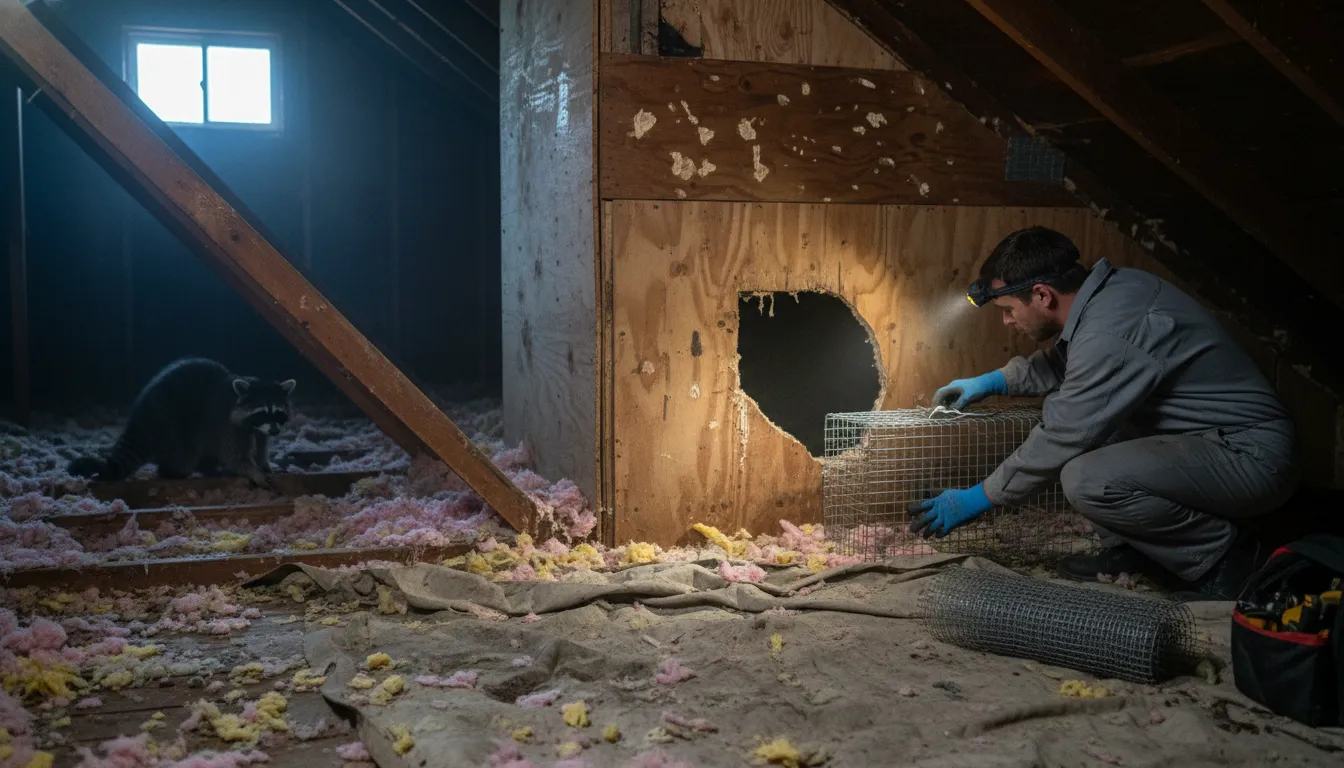
Find the Best Wildlife Removal Companies for Your Business
No obligation • Fast responses • Nationwide coverage

Why you can trust Pest Crews
Pest Crews is a leading U.S. resource for finding and evaluating residential and commercial pest control services. Our team researches providers, reviews treatment approaches, and organizes unbiased information to help you make informed decisions. Companies cannot pay to change our editorial content or influence how they appear.
Search providers near you
Top Wildlife Removal Companies in East Providence, Rhode Island Ranked
Living alongside nature is part of Rhode Island's charm, but when wild animals like raccoons, squirrels, or skunks decide to move into your attic, garage, or under your deck, they become a nuisance and a potential hazard. Professional wildlife removal is the safe, legal, and effective process of evicting these unwanted guests and securing your property against future intrusions. This guide explains the local laws, common wildlife issues, and how to find qualified specialists in East Providence to resolve your animal control problem.
Debug Pest Control - Rhode Island
41 Cedar Swamp Rd Suite D, Smithfield, RI 02917
Debug Pest Control - Rhode Island is a locally owned pest management company based near Providence, RI, offering services for residential and commercial clients. They provide solutions for a wide range of pests including rodents, ants, termites, bed bugs, mosquitoes, and wasps. With over 30 years of experience, Debug Pest Control uses eco-friendly methods and integrated pest management strategies to effectively control and prevent infestations. Their service area includes Rhode Island, Connecticut, and Southeastern Massachusetts, and they offer same-day service when scheduled early in the week.
Assurance Pest Solutions
93 West St, Medfield, MA 02052
Assurance Pest Solutions is a family-owned pest control company serving Boston, MA, and surrounding areas in Massachusetts and Rhode Island. With over 40 years of experience, they provide residential and commercial pest management services including bed bug treatment, ant control, rodent control, termite inspection, mosquito control, bee and wasp removal, and wildlife removal. Their certified technicians use environmentally conscious Integrated Pest Management strategies to address infestations by targeting root causes such as entry points and nesting areas. The company also offers humane wildlife removal and exclusion services to protect properties while ensuring animal safety.
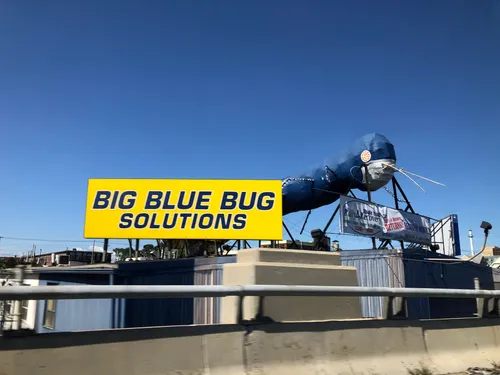
Big Blue Bug Solutions
161 O'Connell St, Providence, RI 02905
Big Blue Bug Solutions is a pest control company based in Providence, RI, serving homes and businesses across New England, including Rhode Island, Massachusetts, Connecticut, Vermont, Maine, and New Hampshire. The company offers comprehensive pest control services such as ant and rodent extermination, termite inspections, and wildlife removal. With over 90 years of experience since 1935, Big Blue Bug Solutions uses advanced techniques and maintains high standards of cleanliness and professionalism through its Blue Glove Service. They provide year-round pest protection and are available every day, all day, 365 days a year, ensuring continuous support for their customers.
Pilgrim Pest Professionals of Quincy
Boston, MA
Pilgrim Pest Professionals of Quincy is a family-owned pest control company serving residents and businesses in Boston, MA. They offer a wide range of services including bed bug, cockroach, ant, rodent, and termite control, as well as wildlife removal and commercial pest management. The company provides 24/7 emergency pest control services and specializes in long-term pest management plans, including preventative treatments for recreational vehicles. With over 10 years of experience, Pilgrim Pest Professionals uses safe and humane removal techniques and guarantees results with coverage options lasting up to two years.
Ultra Safe Pest Management
465 Turnpike St, Canton, MA 02021
Ultra Safe Pest Management is a locally owned pest control and wildlife removal company serving Boston, MA. They provide services to residential, commercial, and municipal clients in the Greater Boston area. The company focuses on developing new pest control methods and materials with an emphasis on environmental responsibility. Owners are actively involved in daily operations and advancing pest control technology.
Understanding Rhode Island's Wildlife Removal Laws
Before taking any action, it's crucial to understand the legal framework governing wildlife control in Rhode Island. The state has specific regulations designed to protect both residents and animals, and violating them can result in fines.
The most critical law to know is that relocating captured wild animals is strictly prohibited in Rhode Island 1. This means you cannot trap an animal on your property and release it in a park, forest, or another neighborhood. The Rhode Island Department of Environmental Management (RIDEM) does not recommend that property owners live-trap nuisance animals unless they are prepared to humanely euthanize the captured animal, as relocation is illegal 2.
For removal, you are generally required to use a licensed Nuisance Wildlife Control Specialist (NWCS). These professionals are trained in safe, legal, and humane methods. There is a narrow exception: state law permits a property owner to kill certain furbearers (like raccoons or skunks) if they are actively killing livestock, destroying crops, or causing significant economic damage. Any animal taken must be reported to RIDEM within 24 hours.
Common Nuisance Wildlife in East Providence
East Providence homes and businesses can attract a variety of mammals seeking food, water, and shelter. Knowing which animal you're dealing with is the first step toward an effective solution.
- Raccoons: Intelligent and dexterous, raccoons are notorious for tipping over garbage cans, tearing into soffits to access attics, and creating dens in chimneys. They can carry rabies and roundworm.
- Squirrels: Both gray and red squirrels often enter attics and wall voids, where they gnaw on wires (a fire hazard), insulation, and structural wood. A persistent scratching or scurrying sound in the ceiling during the day is a common sign.
- Skunks: Typically found under decks, sheds, or porches, skunks dig for grubs in lawns and, of course, pose a potent spraying risk to pets and people.
- Opossums: These marsupials are often attracted to pet food left outdoors and will take up residence in crawlspaces or under structures. While they eat ticks and are less likely to carry rabies, they can still be a nuisance.
- Bats: Small openings in attic vents or gaps in siding can allow bats to enter and form colonies. Their guano (droppings) can pose serious health risks and damage insulation.
- Other Species: Residents may also encounter issues with coyotes, deer, foxes, and birds like woodpeckers or starlings 3.
These animals are primarily drawn by easily accessible resources. Unsecured trash, pet food bowls left outside, fallen birdseed, and overgrown vegetation that provides cover are all major attractants4.
The Wildlife Removal Process: What to Expect
Professional animal removal is more than just trapping; it's a multi-step process focused on permanent resolution.
- Inspection and Assessment: A licensed specialist will conduct a thorough inspection of your property's interior and exterior to identify the species, locate all entry points, and assess the extent of damage and contamination.
- Humane Eviction and Removal: Using species-specific techniques, the professional will remove the animals. This may involve one-way exclusion doors that allow animals to leave but not return, or live trapping followed by legal, on-site euthanasia in accordance with state law.
- Cleanup and Sanitation: After removal, the affected area (like an attic or crawlspace) must be cleaned. This involves removing contaminated insulation, droppings, and nesting materials, followed by disinfecting and deodorizing to eliminate health risks and smells that might attract new wildlife.
- Exclusion and Repair: This is the most critical step for preventing recurrence. All identified entry points are permanently sealed with durable materials like galvanized steel mesh, hardware cloth, or chimney caps. The specialist will also recommend habitat modifications, such as trimming tree limbs away from the roof.
- Restoration: Finally, any damage caused by the animals-such as torn insulation, chewed wires, or damaged vents-is repaired to restore your home's integrity and safety.
Find the perfect wildlife removal companies for your needs
Get personalized recommendations and expert advice
Prevention: Your First Line of Defense
The best and most cost-effective strategy for wildlife control is to make your property less inviting. The primary approach residents should take involves non-lethal prevention and exclusion techniques5.
- Secure Food Sources: Use garbage cans with tight-fitting, locking lids. Never leave pet food outdoors overnight. Clean barbecue grills and use bird feeders that are designed to be squirrel-resistant or place them far from the house.
- Eliminate Shelter: Seal off potential den sites by installing sturdy lattice or wire mesh around decks, porches, and sheds. Keep woodpiles elevated and away from your home's foundation.
- Fortify Your Home: Conduct seasonal inspections of your home's exterior. Seal any openings larger than 1/4 inch with resistant materials. Cap chimneys, repair damaged roof vents and soffits, and ensure basement crawlspace doors are secure6.
- Landscape Management: Trim tree branches so they are at least 6-8 feet away from your roof. Keep shrubs and vegetation trimmed back from the siding to reduce hiding spots and access routes.
Who to Call for Wildlife Issues in East Providence
Knowing which agency or professional to contact saves time and ensures the situation is handled correctly.
- For General Nuisance Wildlife & NWCS Lists: Contact the RIDEM Division of Fish and Wildlife at (401) 789-0281. They provide guidance, fact sheets, and a list of licensed Nuisance Wildlife Control Specialists7.
- For Injured or Orphaned Wildlife: Contact the Wildlife Clinic of Rhode Island at (401) 294-6363 for advice before touching or moving the animal8.
- For Immediate Public Safety Risks: If a wild animal is inside your living space, acting aggressively, or appears sick (potentially rabid), contact the East Providence Police Department's non-emergency line to have an officer assess the situation9.
- East Providence Animal Control (401-435-7675) primarily handles domestic animal issues, dog bites, and enforcement. They typically refer true wildlife problems to RIDEM or private specialists10.
Understanding the Cost of Wildlife Control
RIDEM does not regulate the fees charged by private Nuisance Wildlife Control Specialists, so costs can vary11. The total price depends on the animal species, the complexity of the removal, the extent of damage, and the necessary repairs.
- Initial Inspection: Most companies charge a service fee for an assessment, typically ranging from $75 to $150+.
- Removal Services: Basic removal for a single animal in an accessible location might start around $200-$500. Complex jobs, like removing a maternal raccoon den from an attic, extracting a bat colony, or dealing with multiple animals, can easily cost $1,000 or more12.
- Exclusion and Repairs: This is often where the significant cost lies. Permanently sealing all entry points with high-quality materials and repairing damage (e.g., to insulation, vents, or roofing) can add several hundred to several thousand dollars to the total bill, depending on the scope13 14.
- Getting Quotes: It is highly recommended to obtain detailed written estimates from several licensed NWCS to compare their proposed plans, methods, and costs. Always verify their RIDEM license and insurance.
Frequently asked questions
Sources
Footnotes
-
Capturing a wild animal, whether in your backyard or ... - https://www.facebook.com/RhodeIslandDEM/posts/capturing-a-wild-animal-whether-in-your-backyard-or-elsewhere-and-releasing-it-i/2252019768371901/ ↩
-
RI DEM, Fish & Wildlife, Wildlife & You, Solving Problems with ... - https://dem.ri.gov/sites/g/files/xkgbur861/files/programs/bnatres/fishwild/pdf/solprob.pdf ↩
-
Nuisance Wildlife - Rhode Island Woods - https://web.uri.edu/rhodeislandwoods/wildlife/nuisance-wildlife/ ↩
-
5 Common Wildlife Problems For Providence Residents - https://www.bigbluebug.com/blog/2023/december/5-common-wildlife-problems-for-providence-reside/ ↩
-
Rhode Island Department of Environmental Management - Facebook - https://www.facebook.com/RhodeIslandDEM/posts/capturing-a-wild-animal-whether-in-your-backyard-or-elsewhere-and-releasing-it-i/2252019768371901/ ↩
-
How to Animal-Proof Your Home | Rhode Island Department of ... - https://dem.ri.gov/programs/fish-wildlife/wildlifehuntered/animalproof.php ↩
-
Relocating Wildlife Is Prohibited In Rhode Island - https://dem.ri.gov/sites/g/files/xkgbur861/files/programs/bnatres/fishwild/pdf/norelok8.pdf ↩
-
Found a Wild Animal? | Wildlife Clinic RI - https://www.riwildliferehab.org/if-you-find-a-wild-animal ↩
-
Wild Animals | Foster RI - https://www.townoffoster.com/animal-control/pages/wild-animals ↩
-
Animal Control Division | City of East Providence, RI - https://eastprovidenceri.gov/departments/animal-control ↩
-
Solving Issues with Backyard Wildlife - https://dem.ri.gov/media/36961/download ↩
-
Free Providence RI Wildlife Control Animal Removal Rhode Island - http://www.aaanimalcontrol.com/Professional-Trapper/free/RI-Providence-free.htm ↩
-
Wildlife Damage Repair in Boston, MA - https://northeastwildlifemanagement.com/wildlife-removal/wildlife-damage-repairs/ ↩
-
Animal in Attic Removal - https://www.crittercontrol.com/resources/animal-in-attic-removal/ ↩