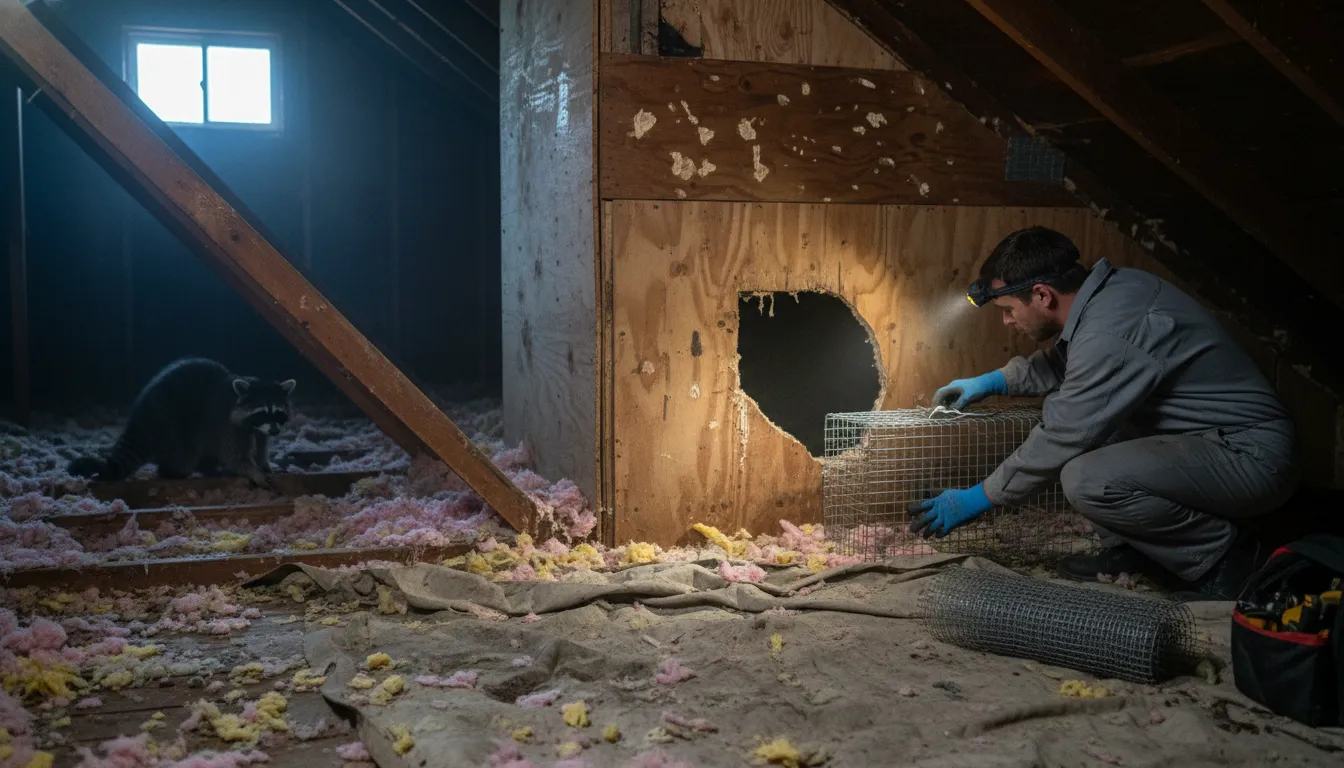
Find the Best Wildlife Removal Companies for Your Business
No obligation • Fast responses • Nationwide coverage
Why you can trust Pest Crews
Pest Crews is a leading U.S. resource for finding and evaluating residential and commercial pest control services. Our team researches providers, reviews treatment approaches, and organizes unbiased information to help you make informed decisions. Companies cannot pay to change our editorial content or influence how they appear.
Search providers near you
Top Wildlife Removal Companies in Pawtucket, Rhode Island Ranked
Discovering an uninvited animal in your Pawtucket home or business can be unsettling. Wildlife control is a specialized service focused on the humane and legal resolution of conflicts with wild animals that have become a nuisance or a hazard. In Rhode Island, this process is strictly regulated to protect both public safety and animal welfare. This guide explains the common wildlife issues in Pawtucket, outlines the legal framework you must follow, and helps you understand when and how to connect with licensed local professionals who can resolve your situation safely and effectively.
Debug Pest Control - Rhode Island
41 Cedar Swamp Rd Suite D, Smithfield, RI 02917
Debug Pest Control - Rhode Island is a locally owned pest management company based near Providence, RI, offering services for residential and commercial clients. They provide solutions for a wide range of pests including rodents, ants, termites, bed bugs, mosquitoes, and wasps. With over 30 years of experience, Debug Pest Control uses eco-friendly methods and integrated pest management strategies to effectively control and prevent infestations. Their service area includes Rhode Island, Connecticut, and Southeastern Massachusetts, and they offer same-day service when scheduled early in the week.
Assurance Pest Solutions
93 West St, Medfield, MA 02052
Assurance Pest Solutions is a family-owned pest control company serving Boston, MA, and surrounding areas in Massachusetts and Rhode Island. With over 40 years of experience, they provide residential and commercial pest management services including bed bug treatment, ant control, rodent control, termite inspection, mosquito control, bee and wasp removal, and wildlife removal. Their certified technicians use environmentally conscious Integrated Pest Management strategies to address infestations by targeting root causes such as entry points and nesting areas. The company also offers humane wildlife removal and exclusion services to protect properties while ensuring animal safety.
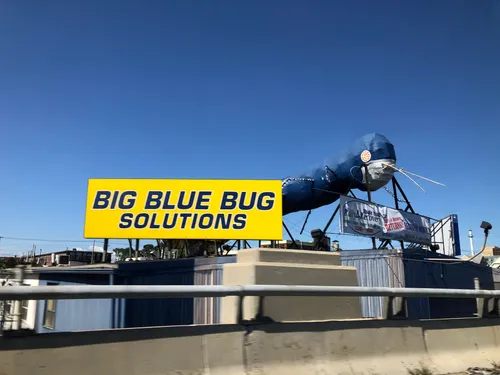
Big Blue Bug Solutions
161 O'Connell St, Providence, RI 02905
Big Blue Bug Solutions is a pest control company based in Providence, RI, serving homes and businesses across New England, including Rhode Island, Massachusetts, Connecticut, Vermont, Maine, and New Hampshire. The company offers comprehensive pest control services such as ant and rodent extermination, termite inspections, and wildlife removal. With over 90 years of experience since 1935, Big Blue Bug Solutions uses advanced techniques and maintains high standards of cleanliness and professionalism through its Blue Glove Service. They provide year-round pest protection and are available every day, all day, 365 days a year, ensuring continuous support for their customers.
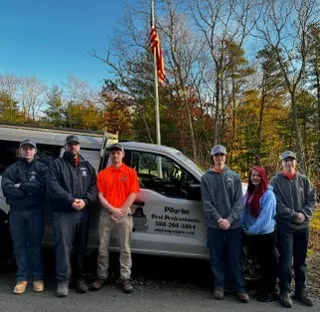
Pilgrim Pest Professionals of Quincy
Boston, MA
Pilgrim Pest Professionals of Quincy is a family-owned pest control company serving residents and businesses in Boston, MA. They offer a wide range of services including bed bug, cockroach, ant, rodent, and termite control, as well as wildlife removal and commercial pest management. The company provides 24/7 emergency pest control services and specializes in long-term pest management plans, including preventative treatments for recreational vehicles. With over 10 years of experience, Pilgrim Pest Professionals uses safe and humane removal techniques and guarantees results with coverage options lasting up to two years.
Ultra Safe Pest Management
465 Turnpike St, Canton, MA 02021
Ultra Safe Pest Management is a locally owned pest control and wildlife removal company serving Boston, MA. They provide services to residential, commercial, and municipal clients in the Greater Boston area. The company focuses on developing new pest control methods and materials with an emphasis on environmental responsibility. Owners are actively involved in daily operations and advancing pest control technology.
Understanding Nuisance Wildlife in Pawtucket
Pawtucket's mix of urban spaces, residential neighborhoods, and proximity to natural areas creates an ideal environment for wildlife to thrive. While seeing animals like squirrels or birds can be enjoyable in a park, problems arise when they seek food and shelter in our homes and businesses. Common nuisance species in the area include mammals such as squirrels, raccoons, skunks, foxes, opossums, coyotes, mice, and rats. Bird problems often involve pigeons, starlings, and English sparrows, which may require specific permits for control.
These animals are not inherently "bad," but their natural behaviors-like chewing wires, nesting in attics, digging under decks, or raiding trash cans-can lead to significant property damage, health risks from droppings, and stressful encounters. Effective animal removal in Pawtucket starts with understanding that these are wild creatures requiring specialized handling techniques governed by state law.
Rhode Island's Legal Framework for Wildlife Control
A critical first step for any Rhode Island resident dealing with a wildlife issue is understanding the state's regulations. The Rhode Island Department of Environmental Management (RIDEM) oversees all wildlife and licenses the professionals who handle it.
The most important rule to know is that it is illegal to capture and relocate nuisance mammals in Rhode Island 1. An animal caught on your property cannot be transported and released elsewhere. State law requires that nuisance wildlife be euthanized on-site or released on the same property where it was captured. This law exists to prevent the spread of disease, avoid introducing animals into established populations where they may not survive, and stop people from simply moving a problem to a neighbor's yard.
Because of this, do-it-yourself (DIY) trapping and relocation is prohibited. For removal services, you must contact a state-licensed Nuisance Wildlife Control Specialist (NWCS). These specialists are trained and permitted by RIDEM to conduct wildlife control services for a fee. They understand the legal methods for trapping, exclusion, and, when necessary, euthanasia. RIDEM provides public lists of these licensed specialists to help homeowners find qualified help.
Prevention: Your First Line of Defense
Before an animal becomes a problem, proactive measures can make your property less attractive to wildlife. Prevention is always the most effective and least costly form of wildlife management.
- Secure Food Sources: Use locking lids on trash cans, remove pet food from outdoors overnight, and clean up fallen fruit or nuts from your yard 2. Open compost piles can also attract animals.
- Exclude Entry Points: Conduct seasonal inspections of your home's exterior. Seal potential entry points into attics, crawl spaces, and basements with sturdy materials like hardware cloth or metal flashing. Pay special attention to areas where utility lines, vents, or chimneys enter the house 3.
- Modify Habitat: Trim tree branches that overhang your roof to limit access for squirrels and raccoons. Keep woodpiles and dense brush away from your home's foundation.
- Use Deterrents: Motion-activated lights or sprinklers can startle and discourage animals from frequenting certain areas. For specific bird issues, RIDEM-approved repellents may be an option.
When to Call a Professional Wildlife Removal Service
While prevention is key, there are clear situations where professional intervention is necessary and legally required. You should contact a licensed NWCS for Pawtucket animal control in the following scenarios:
- When DIY Methods Fail: If your preventive efforts have not resolved the issue, or an animal has already established itself inside your structure.
- For Active Infestations: Signs like persistent noises in walls or ceilings, visible entry holes, or the presence of droppings indicate an active problem that needs expert assessment and removal 4.
- For Species Requiring Special Handling: Bats, for example, have protected status in some contexts and require specific exclusion techniques. Large animals like raccoons or coyotes pose safety risks.
- When Removal is Necessary: Remember, if an animal needs to be trapped, you must use a licensed professional, as relocation is not a legal option 5 6.
- For Health and Safety Concerns: If wildlife has caused significant damage, contaminated an area with waste, or if you are unsure how to proceed safely.
Find the perfect wildlife removal companies for your needs
Get personalized recommendations and expert advice
What Professional Wildlife Control Involves
A licensed Nuisance Wildlife Control Specialist will typically follow a multi-step process to resolve your issue permanently and legally.
- Inspection: The specialist will perform a thorough inspection of your property to identify the species involved, locate all entry and exit points, and assess the extent of the infestation or damage.
- Control Plan: They will develop a custom plan, which may involve live trapping (following state laws), one-way exclusion devices that allow animals to leave but not re-enter, or direct removal.
- Removal & Legal Compliance: Any trapped animals will be handled in accordance with Rhode Island law. The specialist will ensure all activities are documented and reported to RIDEM as required 7 8.
- Exclusion & Repair: After the animals are gone, the most critical step is to seal all entry points to prevent re-infestation. This is the "control" in wildlife control.
- Cleanup & Sanitation: Many professionals offer cleanup services for droppings, nesting materials, and urine, which is important for restoring air quality and eliminating health hazards.
Costs and Selecting a Provider
The cost for professional wildlife abatement in Pawtucket varies significantly based on the species, the severity of the infestation, the complexity of the removal, and the extent of repairs needed 9 10. You can expect fees for the initial inspection, the trapping/removal service itself, and any follow-up exclusion or cleanup work. It is highly recommended to contact multiple licensed NWCS providers for estimates. Always verify that the company holds a current RIDEM Nuisance Wildlife Control Specialist permit.
What Not to Do: Common Missteps
- Do Not Attempt Relocation: As emphasized, capturing and moving an animal is illegal and can result in fines 11 12.
- Do Not Seal Entry Points Prematurely: If you seal a main entry hole while animal young (like baby squirrels or raccoons) are still inside, you will create a much worse problem. Ensure all animals are out before performing exclusion.
- Do Not Feed Wildlife: Intentionally or accidentally feeding wildlife trains them to associate humans with food, increasing nuisance behavior.
- Do Not Contact Animal Control for Wildlife: Municipal animal control services in Pawtucket, like the Animal Control Division, are typically responsible for domestic animals such as stray dogs and cats, pet-related complaints, and licensing issues-not for wild animal removal 13 14.
Self-Defense and Landowner Rights
Rhode Island law does provide limited rights for property owners. A landowner may legally kill a furbearing animal on their property if it is damaging livestock or property 15. However, this action comes with responsibilities: any animal killed must be reported to RIDEM within 24 hours, and the carcass must be handled according to state regulations 15. For most homeowners, the complexities and safety risks make professional wildlife control the preferred and more reliable choice.
Frequently asked questions
Sources
Footnotes
-
Rhode Island Department of Environmental Management | Facebook - https://www.facebook.com/RhodeIslandDEM/posts/capturing-a-wild-animal-whether-in-your-backyard-or-elsewhere-and-releasing-it-i/2252019768371901/ ↩
-
Rhode Island Wildlife Removal - Raccoon, Rodent, Bird Control in ... - http://www.rhodeislandpestwildlife.com/ ↩
-
Rules and Regulations Governing Nuisance Wildlife Control ... - https://rules.sos.ri.gov/regulations/part/250-60-00-3 ↩
-
Wildlife In Rhode Island Can Be Extremely Problematic - https://www.bigbluebug.com/wildlife-in-rhode-island-can-be-extremely-proble/ ↩
-
Rhode Island Wildlife Control and Animal Removal - http://www.aaanimalcontrol.com/professional-trapper/state/rhode-island.htm ↩
-
Nuisance Wildlife - Rhode Island Woods - https://web.uri.edu/rhodeislandwoods/wildlife/nuisance-wildlife/ ↩
-
Application for Nuisance Wildlife Control Specialist Permit - https://dem.ri.gov/sites/g/files/xkgbur861/files/programs/bnatres/fishwild/pdf/nwcs.pdf ↩
-
250 R.I. Code R. 250-RICR-60-00-3.6 - Nuisance Wildlife ... - https://www.law.cornell.edu/regulations/rhode-island/250-RICR-60-00-3.6 ↩
-
FAQ - https://virginiaprofessionalwildliferemovalservices.com/faq.html ↩
-
What to do if I see a wild animal in Rhode Island | Skunk - https://wildlifehelp.org/solution/rhode-island/skunk/what-do-if-i-see-wild-animal/101 ↩
-
Relocating Wildlife Is Prohibited In Rhode Island - https://dem.ri.gov/sites/g/files/xkgbur861/files/programs/bnatres/fishwild/pdf/norelok8.pdf ↩
-
Relocating Wildlife Is Prohibited in Rhode Island - https://dem.ri.gov/sites/g/files/xkgbur861/files/2024-03/norelok8.pdf ↩
-
Pawtucket Wildlife Removal, Pest Animal Control RI - http://www.wildlife-removal.com/city/RI-Pawtucket.htm ↩
-
City of Pawtucket, RI Dogs and Other Animals - eCode360 - https://ecode360.com/8129136 ↩
-
Solving Issues with Backyard Wildlife - https://dem.ri.gov/media/36961/download ↩ ↩2