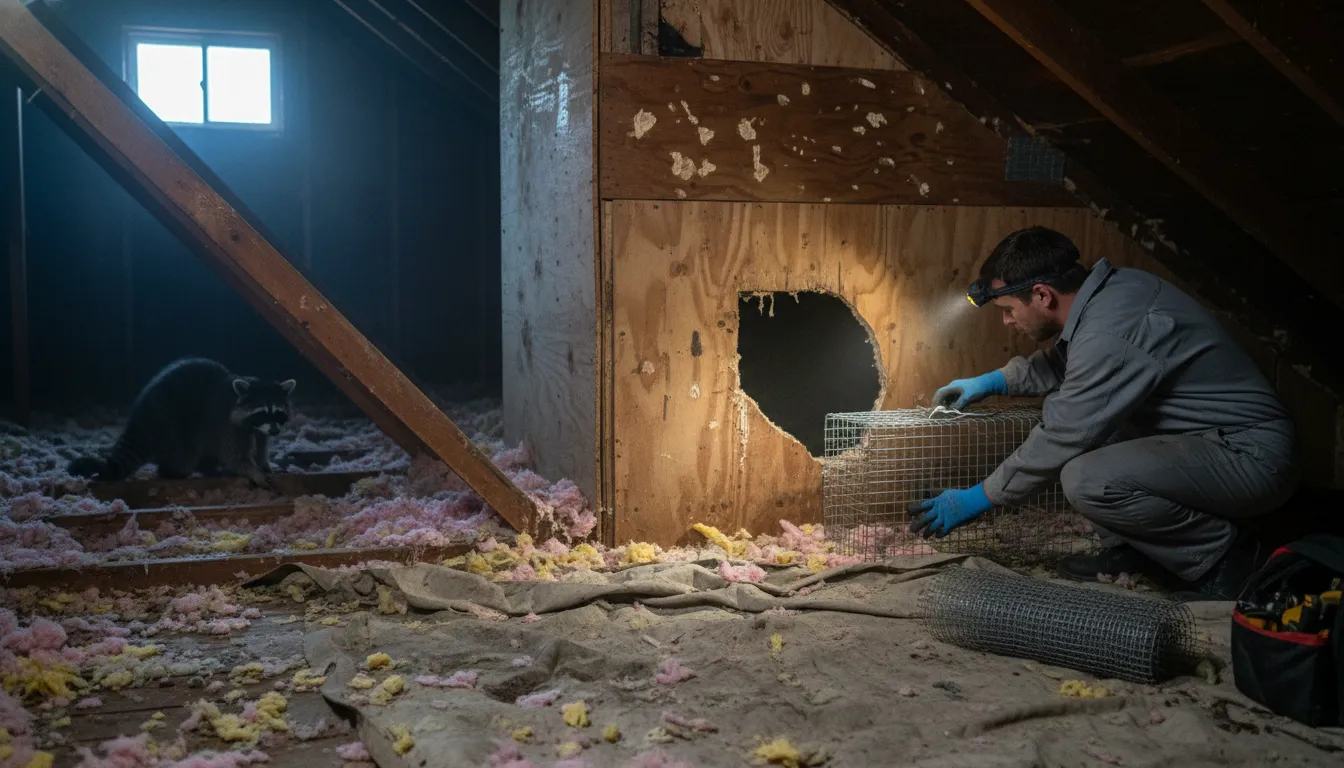
Find the Best Wildlife Removal Companies for Your Business
No obligation • Fast responses • Nationwide coverage

Why you can trust Pest Crews
Pest Crews is a leading U.S. resource for finding and evaluating residential and commercial pest control services. Our team researches providers, reviews treatment approaches, and organizes unbiased information to help you make informed decisions. Companies cannot pay to change our editorial content or influence how they appear.
Search providers near you
Top Wildlife Removal Companies in Warwick, Rhode Island Ranked
Discovering an uninvited animal in your attic, chimney, or under your deck can be unsettling. In Warwick, managing conflicts with local wildlife requires a specific approach due to Rhode Island's strict regulations. This guide explains the common nuisance species you might encounter, outlines effective prevention and legal removal strategies, and helps you understand when to call a professional. By learning the rules and best practices, you can protect your property and ensure wildlife is handled humanely and legally.
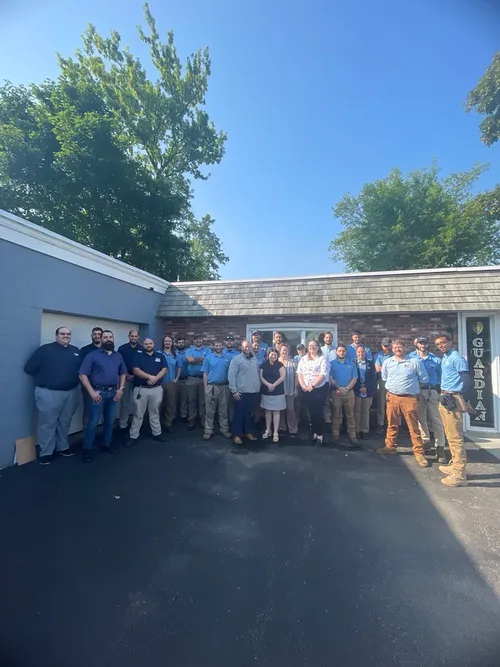
Debug Pest Control - Rhode Island
41 Cedar Swamp Rd Suite D, Smithfield, RI 02917
Debug Pest Control - Rhode Island is a locally owned pest management company based near Providence, RI, offering services for residential and commercial clients. They provide solutions for a wide range of pests including rodents, ants, termites, bed bugs, mosquitoes, and wasps. With over 30 years of experience, Debug Pest Control uses eco-friendly methods and integrated pest management strategies to effectively control and prevent infestations. Their service area includes Rhode Island, Connecticut, and Southeastern Massachusetts, and they offer same-day service when scheduled early in the week.
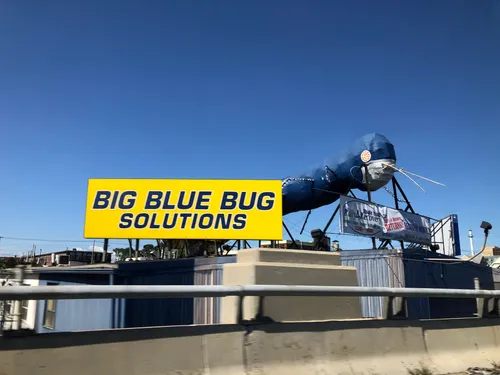
Big Blue Bug Solutions
161 O'Connell St, Providence, RI 02905
Big Blue Bug Solutions is a pest control company based in Providence, RI, serving homes and businesses across New England, including Rhode Island, Massachusetts, Connecticut, Vermont, Maine, and New Hampshire. The company offers comprehensive pest control services such as ant and rodent extermination, termite inspections, and wildlife removal. With over 90 years of experience since 1935, Big Blue Bug Solutions uses advanced techniques and maintains high standards of cleanliness and professionalism through its Blue Glove Service. They provide year-round pest protection and are available every day, all day, 365 days a year, ensuring continuous support for their customers.
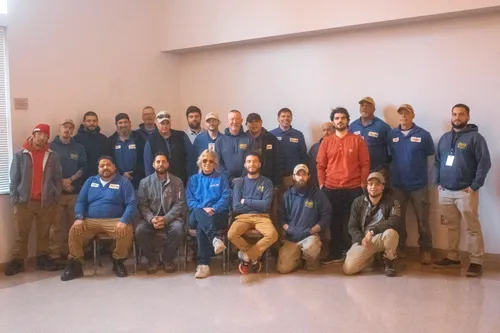
Eliminate 'Em Pest Control Services, LLC
10 Dorrance St #700, Providence, RI 02903
Eliminate 'Em Pest Control Services, LLC is a family-owned pest control company serving Providence, RI, and surrounding areas. They specialize in bed bug treatment, ant control, rodent control, termite inspections, wildlife removal, and commercial pest control. The company offers 24/7/365 availability for urgent pest issues and uses safe, non-chemical solutions to protect homes and businesses. With over 35 years of experience, Eliminate 'Em focuses on humane pest control methods and long-term prevention by sealing entry points and providing advice to avoid future infestations.
Terminator Pest Control LLC
Providence, RI
Terminator Pest Control LLC provides pest control services in Providence, RI, specializing in residential and commercial pest management. Their services include rodent control, wildlife exclusion, and tailored solutions to address infestations at the source and prevent future issues. The company focuses on long-term results for both homes and businesses.
Catseye Pest Control - Providence, RI
Turks Head Building, 1 Place 11th Floor Pl 11th Floor 1, Providence, RI 02903
Catseye Pest Control - Providence, RI offers customized pest, rodent, and wildlife control services for homes and businesses in Providence, RI. Their approach includes removal, clean-up, and exclusion to prevent future infestations. They provide specialized commercial pest solutions with monthly visits to maintain pest-free environments and help businesses meet health standards. Catseye also features the Cat-Guard exclusion system, an eco-friendly, chemical-free method with a limited lifetime warranty for permanent wildlife protection.
Common Nuisance Wildlife in Warwick
Warwick's mix of suburban neighborhoods, wooded areas, and proximity to water creates ideal habitats for several species that can become problematic for homeowners. Knowing which animal you're dealing with is the first step toward a solution.
- Raccoons: These intelligent, dexterous mammals are frequent culprits. They seek shelter in attics, chimneys, and crawlspaces, often causing significant damage to insulation, wiring, and roofing as they create dens.
- Rodents: This category includes squirrels, rats, and mice. Squirrels often enter attics to nest, while rats and mice may infest walls, basements, and garages, gnawing on materials and contaminating food sources.
- Bats: Small colonies may roost in attics or behind shutters. While beneficial for insect control, their droppings (guano) pose health risks and require careful, specialized removal.
- Groundhogs (Woodchucks): These burrowing animals can undermine sheds, decks, and foundations with their extensive tunnel systems.
- Opossums & Skunks: Often attracted by pet food or unsecured garbage, these nocturnal visitors may take up residence under porches or decks.
- Deer: In Warwick and surrounding areas, deer can cause significant landscape damage by browsing on gardens, shrubs, and young trees.
- Nuisance Birds: Pigeons, starlings, and house sparrows can create messes with their droppings, block vents with nests, and their cooing or chirping can become a noise nuisance 1.
Rhode Island's Legal Framework for Wildlife Control
Before taking any action, it's crucial to understand state laws. Rhode Island has specific regulations designed to prevent the spread of disease and protect both wildlife and residents 2.
- Relocation is Illegal: It is against state law to capture any furbearing animal (like raccoons, skunks, or squirrels) and release it elsewhere. This prohibition is in place because relocated animals often struggle to survive, can spread disease to new areas, or simply become a problem for someone else.
- The Role of Licensed Specialists: Only state-licensed Nuisance Wildlife Control Specialists (NWCS) are authorized to provide paid animal removal services for these species. They are trained in legal, humane methods and understand proper disposal protocols.
- Property Owner's Rights: If a furbearing animal is causing damage to your property or livestock, Rhode Island law allows you to kill it on your property using legal means (firearms where permitted, live traps followed by euthanasia). Critical Note: The use of poisons or snares is generally prohibited, and you are required by law to report the kill to the Rhode Island Department of Environmental Management (RIDEM) and provide the carcass 3.
- Who to Call (And Who Not To): For issues with stray dogs, cats, or neglected domestic pets, you should contact Warwick Animal Control 4. However, they do not handle wild animal problems. For all wildlife concerns, regulations, or to find a licensed professional, the primary resource is the RIDEM Division of Fish & Wildlife.
Effective Prevention: Your First Line of Defense
The most effective and cost-efficient strategy for wildlife control is to make your property less attractive to animals in the first place. This proactive approach, known as exclusion, is highly recommended by experts 5 6.
- Eliminate Food Sources: Secure your trash cans with tight-fitting lids or bungee cords. Do not leave pet food outdoors overnight. Clean up fallen fruit from trees and use bird feeders that are less likely to spill seed on the ground.
- Block Access Points: Conduct a thorough inspection of your home's exterior. Seal any gaps, cracks, or holes larger than a quarter-inch using materials like hardware cloth, steel wool, or caulk. Pay special attention to areas where utility lines enter the house, roof vents, and soffits.
- Remove Denning Sites: Clear away brush piles, woodpiles, and dense vegetation close to your home's foundation. Keep tree branches trimmed back at least 6-8 feet from the roofline to prevent easy access for squirrels and raccoons.
- Use Deterrents: For specific issues like deer browsing, you can use repellents registered for use in Rhode Island. For birds, netting or spikes in common roosting areas can be effective.
Find the perfect wildlife removal companies for your needs
Get personalized recommendations and expert advice
When to Hire a Professional Wildlife Removal Service
While DIY methods are suitable for prevention, there are clear situations where enlisting a licensed NWCS is the safest and most practical choice 7.
- When DIY Methods Fail: If an animal has already established a den inside your home (e.g., raccoons in the chimney, squirrels in the attic), removal can be complex and hazardous.
- For Complex Infestations: A significant rodent (rat or mouse) problem within walls or crawlspaces often requires professional-grade traps, monitoring, and exclusion work to fully resolve.
- For Species Requiring Special Handling: Raccoons, bats, and larger animals pose risks of bites, scratches, and disease transmission (like rabies or histoplasmosis from bat guano). Professionals have the proper protective equipment and training.
- To Ensure Legal and Humane Resolution: A licensed specialist will ensure the animal is handled in full compliance with Rhode Island law, which may involve on-site release or humane euthanasia, but never illegal relocation 8.
Understanding Wildlife Removal Costs in Warwick
The price for professional animal control services varies based on several factors. While we can't provide exact quotes, understanding what influences cost can help you evaluate estimates 9 10.
- Type of Animal: Removal of a single squirrel from an attic is typically less expensive than evicting a mother raccoon with young from a chimney, which requires more time and careful strategy.
- Extent of the Problem: The cost will be higher for a large, established infestation (like a colony of bats or multiple rodents) compared to a single animal that just entered.
- Location of the Animal: An animal in an easily accessible crawlspace is simpler to remove than one trapped inside a wall void, which may require cutting and repair.
- Required Services: Most jobs involve two parts: removal and exclusion. The removal fee is for extracting the animal(s). The exclusion work-sealing all entry points to prevent re-entry-is a separate and crucial cost that ensures the problem doesn't recur. You might also incur costs for cleanup and sanitization, especially after rodents or bats.
- Typical Range: For standard removals (like a squirrel or raccoon from an attic), homeowners might expect fees to start in the $150 to $500+ range, with exclusion work adding to the total 11 12. Always get a detailed, written estimate that breaks down inspection, removal, exclusion, and any repair costs.
Finding Licensed and Reputable Help
Your best resource for finding a qualified professional is the official list maintained by the Rhode Island Department of Environmental Management (RIDEM) 13 14. When contacting specialists, ask key questions: Are you a state-licensed NWCS? Can you provide a detailed written estimate? Do you offer a warranty on your exclusion work? What is your process for handling the animals in compliance with RI law? Checking reviews and asking for references can also provide peace of mind.
Frequently asked questions
Sources
Footnotes
-
Nuisance Wildlife - Rhode Island Woods - https://web.uri.edu/rhodeislandwoods/wildlife/nuisance-wildlife/ ↩
-
RIDEM, Division of FIsh & Wildlife, WIldlife, Relocation of WIldife is Prohibited in Rhode Island, Factsheet - https://dem.ri.gov/sites/g/files/xkgbur861/files/programs/bnatres/fishwild/pdf/norelok8.pdf ↩
-
Rhode Island Department of Environmental Management | Facebook - https://www.facebook.com/RhodeIslandDEM/posts/capturing-a-wild-animal-whether-in-your-backyard-or-elsewhere-and-releasing-it-i/2252019768371901/ ↩
-
Page Chapter 4 - ANIMALS AND FOWL[1] Footnotes - https://www.warwickri.gov/sites/g/files/vyhlif12206/f/agendas/with_changes_tracked_chapter_4_animals_and_fowl_kp_edits.pdf ↩
-
Solving Issues with Backyard Wildlife - https://dem.ri.gov/media/36961/download ↩
-
Rules and Regulations Governing Nuisance Wildlife Control ... - https://rules.sos.ri.gov/regulations/part/250-60-00-3 ↩
-
rules and regulations governing nuisance wildlife control ... - https://dem.ri.gov/sites/g/files/xkgbur861/files/pubs/regs/regs/fishwild/f_wnusnc.pdf ↩
-
Application for Nuisance Wildlife Control Specialist Permit - https://dem.ri.gov/sites/g/files/xkgbur861/files/programs/bnatres/fishwild/pdf/nwcs.pdf ↩
-
Warwick Wildlife Removal, Pest Animal Control RI - Bay State ... - http://www.wildlife-removal.com/city/RI-Warwick.htm ↩
-
Rhode Island Wildlife Control and Animal Removal - http://www.aaanimalcontrol.com/professional-trapper/state/rhode-island.htm ↩
-
How Much Does Animal in Attic Removal Cost? - https://www.yahoo.com/lifestyle/much-does-animal-attic-removal-111955331.html ↩
-
Affordable Wildlife Removal Cost - https://critterohio.com/how-much-does-wildlife-removal-cost/ ↩
-
Relocating Wildlife Is Prohibited In Rhode Island - https://dem.ri.gov/sites/g/files/xkgbur861/files/programs/bnatres/fishwild/pdf/norelok8.pdf ↩
-
Learn about RI wildlife - https://dem.ri.gov/natural-resources-bureau/fish-wildlife/learn-about-ri-wildlife ↩