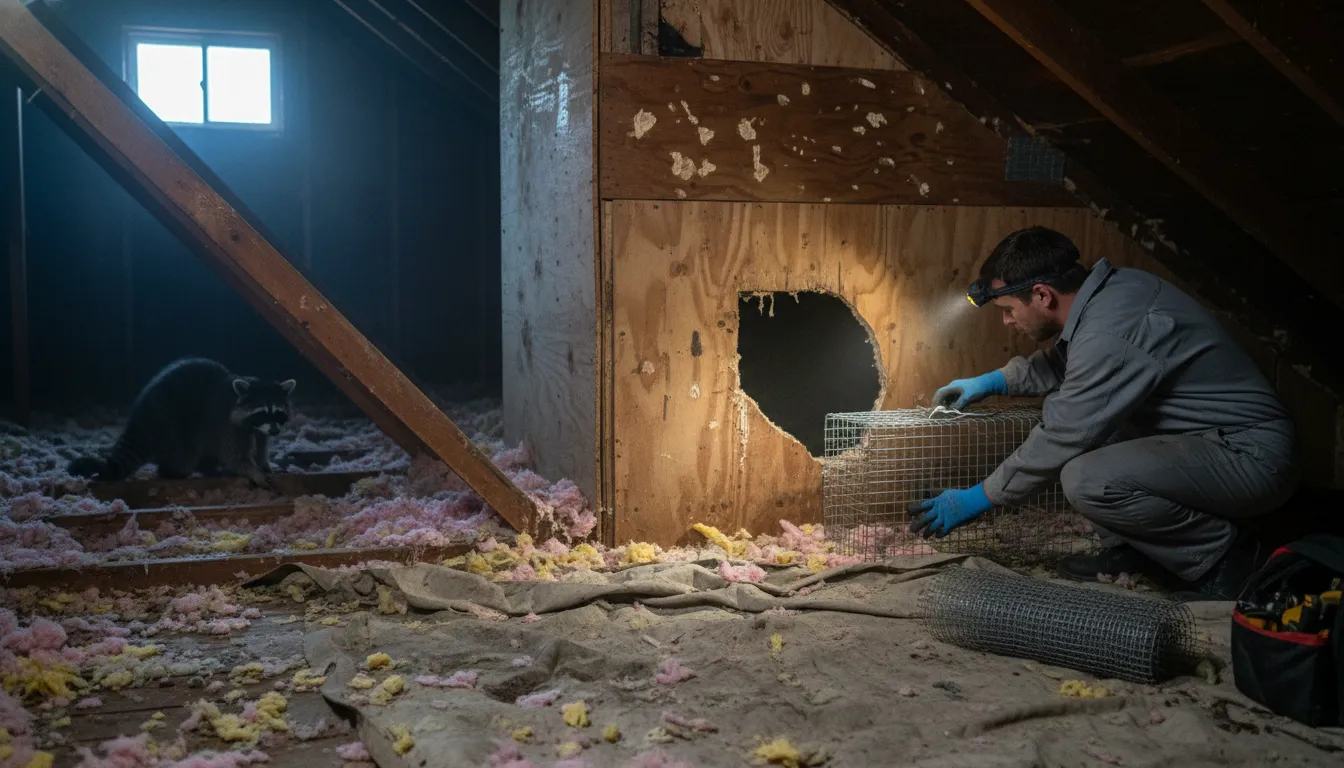
Find the Best Wildlife Removal Companies for Your Business
No obligation • Fast responses • Nationwide coverage

Why you can trust Pest Crews
Pest Crews is a leading U.S. resource for finding and evaluating residential and commercial pest control services. Our team researches providers, reviews treatment approaches, and organizes unbiased information to help you make informed decisions. Companies cannot pay to change our editorial content or influence how they appear.
Search providers near you
Top Wildlife Removal Companies in Eagle Mountain, Utah Ranked
Living in Eagle Mountain offers stunning views and a connection to nature, but sometimes that wild beauty gets a little too close for comfort. Wildlife removal is the process of safely and legally managing nuisance animals that have entered your property, from deer browsing on your garden to rodents in your attic. This service is crucial for protecting your home from damage, preventing health risks from animal waste, and ensuring humane solutions for both you and the animals. This guide will help you understand the local wildlife challenges, what you can handle yourself, and when it's time to call in a licensed professional for animal control or critter removal.
Pest Pro Pest Control
3335 S 900 E Ste 200, Salt Lake City, UT 84106
Pest Pro Pest Control is a Salt Lake City, UT-based company specializing in residential and commercial pest management. They offer services including bed bug treatment, rodent and wildlife removal, termite inspections, and insect control such as ants, cockroaches, and wasps. Their approach centers on Integrated Pest Management (IPM), using EPA-registered, family- and pet-friendly products to address infestations while minimizing environmental impact. Recognized with multiple local awards in 2025, Pest Pro combines certified expertise with a focus on long-term pest prevention and safety.
Thorn Pest Solutions Salt Lake City
Salt Lake City, UT
Thorn Pest Solutions Salt Lake City is a pest management company serving Salt Lake City, UT, with over 15 years of experience. They provide comprehensive residential and commercial pest control services, addressing issues such as bed bugs, cockroaches, ants, rodents, termites, mosquitoes, bees, wasps, and wildlife. Their approach is science-backed and customized, involving thorough inspections and tailored treatment plans to effectively manage and prevent infestations. Thorn's team includes certified entomologists and urban rodentologists who apply biology-based methods to protect homes and businesses from pests that can cause health risks and structural damage. Established in 2007, Thorn Pest Solutions focuses on long-term prevention and offers specialized services for various industries including government, hospitality, food processing, schools, and healthcare.
Daniel's Wildlife & Pest Control
6870 S Village Green Rd, Cottonwood Heights, UT 84121
Daniel's Wildlife & Pest Control is a wildlife removal and pest control company based in Salt Lake City, UT. They provide services to manage and remove various wildlife and pest issues in the area. The company focuses on safe and effective wildlife and pest control solutions tailored to local needs.
Serve Pest Control
9980 S 300 W, Sandy, UT 84070
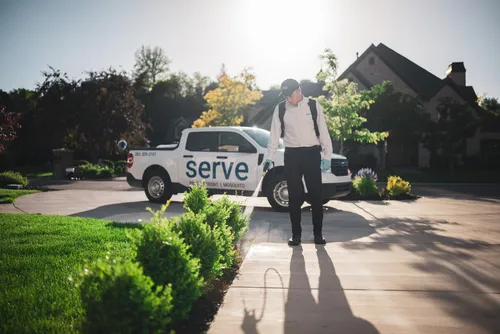
Serve Pest Control provides comprehensive pest control services in Salt Lake City, UT, handling a wide range of pests including ants, cockroaches, rodents, termites, mosquitoes, bees, wasps, and wildlife. Their licensed technicians offer both residential and commercial pest management, using environmentally friendly products and customized treatment plans to ensure safe and effective pest elimination. The company treats entire properties and offers a year-round pest warranty with unlimited re-services if pests return. Serve Pest Control has built its expertise through years of experience and focuses on maintaining safe environments for families and businesses.
Mountain West Pest Control
3343 S Main St, Salt Lake City, UT 84115
Mountain West Pest Control is a locally owned pest control company serving Salt Lake City, UT. They provide comprehensive pest management services for homes and businesses, including treatment for ants, bed bugs, cockroaches, mosquitoes, rodents, termites, and wildlife removal. Their approach covers the entire property from curb to fence line and includes the use of hospital-grade, people- and pet-friendly products. Mountain West Pest Control also offers lawn care services designed to prevent pest attraction and conserve water. Founded by experienced professionals from national companies, they focus on personalized service and offer free re-treatments between quarterly visits.
Understanding Eagle Mountain's Nuisance Wildlife
Eagle Mountain's rapid growth into previously wild areas means residents frequently encounter local fauna. Knowing which species are common and their potential impacts is the first step in effective wildlife management.
Common Problem Animals The most frequent visitors to local properties include deer, coyotes, snakes, various rodents (like mice, gophers, and squirrels), raccoons, and bats. Each presents unique challenges. Deer can cause significant landscaping damage and become aggressive, particularly during the fall rutting season. Coyotes and raccoons are attracted to unsecured trash and pet food. Rodents seek shelter in attics, garages, and wall voids, gnawing on wires and insulation. Bats and snakes often require professional intervention due to legal protections and safety concerns.
Why Professional Intervention is Often Needed While some situations can be handled independently, many require specialized knowledge. Professionals, often called Nuisance Wildlife Control Operators (NWCOs), understand animal behavior, local and state regulations, and humane removal techniques. They also address the aftermath, such as repairing entry points, cleaning biohazardous waste, and applying exclusion measures to prevent future intrusions. Attempting to handle protected or dangerous species like bats or venomous snakes without expertise can be illegal and hazardous.
What You Can Do: DIY Wildlife Deterrence and Removal
Utah law allows residents to address certain nuisance animals on their own property without a special license. This self-help approach centers on prevention and permissible trapping.
Habitat Modification and Deterrence The most effective long-term strategy is to make your property less attractive to wildlife. For deer, this can involve installing tall fencing or using commercially available repellents. For raccoons, skunks, and rodents, securing trash cans with locking lids, removing pet food from outdoors, and sealing potential entry points to structures are critical steps. Keeping yards clear of woodpiles and dense brush reduces shelter for snakes and small mammals.
Permit-Free Removal Actions According to Utah Division of Wildlife Resources (DWR) guidelines, you can trap and euthanize certain species on your property without a license if they are causing damage. This typically includes coyotes, skunks, gophers, ground squirrels, jackrabbits, muskrats, and house mice 1. It's important to use humane traps and follow local ordinances regarding discharge of firearms within city limits. Remember, if you plan to keep the pelt of an animal like a skunk or fox, a furbearer license may be required 1.
When to Call the Authorities or a Professional
Knowing when a situation is beyond a DIY fix is key to safety and legal compliance. Some scenarios require immediate reporting, while others call for the skills of a licensed wildlife removal expert.
Situations for Animal Control or DWR You should immediately report an animal that is acting aggressively or appears sick (e.g., a deer that is not fleeing from humans, an animal displaying signs of rabies). For a dead deer or other large animal on your property, contact the DWR for disposal. Also, report any observed illegal activities, such as someone releasing captive animals into the wild or unlawfully harming protected wildlife.
When to Hire a Licensed NWCO You need a professional for species you are not legally allowed to handle yourself, such as bats and most snakes 2. An NWCO is also the best choice for complex or dangerous situations: removing a raccoon family from a chimney, extracting squirrels from inside walls, or dealing with a colony of bats in an attic 3. These professionals have the tools, knowledge, and legal standing to resolve the issue safely and completely, often providing exclusion services to ensure the animals cannot return.
Find the perfect wildlife removal companies for your needs
Get personalized recommendations and expert advice
The Professional Wildlife Removal Process
Hiring a professional wildlife control service involves more than just trapping an animal. A comprehensive approach ensures the problem is solved for good.
Inspection and Assessment A qualified technician will start with a thorough inspection of your property to identify the nuisance species, locate all entry points, and assess the extent of the damage or infestation. This step is crucial for developing an effective and targeted removal plan.
Humane Removal and Exclusion The core of the service is the safe removal of the animals using methods approved by state wildlife agencies. Following removal, the most critical step is exclusion-permanently sealing all identified entry points with durable materials like steel mesh, hardware cloth, or specialized vent covers 4. This prevents other animals from moving into the now-vacated space. Without proper exclusion, the problem is likely to recur.
Cleanup and Restoration Wildlife leaves behind droppings, urine, nesting materials, and sometimes carcasses. These can pose serious health risks, damage insulation, and create persistent odors. Professional services often include biohazard cleanup, sanitization, and deodorization. They may also offer attic restoration services to replace contaminated insulation and repair structural damage caused by gnawing or nesting.
Understanding Costs and How to Choose a Provider
The cost of wildlife abatement varies widely based on the species, the complexity of the removal, and the extent of repairs needed.
Factors Influencing Price A simple job like trapping and removing ground squirrels from a yard will be on the lower end of the cost spectrum. More involved services, like removing a maternal colony of bats, which requires careful timing (outside of pup season), exclusion of all entry points, and potential guano cleanup, will be significantly more expensive due to the expertise and labor involved 5 6. Raccoon removal, snake extraction, and full attic restorations also fall into higher price categories. Always request a detailed, written estimate that breaks down inspection, removal, exclusion, and cleanup costs 7.
Selecting a Qualified Professional When searching for "wildlife removal Eagle Mountain," look for licensed and insured Nuisance Wildlife Control Operators (NWCOs). Verify their credentials with the Utah DWR. Ask about their methods-they should prioritize humane removal and permanent exclusion. Check online reviews and ask for references. A reputable company will provide a clear contract, guarantee their exclusion work, and be knowledgeable about Utah's specific wildlife regulations.
Legal and Ethical Considerations in Utah
Navigating the legal landscape is a fundamental part of responsible wildlife management. Utah's regulations are designed to protect both property owners and native animal populations.
Key DWR Regulations The Utah Division of Wildlife Resources administers rules governing the "taking, possessing, or releasing of wildlife" 8. It is illegal to trap and relocate most wildlife to a new area, as this can spread disease and disrupt ecosystems. This is why professionals typically euthanize nuisance animals according to protocol or release them on-site only under very specific conditions. Always confirm that any professional you hire operates in full compliance with these state rules 8.
The Ethical Imperative of Humane Practices Beyond legality, there's an ethical duty to treat nuisance animals humanely. This means using traps that do not cause undue suffering, avoiding poisons that can lead to a slow death and secondary poisoning of pets or other wildlife, and ensuring that orphaned young are dealt with appropriately. Professional wildlife removers are trained in these best practices, making them a responsible choice for ethically complex situations.
Frequently asked questions
Sources
Footnotes
-
What to Do Now That You've Trapped a Nuisance Wild Animal - https://digitalcommons.usu.edu/cgi/viewcontent.cgi?article=3516&context=extension_curall ↩ ↩2
-
Spotted wildlife in your neighborhood? Here's when to report it to the ... - https://wildlife.utah.gov/news/utah-wildlife-news/2021-when-to-report-spotted-wildlife-in-your-neighborhood-to-the-dwr.html ↩
-
Wildlife Removal Q&A | Frequently Asked Questions - https://urbanjunglewildliferemoval.com/qa/ ↩
-
Wildlife Exclusion Services - https://www.fullscopepestcontrol.com/what-is-wildlife-exclusion-2/ ↩
-
Utah Wildlife Control and Animal Removal - http://www.aaanimalcontrol.com/professional-trapper/state/utah.htm ↩
-
Wildlife Control Pricing Guide - https://www.michiganwildlifesolutions.com/about/wildlife-control-pricing/ ↩
-
The Cost of Wildlife Removal: What You Need to Know - https://coastalwildlifeservices.com/cost-of-wildlife-removal/ ↩
-
Administrative rules - Utah Division of Wildlife Resources - https://wildlife.utah.gov/35-administrative-rules.html?start=10 ↩ ↩2