Find the Best Wildlife Removal Companies for Your Business
No obligation • Fast responses • Nationwide coverage

Why you can trust Pest Crews
Pest Crews is a leading U.S. resource for finding and evaluating residential and commercial pest control services. Our team researches providers, reviews treatment approaches, and organizes unbiased information to help you make informed decisions. Companies cannot pay to change our editorial content or influence how they appear.
Search providers near you
Top Wildlife Removal Companies in Janesville, Wisconsin Ranked
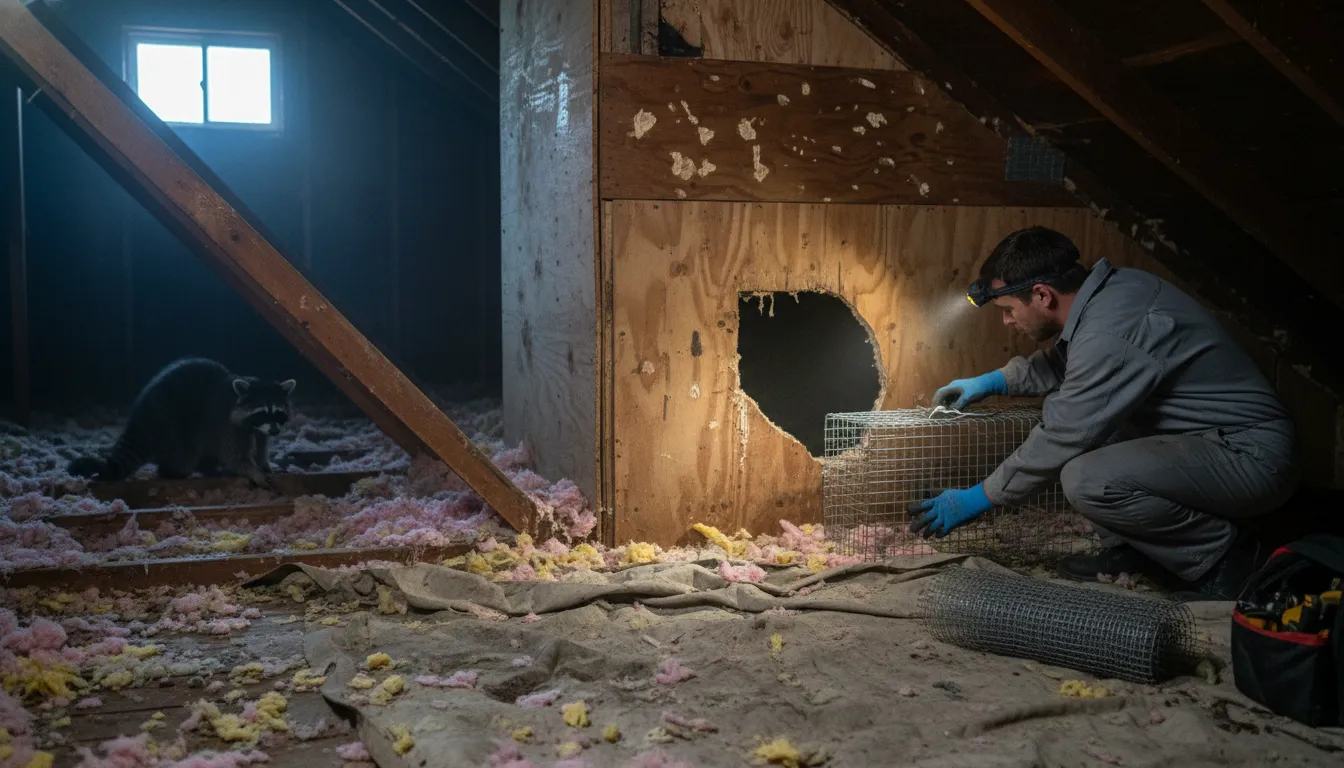
Discovering an uninvited animal in your attic, hearing scratching in your walls, or seeing a coyote near your property can be unsettling. Wildlife removal is the professional service of safely and legally resolving conflicts with wild animals that have become a nuisance or a danger to your home or business. In Janesville, where urban spaces meet natural habitats, understanding how to manage these encounters is crucial for your safety and the well of the animals. This guide will help you identify common local wildlife issues, explore effective and legal solutions, and know when it's time to call in a licensed expert.
Orkin
3029 S Stoughton Rd, Madison, WI 53716
Orkin provides comprehensive pest control services in Madison, WI, addressing common pests such as cockroaches, ants, mosquitoes, rodents, stinging insects, and bed bugs. They offer customized pest management plans for both residential and commercial properties, including termite inspections and treatments. With over 120 years of experience, Orkin's trained professionals understand the seasonal pest challenges unique to the Madison area. Their Madison branch operates 24/7 to assist with pest issues at any time.
Bohmz Pest Services - Madison
Madison, WI
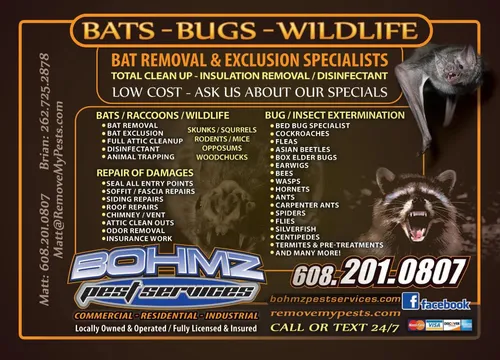
Bohmz Pest Services - Madison offers pest control and wildlife removal services in Madison, WI, and surrounding counties including Dane, Rock, Jefferson, Walworth, and Green. They handle a variety of nuisance animals such as bats, raccoons, squirrels, and birds, as well as pest issues in residential, commercial, and industrial settings. Their services include rodent prevention, attic clean-out and restoration, bat proofing, and contamination cleanup. The company employs certified pest control technicians with local expertise to address pest and wildlife problems effectively.
Common Nuisance Wildlife in Janesville
The Rock River and surrounding green spaces make Janesville a beautiful place to live, but they also attract a variety of wildlife that can sometimes venture too close to homes. Knowing what you're dealing with is the first step.
- Raccoons: These intelligent, dexterous mammals are frequent visitors, often drawn to unsecured garbage or pet food. They seek shelter in attics, chimneys, and under decks, potentially causing significant damage and creating health hazards with their droppings.
- Squirrels: Both gray and fox squirrels are common. They are notorious for chewing their way into attics and eaves to build nests, which can damage wiring, insulation, and structural wood.
- Bats: Several bat species, which are protected under Wisconsin law, may roost in attics or barns. While beneficial for insect control, a colony inside your home poses health risks due to guano accumulation and the potential for rabies transmission.
- Coyotes: These adaptable predators are present in and around Janesville. They are generally wary of humans but may be attracted by small pets, fallen fruit, or unsecured compost.
- Rodents: Mice and rats seek the warmth and food sources provided by homes, especially in colder months. They can contaminate food, chew wires, and reproduce rapidly.
- Birds: Canada Geese can become a nuisance on lawns and near ponds due to aggressive behavior and prolific droppings. Pigeons (rock doves) may roost on buildings, leading to clogged gutters and unsanitary conditions.
Effective and Legal Do-It-Yourself Strategies
For minor wildlife issues, proactive, non-lethal methods can be highly effective. The core principle is to make your property less attractive and accessible.
Remove All Attractants: This is your most powerful tool. Secure garbage cans with tight-fitting lids or bungee cords. Do not leave pet food outdoors overnight. Clean up fallen fruit from trees and bird seed from under feeders. Clear away dense brush and woodpiles that provide shelter near your home's foundation.
Seal Entry Points: Conduct a thorough inspection of your home's exterior. Look for gaps in siding, loose roof vents, holes in soffits, and cracks in the foundation. Use high-quality materials like hardware cloth, steel wool (for rodents), or caulk to seal any openings larger than a quarter-inch. Remember, if an animal is currently inside, you must ensure it is out before sealing it in, which can create worse problems.
Use Scare Tactics: For coyotes passing through a yard, hazing techniques like making loud noises (air horns, yelling), using motion-activated lights, or spraying with a hose from a safe distance can reinforce their natural fear of humans. Important: These methods are not appropriate for bats or birds like geese, which are protected by federal law, and should never be used if an animal appears sick or injured.
Find the perfect wildlife removal companies for your needs
Get personalized recommendations and expert advice
What NOT to Do: Avoiding Costly and Illegal Mistakes
Well-intentioned actions can sometimes violate laws, harm animals, or exacerbate the problem. Be aware of these critical prohibitions in Janesville.
- Do Not Use Poison (Rodenticides): Using poison for rodent control is strongly discouraged and often illegal for wildlife. Poisoned animals can die in inaccessible wall voids, causing odor and insect issues. They can also be consumed by pets or protected predators like hawks and owls, leading to secondary poisoning.
- Do Not Trap Illegally: The City of Janesville ordinance generally prohibits residents from setting traps for wild animals 1. Furthermore, most wild mammals in Wisconsin are protected, and it is illegal to kill or possess them without a permit. Trapping and relocating an animal is also illegal without authorization and is often ineffective, as it simply moves the problem and can strand the animal in an unfamiliar territory where it will likely perish.
- Do Not Disturb Protected Species: Bats and all migratory birds (including geese and their nests) are protected by state and federal laws. It is illegal to harm, kill, or possess them. Special permits are required for their removal 2.
- Do Not Assume an Animal is Orphaned: If you find young wildlife alone, the mother is often nearby foraging. Do not feed or water the animal. Interfering usually reduces its chance of survival. Only contact a licensed wildlife rehabilitator if the mother is confirmed dead or the young animal is visibly injured or in immediate danger 3.
When to Call a Professional Wildlife Control Operator
While DIY methods work for prevention, certain situations require the expertise of a licensed Nuisance Wildlife Control Operator (NWCO).
- When Prevention Fails: If an animal has already established a nest or den inside your home (attic, walls, chimney), professional removal and exclusion are necessary.
- For Protected or Hazardous Species: Dealing with bats, birds, or larger mammals like coyotes often involves legal and safety complexities that professionals are trained to handle.
- If the Animal is Sick or Injured: A sick or injured animal can be unpredictable and dangerous. Professionals have the equipment and training to manage these situations safely.
- For Permanent Exclusion: Simply removing an animal is not enough. A professional will identify and seal all potential entry points to prevent re-infestation, which is a specialized skill.
- For Persistent or Large-Scale Problems: An ongoing issue or an infestation involving multiple animals is best handled by an expert who can implement a comprehensive solution.
Understanding Wildlife Removal Services and Costs
The cost for animal control and exclusion in Janesville varies significantly based on the species, the extent of the infestation, and the complexity of the work required.
- Inspection & Basic Removal: For common issues like squirrels or raccoons in an attic, initial removal services can range from $200 to $500 or more, depending on the number of animals and the accessibility of the space 4 5.
- Bat or Bird Exclusion: These are specialized services due to legal protections and the need for meticulous sealing. Full bat exclusion, including installation of one-way doors and sealing all entry points, often ranges from $500 to $2,000 or more 6 7.
- Coyote or Large Animal Management: Professional services for coyotes may involve consultation on habitat modification, installing fencing, or in rare cases, targeted removal. Costs are highly variable and are typically assessed on a case-by-case basis 8.
Always request a detailed, written estimate from any service provider before work begins.
Local Resources and Who to Contact
Knowing the right agency to call saves time and ensures a legal resolution.
- Immediate Safety Threat (e.g., aggressive animal in home): Contact the Janesville Police Department Non-Emergency line or Animal Control for assistance with domestic animals or immediate safety concerns 9.
- State Regulations & Rehabilitators: The Wisconsin Department of Natural Resources (WDNR) is the primary authority for wildlife laws. Their website provides guidelines, a directory of licensed Nuisance Wildlife Control Operators (NWCOs), and a list of licensed wildlife rehabilitators 10.
- Licensed Wildlife Removal Companies: Search for "Janesville animal removal" or "NWCO Janesville" to find local businesses. Ensure they are licensed by the WDNR.
- Additional Resources: The Wisconsin Trappers' Association offers resources and may provide referrals for nuisance animal situations 11. The Wisconsin Humane Society's Wildlife Rehabilitation Center can offer guidance and, in some cases, removal services for specific situations 12.
Frequently asked questions
Sources
Footnotes
-
CITY OF JANESVILLE - https://janesville.granicus.com/MetaViewer.php?view_id=5&event_id=85&meta_id=13732 ↩
-
Laws and Regulations - Wildlife Ecology and Damage Management - https://wildlifedamage.cals.wisc.edu/wp-content/uploads/sites/289/2020/10/LawsAndRegs.pdf ↩
-
Keep Wildlife Wild - Wisconsin DNR - https://dnr.wisconsin.gov/topic/WildlifeHabitat/orphan ↩
-
Janesville Wildlife Animal Control - Pest Removal - http://www.wildlifeanimalcontrol.com/Janesville.html ↩
-
Nuisance Wildlife Guidelines - https://blogs.extension.wisc.edu/mgvlevel1/files/2012/10/WI-DNR-Nuisance-Wildlife-Guidelines.pdf ↩
-
Advanced Wildlife Management Services | Janesville, WI - https://www.advancedwildlifemgt.com/janesville-wisconsin ↩
-
Wildlife Removal Janesville - https://madison.aaacwildliferemoval.com/service-area/janesville ↩
-
Nuisance, Urban And Damaging Wildlife | | Wisconsin DNR - https://dnr.wisconsin.gov/topic/WildlifeHabitat/damage ↩
-
Animal and Pet Ordinances | Janesville, WI - https://www.janesvillewi.gov/departments-services/police/ordinance-information/animal-and-pet-ordinances ↩
-
Wildlife Rehabilitation Resources and Directory - Wisconsin DNR - https://dnr.wisconsin.gov/topic/WildlifeHabitat/directory ↩
-
Nuisance Animal Removal - https://wistrap.org/nuisance-animal-removal ↩
-
Animal Removal Services | Wisconsin Humane Society - https://www.wihumane.org/wildlife/animal-removal-services ↩