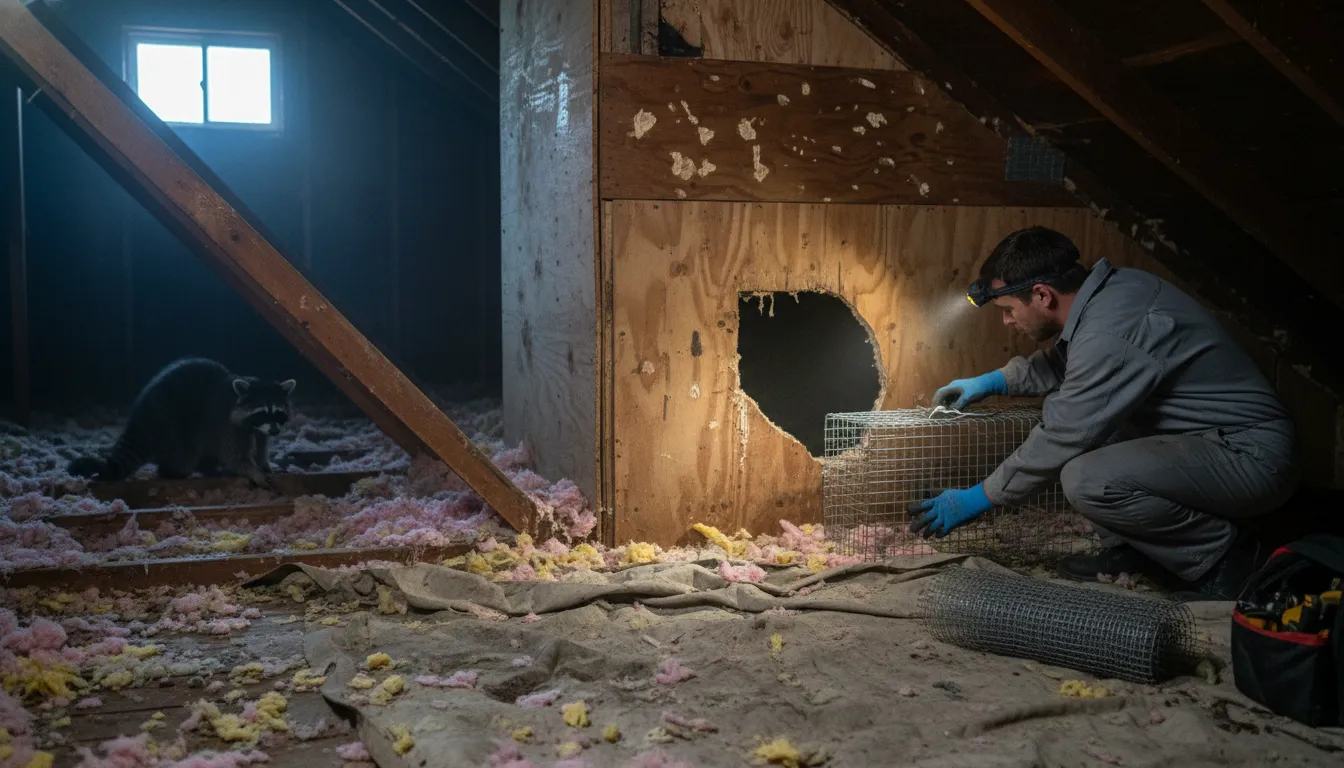
Find the Best Wildlife Removal Companies for Your Business
No obligation • Fast responses • Nationwide coverage

Why you can trust Pest Crews
Pest Crews is a leading U.S. resource for finding and evaluating residential and commercial pest control services. Our team researches providers, reviews treatment approaches, and organizes unbiased information to help you make informed decisions. Companies cannot pay to change our editorial content or influence how they appear.
Search providers near you
Top Wildlife Removal Companies in Kenosha, Wisconsin Ranked
Finding an uninvited animal in your attic, under your deck, or burrowing in your yard can be unsettling and damaging. Wildlife removal is the professional service dedicated to safely and humanely resolving conflicts with nuisance animals, protecting your property and family. In Kenosha, residents share their neighborhoods with a diverse array of wildlife, from raccoons and squirrels to beavers and coyotes. This guide will help you understand your options, from simple do-it-yourself deterrents to when it's essential to call a licensed expert, so you can effectively address any wildlife issue.
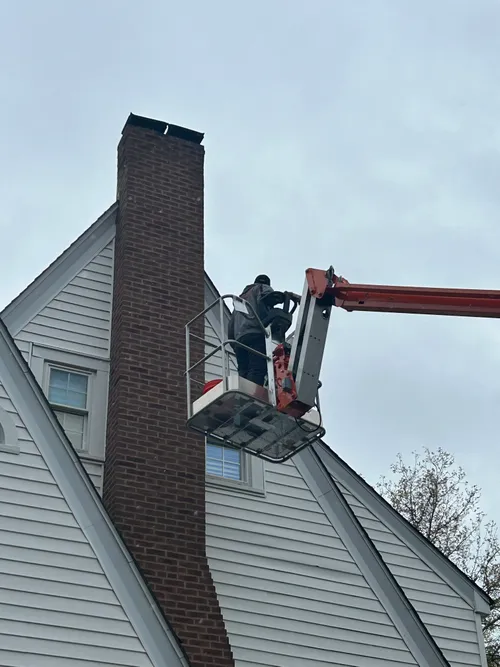
Fur Busters Wildlife
Chicago, IL
Fur Busters Wildlife is a pest control and wildlife removal company based in Chicago, IL. They specialize in humane removal and exclusion of raccoons, squirrels, bats, skunks, opossums, mice, and birds. Fur Busters focuses on environmentally sound and scientific methods to manage nuisance animals and prevent their return. They also offer animal damage restoration to repair properties affected by wildlife. The company serves Northern Illinois and emphasizes humane trapping and release techniques to avoid harm to animals. Fur Busters was founded to provide a fresh approach to wildlife control and is growing to become one of the largest wildlife exclusion companies in the region.
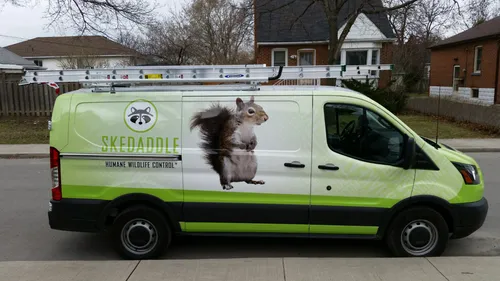
Skedaddle Humane Wildlife Control
Milwaukee, WI
Skedaddle Humane Wildlife Control provides humane wildlife removal and exclusion services in Milwaukee, WI. They address urban wildlife challenges involving raccoons, squirrels, skunks, bats, rodents, and birds, using ethical methods that safely relocate animals to natural habitats. Their expertise includes thorough property assessments to identify entry points and prevent future intrusions, ensuring long-term solutions tailored to local wildlife behavior. Skedaddle emphasizes environmentally conscious practices that support the local ecosystem while maintaining the safety and integrity of homes and businesses. They also serve surrounding Wisconsin communities such as Lake County, Madison, and Waukesha.
Common Nuisance Wildlife in Kenosha
The city's proximity to Lake Michigan, parks, and natural corridors means wildlife is a constant presence. Knowing which animals are most likely to cause problems is the first step in managing them.
- Raccoons: Intelligent and dexterous, raccoons are notorious for tipping over garbage cans, raiding gardens, and tearing into attic vents or soffits to create dens. They can carry diseases like rabies and roundworm.
- Squirrels: Both gray and fox squirrels can become a significant nuisance, especially in autumn when they seek warm nesting sites. They often chew entry holes into attics and eaves, where they can damage insulation and electrical wiring, creating a fire hazard.
- Skunks: Known for their potent defense mechanism, skunks often dig for grubs in lawns and may den under sheds, decks, or porches. An encounter with a pet can lead to a smelly and difficult cleanup.
- Bats: Small brown bats are common in Wisconsin. While beneficial for insect control, a colony in your attic poses health risks due to potential rabies exposure and the accumulation of hazardous guano. Their removal requires specialized exclusion techniques.
- Burrowing Animals: Groundhogs (woodchucks), foxes, and coyotes can dig extensive burrow systems that undermine foundations, sidewalks, and retaining walls. Coyotes, in particular, may prey on small pets 1.
- Beavers & Other Rodents: In areas near waterways, beavers can fell trees and cause flooding. Mice and rats are perennial indoor pests that contaminate food and spread disease.
What You Can Do: DIY Wildlife Control and Prevention
For minor issues, homeowners can take effective, proactive steps to make their property less attractive to wildlife. The core principles are habitat modification and exclusion, which are often the most sustainable long-term solutions.
Eliminate Food Sources:
- Secure trash cans with tight-fitting lids or bungee cords.
- Remove fallen fruit from yards and avoid leaving pet food outdoors overnight.
- Use bird feeders that are squirrel-resistant and clean up spilled seed regularly.
Seal Entry Points:
- Conduct a seasonal inspection of your home's exterior. Look for loose vents, holes in siding, or gaps where utility lines enter.
- Seal potential entry points with sturdy materials like hardware cloth, sheet metal, or commercial vent covers. Remember, a gap of just half an inch is enough for a mouse.
- Install chimney caps and ensure attic vents are properly screened.
Use Deterrents and Modify Habitat:
- Trim tree branches that overhang or touch your roof to limit access for squirrels and raccoons.
- Use motion-activated lights or sprinklers to startle animals away from gardens.
- For burrowing animals, installing a barrier of hardware cloth buried at least a foot deep around gardens or sheds can be effective2.
When to Call a Professional Wildlife Removal Service
While DIY methods work for prevention, certain situations require the expertise of a licensed Nuisance Wildlife Control Operator (NWCO). Knowing when to call can save you time, money, and prevent further damage or risk.
1. The Animal is Inside Your Home: If you hear noises in walls or ceilings, smell odors, or see signs of an active animal in your attic or crawl space, professional removal is advised. Trapping and removing an animal from a confined space requires skill to avoid leaving young behind or causing the animal to die in an inaccessible area.
2. Dealing with Protected or Dangerous Species: In Wisconsin, species like badgers are protected and require special handling. The Wisconsin DNR must be contacted for issues involving badgers3. Any animal acting strangely (e.g., disoriented, aggressive, out during the day for nocturnal species) could be sick and pose a rabies risk. Do not approach it.
3. The Problem is Complex or Recurring: A large infestation, such as a colony of bats or multiple raccoons, needs a comprehensive strategy. Professionals can also address the root cause-finding and sealing all potential entry points-to prevent future intrusions, a process known as exclusion.
4. There is Significant Structural Damage: Extensive chewing, digging, or burrowing that threatens the integrity of your home, deck, or foundation warrants a professional assessment and repair plan.
Find the perfect wildlife removal companies for your needs
Get personalized recommendations and expert advice
Understanding Wisconsin Wildlife Laws and Local Resources
Wildlife management in Kenosha is governed by state regulations. It's important to know who handles what to ensure you're acting within the law.
- Landowner Rights: Wisconsin law provides exemptions for landowners. On your own property, you may trap or hunt certain nuisance animals like raccoons, coyotes, beavers, and rabbits without a license, but you must follow all other regulations (e.g., season dates for hunting, approved trap types) 4.
- Role of Animal Control: Kenosha County Animal Services primarily handles issues with domestic animals-stray dogs and cats, injured pets, and livestock. They typically do not respond to calls about wild animals like raccoons or squirrels.
- Role of the Wisconsin DNR: The Department of Natural Resources (DNR) manages regulated wildlife. Contact the DNR for issues involving protected species (badgers), deer, bears, or if wildlife is causing a significant public health or safety hazard5. They also provide extensive online guidance for homeowners on managing nuisance wildlife5.
- Licensed NWCOs: For hands-on trapping, removal, and exclusion services, you hire a private, licensed Nuisance Wildlife Control Operator. These professionals are trained in safe, legal, and often more humane methods for resolving conflicts.
What to Expect from Professional Wildlife Removal
Hiring a professional involves more than just taking an animal away. A reputable service will follow a systematic process.
- Inspection and Assessment: The technician will perform a thorough inspection of your property to identify the species, entry points, extent of damage, and attractants.
- Customized Plan: They will present a plan that includes removal, cleanup/disinfection (if needed), and exclusion work to seal entry points and prevent recurrence.
- Removal Methods: Techniques vary by species and situation. Live trapping and relocation is common for mammals, but Wisconsin has strict rules about relocation distances to prevent disease spread and simply moving the problem6. For animals like rats, extermination may be the appropriate method. Bat removal always uses one-way exclusion devices that allow bats to leave but not re-enter, never poisons.
- Cleanup and Repair: This may involve removing contaminated insulation, sanitizing affected areas, and making physical repairs to the structure.
Cost of Wildlife Removal in Kenosha
Costs are highly variable and depend on the animal, the severity of the infestation, and the extent of repairs needed. Most companies provide free estimates. As a general guide7 8:
- Squirrel, Skunk, or Groundhog Removal: Often ranges from $200 to $500. This usually includes inspection, trapping, removal, and basic exclusion/sealing of the primary entry point.
- Raccoon Removal: Can be similar but may be on the higher end, especially if a mother and young are involved, potentially costing $300 to $600+.
- Bat Exclusion: Is typically more complex and therefore more expensive, ranging from $400 to over $1,000, as it requires sealing every potential entry point on the structure.
- Dead Animal Removal: Removing a carcass from a wall, attic, or crawlspace usually costs between $100 and $300, depending on accessibility.
- Beaver or Muskrat Management: Can be very situation-dependent, often requiring consultation with the DNR, and costs can be significant if dam removal or water level control is needed.
Always ask what is included in the quoted price and ensure the company is properly licensed and insured.
Frequently asked questions
Sources
Footnotes
-
Nuisance Wildlife vs. Wildlife - What Is the Difference - https://www.huntsmanwildlife.com/blog/nuisance-wildlife-vs-wildlife-what-is-the-difference ↩
-
Wildlife Control Methods | NWCTP - https://wildlifecontroltraining.com/training/wildlife-control-methods/ ↩
-
Badger | Keep Wildlife Wild - Wisconsin DNR - https://dnr.wisconsin.gov/topic/WildlifeHabitat/orphan/Badger ↩
-
Nuisance Wildlife Guidelines - https://blogs.extension.wisc.edu/mgvlevel1/files/2012/10/WI-DNR-Nuisance-Wildlife-Guidelines.pdf ↩
-
Nuisance, Urban And Damaging Wildlife | | Wisconsin DNR - https://dnr.wisconsin.gov/topic/WildlifeHabitat/damage ↩ ↩2
-
Wisconsin Legislature: 29.931 - Wisconsin Legislative Documents - https://docs.legis.wisconsin.gov/document/statutes/29.931 ↩
-
Kenosha Wildlife Control - https://www.wisconsinwildlifecontrol.com/kenosha.html ↩
-
Kenosha Dead Animal Removal | Critter Control - http://www.800critter.com/kenosha_deadanimalremoval.html ↩