Find the Best Wasp & Hornet Removal Companies for Your Business
No obligation • Fast responses • Nationwide coverage

Why you can trust Pest Crews
Pest Crews is a leading U.S. resource for finding and evaluating residential and commercial pest control services. Our team researches providers, reviews treatment approaches, and organizes unbiased information to help you make informed decisions. Companies cannot pay to change our editorial content or influence how they appear.
Search providers near you
Top Wasp & Hornet Removal Companies in Azusa, California Ranked
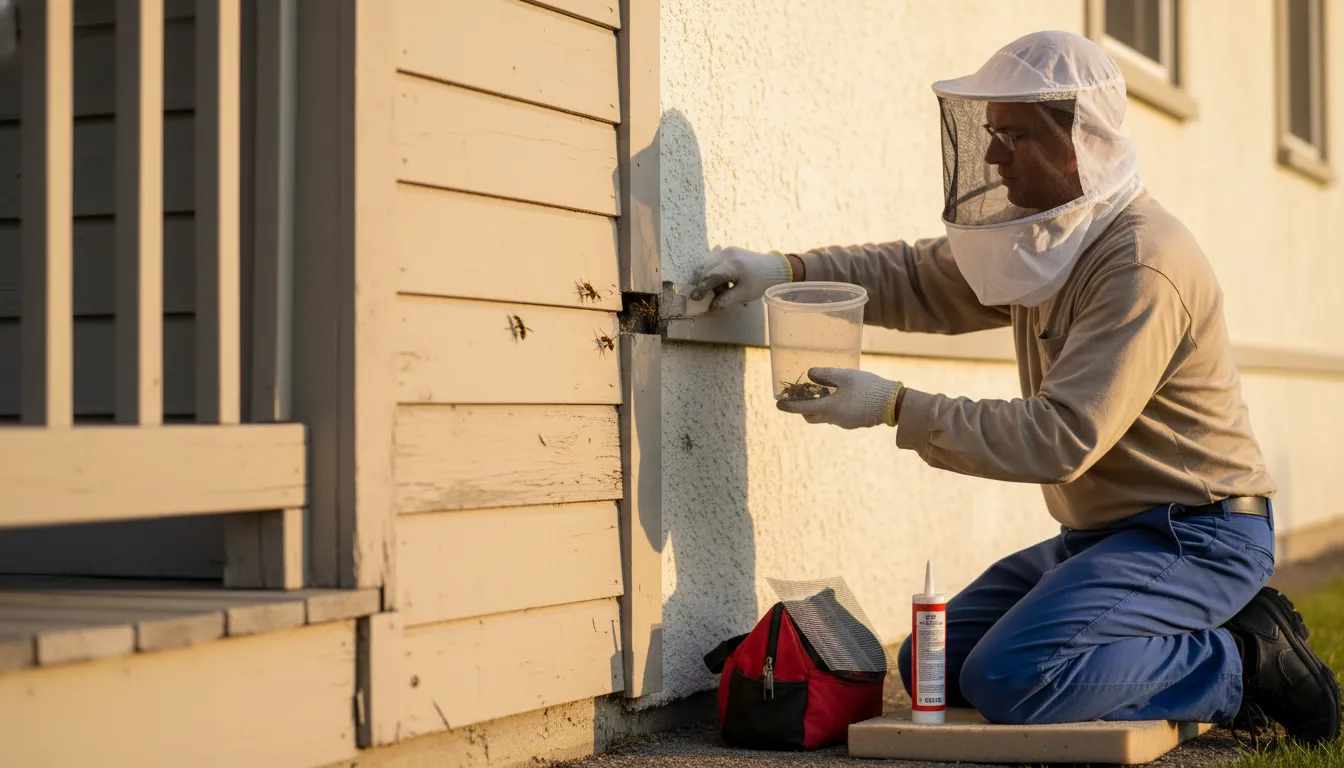
Discovering a buzzing nest on your property can be alarming. In Azusa, managing stinging insect infestations is a common need, and you have effective, local options. Professional bee and wasp removal services ensure the safe and complete resolution of the problem, protecting your family and property. This guide will help you understand your choices, from humane live bee relocation to professional pest control, and how to find the right local expert for your specific situation.
Trident Pest Control
2430 N Glassell St # L, Orange, CA 92865
Trident Pest Control is a pest and termite control company serving Irvine, CA. They offer a range of services including general pest control, termite inspections and treatments, mosquito and stinging insect control, and humane honeybee relocation. Their termite control includes the use of Sentricon bait stations, which target subterranean termites without chemicals. The company also provides termite damage repairs to restore affected wooden structures. They focus on eco-friendly and pet-safe methods and provide next-day appointments seven days a week.
Bed Bug Exterminator LA King
Los Angeles, CA
Bed Bug Exterminator LA King is a licensed and insured pest control company serving Los Angeles, CA. They specialize in bed bug inspections and treatments, including chemical and steam methods that are safe for families and pets. The company also offers control services for ants, cockroaches, rodents, termites, mosquitoes, bees, and wasps, covering both residential and commercial properties. Their approach includes thorough inspections and tailored treatment plans, with a warranty to ensure complete bed bug eradication. They provide discreet and convenient service with a focus on safety and effectiveness.

Eli the Bee Guy | Bee Removal and Rescue
255 Via Prado, Ontario, CA 91762
Eli the Bee Guy | Bee Removal and Rescue is a bee and wasp removal service based in Los Angeles, CA. The company specializes in humane live bee removal, full hive extraction, entry-point repair, and safe relocation to prevent bees from returning. They also offer natural wasp eradication without chemicals or flame and handle African killer bee swarms. Serving Los Angeles County and surrounding areas, Eli the Bee Guy provides 24/7 emergency assistance for households with life-threatening bee sting allergies. With over 20,000 bee colonies successfully relocated, the business emphasizes ethical bee rescue and environmental care.

Zircon Pest Solutions
10822 Chandler Blvd, North Hollywood, CA 91601
Zircon Pest Solutions is a full-service pest control company based in Los Angeles, CA, specializing in commercial properties including multi-family apartments, HOAs, restaurants, hospitality, and healthcare facilities. They offer a wide range of pest control services such as bed bug treatment with K9 detection, termite control, rodent exclusion, mosquito control, and bird pigeon population management. Zircon Pest Solutions is known for its expertise in handling various pest issues across Southern California and has built a strong reputation through years of service. Their team provides knowledgeable and professional pest management tailored to commercial needs.

the bugman
525 N Shepard St, Anaheim, CA 92806
The bugman is a pest control company serving Long Beach, CA, specializing in the removal and management of various pests including ants, roaches, rodents, termites, bees, wasps, and more. Established in 1958, the company uses advanced methods to provide lasting pest control solutions. With over six decades of experience, the bugman focuses on thorough service to address all pest-related issues effectively.
Your Local Removal Options: Professionals and Beekeepers
When facing a bee, wasp, or hornet problem in Azusa, you generally have two primary paths: hiring a licensed pest control company or contacting a local beekeeper for live removal. The best choice depends heavily on the type of insect, the nest location, and your priorities regarding the insects' fate.
Professional Pest Control Companies Licensed pest management professionals are equipped to handle all types of stinging insect infestations. Companies operating in the area, such as Pest Innovations, are trained to deal with aggressive species like yellowjackets, hornets, and Africanized honeybees, which require careful handling. These experts use integrated methods that may include targeted chemical applications, physical removal, and exclusion techniques to ensure the colony is eliminated and future nesting is discouraged. A significant advantage of professional services is that they often provide guarantees for their work and can conduct follow-up inspections, offering peace of mind that the issue is fully resolved 1. They are also the recommended choice for nests in difficult or dangerous locations, such as deep within wall cavities or attics.
Local Beekeepers and Live Removal Specialists For honeybee colonies, many Azusa residents opt for humane relocation. Honeybees are crucial pollinators, and their populations are under stress, so preserving them is an environmentally responsible choice. Local beekeepers and specialized services like USA Live Bee Removal or Family Bees Eco-friendly Bee Removal will safely collect the swarm or hive and transport it to an apiary or bee farm 2 3. This process involves carefully extracting the bees, the queen, and the comb. For easy-to-reach, recently settled swarms, some beekeepers may offer this service for free or at a low cost as a community service 4. For established hives that require more labor, there is typically a fee. It's important to note that beekeepers generally only relocate honeybees; wasp, hornet, or yellowjacket nests are typically handled by pest control professionals.
Where to Look: Common Nesting Sites Around Your Home
Bees and wasps seek out quiet, sheltered spots to build their nests. Knowing where to inspect can help with early detection. In Azusa, common nesting areas fall into three main categories: exterior surfaces, interior structural voids, and underground.
Exterior Surfaces and Overhangs These are some of the most frequent locations for aerial nests. Regularly check:
- Under roof eaves, soffits, and overhangs: These provide shelter from rain and are prime real estate for paper wasps and some bees.
- In trees, dense bushes, and shrubs: Branches and thick foliage offer concealment and support.
- Behind shutters, light fixtures, and in door or window frames: Small gaps and sheltered ledges are attractive.
- Within fences, mailboxes, and playground equipment: Any enclosed or semi-enclosed space can be utilized 5 6.
Interior Structural Voids When insects find an entry point, they can establish colonies inside your home's structure, which are often the most challenging to address.
- Wall voids: A small crack in siding or mortar can give access to the spacious interior of a wall.
- Attics, garages, and sheds: These undisturbed areas are ideal for large colony development.
- Chimneys and vents: Uncapped chimneys are a common entry point.
- Crawl spaces and under porches or decks: These dark, protected areas are highly attractive to many species.
Underground Nests Many species, particularly yellowjackets and some bumblebees, prefer to nest in the ground. They often repurpose:
- Abandoned rodent burrows.
- Spaces under concrete slabs, sidewalks, or patios.
- Areas within log piles, compost heaps, or thick ground cover 7 8.
Find the perfect wasp & hornet removal companies for your needs
Get personalized recommendations and expert advice
The Seasonal Buzz: Activity Patterns in Southern California
Azusa's warm climate means stinging insects can be active for much of the year, but their behavior follows a distinct seasonal cycle. Understanding this can help with timing prevention efforts and knowing when to be most vigilant.
Spring (March - May): The Founding Phase As temperatures rise, overwintering queen wasps emerge from dormancy to seek new nesting sites and begin building their small, starter nests 9. This is also the primary swarming season for honeybees, as established colonies split to reproduce. A swarm-a large cluster of bees resting on a tree branch or fence-is generally docile as it searches for a new permanent home but signals that a new hive may soon be established nearby 10. Spring is the best time for exclusion work, such as sealing potential entry points around your home.
Summer (June - August): Peak Activity Colonies grow rapidly during these hot months. Worker populations explode, and insects are constantly foraging for food (like sugars and proteins) and water to sustain the hive. Nests become large and highly active. Wasps, in particular, can become more defensive of their territory as the colony's size increases. This is when most removal calls are made, as the presence of insects becomes impossible to ignore.
Fall (September - October): Increased Aggression By fall, colonies are at their maximum size. However, natural food sources like flowers begin to dwindle. This scarcity, combined with the colony's instinct to protect its resources as winter approaches, can lead to notably aggressive behavior, especially in wasps and yellowjackets 11 12. It's a critical time to avoid disturbing nests and to ensure outdoor eating areas are kept clean.
Winter (November - February): Dormancy Most wasp and hornet colonies die off, with only the new queens surviving to hibernate. Honeybees do not die off but remain clustered in their hive for warmth, becoming very inactive and rarely venturing out except on unusually warm days 13. Winter is an excellent time to have a professional inspect your property for old nests and seal entry points without the active threat of stings.
Understanding Removal Costs in Azusa
The cost for bee or wasp control in Azusa varies significantly based on several key factors. The primary variables are the type of insect, the location and accessibility of the nest, and the size of the infestation. The following table outlines general price ranges based on data from local and national service providers 14 15 16.
| Factor | Cost Range | Notes |
|---|---|---|
| Basic Removal (Easy Access) | $75 - $500 | For visible, recently settled swarms or small, easily reachable nests (e.g., in a bush, on eaves). Live bee relocation for easy swarms may be on the lower end or free. |
| Complex Removal (Difficult Access) | $500 - $2,000+ | For established hives or nests inside walls, attics, or chimneys. This cost covers the labor for demolition, specialized extraction equipment, and cleanup. It often does not include repair costs for drywall, siding, etc. |
| Wasp/Hornet Removal (Average) | $300 - $700 | The average cost for wasp nest removal is around $385. Price depends on species (e.g., yellowjackets vs. paper wasps) and the height or danger of the location. |
| Live Bee Relocation (Established Hive) | $0 - $800 | Beekeepers may remove easy swarms for free. Relocating an established hive embedded in a structure is labor-intensive, involving comb extraction and careful bee collection, hence the higher potential cost. |
A Critical Safety Note: Attempting DIY nest removal is extremely dangerous and not recommended. Disturbing a nest can provoke a massive, aggressive sting response. Professionals have the protective gear, proper insecticides, and experience to do the job safely and effectively 17. The cost of professional service is an investment in safety and a permanent solution.
Frequently asked questions
Sources
Footnotes
-
Pest Control in Azusa, CA - https://www.pestinnovations.com/service-area/pest-control-azusa-ca ↩
-
TOP 10 BEST Bee Keeper near Azusa, CA - Updated 2026 - Yelp - https://m.yelp.com/search?find_desc=bee+keeper&find_loc=Azusa%2C+CA ↩
-
USA Live Bee Removal - https://www.google.com/viewer/place?mid=/g/11bbwr97m8 ↩
-
Honey Bee Removal - California Master Beekeeper Program - https://cambp.ucdavis.edu/knowledge-base/bee-removal ↩
-
Where Do Wasps Nest? - Harris Pest Control - https://www.harrispestcontrolinc.com/blog/post/where-do-wasps-nest ↩
-
14 common places you will find beehives - https://budgetbrotherstermite.com/14-common-places-you-will-find-beehives/ ↩
-
How to Identify Bee & Wasp Nests - Environmental Pest Control - https://www.environmentalpestcontrol.ca/blog/how-to-identify-bee-and-wasp-nests ↩
-
How to Get Rid of Paper & Mud Wasp Nests Above & Underground | Orkin - https://www.orkin.com/pests/stinging-pests/wasps/wasp-nests ↩
-
Wasp Season in Southern California: When to Watch Out and ... - https://pestrus.com/wasp-season-in-southern-california-when-to-watch-out-and-what-to-do/ ↩
-
When Do Bees Swarm in Southern California? - AG Pest Control - https://www.agpest.com/when-do-bees-swarm-in-southern-california/ ↩
-
Why Bees, Wasps, and Hornets Are So Active in August and ... - https://www.actionpestcontrol.com/2024/08/21/why-bees-wasps-and-hornets-are-so-active-in-august-and-september/ ↩
-
My Bees Swarmed, Now What? - https://www.youtube.com/watch?v=MJGMNWyLXgw ↩
-
What are Bees Up to Year Round? - https://www.thebeecause.org/wp-content/uploads/2020/09/buzzworthy-bee-activities-by-month-calendar.pdf ↩
-
How Much Does Wasp Nest Removal Cost in 2026? - https://lawnlove.com/blog/wasp-nest-removal-cost/ ↩
-
How Much Does Bee Removal Cost in 2025? - HomeAdvisor - https://www.homeadvisor.com/cost/environmental-safety/bee-removal/ ↩
-
How Much Does Bee Removal Cost? [2026 Data] | Angi - https://www.angi.com/articles/how-much-does-bee-removal-cost.htm ↩
-
Bee & Wasp Removal in Southern California | Safe & Fast ... - https://www.1ststrykepestandtermite.com/bee-wasp-removal/ ↩