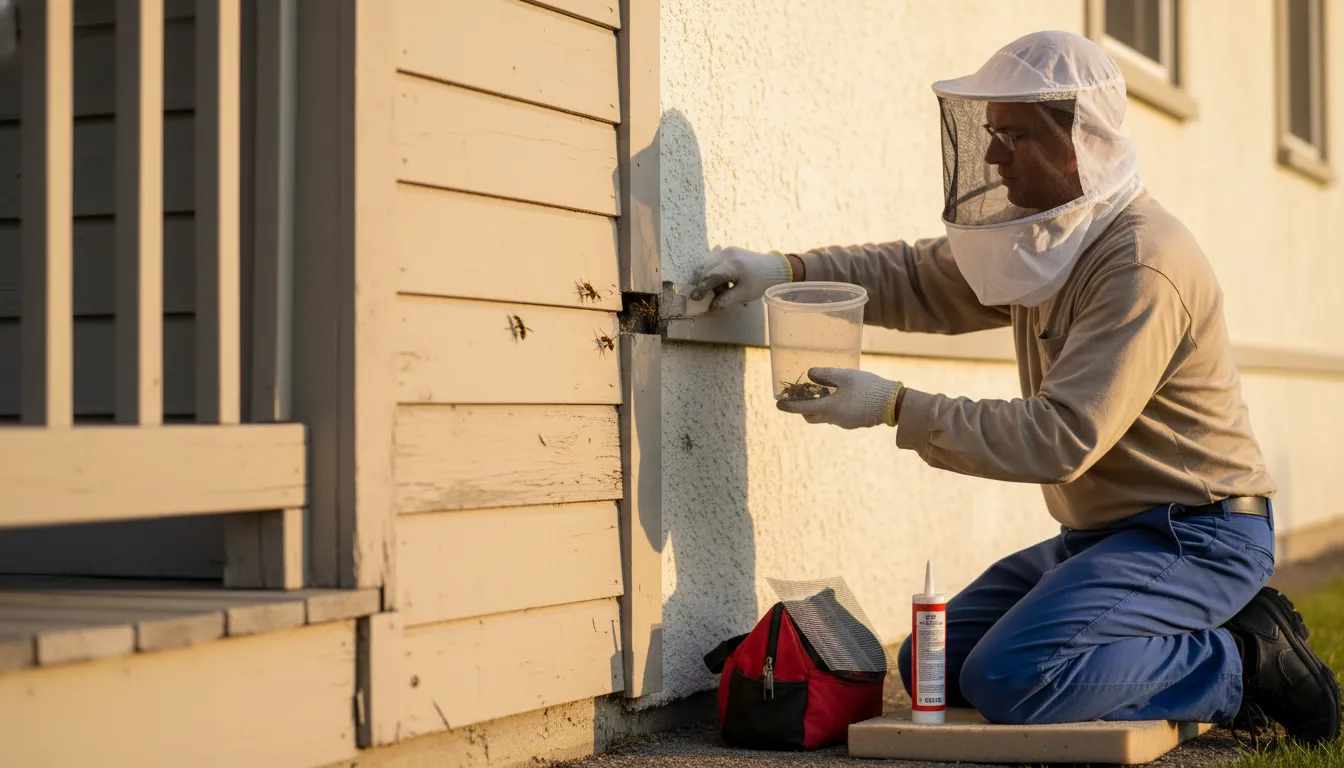
Find the Best Wasp & Hornet Removal Companies for Your Business
No obligation • Fast responses • Nationwide coverage

Why you can trust Pest Crews
Pest Crews is a leading U.S. resource for finding and evaluating residential and commercial pest control services. Our team researches providers, reviews treatment approaches, and organizes unbiased information to help you make informed decisions. Companies cannot pay to change our editorial content or influence how they appear.
Search providers near you
Top Wasp & Hornet Removal Companies in Lancaster, California Ranked
Discovering a buzzing nest on your property can be unsettling. For homeowners in Lancaster and the Antelope Valley, professional bee and wasp removal is the safe and effective solution to manage these stinging insects. This guide explains the local landscape of stinging pest control, from identifying common species and their nests to understanding seasonal activity and removal costs. You'll learn how to find qualified specialists who can address your specific situation, whether it requires humane bee relocation or the removal of an aggressive wasp colony.
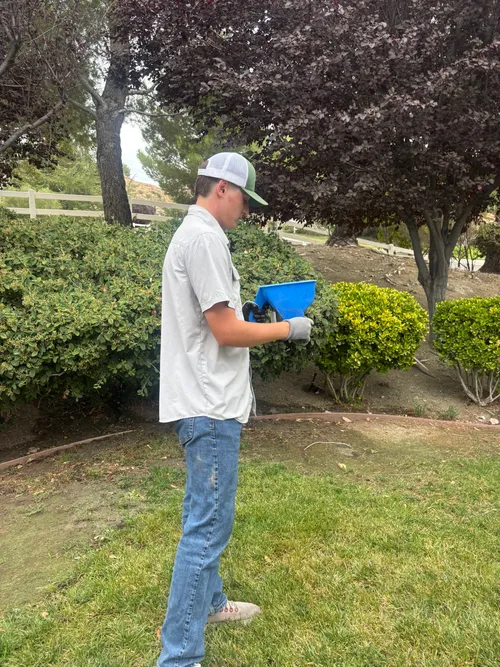
GuardUp Pest Control
26911 Ruether Ave unit s, Santa Clarita, CA 91351
GuardUp Pest Control is a pest control company based in Santa Clarita, CA, offering services for both residential and commercial properties. They provide treatments for a variety of pests including bed bugs, ants, rodents, termites, bees, and wasps. Their approach begins with a detailed inspection to identify pest activity and entry points, allowing for targeted and strategic treatments. GuardUp Pest Control uses child- and pet-friendly methods and follows an Integrated Pest Management approach to minimize pesticide use while ensuring long-lasting protection. They also offer a 100% satisfaction guarantee with complimentary reservice if pests return between scheduled visits.
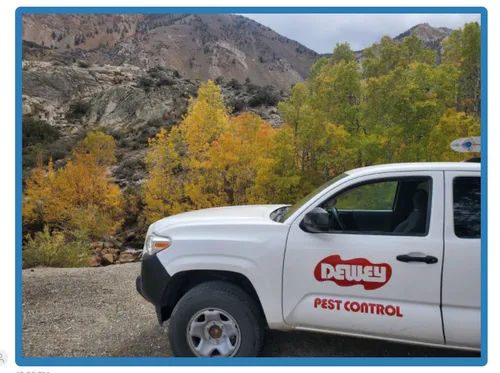
Dewey Pest & Termite Control
45440 23rd St W, Lancaster, CA 93536
Dewey Pest & Termite Control is a pest control company based in Lancaster, CA. They offer a range of services including bed bug treatment, cockroach and ant control, rodent management, termite inspections, mosquito control, and bee and wasp removal. The company provides specialized termite control and bed bug treatments, addressing both common and invasive pests in the area.
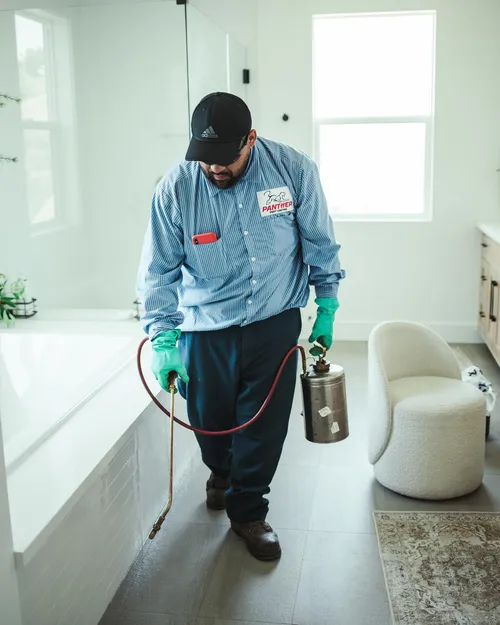
Panther Pest Control
Lancaster, CA
Panther Pest Control is a family-owned pest control company serving Lancaster, CA, and surrounding valleys. They provide residential and commercial pest control services, including ant, rodent, and bee removal. With nearly 20 years of experience, they focus on environmentally safe methods to manage pests without requiring contracts. Panther Pest Control is recognized for their knowledge in handling a wide range of pests and delivering cost-effective solutions.

Sharp pest management
Lancaster, CA
Sharp Pest Management provides pest control services for both residential and commercial properties in Lancaster, CA. They handle a variety of pests including ants, spiders, cockroaches, pantry pests, wasps, fleas, scorpions, bed bugs, rodents, and flies. The company offers bi-monthly, quarterly, and one-time pest control treatments with a 30-day warranty.
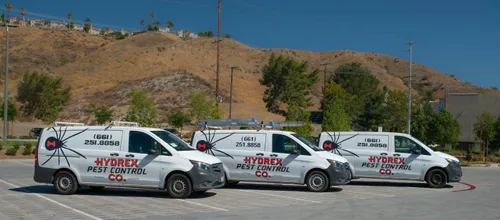
Hydrex Pest Control
18345 Sierra Hwy A-20, Canyon Country, CA 91351
Hydrex Pest Control is a family-owned and operated pest control company serving Santa Clarita, CA, and the surrounding Antelope Valley since 1970. They provide a wide range of residential and commercial pest control services, including treatment for ants, spiders, termites, rodents, bed bugs, mosquitoes, and nuisance birds. Their technicians are licensed by the State of California and trained in the latest pest control technologies. Hydrex offers ongoing service plans to maintain pest-free properties and uses EPA-approved materials to ensure safety for homes and businesses.
Common Stinging Insects in the Antelope Valley
The high desert climate of Lancaster is home to several species of bees and wasps, each with distinct behaviors and nesting preferences. Knowing which insect you're dealing with is the first step toward a proper solution.
Honeybees are crucial pollinators and are often protected. A swarm-a temporary cluster of bees looking for a new home-is generally not aggressive but should be monitored. If they establish a hive inside a wall or attic, it becomes a structural concern requiring professional bee extraction. Many local services specialize in live bee removal, relocating the colony to a local beekeeper or farm rather than exterminating it.
Yellowjackets are aggressive wasps that often build large, papery nests underground in old rodent burrows or within structural voids. Their ground nests pose a significant hazard for lawn mowing and gardening.
Paper Wasps build the familiar open-comb, umbrella-shaped nests under eaves, porch ceilings, and inside railings. While less aggressive than yellowjackets, they will defend their nest.
Carpenter Bees are large, solitary bees that bore perfectly round holes into untreated wood like decks, siding, and fence posts to create nesting galleries. While they don't eat wood, their tunneling can cause structural damage over time.
Bumblebees are large, fuzzy, and generally docile. They often nest at ground level under compost piles, rock walls, or in abandoned rodent nests.
Where to Look for Nests and Hives
A thorough inspection of your property can reveal potential nesting sites. Stinging insects are resourceful and will build hives in a variety of locations.
- Structural Voids: This is a prime location for honeybees and yellowjackets. Check for increased bee activity around cracks in siding, gaps in roof eaves, vents, and openings around utility lines entering your home. Hives inside walls or attics require specialized access and removal techniques 1.
- Eaves and Overhangs: Look for paper wasp nests or hornet nests under the overhangs of your roof, on porch ceilings, inside soffits, and within unused chimneys or light fixtures2.
- Ground Level: Walk your yard carefully. Yellowjacket entrances appear as small holes in the ground, often in garden beds or near tree roots. Bumblebees may nest under sheds, decks, or within piles of debris.
- Wood Structures: Inspect untreated wood on decks, pergolas, railings, and outdoor furniture for the perfect 1/2-inch holes of carpenter bees. You may also see sawdust piles (frass) below the entry points3.
- Other Common Areas: Don't overlook fences, dense shrubbery, children's play sets, mailboxes, grills, and even inside the covers of garbage cans4.
The Seasonal Cycle of Bees and Wasps in Southern California
Activity levels for stinging pests in Lancaster are closely tied to the seasons, which influences both the likelihood of an infestation and the complexity of removal.
- Spring (Peak Swarming): As temperatures warm, overwintering bee colonies become active and expand. Spring is the most common time for bee swarms as a colony splits and the swarm clusters temporarily on a tree branch or fence while scout bees search for a permanent home5 6 7. This is an ideal time for humane relocation before they move into a structure.
- Summer & Early Fall (Peak Activity): Wasp and hornet colonies reach their maximum size and population during the hottest months (July through September). Food sources are abundant, and insects are most active and defensive8 9. This is when the risk of stings is highest, and nests are largest, often making removal more challenging and costly.
- Late Fall & Winter (Dormancy): With cooler temperatures, most wasp colonies die off, leaving only fertilized queens to overwinter in sheltered spots. Honeybee clusters remain in their hives but are far less active10. Removal services are less frequently needed but can still address established indoor hives.
Understanding Bee and Wasp Removal Costs in Lancaster
The price for professional stinging insect control in Lancaster varies based on the species, the size and location of the nest, and the required removal method11 12. Most reputable companies offer free, on-site estimates to provide an accurate quote13 14.
Here's a general breakdown of what homeowners might expect to pay 15:
- Small, Accessible Nest: Removal of a small, exposed paper wasp nest or a recently settled swarm can range from $100 to $250.
- Standard Removal Job: For a typical ground yellowjacket nest or an established wasp nest under an eave, costs commonly fall between $300 and $700.
- Complex or In-Wall Removal: Extracting a honeybee hive or yellowjacket nest from inside a wall cavity, attic, or between floors is more involved. This requires specialized equipment and may involve minor demolition and repair, with costs typically ranging from $600 to $950 or more16.
- Large or Severe Infestations: Properties with multiple large nests or a massive, difficult-to-access hive may see prices from $1,000 to $1,300+.
It's important to ask providers if their quote includes cleanup, necessary repairs (like sealing entry points), and any follow-up visits. For bees, inquire whether they offer bee relocation services as an alternative to extermination17 18.
Find the perfect wasp & hornet removal companies for your needs
Get personalized recommendations and expert advice
Finding a Qualified Removal Specialist in Lancaster
Choosing the right professional is crucial for safety and effectiveness. Look for licensed and insured pest control companies with specific experience in bee and wasp extermination and, preferably, humane bee removal.
You can start your search by looking for local pest control companies that list stinging insect removal as a specialty. Organizations like the Los Angeles County Beekeepers Association may also provide referrals for bee relocation specialists19. When evaluating a company, ask about their methods, their experience with your specific pest problem, and their approach to preventing future infestations through exclusion work.
Safe Practices and Prevention Tips
While professionals handle the removal, homeowners can take steps to minimize risks and make their property less attractive to stinging insects.
- Never Disturb a Nest: Do not attempt to knock down, spray, or seal a nest yourself, especially if you are allergic. This can provoke a mass attack.
- Seal Entry Points: In early spring, inspect your home's exterior and seal cracks, gaps around windows, and openings in siding or rooflines with caulk or steel wool.
- Manage Attractants: Keep garbage cans tightly sealed, clean up fallen fruit promptly, and avoid leaving sweet drinks or food uncovered outdoors.
- Perform Regular Inspections: Periodically check common nesting sites like eaves, sheds, and play structures, especially in spring and early summer when nests are small and easier to manage.
- Landscape Mindfully: Fill in old rodent burrows and ground holes. Keep vegetation trimmed away from your home's structure.
Addressing a bee or wasp issue promptly with a qualified expert protects your family, preserves the local ecosystem when possible, and safeguards your property from damage.
Frequently asked questions
Sources
Footnotes
-
How to Identify Bee & Wasp Nests - Environmental Pest Control - https://www.environmentalpestcontrol.ca/blog/how-to-identify-bee-and-wasp-nests ↩
-
How to Get Rid of Paper & Mud Wasp Nests Above & Underground | Orkin - https://www.orkin.com/pests/stinging-pests/wasps/wasp-nests ↩
-
What Hive Is It?: Identifying Bee and Wasp Nests - Groundworks - https://www.groundworks.com/resources/what-hive-is-it/ ↩
-
How To Identify And Remove A Wasp Nest - Moxie Pest Control - https://moxieservices.com/blog/how-to-identify-and-remove-a-wasp-nest/ ↩
-
The #1 Bee Swarm Removal Service in Lancaster, CA | 5-Star ... - https://familybeesremoval.com/bee-swarm-removal-lancaster-ca/ ↩
-
How to Prevent Bee and Wasp Infestations in Early Spring - https://beemanbuzz.com/how-to-prevent-bee-and-wasp-infestations-in-early-spring/ ↩
-
Bee Swarms and Bee Removal This Spring and Summer - https://beemanbuzz.com/bee-swarms-and-bee-removal-this-spring-and-summer/ ↩
-
Average Cost to Remove Hornets Nest: 7 Best Factors in 2025 - https://bigginsexterminating.com/average-cost-to-remove-hornets-nest/ ↩
-
Pest Seasons Southern California - https://versatechpm.com/pest-seasons-in-southern-california/ ↩
-
Nesting Bees and What You Should Do - Gardening Solutions - https://gardeningsolutions.ifas.ufl.edu/design/gardening-with-wildlife/nesting-bees/ ↩
-
Wasp Nest Removal Cost [2026 Data] | Angi - https://www.angi.com/articles/how-much-does-wasp-removal-cost.htm ↩
-
Breaking Down the Bee Control Cost - https://proguardpest.com/breaking-down-the-bee-control-cost/ ↩
-
Dewey Pest & Termite Control - https://www.google.com/viewer/place?mid=/g/1vd71l4j ↩
-
Exterminator & Pest Control Lancaster CA - https://www.clarkpest.com/locations/lancaster-ca ↩
-
How Much Does Wasp Nest Removal Cost in 2026? - https://lawnlove.com/blog/wasp-nest-removal-cost/ ↩
-
The #1 Bee Relocation Service in Lancaster, CA | 5-Star Rated ... - https://familybeesremoval.com/bee-relocation-lancaster-ca/ ↩
-
Antelope Valley - Bee Green Natural Bee Removal! - https://beegreenremoval.com/locations/palmdale-lancaster-bee-removal-services.html ↩
-
What Are Relocation Options for Stinging Insects? - - https://stopzbugs.com/blog/what-are-relocation-options-for-stinging-insects/ ↩
-
Honey Bee Removal - California Master Beekeeper Program - https://cambp.ucdavis.edu/knowledge-base/bee-removal ↩