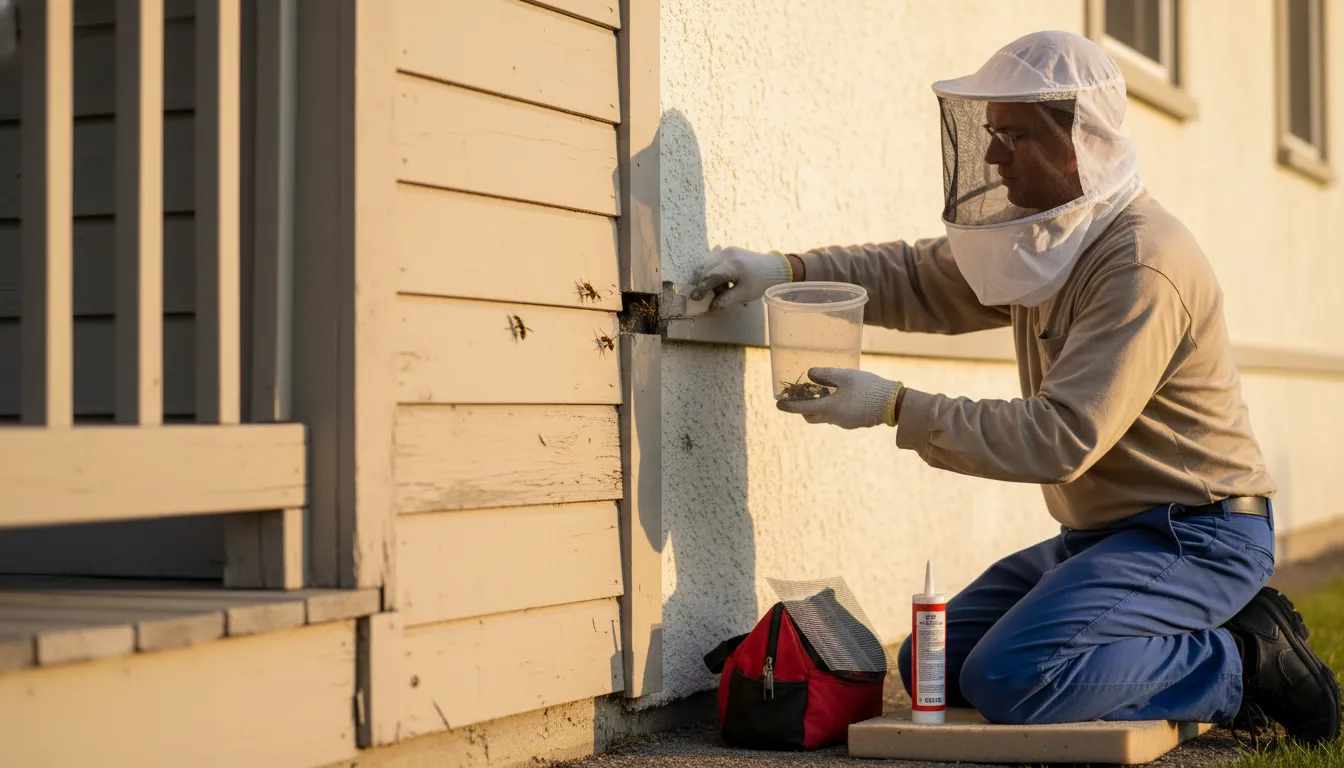
Find the Best Wasp & Hornet Removal Companies for Your Business
No obligation • Fast responses • Nationwide coverage

Why you can trust Pest Crews
Pest Crews is a leading U.S. resource for finding and evaluating residential and commercial pest control services. Our team researches providers, reviews treatment approaches, and organizes unbiased information to help you make informed decisions. Companies cannot pay to change our editorial content or influence how they appear.
Search providers near you
Top Wasp & Hornet Removal Companies in Beaumont, California Ranked
Dealing with a buzzing nest or hive on your property requires a careful, informed approach, especially in California. Bee and wasp removal is a specialized service that balances safety, environmental responsibility, and property protection. Given the state's unique laws protecting key pollinators, it's crucial to understand the differences between species and the proper removal protocols. This guide will help you navigate your options, from identifying the insects to selecting a qualified professional for safe and effective removal.

Antex Exterminating
Riverside, CA
Antex Exterminating is a pest control company serving Riverside, CA, specializing in eliminating pests such as ants, cockroaches, spiders, mosquitoes, bees, wasps, moths, and gophers. With over 20 years of experience, they offer personalized pest management solutions tailored to residential and commercial needs. Their services include humane bee relocation and targeted mosquito management to protect outdoor spaces. Antex Exterminating provides a 30-day guarantee on treatments and will retreat at no extra cost if pests return, emphasizing customer satisfaction and peace of mind.
Compass Pest Management
5925 Rickenbacker Ave, Riverside, CA 92504
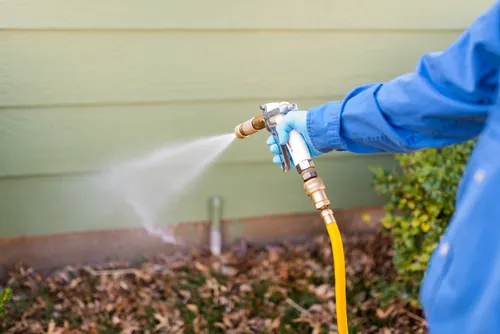
Compass Pest Management is a family-owned pest control company serving Los Angeles, CA, and surrounding areas since 1997. They provide a wide range of pest management services including bed bug treatment, termite inspections and fumigation, rodent exclusion, mosquito reduction, and bee and wasp removal. Their team also handles wildlife removal and commercial pest control, using proven methods and premium pesticides. With over 25 years of experience, Compass Pest Management offers ongoing pest prevention and exclusion services, focusing on practical solutions for homes and businesses. They operate Monday through Saturday and hold multiple licenses and certifications in pest control.

Terminix Commercial
1387 Center St, Riverside, CA 92507
Terminix Commercial offers comprehensive pest control services in Los Angeles, CA, specializing in commercial pest management. Their services include treatment and prevention for bed bugs, cockroaches, ants, rodents, termites, bees, wasps, and wildlife removal. The company provides tailored pest control plans such as the PESTFREE365 and termite protection systems to address common and costly pest issues. With a local team familiar with the area's pest challenges and backed by a nationwide network, Terminix Commercial ensures effective pest management solutions for businesses. They also offer termite inspections and continuous protection systems to prevent structural damage. The company serves a wide range of communities around Los Angeles and Riverside, including Ontario and San Bernardino.

Aptive Pest Control
Moreno Valley, CA
Aptive Pest Control offers pest management services in Moreno Valley, CA, and surrounding areas. They handle common pests such as ants, cockroaches, spiders, rodents, bees, and wasps. Aptive provides year-round treatment plans and focuses on strong communication with customers. Their service area extends to many nearby cities including Corona, Riverside, and San Bernardino. The company is known for addressing pest issues both inside and outside homes, including specialized removal of wasp nests. Aptive Pest Control operates with a network of branches to serve a broad region around Moreno Valley.
Corky's Pest Control
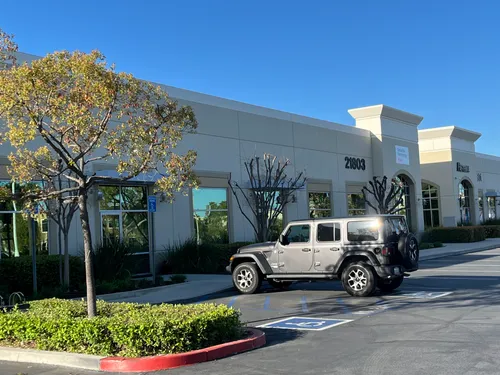
21803 Cactus Ave Suite E - F, Riverside, CA 92518
Corky's Pest Control is a pest control company serving Los Angeles, CA, offering a wide range of services including bed bug treatment, ant and cockroach control, rodent management, termite inspection and fumigation, mosquito treatment, bee and wasp removal, and wildlife relocation. Established in 1967, the company applies detailed inspections and modern methods to address pest issues effectively. They provide specialized capabilities such as termite fumigation and hive relocation for bees, ensuring safety and environmental care. Corky's Pest Control focuses on long-lasting pest management solutions tailored to residential properties.
Understanding California's Stinging Insects
The first and most critical step is identifying what type of insect you're dealing with. This single factor determines the legal requirements, removal methods, and who you should call.
Honey Bees: These are vital agricultural pollinators, recognizable by their fuzzy, golden-brown bodies. They often swarm in spring to establish new colonies, which can end up in wall voids, attics, or chimneys. California law strongly encourages the live removal and relocation of honey bee colonies due to their ecological importance and declining populations.
Bumblebees: Larger and furrier than honey bees, bumblebees are also crucial native pollinators. Certain species, like the Crotch's bumblebee and the Western bumblebee, are protected under the California Endangered Species Act, making their humane removal mandatory.
Wasps & Hornets: This category includes paper wasps, yellowjackets, and hornets. They have slender, smooth bodies with a narrow "waist" and are generally more aggressive in defending their nests. Unlike bees, wasps are predators and are not protected. Removal typically involves extermination, as they are not suitable for relocation.
Legal and Environmental Responsibilities for Property Owners
In California, the responsibility for removing bees or wasps from private property falls on the homeowner or property manager. However, how you handle that responsibility is guided by state environmental priorities.
- Live Relocation Mandate: For honey bees, the preferred and often legally encouraged method is live removal. This involves a specialist carefully extracting the colony, comb, and honey, and relocating them to an apiary. This preserves the pollinators and prevents the future problems caused by leaving honey and wax in walls 1.
- Protected Species: The humane treatment and relocation of protected bumblebee species is not just a recommendation-it's a legal requirement. Special permits and procedures may be involved.
- Professional Licensing: Whether for relocation or extermination, the work should be performed by licensed professionals. Beekeepers removing swarms may operate under different regulations than pest control companies performing structural extractions or wasp treatments. Always verify credentials and insurance.
Removal Methods: From Relocation to Extermination
The approach varies dramatically based on the insect species and the nest location.
For Honey Bees:
- Swarm Collection: A clustered swarm of bees on a tree branch or fence post is often temporary and easiest to handle. Many local beekeepers will collect accessible swarms for free or a minimal fee, as they are adding to their apiaries.
- Established Hive Removal: If bees have moved into a structural void (like a wall or soffit), the process is complex. It involves:
- Inspection: Locating the exact extent of the hive.
- Access: Often requiring careful demolition of drywall, siding, or roofing materials.
- Extraction: Removing all comb, honey, and the bee colony.
- Clean-up: Thoroughly cleaning the cavity to remove pheromones and honey residue that can attract new swarms or pests.
- Repair: Sealing the entry point and repairing the structure 2.
For Wasps and Hornets: Removal usually means extermination. Professionals use targeted insecticides or physical removal methods, often after dusk when the colony is less active. They will also destroy the nest to prevent reinfestation 3 4 5.
For Protected Bumblebees: Specialists use gentle, non-chemical methods to encourage the colony to relocate, often by modifying the habitat around their ground or cavity nest without harming the bees 6.
Find the perfect wasp & hornet removal companies for your needs
Get personalized recommendations and expert advice
What Influences the Cost of Removal?
The price for professional bee or wasp removal in California is not fixed; it depends on several key variables 7.
- Species: Simple wasp nest removal is often less expensive than a complex honey bee extraction from a wall.
- Hive Location & Accessibility: An exposed, easy-to-reach nest is the most affordable scenario. Costs rise significantly for hives inside walls, attics, chimneys, or between floors, due to the labor and materials needed for access and repair.
- Size of the Colony: A small, newly established swarm costs less to remove than a large, mature colony that has been producing comb and honey for months.
- Removal Method: Live bee relocation can be more labor-intensive than extermination, sometimes affecting cost, though many beekeepers offer competitive rates for the service.
- Season: Spring and summer are peak seasons for swarming and nest building, which can influence service availability and pricing.
Typical Cost Ranges:
- Wasp/Hornet Nest Removal: Often starts between $150 and $350, depending on size and location.
- Accessible Bee Swarm: May be free from a beekeeper or cost up to $150.
- Structural Bee Removal: For hives inside walls or attics, prices commonly range from $450 to $1,500 or more, with the higher end reflecting extensive demolition, extraction, and repair work 8 9 10.
- Bumblebee Nest Relocation: For small, accessible nests, costs may range from $78 to $350, but protected species handling may involve specialized services 11.
Always get detailed, written estimates that break down the costs for inspection, removal, clean-up, and any necessary repairs.
How to Choose the Right Service Provider
Selecting a qualified professional is essential for a safe, effective, and legal outcome.
- Identify First: Try to safely identify the insect or take a photo from a distance. This will help you call the right expert from the start.
- Know Who to Call:
- For honey bee swarms or nests, contact a local beekeeper or bee removal specialist. Your county's agricultural extension or beekeepers' association (like the Los Angeles County Beekeepers Association) often maintains swarm removal lists 12.
- For wasps, hornets, or bees embedded deep in a structure, contact a licensed pest control company experienced in these removals.
- For suspected protected bumblebees, seek a specialist familiar with California's endangered species protocols.
- Ask the Right Questions:
- Are you licensed and insured for this work in California?
- What is your specific experience with [bee/wasp] removal?
- For bees: Do you practice live relocation? Where will the bees be taken?
- What is the full process, including clean-up and repair?
- Can you provide a detailed written estimate?
- Do you offer any warranty or guarantee on the removal?
Taking the time to research and hire a knowledgeable professional ensures the job is done correctly, protecting your home, your family, and California's valuable pollinators.
Frequently asked questions
Sources
Footnotes
-
Bee and Wasp Extermination Services - Scout Pest Control - https://www.scoutpestcontrol.com/understanding-bees-and-wasps-what-you-need-to-know-about-removal-and-extermination/ ↩
-
Bee and Wasp Removal: Top 2025 Effective Solutions - https://bigginsexterminating.com/bee-and-wasp-removal/ ↩
-
Bee & Wasp Control in Los Angeles - HomeShield Pest Control - https://www.homeshieldpestcontrol.com/bee-wasp-control/ ↩
-
Bee Hornet and Wasp Removal | Cartwright Termite & Pest ... - https://cartwrightpest.com/bees-hornets-and-wasps/ ↩
-
Safe Wasp Removal in Los Angeles - Eli The Bee Guy - https://elithebeeguy.com/wasp-extermination/ ↩
-
FAQs & Information | Beekeeping in San Diego County - https://ucanr.edu/site/beekeeping-san-diego-county/faqs-information ↩
-
Seasonal Guide to Bees & Wasps: How We Clean Pest Control Can ... - https://wecleanpestcontrol.ca/seasonal-guide-to-bees-and-wasps-how-we-clean-pest-control-can-help/ ↩
-
How Much Does Beehive Removal Cost in 2026? - Lawn Love - https://lawnlove.com/blog/beehive-removal-cost/ ↩
-
How Much Does Bee Removal Cost? [2026 Data] | Angi - https://www.angi.com/articles/how-much-does-bee-removal-cost.htm ↩
-
Swarm and Bee Removal - Los Angeles County Beekeepers ... - https://www.losangelescountybeekeepers.com/swarm-removal ↩
-
What Do Bee Keepers Charge for Bee Removal in 2025? - Pest Extinct - https://pestextinct.com/what-do-bee-keepers-charge-for-bee-removal-in-2025/ ↩
-
Honey Bee Removal - California Master Beekeeper Program - https://cambp.ucdavis.edu/knowledge-base/bee-removal ↩