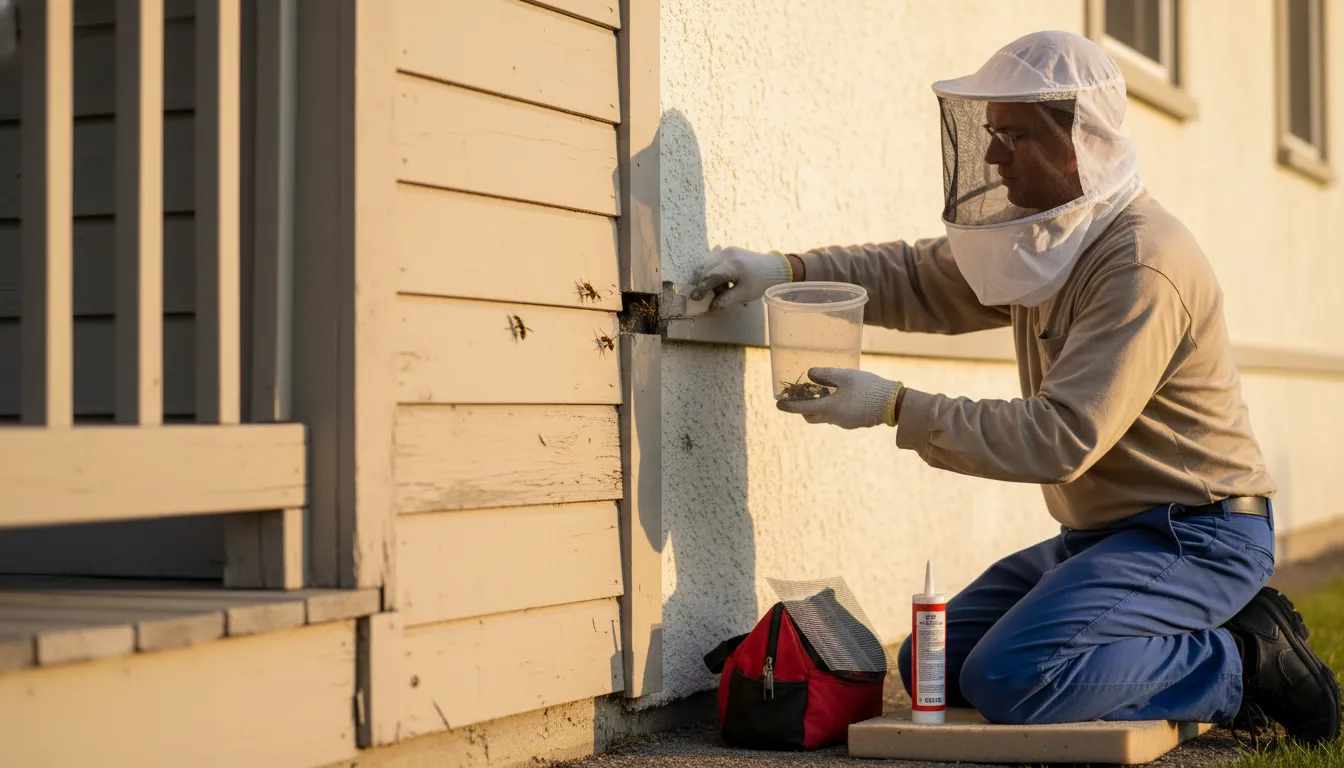
Find the Best Wasp & Hornet Removal Companies for Your Business
No obligation • Fast responses • Nationwide coverage

Why you can trust Pest Crews
Pest Crews is a leading U.S. resource for finding and evaluating residential and commercial pest control services. Our team researches providers, reviews treatment approaches, and organizes unbiased information to help you make informed decisions. Companies cannot pay to change our editorial content or influence how they appear.
Search providers near you
Top Wasp & Hornet Removal Companies in Hayward, California Ranked
Dealing with a bee or wasp nest on your property can be stressful and potentially dangerous. Professional bee and wasp removal services in Hayward provide safe, effective solutions to manage these stinging insects, protecting your family, pets, and property. For environmentally important honey bees, many local specialists prioritize humane relocation over extermination. This guide will help you understand your options, what to expect, and how to connect with qualified local professionals who can assess and resolve your specific situation.
Pest Pros Pest Solutions
2520 Stanwell Dr Suite 102, Concord, CA 94520
Pest Pros Pest Solutions is a family-owned pest control company serving Oakland, CA, and the broader Northern California region. They provide a wide range of pest management services including bed bug treatment, termite inspections, rodent control, mosquito control, and commercial pest solutions. The company uses eco-friendly products and integrated pest management strategies tailored to local pest challenges, such as seasonal infestations and structural threats like termites. Pest Pros Pest Solutions emphasizes education on pest prevention and offers customized plans for both residential and commercial clients. Their service area covers multiple counties around the Sacramento Valley and San Francisco Bay Area.

Advanced Integrated Pest Management
1960 Arnold Industrial Pl, Concord, CA 94520
Advanced Integrated Pest Management provides pest control services in Oakland, CA, specializing in the removal and prevention of insects, rodents, and wildlife for both residential and commercial properties. Their service area includes nearby communities such as Clyde, Pleasant Hill, Dana Estates, and Clayton. The company offers comprehensive pest management solutions including ant, cockroach, spider, bed bug, wasp, bird, and rodent control, as well as vegetation management. Advanced IPM focuses on customized treatments to address infestations and prevent future pest issues.
Bed Bug Exterminator San Francisco
2263 Market St, San Francisco, CA 94114
Bed Bug Exterminator San Francisco provides comprehensive pest control services in San Jose, CA. They specialize in bed bug treatment using eco-friendly heat treatment, steam, and cryonite methods tailored to each infestation. Their services also include control of ants, cockroaches, rodents, termites, mosquitoes, bees, wasps, and other pests. The company is licensed and insured, following local regulations for structural pest control. They offer free inspections and detailed treatment plans to ensure effective pest management across residential and commercial properties. Serving a wide area around San Jose, they emphasize safety and customized solutions.

California Exterminating Service
2770 Camino Diablo Suite D, Walnut Creek, CA 94597
California Exterminating Service is a pest control company serving Oakland, CA, and the surrounding East Bay area. With over 71 years of experience, they provide pest management solutions for common local pests such as ants, rodents, termites, cockroaches, and bees. Their approach emphasizes environmentally friendly methods, including natural deterrents and barriers, to protect homes while minimizing chemical use. They also offer wildlife removal and plant healthcare services tailored to the unique needs of Contra Costa and Alameda counties. The company prioritizes preventive treatments starting at the property perimeter to reduce indoor pest issues and maintain a sustainable environment.
Aptive Pest Control
San Jose, CA
Aptive Pest Control offers comprehensive pest management services in San Jose, CA, addressing common pests such as ants, spiders, cockroaches, rodents, termites, and wasps. Operating with a local understanding of the area's Mediterranean climate and seasonal pest activity, they provide year-round treatments tailored to prevent infestations and protect homes. Their services include exclusion methods, strategic baiting, and targeted treatments to manage and prevent pest problems effectively. Aptive Pest Control serves San Jose and surrounding communities, including Cupertino, Fremont, and Sunnyvale, ensuring coverage across the region.
Understanding Your Stinging Insect Problem
The first step in addressing an infestation is identifying the insect. In Hayward, you may encounter several common species, each with distinct behaviors and nesting preferences.
- Honey Bees: These crucial pollinators are fuzzy and typically amber to brown in color. They live in large, perennial colonies often built inside structural voids like walls or chimneys, though they may also swarm and form exposed clusters. Due to their ecological importance, honey bee colonies are often candidates for live removal and relocation to a local apiary.
- Yellowjackets: A type of social wasp, yellowjackets are smooth, with bright yellow and black markings. They are notoriously aggressive, especially in late summer and fall. They frequently build large, papery nests underground, inside wall cavities, or in other sheltered spots.
- Paper Wasps: These wasps have slender bodies with long legs and build the classic, open-celled, umbrella-shaped nests under eaves, deck railings, and porch ceilings. They are less aggressive than yellowjackets but will defend their nest.
- Bald-Faced Hornets: Actually a type of yellowjacket, these black and white insects construct large, football-sized, enclosed paper nests, usually in trees, dense shrubs, or on buildings.
- Mud Daubers: Solitary and generally non-aggressive, mud daubers are long and slender. They build distinctive mud tubes on protected surfaces like garage walls, sheds, or porch ceilings 1.
Common Nest Locations Around Your Hayward Home
Bees and wasps seek out sheltered, protected areas to build their colonies. Knowing where to look can help with early detection.
- Aerial Locations: Check under roof overhangs, eaves, decks, in trees, and within dense bushes. Hornets and paper wasps favor these spots for their hanging nests 2.
- Ground Nests: Yellowjackets are infamous for building nests in rodent burrows, under rocks, landscape timbers, or concrete slabs. Disturbing the ground near their entrance can provoke a swift, defensive attack 3.
- Structural Voids: This is a major concern for homeowners. Bees and wasps can enter through tiny cracks to establish large colonies inside walls, attics, soffits, and chimneys. These infestations can be extensive and may cause property damage if not addressed 4.
- Other Sheltered Spots: Look in sheds, garages, behind shutters, under patio furniture, and in barbecue grills that are not frequently used.
The Seasonal Cycle of Bees and Wasps in California
Activity levels for stinging insects in Hayward are heavily influenced by the region's warm climate, following a predictable annual pattern 5.
- Spring (March-May): This is the start of the active season. Overwintering queen wasps emerge and begin constructing small starter nests. Honey bee colonies also become more active, with swarming-the process of forming new colonies-peaking during this period 6. Early spring is an ideal time for inspection and preventive measures.
- Summer (June-August): Colonies grow rapidly. Worker populations explode, and foraging activity is at its peak. Nests become larger and more defensive. This is when most people notice infestations and the risk of stings is highest 7 8.
- Fall (September-November): Social wasp colonies (like yellowjackets) reach their maximum size. As natural food sources dwindle, they become particularly aggressive and are drawn to human foods, garbage, and outdoor dining areas 9 10. This is often the most problematic time for yellowjacket encounters.
- Winter (December-February): Activity slows dramatically. Most wasps die off, leaving only fertilized queens to overwinter in sheltered spots. Honey bee clusters huddle in their hives to conserve heat. Visible pest activity is minimal.
Professional Removal Methods Used in Hayward
When you contact a local professional, they will typically recommend an approach based on the species, nest location, and your preferences.
- Live Bee Relocation: For honey bees, many Hayward-area specialists like Humble Bee Removal and Bee Friendly Honey use techniques to safely vacuum, capture, and relocate the entire colony-including the queen-to a local beekeeper's hive. This preserves the bee population and resolves the property issue 11 12.
- Wasp and Hornet Extermination: For aggressive wasp species, professionals use EPA-registered insecticides applied directly to the nest, often using extended-reach equipment for safety. For ground nests, specialized dusts or foams are used to penetrate the deep chambers and eliminate the queen 13.
- Structural Infestation Solutions: When bees or wasps are inside a wall or attic, the process is more complex. Professionals may need to use thermal imaging to locate the colony, carefully open a section of the wall to access it, remove the comb and insects, and then thoroughly clean the area to prevent future problems from attracted pests 14.
- Integrated Pest Management (IPM): Many local companies, such as Advanced Integrated Pest Management, employ IPM strategies. This approach focuses on long-term prevention by sealing entry points, removing attractants, and using targeted treatments only when necessary, minimizing environmental impact.
Find the perfect wasp & hornet removal companies for your needs
Get personalized recommendations and expert advice
What to Expect: Service Costs in Hayward
The cost for professional bee or wasp control in Hayward varies widely and is primarily determined by the nest's location and accessibility. The following estimates are based on regional data and can help you budget, though many companies offer free inspections for a precise quote 15 16.
| Service Scenario | Typical Cost Range | Key Factors |
|---|---|---|
| Easy-Access Aerial Nest (eaves, small hanging nest) | $100 - $400 | Standard one-time treatment. Cost depends on height and size. |
| Ground Nest Removal (yellowjackets) | $500 - $750 | Requires specialized techniques to reach the deep queen chamber. |
| Difficult-Access/Structural Nest (inside walls, attics, chimneys) | $600 - $1,500+ | Includes potential carpentry for access, removal of comb/honey, and cleanup. |
| Bee Swarm Capture (exposed cluster, no established hive) | $125 - $200 | Relatively simple for professionals; some beekeepers may do this for free if easily accessible. |
| Large or Severe Infestation | Up to $1,300+ | May involve multiple visits, extensive hive removal, and repair work. |
Important Note: Always get a detailed, written estimate before work begins. The price should include the initial removal, any necessary cleanup, and a guarantee or follow-up visit if needed.
Why DIY Removal is Not Recommended
Attempting to remove a bee or wasp nest yourself is highly risky.
- Severe Allergy Risk: Stings can trigger life-threatening anaphylactic reactions even in individuals with no prior allergy history.
- Aggressive Defense: Disturbing a nest, especially of yellowjackets or hornets, can provoke a mass attack from hundreds of insects.
- Incomplete Elimination: DIY sprays often fail to reach the queen deep within a ground or wall nest. If the queen survives, the colony will simply rebuild.
- Property Damage: Improper handling of a honey bee colony inside a wall can lead to honey and wax melting, causing stains and attracting other pests like ants and rodents.
- Environmental Harm: Indiscriminate use of pesticides can harm beneficial insects and the local ecosystem. Professionals have the training to apply products correctly and selectively.
Choosing a Local Hayward Service Provider
When evaluating local bee and wasp control experts, consider the following:
- Licensing and Insurance: Verify the company is licensed by the California Structural Pest Control Board and carries liability insurance.
- Experience with Your Specific Problem: Ask if they regularly handle your type of infestation (e.g., ground yellowjackets, live bee relocation, structural removals).
- Methods and Philosophy: Inquire about their approach. Do they offer relocation for bees? Do they practice Integrated Pest Management (IPM) principles? 17
- Detailed Quote: A reputable provider will perform an inspection and provide a clear, written breakdown of costs, the proposed method, and any guarantees.
- Safety Protocols: They should explain their safety procedures for your family, pets, and their technicians during the removal process.
Frequently asked questions
Sources
Footnotes
-
How to Get Rid of Paper & Mud Wasp Nests Above & Underground | Orkin - https://www.orkin.com/pests/stinging-pests/wasps/wasp-nests ↩
-
Licensed & Insured Bee Wasp & Hornet Exterminator | Nest Removal - https://southernpestcontrol.biz/bees-wasps-exterminators/ ↩
-
Yellow jacket exterminator cost 2025: Top 5 Proven Savings - https://bigginsexterminating.com/yellow-jacket-exterminator-cost/ ↩
-
The Key To Keeping Your Bay Area Yard Wasp Free | - https://www.baypestsolution.com/the-key-to-keeping-your-bay-area-yard-wasp-free/ ↩
-
Everything to know about getting rid of wasps in California - https://www.desertsun.com/story/news/nation/california/2024/08/16/everything-to-know-about-getting-rid-of-wasps-in-california/74829775007/ ↩
-
When Do Bees Swarm in Southern California? - AG Pest Control - https://www.agpest.com/when-do-bees-swarm-in-southern-california/ ↩
-
Wasp Season in Southern California: When to Watch Out and ... - https://pestrus.com/wasp-season-in-southern-california-when-to-watch-out-and-what-to-do/ ↩
-
Residential Pest Control - https://presto-pest.com/residential-pest-control/ ↩
-
Stinging Season: Why Wasps Are More Active in Late Summer - https://abrakadabraenvironmental.com/stinging-season-why-wasps-are-more-active-in-late-summer/ ↩
-
Wasp Activity Is Ramping Up - SDSU Extension - https://extension.sdstate.edu/wasp-activity-ramping ↩
-
Humble Bee Removal - https://www.google.com/viewer/place?mid=/g/11b7fyjmqj ↩
-
Bee Friendly Honey - Honey Bee Relocation & Pesticide Free Wasp Removal - https://www.google.com/viewer/place?mid=/g/1q5gr6qlh ↩
-
Bee and Wasp Removal: Top 2025 Effective Solutions - https://bigginsexterminating.com/bee-and-wasp-removal/ ↩
-
Bee Removal FAQs | Eli the Bee Guy, Los Angeles Bee Rescue - https://elithebeeguy.com/faqs-for-bee-removal-services/ ↩
-
How Much Does Wasp Nest Removal Cost? [2026 Data] - Angie's List - https://www.angi.com/articles/how-much-does-wasp-removal-cost.htm ↩
-
How Much Does Bee Removal Cost? [2026 Data] | Angi - https://www.angi.com/articles/how-much-does-bee-removal-cost.htm ↩
-
Advanced Integrated Pest Management - https://www.google.com/viewer/place?mid=/g/11btx6mdwl ↩