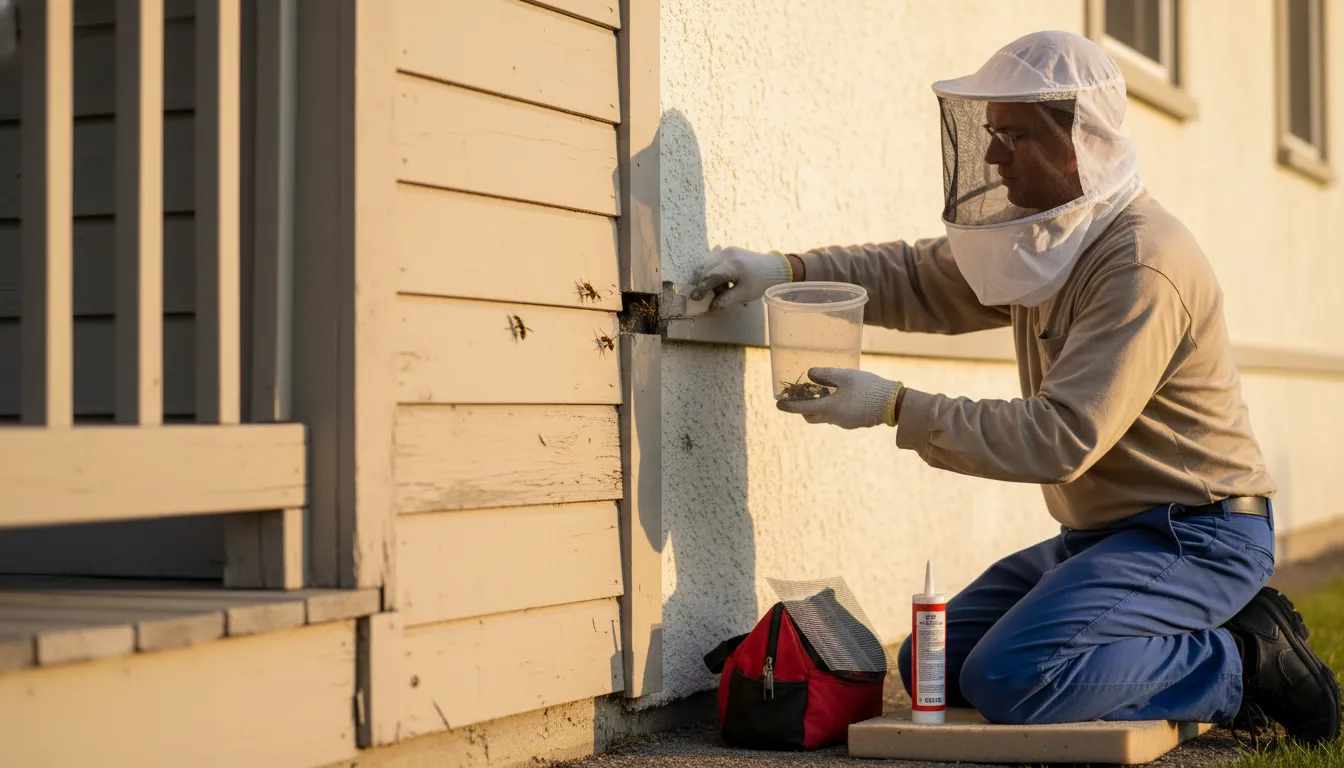
Find the Best Wasp & Hornet Removal Companies for Your Business
No obligation • Fast responses • Nationwide coverage

Why you can trust Pest Crews
Pest Crews is a leading U.S. resource for finding and evaluating residential and commercial pest control services. Our team researches providers, reviews treatment approaches, and organizes unbiased information to help you make informed decisions. Companies cannot pay to change our editorial content or influence how they appear.
Search providers near you
Top Wasp & Hornet Removal Companies in Milpitas, California Ranked
Discovering a buzzing nest on your property can be unsettling. In Milpitas, professional bee and wasp removal services provide safe, effective solutions for managing these stinging insects. Whether you're dealing with a honeybee swarm that needs relocation or an aggressive yellowjacket nest requiring extermination, understanding your options helps protect your family and home. This guide details what to expect from local stinging insect control, including typical nest locations, seasonal activity, service methods, and how to connect with qualified specialists in your area.

Aptive Pest Control
San Jose, CA
Aptive Pest Control offers comprehensive pest management services in San Jose, CA, addressing common pests such as ants, spiders, cockroaches, rodents, termites, and wasps. Operating with a local understanding of the area's Mediterranean climate and seasonal pest activity, they provide year-round treatments tailored to prevent infestations and protect homes. Their services include exclusion methods, strategic baiting, and targeted treatments to manage and prevent pest problems effectively. Aptive Pest Control serves San Jose and surrounding communities, including Cupertino, Fremont, and Sunnyvale, ensuring coverage across the region.
All Pests
2140 Edison Ave, San Leandro, CA 94577
All Pests is a pest control company serving San Francisco, CA, specializing in comprehensive pest management for homes. Their services include treatment and control of bed bugs, cockroaches, ants, termites, mosquitoes, bees, wasps, and other common pests. They use a detailed 5-step pest proofing process that includes inspection, identification, customized treatment plans, implementation, and follow-up to ensure effective pest elimination and prevention. The company emphasizes safe and effective extermination strategies, including sealing entry points and using HEPA vacuums and hospital-grade sanitizers. All Pests serves the Bay Area with a focus on long-lasting protection and thorough monitoring.

Terminix Commercial
32970 Alvarado-Niles Rd #708, Union City, CA 94587
Terminix Commercial provides comprehensive pest control services in San Jose, CA, addressing common local pests such as termites, ants, rodents, bed bugs, mosquitoes, and wildlife. Their team offers both residential and commercial pest management, including termite inspections and continuous termite protection systems. With a focus on tailored pest prevention plans and a nationwide support network, Terminix Commercial is equipped to handle a wide range of pest challenges in the San Jose area. The company offers 24-hour availability and guarantees to return if pests reappear between treatments.

Terminix
1868 Hartog Dr, San Jose, CA 95112
Terminix is a pest control company serving San Jose, CA, with expertise in managing a wide range of pests including bed bugs, termites, ants, cockroaches, rodents, and wildlife. Their local technicians understand the specific pest challenges in the San Jose area and provide customized treatment plans to protect homes and properties. Terminix offers termite inspections and control, bed bug treatment, rodent prevention, and removal of bees, wasps, and other wildlife. The company is supported by a nationwide network of pest control professionals.

PURCOR Pest Solutions
28306 Industrial Blvd, Hayward, CA 94545
PURCOR Pest Solutions is a pest control company based in San Jose, CA, offering services to protect homes and businesses from various pests. Their expertise includes termite inspections and control, bee and wasp removal, spider control, and commercial pest management. They focus on preventing damage from termites and safely removing stinging insects common in the Bay Area. PURCOR Pest Solutions provides thorough pest removal and control to maintain the safety and integrity of properties in the San Jose area.
Understanding Your Stinging Insect Problem
The first step in addressing any pest issue is proper identification. Bees and wasps play different ecological roles and require distinct removal approaches. Honeybees are vital pollinators and are often protected; many local services prioritize their live removal and relocation to apiaries. Wasps, including yellowjackets, paper wasps, and hornets, are generally more aggressive and are typically exterminated to eliminate the threat of stings. A professional inspection can accurately identify the species, assess the nest's size and location, and recommend the most appropriate course of action.
Common Nest Locations Around Milpitas Homes
Bees and wasps are adept at finding sheltered spots to build their colonies. Knowing where to look can help you spot a problem early.
Exterior and Easily Visible Sites:
- Eaves, Soffits, and Roof Overhangs: These sheltered spots are prime real estate for paper wasp nests and the beginning stages of larger wasp or bee hives 1.
- Trees, Shrubs, and Garden Structures: Bushes, tree branches, and even children's play sets can host hanging nests.
- Utility Boxes, Fixtures, and Furniture: Electrical meter boxes, light fixtures, and unused grills or furniture provide enclosed spaces that are attractive to many species.
Hidden and Structural Sites:
- Wall Voids and Attics: Bees and wasps can enter through small exterior cracks and establish large, hidden colonies inside walls or attic spaces. These are among the most challenging and costly to address 2.
- Under Decks, Porches, and in Crawl Spaces: The sheltered underside of structures is a common location for nests.
- Underground: Yellowjackets frequently repurpose old rodent burrows or spaces within rock walls to build extensive subterranean nests 3 4.
- Chimneys and Vents: Uncapped chimneys offer a protected, vertical space that is particularly appealing to swarming honeybees.
The Professional Removal Process: What to Expect
Engaging a licensed pest control professional is the safest and most effective way to handle stinging insects. DIY removal attempts can provoke the colony, leading to dangerous stings and often incomplete eradication.
1. Inspection and Assessment: A technician will perform a thorough inspection to locate all nesting sites, identify the insect species, and evaluate the nest's accessibility. This assessment forms the basis for the treatment plan and quote.
2. Treatment Method Selection:
- Live Bee Removal & Relocation: For honeybees, specialists may use specialized vacuum equipment to carefully collect the bees and the comb. They often partner with local beekeepers to relocate the colony to a managed hive, preserving these important pollinators 5 6.
- Wasp and Hornet Extermination: For aggressive species, technicians apply targeted insecticides, often in dust or aerosol form, directly into the nest entrance. This method eliminates the colony with minimal chemical exposure to the surrounding area 7. The nest is usually removed afterward to prevent secondary pest issues.
- Integrated Pest Management (IPM): Many reputable companies employ an IPM approach. This goes beyond simple removal to include sealing potential entry points, recommending habitat modifications (like managing fallen fruit), and providing advice to deter future colonies from establishing on your property 8 9.
3. Clean-up and Exclusion: After the colony is eliminated, the service may remove the nest and comb material. For structural infestations (like within a wall), this step is crucial to avoid attracting other pests or causing honey damage. The technician will also point out entry holes that should be sealed after confirming the colony is dead.
Find the perfect wasp & hornet removal companies for your needs
Get personalized recommendations and expert advice
Seasonal Activity of Bees and Wasps in Milpitas
Understanding the annual life cycle of these insects helps explain when you're most likely to encounter them and why their behavior changes throughout the year.
- Spring (March - May): This is the start of the active season. Overwintering wasp queens emerge to begin building new, small nests. Honeybee swarming activity, where a large group of bees leaves an established hive to form a new one, is also common in spring 10. Early intervention during this period can prevent a small nest from becoming a large, problematic colony.
- Summer (June - August): This is the peak season for wasp and bee activity in the Bay Area 11 12. Colonies expand rapidly, with worker numbers soaring. Wasps are actively foraging for protein (insects) to feed larvae, and nests can grow to substantial sizes. Activity and visibility are at their highest.
- Fall (September - November): As temperatures begin to cool, the colony's focus shifts. Wasps, in particular, become more aggressive in their search for sugary foods (like sodas or fallen fruit) to feed the next generation of queens 13. This is when human-wasp conflicts are frequent. Activity continues until consistent cold weather sets in.
- Winter (December - February): Most wasps die off, with only the fertilized new queens surviving in sheltered hibernation spots. Honeybees cluster in their hives to stay warm and survive on stored honey. Visible pest activity is minimal during this time 14 15.
Cost Factors for Bee and Wasp Control
The price for professional stinging insect removal in Milpitas is not a flat fee; it varies significantly based on several key factors 16. The primary determinant is the nest's location and accessibility, as this dictates the time, equipment, and techniques required.
| Nest Location & Scenario | Average Cost Range | Key Reasons for Cost |
|---|---|---|
| Easily Accessible (e.g., small, exposed paper wasp nest under an eave) | $100 - $400 | Straightforward treatment with standard tools and minimal time. |
| Ground Nests (e.g., yellowjackets in a burrow) | $500 - $750 | Requires specialized dust application equipment and techniques to treat deep, underground cavities effectively 17. |
| Wall Voids, Attics, or Structural Cavities | $600 - $1,100+ | Often requires thermal imaging or listening devices to locate the nest. May involve minor demolition (like removing siding or drywall) for access and subsequent repair work. Comb removal is critical to prevent damage 18. |
| Chimneys or High-Roof Lines | $700 - $1,000+ | Presents safety challenges requiring special equipment (e.g., tall ladders, roof harnesses). Confined spaces make application difficult. |
Additional factors that can influence the final price include the size of the colony, the specific species (with live bee relocation sometimes commanding a premium due to the specialized skill involved), and whether emergency or after-hours service is required. For the most accurate estimate, it is recommended to contact licensed local providers like EcoGuard Pest Management, Banner Pest Services, or other highly-rated specialists in the Milpitas area for an on-site inspection 19 20 21 22.
Preventing Future Infestations
After successful removal, taking preventive steps can reduce the likelihood of a recurrence.
- Seal Entry Points: In the fall or winter, inspect your home's exterior. Seal cracks in siding, around roof vents, utility line entries, and where siding meets the foundation with caulk or steel wool.
- Manage Attractants: Keep trash cans tightly sealed and clean up fallen fruit from trees promptly. Avoid leaving sugary drinks or food uncovered outdoors.
- Reduce Nesting Sites: Fill in abandoned rodent burrows in your yard. Consider installing fine mesh screens over attic vents, chimney caps, and inside weep holes in brick siding.
- Regular Inspections: Periodically check common nesting sites in the spring and early summer, such as under eaves, deck railings, and inside sheds. Early detection makes removal simpler and less expensive.
Frequently asked questions
Sources
Footnotes
-
Common Areas for Wasp Nests - Summit Pest Management - https://www.summitpestmanagement.com/bees-wasps-exterminators/common-areas-for-wasp-nests/ ↩
-
Common Places You Find Bee and Wasp Nests - Abarb Pest Services - https://abarbpest.com/common-places-you-find-bee-and-wasp-nests/ ↩
-
Yellowjackets and Other Social Wasps - UC IPM - https://ipm.ucanr.edu/home-and-landscape/yellowjackets-and-other-social-wasps/ ↩
-
How to Identify Bee & Wasp Nests - Environmental Pest Control - https://www.environmentalpestcontrol.ca/blog/how-to-identify-bee-and-wasp-nests ↩
-
Bee & Wasp Removal in Southern California | Safe & Fast ... - https://www.1ststrykepestandtermite.com/bee-wasp-removal/ ↩
-
Removal FAQs - https://tvbees.org/pages/removal-faqs ↩
-
Identify and Get Rid of Wasps - https://aptivepestcontrol.com/pests/stinging-pests/wasps/ ↩
-
Swarmed - Ethical Bee Removal - https://www.google.com/viewer/place?mid=/g/11wjbh3snk ↩
-
Bee Friendly Honey - Honey Bee Relocation & Pesticide Free Wasp Removal - https://www.google.com/viewer/place?mid=/g/1q5gr6qlh ↩
-
When Do Bees Swarm in Southern California? - AG Pest Control - https://www.agpest.com/when-do-bees-swarm-in-southern-california/ ↩
-
Why Summer is the Peak Season for Wasp Activity and Nest ... - https://alluneedpest.com/blog/why-summer-is-the-peak-season-for-wasp-activity-and-nest-growth/ ↩
-
Wasps in CA: How to identify, avoid stings, symptoms - https://www.sacbee.com/news/california/article290091519.html ↩
-
Wasps Life Cycle: Wasps Seasonality Information - https://bestbeebrothers.com/blogs/blog/wasp-season?srsltid=AfmBOop7iqWzIc349igJpGzqXR1Rk6qZgCRbzuosHq6T1xA7od5e38Bw ↩
-
What Month Do Wasps Go Away? - Lookout Pest Control - https://www.lookoutpestcontrol.com/blog/what-seasons-are-wasps-most-active/ ↩
-
Wasps in Winter - https://www.pestuk.com/blog/wasps-winter/ ↩
-
Bee or Wasp Removal Cost - https://usalivebeeremoval.com/bee-or-wasp-removal-cost/ ↩
-
Yellow jacket exterminator cost 2025: Top 5 Proven Savings - https://bigginsexterminating.com/yellow-jacket-exterminator-cost/ ↩
-
2025 Bee Removal Cost | Get Estimates - Thumbtack - https://www.thumbtack.com/p/bee-removal-cost ↩
-
Banner Pest Services - https://www.google.com/viewer/place?mid=/g/11rn4ldt4k ↩
-
Milpitas Pest Control & Exterminators - https://www.ecoguardpestmanagement.com/milpitas-pest-control ↩
-
EcoGuard Pest Management - https://www.google.com/viewer/place?mid=/g/11m_k6n7bs ↩
-
The 10 Best Pest Inspection Services in San Jose, CA (2025) - https://homeguide.com/ca/san-jose/pest-inspection/ ↩