Find the Best Wasp & Hornet Removal Companies for Your Business
No obligation • Fast responses • Nationwide coverage

Why you can trust Pest Crews
Pest Crews is a leading U.S. resource for finding and evaluating residential and commercial pest control services. Our team researches providers, reviews treatment approaches, and organizes unbiased information to help you make informed decisions. Companies cannot pay to change our editorial content or influence how they appear.
Search providers near you
Top Wasp & Hornet Removal Companies in Pittsburg, California Ranked
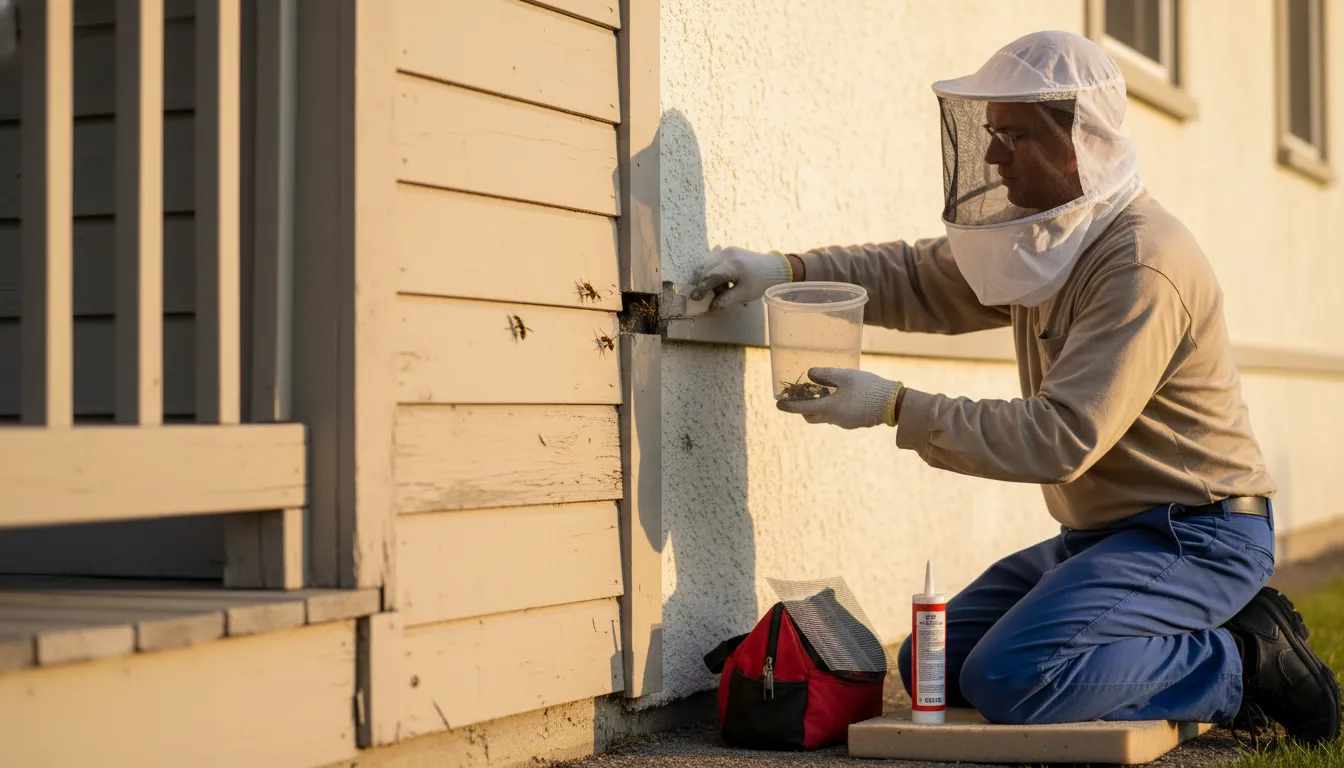
Discovering a buzzing nest on your property can be alarming. Whether it's a paper wasp colony under your eave or a honey bee swarm in a tree, safe and effective removal is crucial for your family's safety and the well of the local ecosystem. This guide provides a detailed overview of professional stinging insect control in Pittsburg, covering how to identify a problem, when to call for help, and what to expect from local experts who specialize in both extermination and humane relocation.
Pest Pros Pest Solutions
2520 Stanwell Dr Suite 102, Concord, CA 94520
Pest Pros Pest Solutions is a family-owned pest control company serving Oakland, CA, and the broader Northern California region. They provide a wide range of pest management services including bed bug treatment, termite inspections, rodent control, mosquito control, and commercial pest solutions. The company uses eco-friendly products and integrated pest management strategies tailored to local pest challenges, such as seasonal infestations and structural threats like termites. Pest Pros Pest Solutions emphasizes education on pest prevention and offers customized plans for both residential and commercial clients. Their service area covers multiple counties around the Sacramento Valley and San Francisco Bay Area.

Advanced Integrated Pest Management
1960 Arnold Industrial Pl, Concord, CA 94520
Advanced Integrated Pest Management provides pest control services in Oakland, CA, specializing in the removal and prevention of insects, rodents, and wildlife for both residential and commercial properties. Their service area includes nearby communities such as Clyde, Pleasant Hill, Dana Estates, and Clayton. The company offers comprehensive pest management solutions including ant, cockroach, spider, bed bug, wasp, bird, and rodent control, as well as vegetation management. Advanced IPM focuses on customized treatments to address infestations and prevent future pest issues.

California Exterminating Service
2770 Camino Diablo Suite D, Walnut Creek, CA 94597
California Exterminating Service is a pest control company serving Oakland, CA, and the surrounding East Bay area. With over 71 years of experience, they provide pest management solutions for common local pests such as ants, rodents, termites, cockroaches, and bees. Their approach emphasizes environmentally friendly methods, including natural deterrents and barriers, to protect homes while minimizing chemical use. They also offer wildlife removal and plant healthcare services tailored to the unique needs of Contra Costa and Alameda counties. The company prioritizes preventive treatments starting at the property perimeter to reduce indoor pest issues and maintain a sustainable environment.
All Pests
2140 Edison Ave, San Leandro, CA 94577
All Pests is a pest control company serving San Francisco, CA, specializing in comprehensive pest management for homes. Their services include treatment and control of bed bugs, cockroaches, ants, termites, mosquitoes, bees, wasps, and other common pests. They use a detailed 5-step pest proofing process that includes inspection, identification, customized treatment plans, implementation, and follow-up to ensure effective pest elimination and prevention. The company emphasizes safe and effective extermination strategies, including sealing entry points and using HEPA vacuums and hospital-grade sanitizers. All Pests serves the Bay Area with a focus on long-lasting protection and thorough monitoring.
Burge Pest Control
San Francisco, CA
Burge Pest Control is a family-owned and operated pest control company serving San Francisco, CA, and the surrounding Bay Area. Established in 1946, they provide pest management solutions for homes and businesses, including bed bug treatment, rodent control, termite inspections, and bee and wasp removal. Their approach uses integrated pest management techniques that focus on safe, proactive, and environmentally responsible treatments designed to address the root of pest problems for long-term protection. With over 80 years of experience, Burge Pest Control combines industry knowledge with personalized service tailored to the unique needs of their community.
Understanding Your Stinging Insect Problem
The first step in addressing any pest issue is proper identification. In Pittsburg, you're most likely to encounter social wasps like yellow jackets and paper wasps, along with various bees, primarily honey bees. While they may look similar from a distance, their behavior, nest structure, and the appropriate removal strategy differ significantly.
Wasps (including yellow jackets, hornets, and paper wasps) are generally more aggressive in defending their nests and can sting repeatedly. Their nests are often made from a paper-like material they create by chewing wood fibers. Yellow jackets frequently nest in underground cavities or wall voids, while paper wasps build the familiar open-comb, umbrella-shaped nests under horizontal surfaces like eaves, decks, and railings.
Honey Bees are vital pollinators and are typically less aggressive unless their hive is directly threatened. They produce honeycombs made of wax, often within enclosed spaces like hollow trees, wall cavities, or chimneys. A large, buzzing cluster on a branch or fence is usually a "swarm"-a temporary resting spot for a colony looking for a new home-and is generally at its most docile state 1.
Why Professional Removal is Essential
Attempting DIY bee or wasp nest removal is strongly discouraged and can be extremely dangerous. Disturbing a nest often triggers a mass defensive attack. Professionals have the training, protective gear, and correct insecticides or tools to manage the situation safely. Furthermore, they can accurately identify the species, which dictates the correct approach-especially important for honey bees, which many prefer to relocate humanely rather than exterminate.
For homeowners with allergies, pets, or children, the risk is even greater. A professional service not only removes the immediate threat but can also advise on and implement preventative measures to deter future colonies from establishing themselves on your property.
Common Nest Locations in and Around Pittsburg Homes
Bees and wasps seek out sheltered, quiet locations that offer protection from the elements and predators 2. Being familiar with these common hotspots can help you perform regular inspections, especially in spring and early summer.
Exterior Nesting Sites
- Eaves, Soffits, and Roof Overhangs: The underside of roof edges provides a sheltered, horizontal anchor point ideal for paper wasp nests and sometimes the entrance to a larger hive inside the attic 3.
- Trees and Shrubs: Branches and dense shrubbery can host hanging wasp nests or bee swarms. Hollows in tree trunks are a preferred natural cavity for honey bee hives.
- Fences, Deck Railings, and Play Structures: Any sheltered nook or cranny can become home to a small colony.
- Ground Burrows and Landscaping: Yellow jackets often repurpose abandoned rodent burrows or create nests in piles of brush, mulch, or within retaining wall blocks 4.
- Grills, Outdoor Furniture, and Sheds: Unused equipment stored outdoors, especially with covers, provides perfect shelter.
Interior and Structural Nesting Sites
- Attics and Crawl Spaces: These quiet, dark spaces are highly attractive to both bees and wasps seeking a permanent home. An active hive in a wall or attic can cause structural damage over time 5.
- Wall Voids: Gaps around pipes, cables, or vents provide access. You may hear buzzing within the walls or see bees/wasps consistently entering and exiting a small hole in your siding.
- Chimneys and Vents: Uncapped chimneys are a prime target. Dryer vents and bathroom exhaust vents can also be entry points.
- Garages and Barns: Mud daubers (a less aggressive type of wasp) are known for building their characteristic mud tubes on the walls of these structures 6.
Seasonal Activity of Bees and Wasps in the East Bay
The activity level and potential for encountering stinging insects in Pittsburg follows a predictable seasonal cycle tied to weather and colony life stages 7.
- Spring (March-May): This is the primary season for colony establishment. Overwintered queen wasps emerge to start building new nests. Honey bee colonies often swarm in spring, sending out a portion of the colony with a new queen to find a new home-this is when swarms are most commonly seen clustered on objects. It's the best time for preventative inspections and early nest removal when colonies are still small.
- Summer (June-August): Activity peaks. Wasp and bee colonies reach their maximum size, with hundreds or thousands of individuals. Foraging is intense, and defensive behavior is at its highest as the colony protects its brood and food stores. Nests are most noticeable and problematic during these warm months 8.
- Fall (September-November): For wasps and hornets, the colony cycle ends. New queens mate and seek sheltered spots to hibernate, while the workers die off with the first frost. Nests are abandoned and will not be reused. Honey bees, however, remain active, foraging to build up honey stores for the winter and clustering in their hive to stay warm 9.
- Winter (December-February): Wasp nests are empty and can be safely removed. Honey bee activity is minimal; they stay inside their hive in a tight cluster to conserve heat. Sightings of individual bees or wasps indoors during winter may indicate a hive within the structure itself.
Find the perfect wasp & hornet removal companies for your needs
Get personalized recommendations and expert advice
Professional Removal Methods: Extermination vs. Relocation
Local Pittsburg providers typically offer two main approaches, chosen based on the insect species, nest location, and homeowner preference.
Extermination: This is the most common method for wasps, hornets, and yellow jackets. Pest control professionals use EPA-registered insecticides in the form of sprays or dusts. The product and application method are chosen based on the nest's location (e.g., dust for wall voids, spray for aerial nests). The goal is to eliminate the colony efficiently and minimize the risk of stings. Companies like All N One Pest Eliminators, McCauley Agricultural & Pest Control, and AAI Pest Control offer these services in the Pittsburg area 10 11 12.
Live Bee Removal and Relocation: For honey bees, many homeowners and professionals prefer this ethical option. Specialists, often experienced beekeepers, will carefully extract the bees and comb from a structure and transfer them to a portable hive box. The queen is safely relocated, and the entire colony follows. This preserves the vital pollinators. Companies like A & Bee Swarm Removal and Jones Family Bee Removal, as well as local beekeeping associations like the Alameda County Beekeepers Association, provide these humane services in the region 13 14 15. This process is more labor-intensive and may involve carefully opening up a wall or soffit to access the hive, which can influence the cost.
What Determines the Cost of Removal in Pittsburg?
The price for professional bee or wasp removal in Pittsburg is not a flat fee; it varies based on several key factors 16. Understanding these can help you interpret estimates.
- Nest Size and Insect Species: A small, early-season paper wasp nest is far less labor-intensive than a large, established yellow jacket nest in the ground or a massive honey bee hive that has filled a wall cavity.
- Location and Accessibility: A nest on a low fence is easy to reach. A nest high on a second-story eave, inside a sealed wall void, or deep within an attic requires more time, specialized equipment (like ladders, extension poles, or tools to open and repair walls), and carries greater risk for the technician. Difficult access is a primary driver of higher costs 17.
- Removal Method: Standard extermination for wasps is typically on the lower end of the price spectrum. Live honey bee removal and relocation is a specialized skill that often commands a higher price due to the careful work and extra time involved.
- Urgency: A standard appointment during business hours will cost less than an emergency or after-hours service call, which may include a premium of $150-$350 or more 18.
As a general guide based on regional data, homeowners in the East Bay can expect a range 19:
- $100 - $300: For small, easily accessible nests (e.g., in a bush, on a low eave, a small ground nest).
- $300 - $600: For larger nests, those in moderately difficult locations (high eaves, attics), or for standard live bee swarm removal.
- $600 - $1,100+: For large, established hives inside structures (walls, chimneys) requiring extraction and repair, or for extensive yellow jacket infestations. Live removal of an established hive from a structure is often in this higher range.
Always request a detailed, on-site inspection and quote from any provider before work begins.
Choosing a Local Pittsburg Service Provider
When selecting a professional, consider more than just price. Look for a company with specific experience in bee and wasp control. Ask about their approach: do they offer relocation options for bees? Are they licensed and insured? Check reviews for mentions of safety, thoroughness, and customer service. Reputable providers will clearly explain their process, the products they use, any necessary follow-up, and what precautions you need to take before and after treatment. They should also offer a guarantee on their work for a specified period.
Prevention Tips for Pittsburg Homeowners
After removal, take steps to make your property less inviting:
- Seal Entry Points: In early spring, inspect and seal cracks, gaps, and holes in your home's exterior, especially around roof joints, siding, and utility penetrations, with caulk or steel wool.
- Manage Attractants: Keep trash cans tightly sealed. Clean up fallen fruit promptly. Consider placing hummingbird feeders away from high-traffic areas.
- Deny Shelter: Remove piles of wood, debris, and unused yard equipment. Fill in abandoned rodent burrows in the ground.
- Perform Regular Inspections: Periodically check the common nesting sites listed earlier, particularly in spring and early summer when new colonies are just starting and are easiest to manage.
Frequently asked questions
Sources
Footnotes
-
Honey Bee Removal - California Master Beekeeper Program - https://cambp.ucdavis.edu/knowledge-base/bee-removal ↩
-
Common Places You Find Bee and Wasp Nests - Abarb Pest Services - https://abarbpest.com/common-places-you-find-bee-and-wasp-nests/ ↩
-
Common Areas for Wasp Nests - Summit Pest Management - https://www.summitpestmanagement.com/bees-wasps-exterminators/common-areas-for-wasp-nests/ ↩
-
Where Do Wasps Nest? - Harris Pest Control - https://www.harrispestcontrolinc.com/blog/post/where-do-wasps-nest ↩
-
IDENTIFYING BEE AND WASP NESTS - Orkin Canada - https://www.orkincanada.ca/drive/uploads/2019/07/Identifying-Bees-and-Wasps-Nests-OC-ENG-v1-1.pdf ↩
-
How to Identify Bee & Wasp Nests - Environmental Pest Control - https://www.environmentalpestcontrol.ca/blog/how-to-identify-bee-and-wasp-nests ↩
-
Beekeeping Checklist By The Seasons • Ecrotek - https://www.ecrotek.co.nz/learn/articles/detail/beekeeping-checklist-by-the-seasons ↩
-
Prevention and Treatment of Nuisance Honey Bees Around Your Home - https://extension.msstate.edu/publications/prevention-and-treatment-nuisance-honey-bees-around-your-home ↩
-
How to Kill Wasps - https://www.woodstreampartnerportal.com/articles/how-to-kill-wasps ↩
-
All N One Pest Eliminators - https://www.google.com/viewer/place?mid=/g/11bycgcxby ↩
-
McCauley Agricultural & Pest Control - https://www.google.com/viewer/place?mid=/g/11byck_xyp ↩
-
Pittsburg Pest Control and Extermination - https://www.aaipest.com/pest-control/pittsburg/ ↩
-
A & Bee Swarm Removal - Pittsburg - MapQuest - https://www.mapquest.com/us/california/a-bee-swarm-removal-451785937 ↩
-
Jones Family Bee Removal - https://www.google.com/viewer/place?mid=/g/11c7v_7cwr ↩
-
Get Free Help with a Honey Bee Swarm in the Bay Area - https://www.alamedabees.org/get-help-with-a-honey-bee-swarm/ ↩
-
Bee and Wasp Removal: Top 2025 Effective Solutions - https://bigginsexterminating.com/bee-and-wasp-removal/ ↩
-
How Much Does Wasp Nest Removal Cost in 2026? - https://lawnlove.com/blog/wasp-nest-removal-cost/ ↩
-
How much does Wasp extermination cost? - Yelp - https://www.yelp.com/costs/wasp_extermination ↩
-
Yellow jacket exterminator cost 2025: Top 5 Proven Savings - https://bigginsexterminating.com/yellow-jacket-exterminator-cost/ ↩