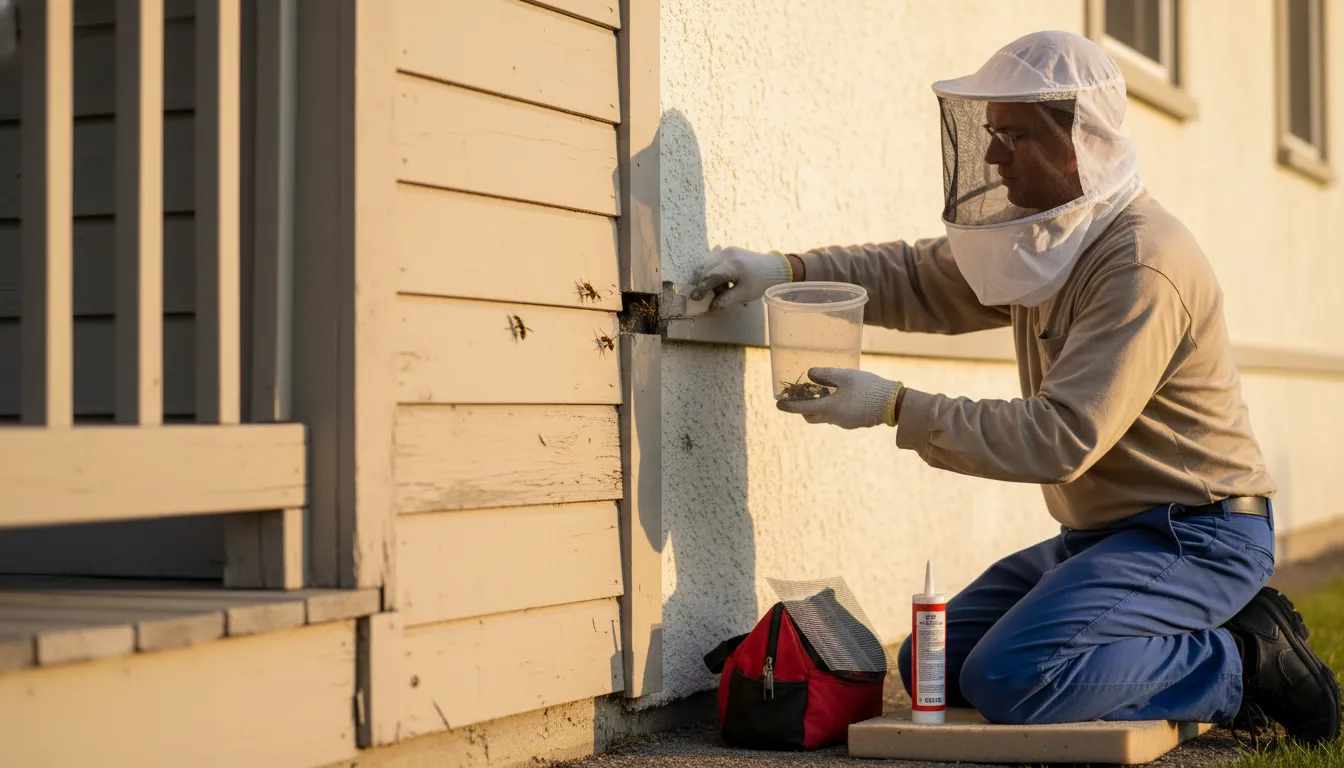
Find the Best Wasp & Hornet Removal Companies for Your Business
No obligation • Fast responses • Nationwide coverage

Why you can trust Pest Crews
Pest Crews is a leading U.S. resource for finding and evaluating residential and commercial pest control services. Our team researches providers, reviews treatment approaches, and organizes unbiased information to help you make informed decisions. Companies cannot pay to change our editorial content or influence how they appear.
Search providers near you
Top Wasp & Hornet Removal Companies in Woodland, California Ranked
Bee and wasp removal is a specialized service focused on safely addressing stinging insect infestations around your home or business. These insects are not just a nuisance; their presence can pose significant health risks due to painful stings and potential allergic reactions. Finding the right local professional is crucial, as the correct approach depends on the species, nest location, and your preference for humane relocation versus extermination. This guide will help you understand your options and what to expect when dealing with stinging insects in Woodland.
PEST PROS PEST SOLUTIONS
1016 N Market Blvd #40, Sacramento, CA 95834
PEST PROS PEST SOLUTIONS is a family owned pest control company based in Sacramento, CA, serving the Sacramento Valley and the San Francisco Bay Area. They provide a wide range of pest management services including bed bug treatment, termite inspections, rodent control, mosquito control, and commercial pest control solutions tailored to local environmental challenges. The company uses eco-friendly products and integrated pest management strategies to effectively address pest issues while minimizing environmental impact. Their expertise includes handling pests common to Northern California such as carpenter ants, termites, rodents, and mosquitoes. Pest Pros Pest Solutions emphasizes education on pest prevention and offers customized plans for both residential and commercial clients. They also provide same-day service when contacted early in the day. The company is committed to community support and environmental responsibility. Their service area covers multiple Northern California counties, ensuring broad access to their pest control expertise. Pest Pros Pest Solutions combines local knowledge with professional-grade products and techniques to manage pest problems safely and effectively.
Pest Control Center Inc.
3845 Madison Ave, North Highlands, CA 95660
Pest Control Center Inc. is a family-owned pest control company serving Sacramento, CA, and nearby communities. With over 40 years of experience, they provide comprehensive pest prevention services targeting ants, cockroaches, rodents, termites, mosquitoes, and wasps. Their offerings include thorough inspections, customized treatment plans, and eco-friendly options. The company also specializes in termite inspections and treatments, along with mosquito and fly control. Pest Control Center Inc. emphasizes ongoing monitoring and maintenance to prevent future infestations and offers flexible service schedules. They provide a 100% service guarantee and accommodate same-day service in many areas.
Next Level Pest Control
6008 Auburn Blvd #1, Citrus Heights, CA 95621
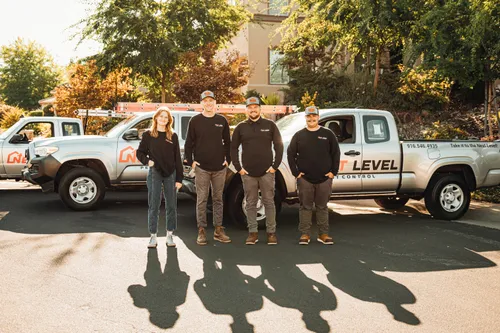
Next Level Pest Control is a pest control company based in Sacramento, CA, serving both residential and commercial clients. They provide comprehensive pest management solutions including cockroach, ant, rodent, bee, and wasp removal services. Their commercial pest control is designed to meet the needs of offices, restaurants, and warehouses with discreet and effective treatments. The company offers customized treatment plans and ongoing pest protection packages to maintain pest-free properties year-round.
Next Level Pest Control
11292 Coloma Rd STE A, Gold River, CA 95670
Next Level Pest Control is a pest control company based in Sacramento, CA, serving both residential and commercial clients. They offer a range of services including cockroach, ant, rodent control, and bee and wasp removal. Their commercial pest management is designed to meet the needs of offices, restaurants, and warehouses with discreet and effective treatments. The company provides customized treatment plans and ongoing pest protection packages to maintain pest-free environments year-round.
Pest Pros Pest Solutions
1100 Melody Ln STE 105, Roseville, CA 95678
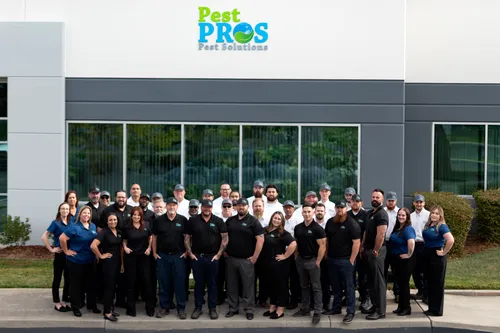
Pest Pros Pest Solutions is a family-owned pest control company serving Sacramento, CA, and the broader Northern California region. They offer a wide range of services including ant, bed bug, termite, rodent, mosquito, bee and wasp, bird, and cockroach control for both residential and commercial properties. The company uses eco-friendly products and integrated pest management strategies to address local pest challenges effectively. Their commercial services are tailored to meet industry-specific needs, ensuring compliance and minimal disruption. Pest Pros Pest Solutions emphasizes education on pest behavior and prevention to provide long-term results. They serve multiple counties across Northern California and provide same-day service when contacted early in the day.
Understanding Your Stinging Insect Problem
The first step in any effective removal process is proper identification. Bees and wasps have distinct behaviors, nesting preferences, and levels of aggression, which directly influence the removal strategy and cost 1.
Common Bees in Woodland:
- Honey Bees: These vital pollinators are not naturally aggressive but will defend their hive. They prefer to establish colonies in enclosed, hollow spaces. In residential areas, this often means inside wall voids, attics, chimney flues, or hollow structural supports.
- Bumblebees: Larger and furrier than honey bees, bumblebees are generally docile. They typically nest near the ground in abandoned rodent burrows, under piles of debris, or within compost heaps.
- Carpenter Bees: These solitary bees are often mistaken for bumblebees. The males are harmless, but females bore perfectly round holes into untreated wood to create nesting galleries. They target decks, eaves, siding, and porch railings, which can lead to structural damage over time 2.
Common Wasps in Woodland:
- Paper Wasps: Recognizable by their umbrella-shaped, open-comb nests that hang from a single stalk. They often build under porch ceilings, window frames, eaves, and in attic rafters. While less aggressive than yellowjackets, they will sting if their nest is disturbed.
- Yellowjackets: Perhaps the most aggressive common wasp, yellowjackets are a significant concern. They build enclosed, papery nests that can be located in the ground (often in old rodent holes), inside wall cavities, or suspended in dense bushes and trees. Their scavenging behavior brings them into close contact with people during outdoor meals.
- Mud Daubers: These solitary wasps are slender and less threatening. They construct small, tubular nests out of mud, often placing them side-by-side in sheltered spots like garage corners, under eaves, and in chimneys. They are beneficial as they hunt spiders but can still be a nuisance 3.
Professional Removal: Your Safest Option
For any established nest or hive, especially those attached to or inside your home, professional intervention is strongly recommended. DIY removal carries a high risk of painful stings and can trigger dangerous allergic reactions. Professionals have the necessary protective gear, specialized equipment, and expertise to handle the job safely and effectively.
Types of Local Professionals:
- Pest Control Companies: Many local pest management firms, such as Woodland-Davis Termite & Pest Control, offer comprehensive bee and wasp control services 4. Their approach typically includes identification, treatment (which may be extermination for wasps), physical removal of the nest, and recommendations for preventative measures to avoid future problems 5.
- Beekeepers & Live Removal Specialists: For honey bee swarms or accessible hives, contacting a local beekeeper or a specialist in live removal is often the best course of action. Due to the ecological importance of honey bees, many beekeepers will remove a swarm or an easily accessible colony for a reduced fee or sometimes even for free, as they can relocate the bees to an apiary 6. This humane approach is encouraged whenever possible.
Find the perfect wasp & hornet removal companies for your needs
Get personalized recommendations and expert advice
Seasonal Activity in Woodland's Climate
Understanding the seasonal patterns of bees and wasps can help you anticipate problems and take preventative action.
- Spring (March - May): This is the start of the active season. Overwintered queen wasps emerge to begin building new nests. For honey bees, spring is peak swarming season, as established colonies divide to form new ones. You may see large clusters of bees (swarms) resting on tree branches or fences before they find a permanent home 7 8.
- Summer (June - August): Colonies reach their maximum size. Worker activity is at its peak as insects forage for food to support the growing nest. This is when they are most visible and active around your property.
- Fall (September - November): As natural food sources like flowers decline, wasps and bees become more aggressive in their search for sugars. This leads them to picnics, outdoor trash cans, and fallen fruit, increasing human encounters. Yellowjacket activity is particularly noticeable in early fall 9 10.
- Winter (December - February): Activity significantly decreases. Most wasp colonies die off, leaving only fertilized queens to hibernate. Honey bee clusters stay inside their hives to keep warm and are rarely seen outside. Spotting significant activity in winter can indicate a nest within the structure of your home 11.
What Determines the Cost of Removal?
The price for professional bee or wasp removal in Woodland is not a flat fee. It varies based on several key factors.
- Insect Species: Humane honey bee removal can differ in cost from wasp extermination. Swarm removal is typically less expensive than dealing with an established hive inside a wall.
- Nest Location and Accessibility: This is the primary cost driver. A small, exposed paper wasp nest under an eave will cost far less to treat than a large yellowjacket nest deep within a wall cavity or underground.
- Nest Size: Larger colonies require more time and material to address.
- Required Repairs: If bees have been living inside a wall, removal often involves opening the wall to extract the comb and honey. The service cost may then include sealing the entry point and repairing the interior wall, which can add significantly to the total project price.
General Cost Ranges:
- Basic, Accessible Service: Removal of a simple, easy-to-reach nest may range from $150 to $500.
- Wasp Nest Removal: Professional wasp extermination and removal typically falls between $300 and $70012.
- Honey Bee Swarm Removal: Collecting a swarm is often the least expensive option, generally costing $125 to $200, and can sometimes be free if a beekeeper can easily collect it 13 14.
- Complex or Structural Removal: For hives inside walls, attics, or chimneys that require demolition and repair, costs can range from $1,000 to $2,500 or more, depending on the extent of the work 15 16.
Preventing Future Infestations
After removal, taking preventative steps can help keep your property free of stinging insects:
- Seal Entry Points: Carefully inspect your home's exterior in early spring. Seal cracks, gaps around utility lines, and holes in siding or rooflines with caulk or steel wool.
- Manage Attractants: Keep trash cans tightly sealed. Clean up fallen fruit from trees promptly. Avoid leaving sugary drinks or food uncovered outdoors.
- Reduce Nesting Sites: Fill in abandoned rodent holes in the ground. Keep yard debris, compost piles, and woodpiles neatly maintained and away from the house.
- Treat Wood Surfaces: Painting or staining untreated wood on decks, eaves, and fences can deter carpenter bees from boring into it.
Frequently asked questions
Sources
Footnotes
-
How to Identify Bee & Wasp Nests - Environmental Pest Control - https://www.environmentalpestcontrol.ca/blog/how-to-identify-bee-and-wasp-nests ↩
-
What Hive Is It?: Identifying Bee and Wasp Nests - Groundworks - https://www.groundworks.com/resources/what-hive-is-it/ ↩
-
How To Identify And Remove A Wasp Nest - Moxie Pest Control - https://moxieservices.com/blog/how-to-identify-and-remove-a-wasp-nest/ ↩
-
Woodland-Davis Termite & Pest Control - https://www.google.com/viewer/place?mid=/g/1hbpwrtr6 ↩
-
Davis Pest Control -Termite and Pest Inspection - Free Estimate - https://www.thelocalguys.net/davis-pest-control ↩
-
Honey Bee Removal Cost: What to Know for Your Budget - https://blythewoodbeecompany.com/blogs/news/honey-bee-removal-cost ↩
-
How Seasonal Changes Affect Pest Patterns - https://harborpest.com/blog/post/how-seasonal-changes-affect-pest-patterns ↩
-
When Do Bees Swarm in Southern California? - AG Pest Control - https://www.agpest.com/when-do-bees-swarm-in-southern-california/ ↩
-
Why Bees, Wasps, and Hornets Are So Active in August and ... - https://www.actionpestcontrol.com/2024/08/21/why-bees-wasps-and-hornets-are-so-active-in-august-and-september/ ↩
-
Wasp Season in Southern California: When to Watch Out and ... - https://pestrus.com/wasp-season-in-southern-california-when-to-watch-out-and-what-to-do/ ↩
-
How to Identify Bee vs. Wasp Activity in Late Winter - https://www.ochelper.com/how-to-identify-bee-vs-wasp-activity-in-late-winter/ ↩
-
How Much Does Wasp Nest Removal Cost in 2025? - HomeAdvisor - https://www.homeadvisor.com/cost/environmental-safety/hornet-wasp-removal/ ↩
-
How Much Does Beehive Removal Cost in 2026? - Lawn Love - https://lawnlove.com/blog/beehive-removal-cost/ ↩
-
How Much Does Bee Removal Cost? [2026 Data] | Angi - https://www.angi.com/articles/how-much-does-bee-removal-cost.htm ↩
-
Breaking Down the Bee Control Cost - https://proguardpest.com/breaking-down-the-bee-control-cost/ ↩
-
How Much Does Terminix Cost? (2026) - HomeGuide - https://homeguide.com/costs/terminix-prices ↩