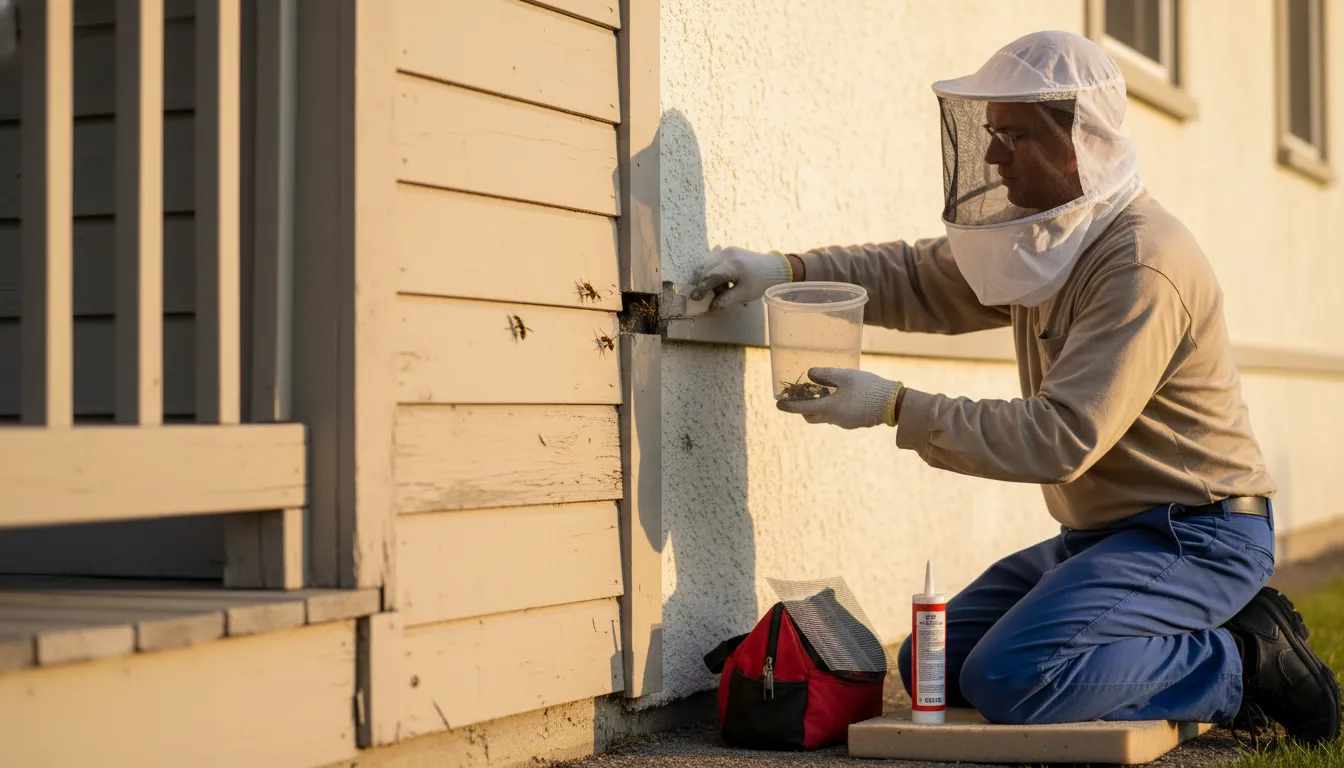
Find the Best Wasp & Hornet Removal Companies for Your Business
No obligation • Fast responses • Nationwide coverage

Why you can trust Pest Crews
Pest Crews is a leading U.S. resource for finding and evaluating residential and commercial pest control services. Our team researches providers, reviews treatment approaches, and organizes unbiased information to help you make informed decisions. Companies cannot pay to change our editorial content or influence how they appear.
Search providers near you
Top Wasp & Hornet Removal Companies in Cape Coral, Florida Ranked
Dealing with a bee or wasp infestation requires a careful approach that balances safety, effectiveness, and environmental responsibility. For Cape Coral homeowners, understanding the local options for stinging insect control is key to protecting your family and property. This guide provides essential information on professional removal services, seasonal activity patterns, and cost considerations to help you make an informed decision when facing a buzzing problem.
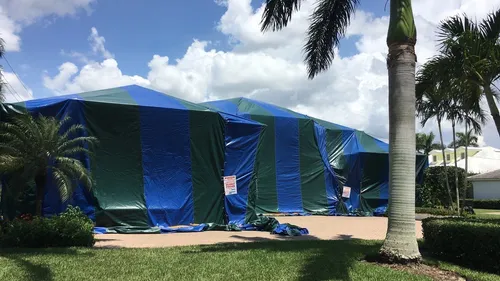
Security Termite & Pest Control
7995 Mercantile St #5, North Fort Myers, FL 33917
Security Termite & Pest Control is a locally owned pest control company serving Cape Coral, FL, and the greater Southwest Florida area. With over 25 years of experience since 1985, they provide residential and commercial pest control services including bed bug treatment, termite control, mosquito control, rodent control, bee and wasp removal, and tent fumigation. They use Integrated Pest Management (IPM) techniques to offer targeted, environmentally considerate pest solutions. Security Termite & Pest Control also offers quarterly treatments to maintain pest barriers and provides 24/7 emergency services for urgent pest issues.
ENG Pest Control Cape Coral
4030 Skyline Blvd, Cape Coral, FL 33914
ENG Pest Control Cape Coral offers pest control services in Cape Coral, FL. They provide treatments for a variety of pests including ants, roaches, spiders, fleas, ticks, mosquitoes, bees, wasps, and lawn pests. Their services include one-time treatments as well as quarterly plans, along with lawn care options such as weed control, fertilization, and insecticide applications. The company also handles specialized pest issues like fire ants and palm tree fertilization.

Bug the Bugs, LLC
695 Tarpon Bay Rd Suite 8, Sanibel, FL 33957
Bug the Bugs, LLC is a pest control company serving Cape Coral, FL, and the broader Southwest Florida area including Naples, Estero, Fort Myers, and Sanibel Island. Founded in 2016, the company offers comprehensive pest management services such as bed bug treatment, cockroach and rodent control, termite inspections, and bee and wasp removal. They use advanced inspection technologies like fiber optic and infrared tools and provide customized pest control plans for homes, businesses, and condominiums. Bug the Bugs is licensed and state certified in multiple pest control categories, ensuring a full range of services including general household pest control, termite and wood-destroying organism management, lawn and ornamental care, and fumigation.
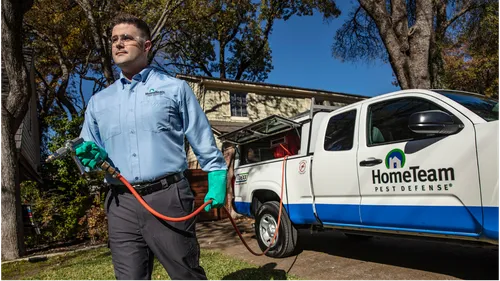
HomeTeam Pest Defense
5570 Lee St #12, Lehigh Acres, FL 33971
HomeTeam Pest Defense is a pest control company serving Cape Coral, FL, and surrounding areas including Ft. Myers and Lehigh Acres. They offer a range of services such as cockroach, ant, rodent, termite, mosquito, bee, and wasp control. Their termite treatments include Sentricon systems and borate wood and soil treatments, focusing on subterranean termites. The company also provides rodent exclusion services that combine baiting and sealing entry points to prevent infestations. HomeTeam Pest Defense emphasizes customized pest management strategies tailored to local pest challenges in Florida.
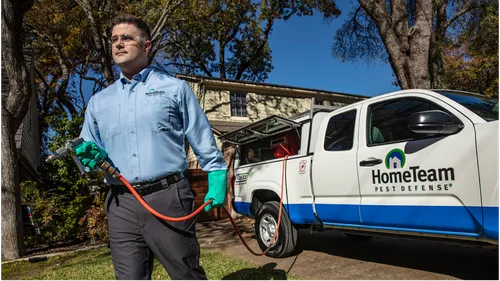
HomeTeam Pest Defense
3465 Bonita Beach Rd SW Suites 8-11, Bonita Springs, FL 34134
HomeTeam Pest Defense offers pest control services in Cape Coral, FL, and surrounding areas including Bonita Springs, Estero, and Fort Myers Beach. They handle a variety of pests such as ants, roaches, rodents, termites, bees, and wasps. The company provides termite treatments including soil treatments, baiting systems, and borate wood treatments for new construction. Their technicians are trained and background-checked, and they service homes with built-in pest control systems for added convenience.
Professional Removal Services in Cape Coral
When you discover a nest on your property, you have two primary avenues for professional assistance: licensed pest control companies and local beekeepers. The best choice depends largely on the type of insect and your personal preferences regarding relocation versus extermination.
Licensed Pest Control Companies These professionals are equipped to handle all types of stinging insect infestations, from paper wasps to aggressive yellowjackets and hornets. They are the recommended choice for nests that are difficult to access, located inside structures, or pose an immediate safety risk. A key advantage of hiring a pest management service is their ability to perform necessary repairs after removing a hive from a wall or attic. For honeybees, many companies will attempt to contact a local beekeeper for relocation first, but if the colony is too aggressive or the location makes relocation impossible, extermination may be the only viable option 1.
Local Beekeepers and Relocation For honeybee swarms or established hives that are easily accessible, contacting a local beekeeper is an excellent, eco-friendly solution. Beekeepers are passionate about preserving these vital pollinators and will often remove a colony to relocate it to an apiary. In Florida, beekeepers who perform removal services must be registered with the Florida Department of Agriculture and Consumer Services (FDACS) 2. This service is sometimes offered for a reduced fee or even a donation, as the beekeeper gains a new colony and potential honey. If you have a honeybee issue, reaching out to a beekeeper or a local beekeeping association should be your first call.
Common Nest Locations Around Your Home
Bees and wasps seek out sheltered, low-traffic areas to build their nests. Knowing where to look can help you identify a problem early. Regular inspections of these common spots, especially during peak seasons, are a crucial part of prevention 3.
Exterior Structures
- Eaves, Awnings, and Porch Ceilings: These overhead shelters provide protection from rain and are prime real estate for paper wasp nests and the beginning stages of honeybee swarms.
- Rooflines and Behind Shutters: Small gaps and sheltered ledges offer perfect anchoring points for nests.
- Trees, Shrubs, and Dense Foliage: Branches and thick bushes can conceal both aerial wasp nests and bee swarms.
- Sheds, Garages, and Play Structures: Door frames, window sills, and unused corners inside outbuildings are attractive to many species.
Ground-Level and Below-Grade Sites
- Abandoned Rodent Burrows and Ground Holes: Yellow jackets are notorious for building extensive underground nests.
- Utility Boxes: Water meter boxes and sprinkler valve boxes provide dark, enclosed spaces that are highly attractive to stinging insects.
- Compost Piles and Leaf Litter: The heat and decomposition can attract certain bumblebee and wasp species 4.
Interior and Structural Cavities This is the most problematic category, often requiring professional intervention. Bees and wasps can enter through incredibly small gaps to build hives inside:
- Wall Cavities: A small crack in siding or a gap around a pipe can lead to a large, hidden honeycomb inside your walls.
- Attics and Soffits: Vents and loose soffit panels are common entry points.
- Chimneys and Vents: Unused chimneys or dryer vents offer a protected, vertical space ideal for nesting 5 6.
Nests in these structural locations almost always require a professional who can safely remove the insects, the comb, and the honey (which can attract other pests and cause damage if left behind), followed by sealing the entry point and repairing any interior damage.
Seasonal Activity Guide for Cape Coral
Florida's warm climate means stinging insects are active nearly year-round, but their behavior changes with the seasons. Understanding this cycle helps explain when you're most likely to encounter swarms or aggressive behavior.
Spring (March-May): Peak Swarming Season Spring is the most active time for bee swarms in Florida. As established colonies grow rapidly, they become overcrowded. The old queen will leave with a large group of worker bees to find a new home, which is when you might see a "swarm" clustered on a tree branch or the side of your house. This is a critical time for proactive inspections, as scout bees are actively searching for new nesting sites 7.
Summer (June-August): High Activity and Growth Established colonies are at their largest and are foraging intensely. Wasp nests, in particular, can grow to alarming sizes during the summer months. Insects may become more defensive as they work to protect the queen and the developing young within the nest. This is when most removal calls occur for aggressive yellow jacket or hornet nests 8.
Fall (September-November): Increased Aggression As natural food sources like flowers begin to dwindle, bees and wasps may become more persistent in their search for sugars and proteins, sometimes bringing them into closer contact with people at outdoor gatherings. Wasps can be notably aggressive in the fall as the colony's lifecycle nears its end 9 10.
Winter (December-February): Dormant Period This is the quietest time for stinging insects in Cape Coral. However, on unusually warm winter days, you may still see some activity. It's an excellent time to have a professional inspect your property for old, vacant nests and seal potential entry points before the spring swarm season begins 11 12.
Find the perfect wasp & hornet removal companies for your needs
Get personalized recommendations and expert advice
Understanding Removal Costs
The cost for bee or wasp control in Cape Coral varies significantly based on several factors: the type of insect, the size and location of the nest, and the complexity of the removal process 13. Here's a general breakdown of what you might expect:
Basic Removal for Easy-Access Nests For a single, small, and easily accessible nest-such as a paper wasp nest under an eave or a small ground nest-costs typically start in the range of $150 to $300. This is generally a straightforward service for a professional 14.
Average Removal Services For a standard-sized nest that requires a ladder or more involved treatment, homeowners can expect to pay an average of around $385 for wasp removal and $445 for bee removal. These prices reflect a more typical residential call 15.
Complex and Structural Removal This is where costs can rise substantially. Removing a large hive of honeybees or wasps from inside a wall, attic, or deep underground often requires cutting into drywall, removing siding, or excavation. These jobs require not just insect removal but also demolition, cleanup, and repair. Complex removals can easily cost $1,000 or more, plus the expense of the structural repairs 16 17.
Ongoing Prevention Plans Many local pest control companies offer quarterly or monthly maintenance plans. These plans typically include periodic inspections and the removal of any new wasp nests that form on the exterior of your home. These services usually involve an initial setup fee followed by a recurring visit charge, often ranging from $40 to $120 per service visit 18.
Safety and Prevention Tips
Attempting a do-it-yourself removal, especially with over-the-counter sprays, is risky and often ineffective for anything beyond a tiny, isolated nest. Disturbing a nest can provoke a mass attack. Professionals have the proper protective equipment, insecticides, and techniques to handle the job safely.
For prevention, focus on making your property less attractive:
- Seal Entry Points: In the winter, inspect and seal cracks in siding, gaps around roof eaves, vents, and utility penetrations with caulk or steel wool.
- Manage Attractants: Keep trash cans tightly sealed, clean up fallen fruit promptly, and avoid leaving sugary drinks or food uncovered outdoors.
- Reduce Nesting Sites: Fill in abandoned rodent burrows in the yard and consider covering exposed soil in seldom-used areas.
- Regular Inspections: Make it a habit to walk the perimeter of your home monthly during spring and summer, looking for increased insect traffic or the early stages of nest construction.
Frequently asked questions
Sources
Footnotes
-
Bee and Wasp Removal Fort Myers & Cape Coral Florida - https://pinnaclepestsolutions.com/bee-wasp-removal/ ↩
-
Honey Bee Removal or Eradication in Florida - https://www.fdacs.gov/Consumer-Resources/Consumer-Rights-and-Responsibilities/Pest-Control/Honey-Bee-Removal-or-Eradication-in-Florida ↩
-
Signs of a Wasp Nest Near Your Home in Central Florida - https://www.rowlandpest.com/blog/signs-of-wasp-nest-near-house/ ↩
-
How To Get Rid of Yellowjackets | DIY Yellowjacket Control Products - https://www.solutionsstores.com/yellowjacket-control ↩
-
Bee and Wasp Nest Removal in Central FL - Heron Home & Outdoor - https://www.myheronhome.com/pest/bees-wasps-exterminators/nest-removal/ ↩
-
Swarm Relocation | Call 239-634-1671 - https://leehoneybee.com/bee-removal-cape-coral/ ↩
-
Expert Bee Pest Control Columbus | Critter Removal - https://critterohio.com/bee-pest-control/ ↩
-
5 Common Places You Find Wasp Nests - Dustin Pest Control - https://dustinpestcontrol.com/5-common-places-you-find-wasp-nests/ ↩
-
We know you don't want to hear this, but... Florida has ... - https://www.facebook.com/BSFCRD/posts/-we-know-you-dont-want-to-hear-this-but-florida-has-different-bug-seasons-throug/938745411612647/ ↩
-
Florida Bee Swarm Season | Timing & Prevention Tips - https://www.ecobeeremoval.com/blog/when-do-bees-swarm-in-florida ↩
-
Florida Bee Season: Swarm Time & Monthly Activity Guide - https://www.ecobeeremoval.com/blog/florida-bee-season-swarm-activity-guide ↩
-
A Beekeeper's Guide for South Florida - Altamont Farms - https://www.altamontfarms.com/post/a-beekeeper-s-guide-for-south-florida ↩
-
How Much Does Wasp Nest Removal Cost in 2026? - Lawn Love - https://lawnlove.com/blog/wasp-nest-removal-cost/ ↩
-
How much does wasp or hornet nest removal cost? - HomeGuide - https://homeguide.com/costs/wasp-and-hornet-nest-removal-cost ↩
-
Wasp Nest Removal Cost [2026 Data] | Angi - https://www.angi.com/articles/how-much-does-wasp-removal-cost.htm ↩
-
How Much Does Bee Removal Cost? [2026 Data] | Angi - https://www.angi.com/articles/how-much-does-bee-removal-cost.htm ↩
-
How Much Does Beehive Removal Cost in 2026? - Lawn Love - https://lawnlove.com/blog/beehive-removal-cost/ ↩
-
Basic Solutions Packages | Cape Coral Pest Control Company - https://www.paskepestcontrol.com/packages/basic-solutions-packages/ ↩