Find the Best Commercial Pest Control Companies for Your Business
No obligation • Fast responses • Nationwide coverage

Why you can trust Pest Crews
Pest Crews is a leading U.S. resource for finding and evaluating residential and commercial pest control services. Our team researches providers, reviews treatment approaches, and organizes unbiased information to help you make informed decisions. Companies cannot pay to change our editorial content or influence how they appear.
Search providers near you
Top Commercial Pest Control Companies in Cedar Hill, Texas Ranked
For any business in Cedar Hill, from a cozy boutique to a bustling restaurant, maintaining a pest-free environment is non-negotiable. Commercial pest management is a specialized service designed to protect your property, inventory, and reputation from the threats posed by rodents, insects, and other pests. It matters because a single pest sighting can damage customer trust, violate health codes, and lead to costly structural damage. This resource helps you understand the local approach to business pest control, the methods used, and how to evaluate service providers to find the right protection plan for your specific needs.
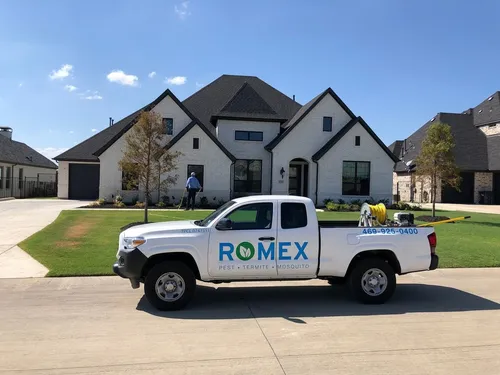
Romex Pest & Termite Control
1606 109th St Suite A, Grand Prairie, TX 75050
Romex Pest & Termite Control provides eco-friendly pest control services in Dallas, TX, serving both homes and businesses. Their offerings include treatment for bed bugs, rodents, termites, mosquitoes, and other common pests, using non-toxic methods that prioritize the safety of families and pets. The company employs advanced detection and treatment tools combined with integrated pest management strategies tailored to local needs. Romex Pest & Termite Control is licensed and insured across Texas and neighboring states, emphasizing environmentally responsible solutions.
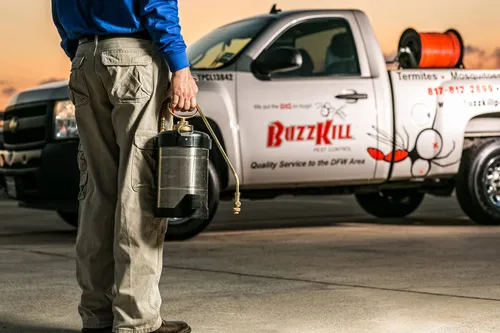
Buzz Kill Pest Control
8200 Northeast Pkwy #116, North Richland Hills, TX 76182
Buzz Kill Pest Control is a locally owned company based in Dallas, TX, specializing in residential and commercial pest control services. They provide comprehensive solutions for a variety of pests including ants, termites, bed bugs, roaches, spiders, rodents, mosquitoes, and wasps. Their termite services include pre-construction soil treatments and in-ground baiting systems to protect new and existing buildings. With over 30 years of experience serving the Dallas-Fort Worth metroplex, Buzz Kill offers tailored integrated pest management plans using low-impact chemicals to ensure safety for families, pets, and workers.
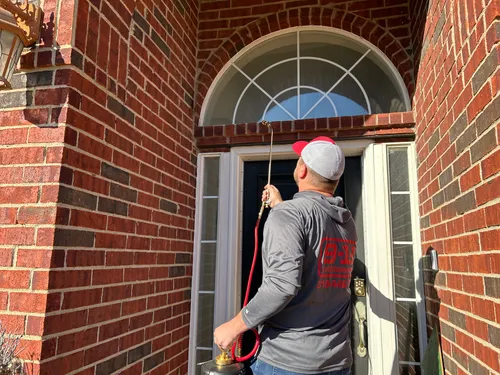
911 Pest Control Services
Arlington, TX
911 Pest Control Services provides pest management solutions for homes and businesses in Arlington, TX. They cover the Dallas-Fort Worth metroplex, including Dallas and Tarrant Counties, offering treatments for wasps, spiders, flies, cockroaches, earwigs, ants, termites, and other common pests. Their licensed technicians use proven methods to address infestations and provide preventative care with same-day service available.
Mosquito Hunters of Southlake-North Richland Hills-Grapevine
Arlington, TX
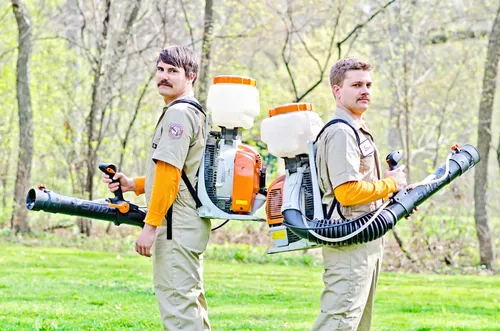
Mosquito Hunters of Southlake-North Richland Hills-Grapevine provides mosquito control and pest management services in Arlington, TX. They specialize in targeted mosquito and tick prevention treatments designed to protect residential and commercial properties, including golf courses, pools, and outdoor venues. Their approach focuses on thorough barrier treatments applied directly to mosquito habitats around the property, which helps reduce mosquito populations and the risk of mosquito-borne illnesses. The company emphasizes customized service plans tailored to each property and uses natural and synthetic treatment options. Mosquito Hunters aims to create enjoyable outdoor spaces free from mosquitoes and ticks.
Preston Pest Service LLC
1100 Macadamia St, Venus, TX 76084
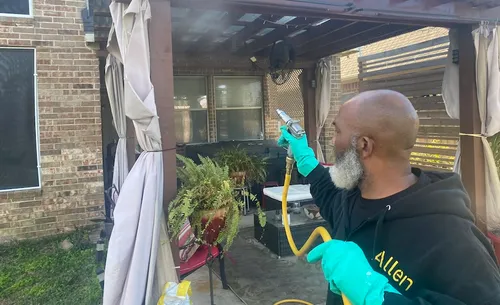
Preston Pest Service LLC is a pest control company based in Fort Worth, TX, offering a range of services including commercial and residential pest management. They provide integrated pest management to reduce chemical use and environmental impact, along with specialized restaurant pest control and emergency pest removal. The company uses advanced detection techniques and customized strategies to maintain pest-free environments. With over 25 years of experience, Preston Pest Service LLC offers 24/7 emergency pest control and employs certified technicians to ensure effective service.
Understanding the Commercial Pest Control Process in Cedar Hill
Unlike one-off residential treatments, commercial pest management in Cedar Hill is a systematic, ongoing partnership. Local providers emphasize a strategy known as Integrated Pest Management (IPM), which prioritizes long-term prevention and minimal chemical intervention 1. This process typically begins not with spraying, but with a thorough inspection and a collaborative plan.
The Initial Inspection and Action Thresholds
The first step a professional will take is a comprehensive site assessment. This goes beyond looking for bugs; it involves identifying the specific pest species, their activity levels, and the unique conditions of your business that attract them 2. Technicians will analyze entry points, moisture issues, and sanitation practices. A key component of IPM is establishing "action thresholds"-the point at which pest populations or conditions require intervention 3 4. For a warehouse, seeing a single spider may be acceptable, while for a food processing plant, zero tolerance for pests is the standard. Setting these thresholds with your provider ensures treatments are both necessary and effective.
The Four Pillars of IPM Treatment Strategies
Once the assessment is complete, a Cedar Hill commercial pest control plan will integrate multiple tactics. These are often categorized into four main pillars:
- Cultural and Sanitation Controls: This is the foundation. Your provider will offer specific recommendations to make your business less inviting to pests. This includes guidance on waste management, storage practices, landscaping, and eliminating standing water. Often, improving these conditions can significantly reduce pest pressure on its own.
- Physical and Mechanical Controls: These methods involve creating barriers and trapping pests. Examples include sealing cracks and gaps around doors, windows, and utility lines; installing door sweeps; using rodent traps and insect monitoring stations; and employing air curtains.
- Biological Controls: While less common for general commercial pest issues in an urban setting, this involves using natural predators or pathogens to manage pests. It's a highly specialized facet of ecological pest management 5 6.
- Chemical Controls: When pesticides are necessary, the IPM approach dictates they be used as a targeted tool, not a blanket solution. In Cedar Hill, this often means using baits placed in secure stations or applying low-impact materials directly into cracks and crevices where pests hide, minimizing exposure and environmental impact 7 8.
Common Commercial Pest Threats and Services
Businesses in Cedar Hill face a range of pest challenges. A robust commercial exterminator service will offer targeted programs for the most prevalent threats.
- General Insect Control: This covers routine management of common invaders like ants, cockroaches, spiders, and silverfish. Regular monitoring and targeted treatments are crucial, especially in offices, retail spaces, and multi-tenant buildings.
- Rodent Management: For rodents like mice and rats, a complete program includes more than just trapping. Effective rodent control focuses on exclusion (sealing entry points), sanitation to remove food sources, and strategic placement of tamper-resistant bait stations.
- Termite Protection: Given the potential for severe structural damage, termite control is a critical specialty. Services include annual inspections, soil treatments with liquid termiticides, and baiting systems that monitor and eliminate colonies.
- Specialty & Niche Services: Many providers also address specific problems such as mosquito abatement for outdoor dining areas, bed bug heat treatments for hotels, and bird deterrent systems to protect building facades and loading docks.
What to Expect from an Ongoing Service Plan
A commercial pest management contract is designed for continuous protection. After the initial treatment, your service will transition into a maintenance and monitoring phase.
- Service Frequency: Visits are typically scheduled on a regular basis-monthly, bi-monthly, or quarterly-depending on your business type, pest pressure, and the season.
- Monitoring and Reporting: During each visit, the technician will inspect monitoring devices like glue boards and insect traps, refresh bait stations, and look for new signs of activity. A detailed service report should be provided after each visit, noting findings, actions taken, and any recommendations for your staff.
- Emergency Response: A good plan includes protocols for urgent pest issues that arise between scheduled visits, ensuring you have support when you need it most.
Find the perfect commercial pest control companies for your needs
Get personalized recommendations and expert advice
Understanding Investment: Costs for Business Pest Management
The cost of commercial pest control in Cedar Hill is not one-size-fits-all; it varies significantly based on the size of your facility, the type of business you operate, the specific pests being managed, and the frequency of service required. Plans are generally structured as ongoing contracts, with costs ranging from hundreds to thousands of dollars annually.
- Small Businesses: For a standard office, small retail shop, or boutique, basic ongoing service often ranges from $75 to $200+ per month.
- Medium-Risk Businesses: Operations like restaurants, larger retail stores, or medical offices that have higher sanitation standards or more attractants typically see monthly costs between $200 and $500+, depending on the square footage and pest pressure.
- Large or High-Risk Facilities: Warehouses, food processing plants, and large hospitality venues require extensive, often custom, plans. Service for these properties can range from $500 to $1,000+ per month or quarter and is usually contract-based.
- One-Time or Initial Services: For addressing an acute infestation before starting a maintenance plan, an initial treatment can cost $150 to $400 or more, with additional costs for exclusion work like sealing entry points 9 10.
When evaluating quotes, look beyond the bottom line. Consider the value of the inspection detail, the comprehensiveness of the proposed IPM strategy, the clarity of reporting, and the provider's experience with businesses like yours.
Choosing a Provider: Key Questions to Ask
Selecting the right commercial pest management partner is a business decision. Here are essential questions to pose during your evaluation:
- What is your specific experience with businesses in my industry (e.g., food service, healthcare, warehousing)?
- Can you walk me through your standard IPM process and explain how you determine action thresholds for my facility?
- What does your ongoing monitoring and reporting include? Will I receive detailed logs after each service visit?
- What are your protocols for emergency call-outs between scheduled visits?
- Are your technicians licensed and insured for commercial work in Texas, and do they receive ongoing training?
- Can you provide references from other commercial clients in the Cedar Hill area?
Taking the time to understand these elements will help you secure a service that acts as a true partner in protecting your business.
Frequently asked questions
Sources
Footnotes
-
Integrated Pest Management (IPM) Principles | US EPA - https://www.epa.gov/safepestcontrol/integrated-pest-management-ipm-principles ↩
-
Five Steps of Integrated Pest Management (IPM) - https://www.pesticide.org/five_steps_of_ipm ↩
-
What Is Integrated Pest Management (IPM)? / UC Statewide IPM Program ... - https://ipm.ucanr.edu/what-is-ipm/ ↩
-
Setting Action Thresholds - School Integrated Pest Management - https://schoolipm.tamu.edu/forms/pest-management-plans/setting-action-thresholds/ ↩
-
Integrated Pest Management (IPM): A Sustainable Approach to Pest ... - https://hgic.clemson.edu/factsheet/iintegrated-pest-management-ipm-a-sustainable-approach-to-pest-management/ ↩
-
Unit 1: Principles of Pest Control - CTAHR.hawaii.edu - https://cms.ctahr.hawaii.edu/epp/Education/Study-Guide-Packets/APC-Core/APC-Unit1 ↩
-
Effective Pest Control Methods: Best Practices & Strategies - FieldRoutes - https://www.fieldroutes.com/blog/pest-control-methods ↩
-
Situational Pest Management - https://www.pctonline.com/article/situational--pest-management/ ↩
-
Effective Pest Control Services in Cedar Hill, TX - https://desotopest.com/pest-control-services-in-cedar-hill/ ↩
-
Commercial Pest Services in Cedar Hill - https://www.masseyservices.com/cedar-hill/commercial/commercial-pest-services/ ↩