Find the Best Commercial Pest Control Companies for Your Business
No obligation • Fast responses • Nationwide coverage

Why you can trust Pest Crews
Pest Crews is a leading U.S. resource for finding and evaluating residential and commercial pest control services. Our team researches providers, reviews treatment approaches, and organizes unbiased information to help you make informed decisions. Companies cannot pay to change our editorial content or influence how they appear.
Search providers near you
Top Commercial Pest Control Companies in Sugar Land, Texas Ranked
For any business in Sugar Land, from bustling restaurants to corporate offices, maintaining a pest-free environment is non-negotiable. Commercial pest management is a specialized service designed to protect your property, inventory, and reputation from the damage and health risks posed by insects, rodents, and other pests. This isn't just about spraying for bugs; it's a strategic, ongoing partnership focused on prevention, compliance, and minimal disruption to your daily operations. This guide will help you understand the services, strategies, and considerations for finding the right pest management partner for your Sugar Land business.
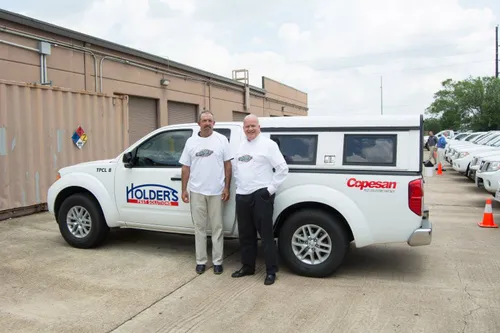
Holder's Pest Solutions
10560 Bissonnet St, Houston, TX 77099
Holder's Pest Solutions has been providing pest control services in Houston, TX, and the greater Houston-Galveston area since 1947. They offer residential and commercial pest management, addressing common pests such as bed bugs, termites, ants, cockroaches, rodents, and spiders. Their services include routine inspections, treatments, and follow-up visits tailored to the specific pest challenges faced by homes and businesses. Holder's Pest Solutions is known for its local expertise and uses an electronic data reporting system to maintain consistent communication with clients.
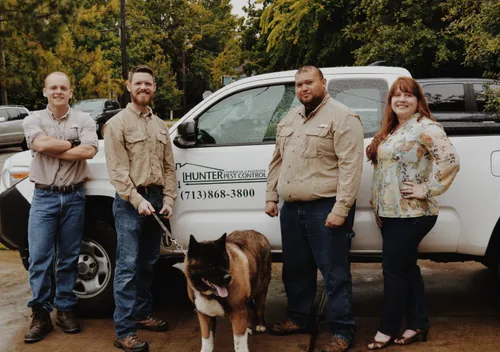
Hunter Pest Control
Houston, TX
Hunter Pest Control is a family-owned pest control company serving Houston, TX. They offer services for residential and commercial properties, including cockroach control, termite inspections, and general pest management. The company specializes in wood-destroying insect treatments and termite inspections, with all service technicians certified at the highest level in Texas. Hunter Pest Control has been in business since 1988, providing professional pest control solutions tailored to local conditions.
TNT Home & Commercial Services
17302 House Hahl Rd Suite 209, Cypress, TX 77433
TNT Home & Commercial Services is a family-owned pest control company serving Houston, TX, and the surrounding Cypress area. Since 2014, they have provided residential and commercial pest control solutions tailored to the local climate and pest challenges. Their licensed professionals focus on eliminating infestations and implementing preventive measures while adhering to state and local pest control regulations. TNT also offers additional services such as phone, TV, and internet to support property owners' needs.
Bulls-Eye Pest & Termite Control, Inc.
14905 Southwest Fwy #219, Sugar Land, TX 77478
Bulls-Eye Pest & Termite Control, Inc. is a family owned and operated pest control company serving Houston, TX, and the Greater Houston area. With over 20 years of experience, they provide residential and commercial pest control services including termite inspection and extermination, mosquito control, rodent control, and green pest control options. Their termite control services address Houston's unique climate challenges with effective prevention and treatment solutions. Bulls-Eye offers customized plans for businesses of all sizes and uses environmentally friendly methods that meet EPA standards.
Mosquito Hunters of West Houston-Mission-Foster
Houston, TX
Mosquito Hunters of West Houston-Mission-Foster provides mosquito control and pest management services in Houston, TX. They specialize in customized barrier treatments that target mosquitoes and ticks, using both synthetic and all-natural ingredients. The company offers services for residential and commercial properties, including golf courses, pools, and outdoor venues. Their approach focuses on treating mosquito hot spots like dense bushes and shaded areas to reduce mosquito populations effectively. Mosquito Hunters emphasizes protecting clients from mosquito-borne illnesses such as West Nile Virus and Zika Virus.
What is Commercial Pest Management?
Commercial pest control, often referred to as business pest management, is a professional service tailored to the unique needs and regulations of commercial properties. Unlike one-off residential treatments, it employs a proactive, systematic approach known as Integrated Pest Management (IPM). This philosophy prioritizes long-term prevention through a combination of methods-sanitation, physical exclusion, monitoring, and targeted treatments-rather than relying solely on reactive pesticide use. For businesses, this is critical not only for effectiveness but also for adhering to local health codes and food safety standards, which often mandate such comprehensive strategies 1.
Core Services for Sugar Land Businesses
Local providers offer a suite of services designed to address the specific pest pressures in the Fort Bend County area. Understanding these options helps you select the right plan for your establishment.
Integrated Pest Management (IPM) Programs
The cornerstone of modern commercial pest management, IPM programs are customized plans that begin with a thorough inspection and continue with regular monitoring and maintenance. These scheduled services-typically monthly, bi-monthly, or quarterly-ensure ongoing protection and allow technicians to catch potential issues before they become full-blown infestations. The goal is sustainable control with the least possible hazard to people, property, and the environment 2.
Targeted Pest Extermination
While prevention is key, sometimes specific pests require immediate attention. Providers offer targeted extermination for common commercial threats:
- Rodent Control: Managing mice and rats through trapping, baiting, and exclusion.
- Insect Control: Addressing roaches, ants, flies, and stored product pests that threaten food safety and sanitation.
- Termite Control: Protecting the structural integrity of your building from subterranean and drywood termites, which are a known concern in Texas.
- Bed Bug Services: Discreet and effective treatments for hotels, multi-family housing, and offices.
- Wildlife Management: Humanely addressing birds, bats, raccoons, or squirrels that may invade properties.
Emergency Pest Services
Unexpected pest crises can happen. Reputable local companies offer emergency response services for sudden, severe infestations that require immediate intervention to protect your business operations and customer safety.
The Professional Process: From Inspection to Prevention
A high-quality commercial pest management program follows a meticulous, multi-step process.
Step 1: Comprehensive Site Assessment & Inspection
The first visit is all about investigation. A certified technician will conduct a detailed audit of your property, both inside and out. They will:
- Identify potential pest entry points, such as cracks in foundations, gaps around doors and windows, and utility penetrations.
- Map areas of existing pest activity by looking for droppings, nests, damage, and feeding signs.
- Note "conducive conditions" that attract pests, like accessible food waste, moisture issues, and clutter that provides shelter.
- Provide detailed documentation of their findings, which can be invaluable for health inspections and compliance records.
Step 2: Implementation of Control Methods
Based on the inspection, the technician will deploy a tailored mix of control strategies, always starting with the least intrusive options.
- Cultural & Sanitation Controls: This involves working with you to eliminate the root causes. Recommendations may include improving food storage protocols, scheduling more frequent waste removal, and fixing leaky faucets to remove water sources 3.
- Physical & Mechanical Controls: These methods block pests from entering or trap them inside. Actions include sealing cracks and crevices, installing door sweeps, placing rodent traps in strategic locations, and using fly lights.
- Chemical Controls: When necessary, pesticides are used judiciously and strategically. Instead of broad sprays, technicians often use targeted applications like gel baits for roaches in wall voids, insect growth regulators, and tamper-resistant bait stations for rodents placed in safe, out-of-the-way locations 4 5.
- Biological Controls: While less common in standard commercial indoor settings, this involves using natural predators or pathogens to manage pests and is a component of a holistic IPM strategy 6.
Step 3: Ongoing Monitoring & Follow-Up
The final, ongoing phase is what separates a true management program from a simple extermination job. During regular service visits, the technician will:
- Check the effectiveness of all control measures.
- Replenish baits and monitors.
- Inspect for new signs of activity or entry points.
- Adjust the strategy based on seasonal changes or shifts in pest pressure 7.
This proactive cycle ensures long-term protection and gives business owners peace of mind.
Find the perfect commercial pest control companies for your needs
Get personalized recommendations and expert advice
Understanding Investment in Commercial Pest Management
The cost for commercial pest control in Sugar Land is not one-size-fits-all; it varies based on your business's size, type, and specific pest pressures. While exact pricing requires a custom quote, understanding the general structure can help you budget effectively.
- Service Scope & Frequency: A large restaurant with high pest pressure will have different needs and costs than a small office building. Similarly, a monthly service plan will have a different pricing model than a quarterly plan.
- Pricing Models: Many providers offer structured maintenance plans. You might encounter monthly plans or quarterly visit plans, with costs scaling based on the square footage of your property and the complexity of the services required 8 9.
- One-Time vs. Ongoing Service: A single, corrective treatment for an active infestation will typically be a higher one-time cost. In contrast, ongoing preventative plans are designed to be a manageable operational expense that prevents costly emergency treatments and potential fines 10.
Choosing the Right Provider in Sugar Land
Your choice of a pest management partner is a critical business decision. Look for a local provider that demonstrates the following:
- Licensing & Expertise: Ensure the company is fully licensed and insured for commercial work in Texas, with technicians certified in IPM principles.
- Transparent Communication & Upfront Pricing: They should provide clear, detailed proposals and service reports without hidden fees.
- Commitment to Discretion & Minimal Disruption: Services should be scheduled at times that least impact your business, with techniques that are unobtrusive and safe for employees and customers 11.
- Focus on Compliance: The provider should understand local health codes (especially critical for food service and healthcare) and help you maintain compliance through documentation and effective strategies 12.
Partnering with a qualified commercial pest control expert is an investment in your business's safety, reputation, and longevity. A proactive, professional program is the most effective way to ensure your Sugar Land establishment remains a clean, welcoming, and compliant environment.
Frequently asked questions
Sources
Footnotes
-
Unit 1: Principles of Pest Control - CTAHR.hawaii.edu - https://cms.ctahr.hawaii.edu/epp/Education/Study-Guide-Packets/APC-Core/APC-Unit1 ↩
-
Integrated Pest Management (IPM): A Sustainable Approach to Pest ... - https://hgic.clemson.edu/factsheet/iintegrated-pest-management-ipm-a-sustainable-approach-to-pest-management/ ↩
-
Do's and Don'ts of Pest Control | US EPA - https://www.epa.gov/safepestcontrol/dos-and-donts-pest-control ↩
-
Integrated Pest Management (IPM) Principles | US EPA - https://www.epa.gov/safepestcontrol/integrated-pest-management-ipm-principles ↩
-
What are the 3 Methods of Pest Control? | Virtual College - https://www.virtual-college.co.uk/resources/3-methods-of-pest-control ↩
-
Effective Pest Control Methods: Best Practices & Strategies - FieldRoutes - https://www.fieldroutes.com/blog/pest-control-methods ↩
-
Commercial Termite Control in Sugar Land, TX - #1 Pest ... - https://sugarlandtermite.com/commercial/ ↩
-
Local Exterminators & Pest Services in Sugar Land, TX | Aptive Pest Control - https://aptivepestcontrol.com/locations/texas-tx/sugar-land-pest-control/local-branch/ ↩
-
Commercial Pest Control | Las Vegas NV - https://jspestcontrol.com/commercial-pest-control ↩
-
Profitable Pest Control Business Guide 2025 - https://fieldworkhq.com/2025/09/11/what-do-you-need-to-build-a-profitable-pest-control-business/ ↩
-
Sugar Land Pest Control - #1 in Pest Solutions ($57 Plans) - https://www.precisionpest.org/pest-control/sugar-land-tx ↩
-
Commercial Pest Control in Sugar Land - https://www.preventivepesthouston.com/service-areas/sugar-land/commercial-pest-control/ ↩