Find the Best Termite Inspection Companies for Your Business
No obligation • Fast responses • Nationwide coverage

Why you can trust Pest Crews
Pest Crews is a leading U.S. resource for finding and evaluating residential and commercial pest control services. Our team researches providers, reviews treatment approaches, and organizes unbiased information to help you make informed decisions. Companies cannot pay to change our editorial content or influence how they appear.
Search providers near you
Top Termite Inspection Companies in Maricopa, Arizona Ranked
A termite inspection is a critical evaluation of your property to detect the presence or risk of wood-destroying insects. In Maricopa, where specific termite species thrive in the arid climate, these assessments are essential for protecting your home's structural integrity and value. This guide explains what a termite check involves locally, how to identify signs of an infestation, and how to connect with qualified professionals who can perform a thorough examination.
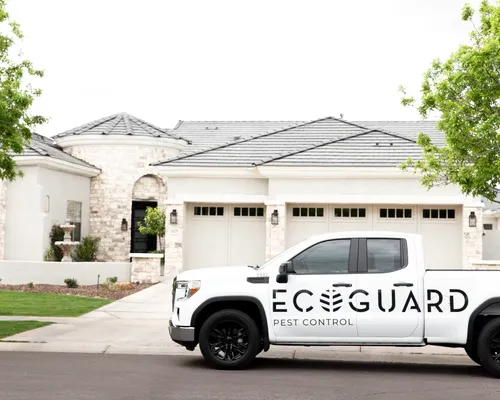
EcoGuard Pest Control
9117 W Grand Ave Suite 12, Peoria, AZ 85345
EcoGuard Pest Control provides pest control services in Phoenix, AZ, addressing common local pests such as cockroaches, ants, rodents, termites, and mosquitoes. They focus on reducing health risks from pest-borne diseases and preventing structural damage caused by termites and carpenter ants. Their services include termite inspections and general pest control tailored to the region's warm, dry climate.
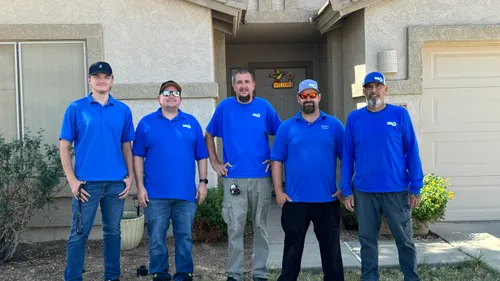
Deal Pest Control LLC
Peoria, AZ
Deal Pest Control LLC provides residential and commercial pest control services in Peoria, AZ. They offer flexible, no-contract pest management solutions including rodent control, termite inspections, and weed treatments. Their services cover comprehensive pest extermination with interior and exterior treatments designed to address ant, rodent, and termite problems effectively. The company is noted for using high-quality termite products and offers a 30-day retreatment guarantee for pest reoccurrence.

Terminix
4246 E Wood St Suite 350, Phoenix, AZ 85040
Terminix provides pest control and termite inspection services in Phoenix, AZ. The company offers treatments for a variety of pests including bed bugs, ants, cockroaches, rodents, termites, mosquitoes, bees, wasps, and wildlife. Their services include comprehensive interior and exterior inspections, ongoing pest treatments, and termite protection systems. Terminix technicians are familiar with local pest issues and provide tailored plans to protect homes from seasonal and persistent pest problems. The company also offers a termite damage repair guarantee for qualifying homes.

Open Range Pest Control LLC
Glendale, AZ
Open Range Pest Control LLC provides pest control services in Glendale, AZ, specializing in ant, rodent, and termite control. They offer pest inspections for homes and businesses to help maintain pest-free environments. Their services include termite control to prevent costly damage and commercial pest management solutions.

Green Mango Pest Control - Phoenix
10801 N 24th Ave Ste 101, Phoenix, AZ 85029
Green Mango Pest Control - Phoenix offers comprehensive pest control services in Phoenix, AZ. They handle a wide range of pests including bed bugs, cockroaches, ants, rodents, termites, mosquitoes, bees, wasps, and wildlife. Their services cover both residential and commercial properties, using advanced technology to ensure effective and safe pest management. Green Mango also provides termite inspection and treatment backed by a 10-year guarantee, along with mosquito abatement targeting all life stages to reduce bites. They emphasize safety and long-lasting results in their pest control solutions.
Why Termite Inspections Are Crucial in Maricopa
The desert environment around Maricopa is home to several resilient termite species that can cause significant, costly damage to homes. Unlike more visible pests, termites often work silently within walls and foundations, meaning an infestation can go unnoticed for years. A professional termite evaluation is the best defense, providing peace of mind for homeowners and is frequently a required step in real estate transactions 1. Regular inspections help catch problems early, potentially saving thousands of dollars in repairs and complex treatment.
Common Termite Species in the Maricopa Area
Knowing which termites are active in your area helps inspectors know what to look for. The primary species in Maricopa and Pinal County include:
- Desert Subterranean Termites: The most common type in the region. They live underground and build distinctive mud tubes to travel between their colony and food sources (your home's wood) while retaining moisture 2.
- Arid-land Subterranean Termites: Another subterranean species specially adapted to dry climates. They pose a similar threat as their desert cousins, requiring careful inspection around the foundation.
- Western Drywood Termites: These termites infest dry wood directly and do not need contact with soil. They are often detected by the piles of sand-like droppings, called frass, they leave behind.
- Desert Dampwood Termites: Less common but a concern near water sources. They prefer wood with high moisture content, so inspectors pay close attention to areas with leaks or poor drainage 3.
What a Professional Inspector Looks For
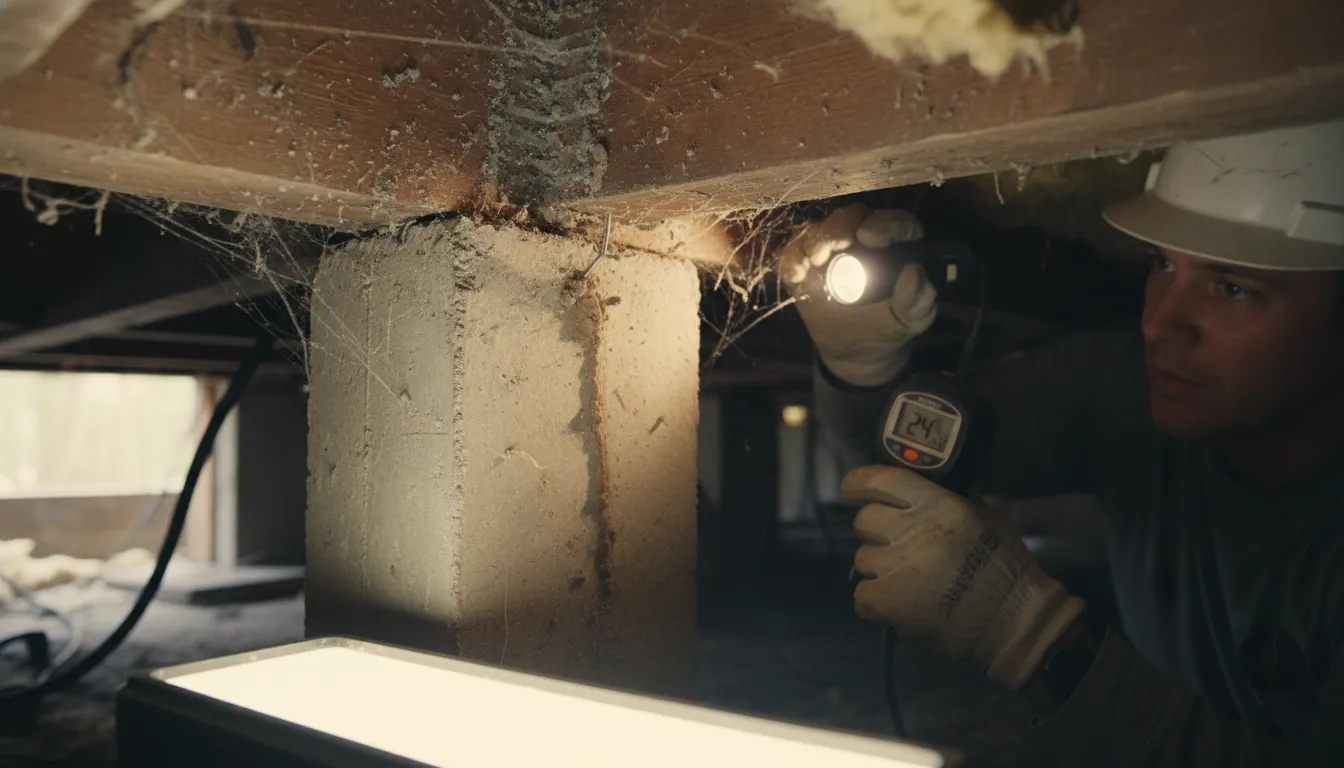
A comprehensive termite assessment in Maricopa is a meticulous process. The inspector conducts a visual examination of both the interior and exterior of the property, looking for direct evidence and conditions that attract termites.
Key Signs of Infestation:
- Mud Tubes: Pencil-sized tunnels on foundation walls, in crawl spaces, or along pipes. These are a hallmark sign of subterranean termite activity.
- Wood Damage: Wood that sounds hollow when tapped, appears blistered or dark, or has maze-like patterns inside. Inspectors will probe suspicious wood with a tool to check its integrity.
- Frass: Piles of tiny, wood-colored pellets. This is excrement from drywood termites and is a clear indicator of an active infestation 4.
- Swarmers & Discarded Wings: The presence of winged reproductive termites (swarmers) or piles of their discarded wings near windowsills or doors signals a nearby colony.
Conducive Conditions (What Attracts Termites): Inspectors also note factors that make your home vulnerable. Correcting these can be as important as treating an active infestation.
- Moisture Issues: Leaky pipes, faulty sprinkler systems, poor gutter drainage, and any area of standing water or excessive dampness.
- Wood-to-Soil Contact: Any untreated wood touching the soil, such as fence posts, deck supports, trellises, or even piles of firewood or lumber stored against the house 5.
- Cracks and Openings: Even hairline cracks in the foundation or exterior stucco can provide an entry point for termites.
- Vegetation and Mulch: Dense vegetation, mulch, or planter boxes placed directly against the home's exterior can retain moisture and hide termite entry points 6.
The Inspection Process: Interior and Exterior
A thorough inspection covers every accessible area of your property. Professionals use specific tools to aid their search.
Exterior Inspection: The inspector walks the entire perimeter of the home, examining the foundation, exterior walls, and any attached structures like garages or patios. They look for mud tubes, cracks, and wood-to-ground contact. They will also check sprinkler heads for overspray and assess the grading of the land to ensure water flows away from the foundation.
Interior Inspection: Inside, the inspector examines attics, crawl spaces, basements, and living areas. Key areas of focus include around plumbing penetrations, under sinks, around windows and doors, and where walls meet floors. They will look for signs of moisture, damaged wood, and frass 7.
Tools of the Trade:
- Moisture Meter: Detects elevated moisture levels in wood and walls, which can indicate leaks and attract termites.
- Probing Tools: Screwdrivers or picks are used to gently probe wood for soft spots and hollow areas 8.
- Flashlight and Mirror: Essential for illuminating and viewing dark, tight spaces in attics and crawl spaces.
- Thermal Imaging Camera: Some inspectors use advanced thermal cameras to detect temperature differences behind walls that may indicate moisture or hidden pest activity.
The Inspection Report: After the evaluation, you should receive a detailed written report. This document typically includes findings, photographs of problem areas, diagrams noting conducive conditions, and recommendations for treatment or corrective actions 9.
Find the perfect termite inspection companies for your needs
Get personalized recommendations and expert advice
Understanding Costs for Inspection and Treatment
The cost for a termite inspection in Maricopa is typically straightforward, while treatment costs can vary widely based on the findings.
- Termite Inspection Cost: A standard inspection for a single-family home in Maricopa generally ranges from $75 to $125 10. Many companies will waive this fee if you proceed with a treatment plan through them.
- Termite Treatment Cost: This is highly dependent on the species, the extent of the infestation, the size of your home, and the treatment method required. For a localized spot treatment or a basic soil barrier application, costs might start around $245. For a whole-home treatment, such as tenting for drywood termites or installing a comprehensive baiting system, costs can reach into the thousands of dollars 11 12. Your inspector will provide a detailed quote based on the specific needs of your property.
Preparing for Your Termite Inspection
To ensure the inspector can do a thorough job, a little preparation is helpful:
- Clear Access: Move boxes, stored items, and furniture away from walls in garages, basements, and attics. Ensure the inspector can access the electrical panel and water heater.
- Trim Vegetation: Trim back shrubs, vines, and tree branches that are touching the house.
- Move Firewood: Relocate any firewood or lumber piles at least 20 feet away from the home's foundation.
- Note Concerns: Make a list of any areas where you've seen suspicious signs (e.g., mud tubes, frass, damaged wood) to point out to the inspector.
Frequently asked questions
Sources
Footnotes
-
Termite Inspection Maricopa County Az: What to Expect - https://billstermiteco.com/termite-inspection-maricopa-county-az/ ↩
-
Termite Control in Mesa, AZ - https://www.defensepestcontrol.com/termite-control-mesa-az/ ↩
-
Types of Termites in Florida: Common Species - https://www.flapest.com/termites/identification/what-termites-are-in-my-area/ ↩
-
Common Termites in Arizona and How To Identify Them | Bug Wiser - https://www.bugwiserpest.net/blog/common-termites-arizona-and-how-identify-them ↩
-
Termite Inspections: What to Expect and How to Prepare - https://www.petrispestcontrol.com/termite-control/termite-inspections-what-to-expect/ ↩
-
Ultimate Termite Control: Inspection Checklist - https://firehousepest.com/ultimate-termite-control-inspection-checklist/ ↩
-
What Does A Termite Inspector Look For? - AG Pest Control - https://www.agpest.com/what-does-a-termite-inspector-look-for/ ↩
-
Termite Inspections - OPM - https://opm.azda.gov/TermiteInsp.php ↩
-
Termite Inspections: How Much Do They Cost and What ... - https://ajfinspections.com/termite-inspections-how-much-do-they-cost-and-what-should-you-expect/ ↩
-
Are Termite Inspections Recommended for Home Sellers in ... - https://tucsonpest.com/are-termite-inspections-recommended-for-home-sellers-in-arizona/ ↩
-
How Much Does Termite Treatment Cost in Arizona? - Atomic Pest Control - https://atomicpestcontrol.com/blog/how-much-does-termite-treatment-cost-in-arizona ↩
-
How Much Does Termite Treatment Cost in Arizona? - https://atomicpestcontrol.com/blog/how-much-does-termite-treatment-cost-in-arizona ↩