Find the Best Termite Inspection Companies for Your Business
No obligation • Fast responses • Nationwide coverage

Why you can trust Pest Crews
Pest Crews is a leading U.S. resource for finding and evaluating residential and commercial pest control services. Our team researches providers, reviews treatment approaches, and organizes unbiased information to help you make informed decisions. Companies cannot pay to change our editorial content or influence how they appear.
Search providers near you
Top Termite Inspection Companies in Warren, Michigan Ranked
A termite inspection is a specialized assessment of your property to detect the presence or evidence of wood-destroying insects, primarily termites. This service is critical in Warren due to the region's vulnerability to subterranean termites, which can cause extensive and costly structural damage if left unchecked. By understanding the process and knowing what local professionals look for, you can take a proactive step in protecting your most valuable investment-your home.

EcoShield Pest Solutions
31557 Schoolcraft Rd Suite 100, Livonia, MI 48150
EcoShield Pest Solutions provides a range of pest control services in Detroit, MI, including bed bug treatment, cockroach and ant control, rodent and wildlife exclusion, termite inspection and prevention, and mosquito elimination. They offer specialized plans such as the Home Shield for general pest protection and the Exclusion Shield to keep rodents and wildlife out. EcoShield emphasizes environmentally conscious pest control methods and employs state-licensed technicians trained to apply EPA-regulated materials safely. Their services cover both residential and commercial properties with a focus on effective, less pesticide-intensive solutions.

Elite Pest Management
36358 Garfield Rd Suite 8, Clinton Township, MI 48035
Elite Pest Management is a family-owned pest control and wildlife removal company serving Detroit, MI, and the surrounding areas. Established in 2001, they offer a range of services including termite control, rodent control, and humane wildlife management. With over 23 years of experience, the company emphasizes environmentally friendly practices and provides customized solutions tailored to each client's needs. Their expertise includes effective termite inspections and control, backed by a satisfaction guarantee.
EcoShield Pest Solutions
408 Oliver, Troy, MI 48084
EcoShield Pest Solutions is a pest control company serving Detroit, MI, offering a wide range of services including bed bug treatment, termite inspections, mosquito control, rodent elimination, and removal of stinging insects like bees and wasps. They specialize in managing common local pests such as ants, cockroaches, spiders, ticks, and carpenter bees. EcoShield uses environmentally friendly methods and professional products that are safe for people and pets. Their service includes guaranteed pest elimination and prevention plans designed for both residential and commercial properties.
ProAction Pest Control
32540 Schoolcraft Rd Suite 250, Livonia, MI 48150
ProAction Pest Control is a locally owned pest control company based near Detroit, MI, serving Wayne, Oakland, Washtenaw, and Livingston counties. They provide residential and commercial pest and wildlife control services, handling a wide range of pests including ants, bed bugs, termites, rodents, bees, wasps, and wildlife such as raccoons and squirrels. Their capabilities include safe and licensed bee and wasp removal, as well as thorough termite inspections and treatments. With over 18 years of experience, ProAction Pest Control offers same-day service with no extra charge and emergency appointments, including evening and weekend availability.

Downriver Pest Control
19245 Sibley Rd, Brownstown Township, MI 48193
Downriver Pest Control provides pest and wildlife management services in Detroit, MI. They offer flexible options including one-time treatments and recurring protection plans for common pests such as ants, spiders, rodents, cockroaches, mosquitoes, and termites. Their services cover both residential and commercial properties, with capabilities including wildlife trapping and bat exclusion. The company serves the Downriver area and surrounding Metro Detroit communities, delivering licensed and insured pest control solutions tailored to customer needs.
Why Termite Inspections Are Essential in Warren
Warren's climate and soil conditions create a welcoming environment for subterranean termites, which are the most common and destructive type in Michigan 1. These pests thrive on moisture and are constantly foraging for cellulose, the main component of wood. A professional termite inspection is your first line of defense, designed to identify not only active infestations but also the conducive conditions that attract them. Catching termite activity early can prevent thousands of dollars in repair costs and preserve the structural integrity of your home 2. For homeowners considering a sale, a clean termite inspection report is often a mandatory requirement to satisfy lenders and buyers 3.
What a Professional Inspector Looks For
During a termite evaluation, a certified inspector conducts a meticulous search for specific signs of infestation and risk factors. This is far more than a casual glance; it's a systematic investigation using both keen observation and specialized tools.
Key Indicators of Termites:
- Mud Tubes: Subterranean termites build pencil-thin, brown tunnels of soil and saliva to travel between their colony in the ground and their food source (your wood) while protecting themselves from dry air. Finding these on foundation walls, in crawl spaces, or on piers is a primary sign of activity.
- Wood Damage: Inspectors will probe exposed wood, especially in basements, crawl spaces, and around door frames. Termite-damaged wood often sounds hollow when tapped and may appear crushed or layered, like a honeycomb.
- Frass: Drywood termites, while less common in Michigan, produce distinctive droppings called frass. This powdery, wood-colored substance is often found in small piles near infested wood.
- Discarded Wings: Reproductive termites (swarmers) shed their wings after finding a mate and a new location to start a colony. Piles of tiny, identical wings near windowsills, doors, or in spider webs are a telltale sign of a nearby colony 4.
Inspectors also identify Conducive Conditions:
- Wood-to-Soil Contact: Any direct contact between structural wood and the soil, such as with deck posts, stair stringers, or fence boards, provides termites with an easy bridge into your home.
- Excess Moisture: Leaky pipes, poor drainage, clogged gutters, and insufficient ventilation in crawl spaces create the damp environment termites need.
- Cracks in Foundation: Even hairline cracks in a home's concrete foundation can serve as an entry point for foraging termites 5.
The Termite Inspection Process: Step-by-Step
Knowing what to expect can help you prepare for an inspection. A thorough termite assessment typically follows a standard procedure to ensure no area is overlooked.
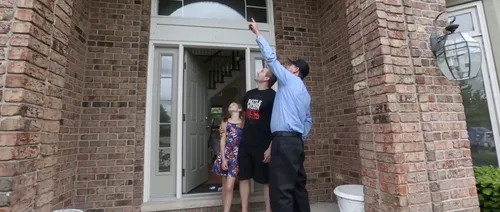
1. Exterior Inspection The inspector begins outside, examining the perimeter of your home. They will check the foundation for mud tubes and cracks, inspect all wood siding, door frames, and window frames, and look at any exterior structures like decks, porches, and fences for signs of damage or wood-to-soil contact. Vegetation, mulch, and soil grading near the foundation are also assessed for moisture retention.
2. Interior and Structural Inspection Next, the inspector moves inside to key areas:
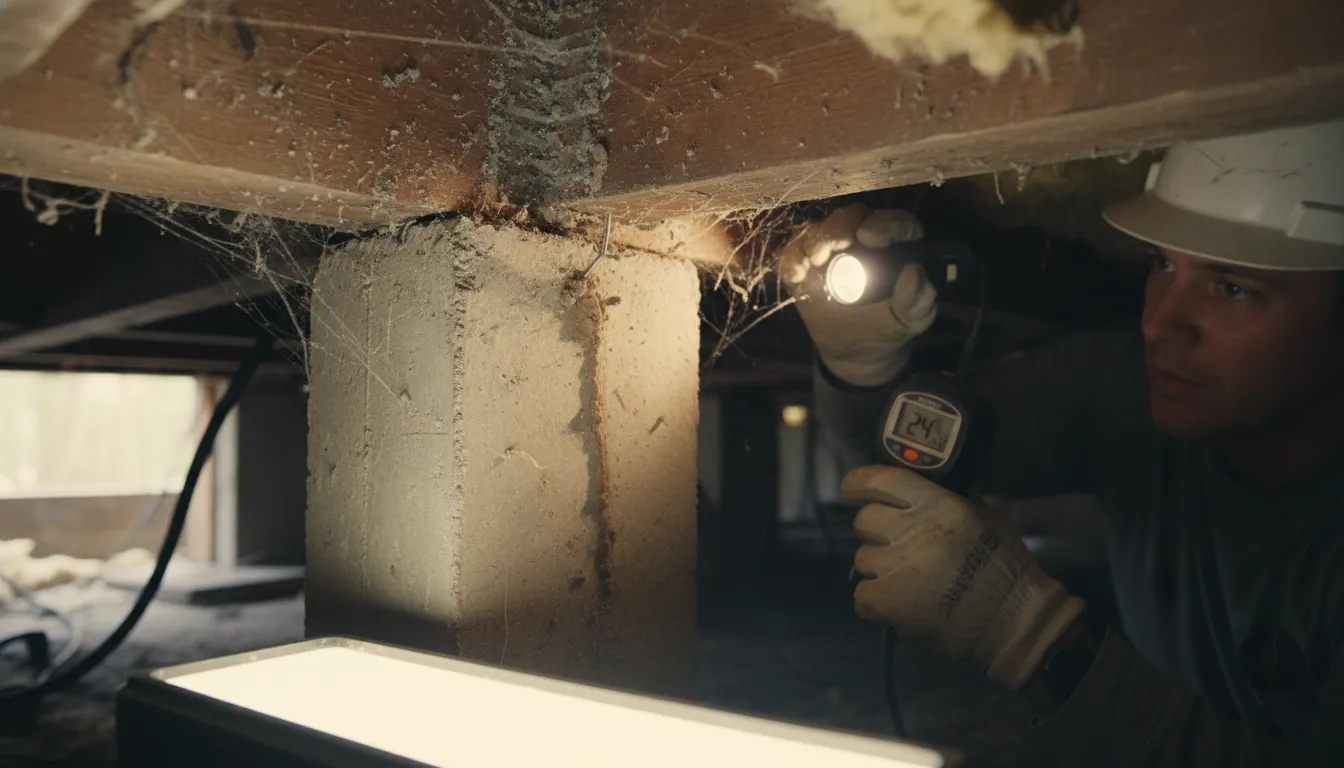
- Basements and Crawl Spaces: These are high-priority zones. The inspector will look for mud tubes on foundation walls and piers, check wooden joists and subflooring for damage, and use a moisture meter to detect hidden dampness 6. It's helpful to ensure these areas are accessible by moving stored items away from walls.
- Attics: While less common for subterranean termites, attics are checked for drywood termite frass, damaged wood, and proper ventilation 7.
- Living Areas: Inspectors will check around baseboards, windows, doors, and anywhere plumbing penetrates walls, as leaks can attract pests 8.
3. Use of Specialized Tools A professional doesn't rely on sight alone. They employ tools like:
- Moisture Meters: To detect elevated moisture levels inside walls and wood, which can indicate a leak and a potential termite hotspot 9.
- Probes and Picks: To gently test wood for hollow spots and softness that aren't visible from the surface.
- Flashlights and Mirrors: To peer into dark, tight spaces behind appliances and in corners.
4. The Inspection Report After the assessment, you should receive a detailed written report. This document outlines what was inspected, any evidence of termite activity or damage found, a list of conducive conditions that should be corrected, and recommendations for treatment or preventative measures if necessary 10 11. This report is a valuable record for your home's maintenance history.
Find the perfect termite inspection companies for your needs
Get personalized recommendations and expert advice
Understanding Inspection Costs in Warren
The cost of a termite inspection in Warren is an investment in peace of mind. Prices generally range from $50 to $325 or more, with the final cost depending on several key factors 12 13. The primary driver is the size and layout of your home; a larger square footage or a complex design with multiple crawl spaces and additions requires more time to inspect thoroughly. The age and condition of the property can also affect price, as older homes may have more potential access points and require more investigative work. Some companies offer a free or low-cost inspection if you sign up for a treatment plan, while a standalone inspection, especially one required for a real estate transaction (often called a Wood Destroying Insect Inspection or WDO), may be at a fixed rate 14. It's always wise to get a clear quote upfront.
Termite Types Found in Southeast Michigan
While several species exist, two main types concern Warren homeowners:
- Subterranean Termites: This is the most common and destructive group in Michigan. They live in colonies in the soil and build the characteristic mud tubes to access above-ground wood. They are particularly attracted to moisture and can cause severe structural damage relatively quickly 15.
- Drywood Termites: These are less common in Michigan's climate but can be introduced through infested furniture or wood products. They live inside the wood they consume and produce the granular frass as a sign of their presence. They do not require contact with soil 16.
Preparing for Your Termite Inspection
To ensure the inspection is as efficient and comprehensive as possible, you can take a few simple steps:
- Clear Access: Move boxes, stored items, and furniture away from basement and crawl space walls. Ensure the attic access panel is clear.
- Trim Vegetation: Cut back shrubs, vines, and tree branches that are touching the house's exterior.
- Address Moisture: Fix any obvious leaky faucets or downspouts before the inspector arrives.
- Note Your Concerns: If you've seen suspicious signs like discarded wings or mud tubes, point them out to the inspector.
Frequently asked questions
Sources
Footnotes
-
What Does a Termite Inspector Look For? - Orkin - https://www.orkin.com/pests/termites/what-a-termite-inspector-does ↩
-
Termite Inspections: Identifying And Preventing Costly Damage - https://maxhomeinspections.com/blog/termite-inspection/termite-inspections-costly-damage/ ↩
-
Complete Guide to Termite Inspection for Home Purchase - https://bettertermite.com/termite-inspection-for-home-purchase/ ↩
-
What Happens During a Termite Inspection - Terminix - https://www.terminix.com/termite-control/inspection/ ↩
-
What to Expect from a Professional Termite Inspection & Treatment - https://pinellastermite.com/professional-termite-inspection-and-treatment-what-to-expect/ ↩
-
What is a pest inspection? - MichiganPro Home Inspections - https://www.michiganpro.com/what-is-a-pest-inspection/ ↩
-
Full Guide to Professional Termite Inspections for Home Inspectors - https://www.homegauge.com/learning/home-inspectors-termites/ ↩
-
What Happens During a Termite Inspection (And Why You Can't ... - https://www.drakepest.com/what-happens-during-a-termite-inspection-and-why-you-cant-skip-it/ ↩
-
West Wayne County Termite Inspections - https://npiweb.com/detroitwest/services/termite-inspections/ ↩
-
What You Need to Know About Termite Inspections - AmeriSpec - https://www.amerispec.com/blog/what-you-need-know-about-termite-inspections ↩
-
Termite inspection: How it works - Western Exterminator - https://www.westernexterminator.com/termite-control/termite-inspection ↩
-
How Much Is a Termite Inspection? Complete Cost Overview - https://www.homelight.com/blog/how-much-is-a-termite-inspection/ ↩
-
Termite Inspection in Warren, MI - Costs 12 / 2025 - Homeyou - https://www.homeyou.com/mi/termite-inspection-warren-costs ↩
-
Pest, Termite & WDO Inspections | HomeTeam of Warren ... - https://hometeam.com/warren-michigan/our-services/pest-termite-and-wdo-inspections/ ↩
-
What are the Problems Caused by Subterranean Termites? | Termite Treatment & Removal - https://www.hitechtermite.com/articles/subterranean-termites-and-the-problems-they-cause ↩
-
Blog - What Does Termite Damage Look Like? - https://www.getmypests.com/blog/2023/march/what-does-termite-damage-look-like-/ ↩