Find the Best Termite Inspection Companies for Your Business
No obligation • Fast responses • Nationwide coverage

Why you can trust Pest Crews
Pest Crews is a leading U.S. resource for finding and evaluating residential and commercial pest control services. Our team researches providers, reviews treatment approaches, and organizes unbiased information to help you make informed decisions. Companies cannot pay to change our editorial content or influence how they appear.
Search providers near you
Top Termite Inspection Companies in Chapel Hill, North Carolina Ranked
A termite inspection is a critical evaluation of your property to detect the presence of wood-destroying insects, primarily termites. This specialized assessment matters because termites cause billions of dollars in structural damage annually, often silently, before homeowners are aware of an infestation. For Chapel Hill residents, using this guide to connect with qualified local inspectors is the first step in protecting your most valuable investment-your home-from costly and hidden destruction.

ClearDefense Pest Control
8801 Westgate Park Dr Ste 100, Raleigh, NC 27617
ClearDefense Pest Control is a pest control company based in Raleigh, NC. They offer services targeting household pests including cockroaches, termites, mosquitoes, and spiders. The company provides termite inspections and mosquito control as part of their pest management solutions. ClearDefense Pest Control serves the Raleigh area and surrounding locations, focusing on effective pest elimination and prevention.

Kind Pest Control
6516 Old Wake Forest Rd, Raleigh, NC 27616
Kind Pest Control offers environmentally responsible pest control services in Raleigh, NC, and surrounding communities. They handle a variety of pests including cockroaches, ants, rodents, termites, and stinging insects for both residential and commercial properties. Their approach emphasizes eco-friendly methods that are safe for pets and children, using EPA-registered products. Kind Pest Control serves the broader Triangle area, including Durham, Cary, and Wake Forest. They provide a 100% satisfaction guarantee with re-treatment if pests return between visits and offer a two-year price lock guarantee. The company also supports environmental sustainability by planting a tree for every service provided.

Kind Pest Control
205 W Main St #212, Carrboro, NC 27510
Kind Pest Control provides environmentally responsible pest control services in Durham, NC, and the surrounding Triangle area. They handle a variety of pests including ants, cockroaches, rodents, spiders, stinging insects, and termites using EPA-registered products that are safe for pets and children. The company offers both residential and commercial pest control with a focus on eco-friendly solutions. Kind Pest Control also supports reforestation by planting a tree for every service provided. They back their work with a 100% satisfaction guarantee and a 2-year price lock guarantee.

Kind Pest Control
10421 Ligon Mill Rd, Wake Forest, NC 27587
Kind Pest Control is a pest control company based in Raleigh, NC, offering environmentally responsible services for homes and businesses. They provide treatments for a variety of pests including cockroaches, ants, rodents, termites, and stinging insects, using EPA-registered products that are safe for pets and children. Kind Pest Control serves the greater Triangle area, including Raleigh and nearby communities. Their services include both residential and commercial pest control with a focus on eco-friendly methods. The company also supports reforestation by planting a tree for every service provided. They offer a 100% satisfaction guarantee with free re-treatment if pests return between scheduled visits and a 2-year price lock guarantee.

Kind Pest Control
1155 Kildaire Farm Rd Suite 212, Cary, NC 27511
Kind Pest Control is a pest control company serving Raleigh, NC, and the surrounding Triangle area, including Durham, Cary, and Apex. They provide environmentally responsible pest management for residential and commercial properties, handling pests such as cockroaches, ants, rodents, termites, and stinging insects. Their services focus on eco-friendly methods that are safe for pets and children, using EPA-registered products. Kind Pest Control offers a 100% satisfaction guarantee with free re-service if pests return between scheduled visits. They also support environmental efforts by planting a tree for every service provided.
Why Termite Inspections Are Essential in Chapel Hill
The warm, humid climate of North Carolina provides an ideal environment for termites to thrive. These pests are a constant threat to homes, capable of compromising structural integrity by feeding on the wooden components that frame your house. A professional termite evaluation is not just for real estate transactions; it's a vital component of routine home maintenance. Early detection through a thorough inspection can mean the difference between a simple, preventative treatment and extensive, expensive repairs to load-bearing beams, floor joists, and other critical structures.
Common Termite Species in Chapel Hill
Understanding your adversary is key. Chapel Hill properties are primarily threatened by subterranean termites, which live in the soil and build mud tubes to access food sources above ground.
- Eastern Subterranean Termites: This is the most common and widespread species in the region. They build large colonies underground and are responsible for the majority of termite damage reported in North Carolina.
- Formosan Subterranean Termites: Often called "super termites," this species is also prevalent and known for its aggressive nature and ability to cause extensive damage very quickly. They can form enormous colonies and are a significant concern1.
- Drywood Termites: While less common than subterranean types, drywood termites are also found in North Carolina. Unlike their subterranean cousins, they infest dry wood and do not require contact with soil, making them a unique detection challenge2.
What a Professional Inspector Looks For
A comprehensive termite inspection, or Wood Destroying Insect Inspection (WDI), is a meticulous process. A certified inspector will conduct a visual examination of both the interior and exterior of your property, focusing on areas where termites are most likely to be active or gain entry3.
Exterior Inspection Points:
- Foundation & Walls: Searching for the tell-tale mud tubes-pencil-sized tunnels termites build from soil to wood-on foundation walls, piers, and siding.
- Wood-to-Soil Contact: Identifying any structural wood, such as door frames, siding, or deck posts, that is in direct contact with the soil, providing easy access for termites.
- Outdoor Structures: Checking fences, decks, and wooden landscaping features for signs of damage or infestation.
- Moisture Sources: Noting areas with excessive moisture, poor drainage, or standing water near the foundation, as moisture attracts termites4 5.
Interior & Structural Inspection Points:
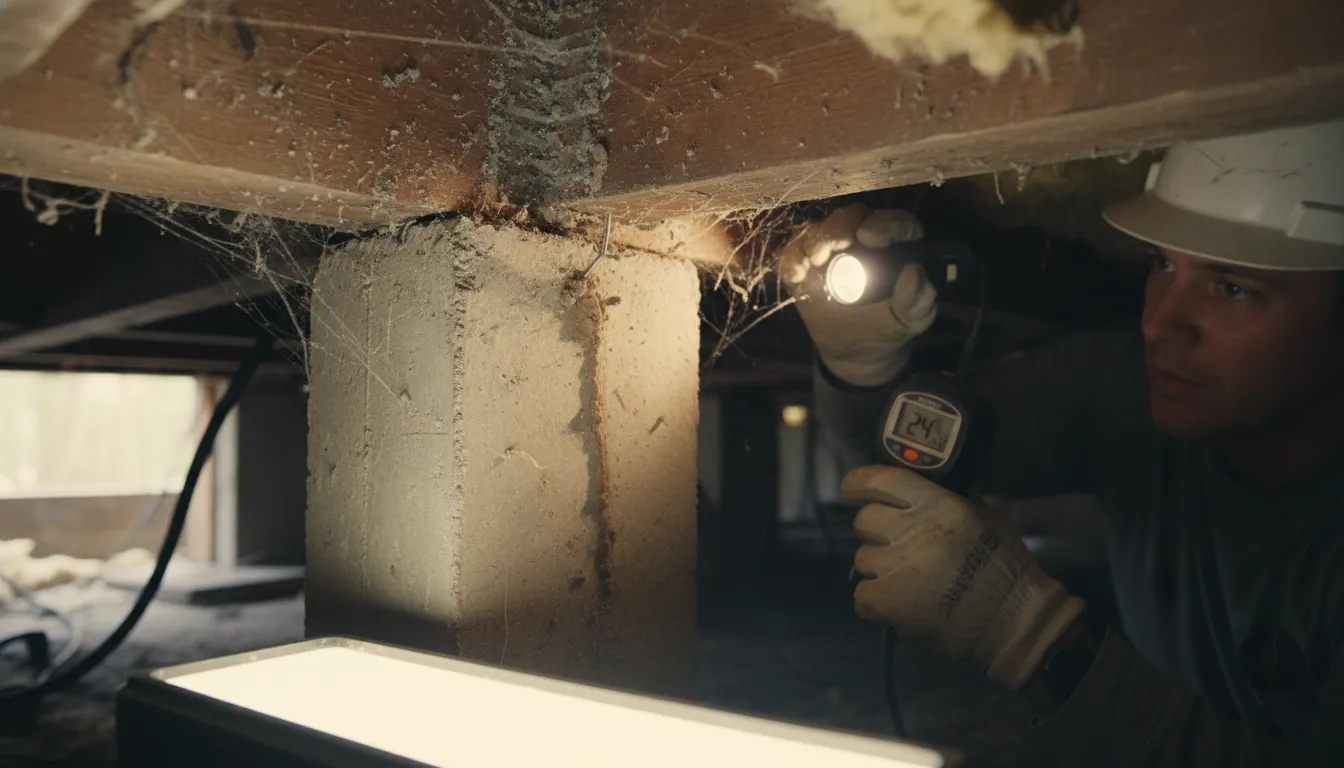
- Crawl Spaces & Attics: These are critical, vulnerable areas. Inspectors look for mud tubes, damaged wood, termite wings (swarmers), and frass (termite droppings) in these often-dark and undisturbed spaces 6.
- Basements and Garages: Examining sill plates, joists, and support posts for hollow-sounding wood or visible tunnels.
- Living Areas: Tapping on baseboards, window frames, and door jambs to listen for a hollow sound, which can indicate internal damage. Inspectors also look for pinpoint holes in drywall or bubbling paint, which can be signs of moisture from mud tubes behind walls7.
- Plumbing & Utility Entries: Checking around pipes, under sinks, and where utilities enter the home, as these are common entry points.
The Inspection Report: Your WDIR
Following the inspection, you will receive a formal Wood Destroying Insect Report (WDIR). This document is a legal record of the inspector's findings. It will detail any evidence of active or previous termite infestation, damage caused by wood-destroying organisms, and conditions conducive to future infestations (like moisture issues or wood-soil contact). This report is essential for real estate transactions and serves as a baseline for your home's condition, guiding any necessary treatment or preventative actions.
How to Prepare for Your Inspection
To ensure your termite inspection is as thorough and efficient as possible, a little preparation is helpful:
- Ensure Access: Clear clutter and stored items away from the perimeter of your basement or crawl space entrance, attic access points, and garage walls. Inspectors need full access to these critical areas.
- Clear the Perimeter: Move firewood, mulch piles, and dense vegetation at least 18 inches away from your home's foundation. Trim back shrubs and tree branches touching the house.
- Move Interior Items: Pull furniture and boxes away from walls in basements, closets, and utility rooms to allow the inspector clear access to baseboards and corners.
- Address Moisture: Note any areas of known moisture problems, such as leaky faucets or poor gutter drainage, to point out to the inspector.
Find the perfect termite inspection companies for your needs
Get personalized recommendations and expert advice
Understanding Inspection Costs
The cost for a standalone termite inspection and WDIR in the Chapel Hill area typically ranges from $125 to $2508. The final price can vary based on the size of your home, its age, the complexity of the structure (such as multiple crawl spaces or additions), and the individual inspector or company. While this is an out-of-pocket expense, it is a minor investment compared to the potential cost of undetected termite damage, which is rarely covered by homeowners insurance.
Inspection vs. Treatment: Know the Difference
It's important to understand that an inspection is a diagnostic service, not a treatment. The goal of a termite inspection is to identify evidence of activity, damage, and conducive conditions. If an active infestation is found, the inspector will recommend a course of treatment, which is a separate service with its own cost estimate. Many companies offer both inspection and treatment services, but you are never obligated to use the same company for both9.
Frequently asked questions
Sources
Footnotes
-
North Carolina's Battle with Termites: Strategies for Prevention and ... - https://www.capitalpest.com/north-carolinas-battle-with-termites-strategies-for-prevention-and-eradication/ ↩
-
What You Need To Know About Termites In North Carolina! - https://www.trianglepest.com/blog/termites-in-north-carolina/ ↩
-
Termite Inspections: Essential Knowledge for Realtors - https://www.homeinspectioncarolina.com/termite-inspections-essential-knowledge-for-realtors/ ↩
-
Termite (Wood Destroying Insects) Inspection - https://preventiveinspections.com/services/termite-inspection ↩
-
Spring Termite Inspection: Your 5 Step Prep - https://ecolatermite.com/spring-termite-inspection-your-5-step-prep/ ↩
-
Investing in an Expert Termite Home Inspection: It Matters - https://pestmgt.com/blog/investing-in-a-termite-home-inspection/ ↩
-
What Does A Termite Inspector Look For? - AG Pest Control - https://www.agpest.com/what-does-a-termite-inspector-look-for/ ↩
-
Termite Inspection WDIR - Advantage NC Home Inspection - https://advantagenc.com/termite-inspection-wdir/ ↩
-
Termite Inspection and Treatment: Understanding the Difference - https://killroy.com/termite-inspection-and-treatment-whats-the-difference/ ↩