Find the Best Termite Inspection Companies for Your Business
No obligation • Fast responses • Nationwide coverage

Why you can trust Pest Crews
Pest Crews is a leading U.S. resource for finding and evaluating residential and commercial pest control services. Our team researches providers, reviews treatment approaches, and organizes unbiased information to help you make informed decisions. Companies cannot pay to change our editorial content or influence how they appear.
Search providers near you
Top Termite Inspection Companies in Cincinnati, Ohio Ranked
A termite inspection is a specialized evaluation of a property to detect the presence or evidence of wood-destroying insects, primarily termites. In Cincinnati, this service is critical due to the region's vulnerability to subterranean termites, which can cause extensive and costly structural damage if left undetected. This guide will help you understand the process, what local professionals look for, and how to find qualified experts for a thorough wood-destroying insect evaluation.

American Verified Home Inspections
4027 Gilmore Ave, Cincinnati, OH 45209
American Verified Home Inspections is a termite inspection company based in Cincinnati, OH. Since 2004, they have completed over 7,000 inspections, offering thorough home inspections that include licensed wood destroying insect (WDI) inspections at no extra charge. They use advanced tools such as thermal cameras, moisture meters, carbon monoxide detectors, and drone cameras to provide detailed and accurate reports. Their inspections also cover roof examinations with drone support when needed. The company offers an online scheduler available 24/7 for convenient appointment booking and coordinates home access through listing agents or sellers.

Cincy Home Inspections
Wooster Pike, Cincinnati, OH 45227
Cincy Home Inspections is a locally owned and operated termite inspection company based in Cincinnati, OH. They provide thorough home inspections, including wood-destroying insect inspections, radon testing, mold testing, and sewer scope assessments. The company offers detailed reports with photos and clear explanations to help clients understand the condition of their property. Cincy Home Inspections is state licensed and emphasizes transparency and education during their inspections.

Scherzinger Pest Control
10557 Medallion Dr, Cincinnati, OH 45241
Scherzinger Pest Control has been serving Cincinnati, OH, and surrounding areas since 1934. They provide comprehensive pest control services for both residential and commercial properties, including bed bug treatment, termite inspection, rodent control, and mosquito management. Their Guardian programs offer proactive pest prevention with advanced detection and treatment methods. Scherzinger Pest Control operates with state-certified technicians and offers 24/7 service to address pest issues promptly.

Greenix Pest Control
2300 Montana Ave #218, Cincinnati, OH 45211
Greenix Pest Control offers comprehensive pest management services in Cincinnati, OH, addressing a wide range of pests including ants, bed bugs, rodents, termites, mosquitoes, and wasps. Their service includes a detailed 20-point inspection and a multi-step treatment process that targets pests both inside and outside the home. Greenix uses a science-based, eco-friendly approach tailored to each customer's needs, providing year-round protection against over 50 common household pests. The company also specializes in rodent control and termite prevention plans designed to protect homes from structural damage and health risks. Greenix Pest Control serves multiple Cincinnati neighborhoods and emphasizes sustainable pest control methods that minimize environmental impact.

Valley Termite & Pest Control
8504 Reading Rd, Cincinnati, OH 45215
Valley Termite & Pest Control is a locally owned and family-operated pest control company serving Cincinnati, OH. Established in 1960, they provide a range of pest management services including bed bug treatment, rodent control, termite inspections, and fumigation. Their licensed technicians use specialized products like Vikane™ for fumigation and Termidor® for termite treatments to protect homes and businesses. They offer customized treatment plans on a monthly, bimonthly, or quarterly basis to address various pest issues throughout the year.
Why Termite Inspections Are Essential in Cincinnati
Cincinnati's climate and soil conditions create an ideal environment for subterranean termites, the most common and destructive species in Ohio. These pests are attracted to moisture and can silently compromise the structural integrity of your home by consuming wood from the inside out. A professional termite inspection is your first line of defense, identifying not only active infestations but also conditions conducive to future problems. Early detection through a routine wood-destroying organism (WDO) inspection can prevent repair bills that often reach thousands of dollars.
What a Cincinnati Termite Inspector Looks For
A comprehensive termite check involves a meticulous search for both direct evidence of pests and indirect signs of conducive conditions. Inspectors are trained to identify the subtle clues that homeowners often miss.
Evidence of Active Infestations
- Mud Tubes: Subterranean termites construct pencil-sized tunnels made of soil and saliva to travel between their colony in the ground and their food source-your wood. Inspectors look for these tubes on foundation walls, in crawl spaces, and on piers.
- Wood Damage: Termites eat wood along the grain, leaving behind a maze-like pattern of grooves. Inspectors will probe exposed wood, listening for a hollow sound and looking for blistering or darkening.
- Termite Swarmers: The presence of discarded wings near windowsills, doors, or in spider webs is a telltale sign of a nearby colony that has recently sent out reproductive swarmers.
Conducive Conditions for Infestation
- Excess Moisture: Leaky pipes, poor drainage, clogged gutters, and inadequate ventilation in crawl spaces create the damp environment termites need to thrive. Inspectors use tools like moisture meters to identify hidden problem areas.
- Wood-to-Soil Contact: Any structural wood, such as deck posts, stair stringers, or framing, that touches the soil provides termites with a direct, unprotected highway into your home. Eliminating this contact is a cornerstone of termite prevention.
- Cellulose Debris: Wood piles, mulch, or old form boards left in contact with the foundation can attract termites and serve as a staging ground for an attack on your home.
The Professional Inspection Process: Step-by-Step
Understanding what happens during a termite evaluation can help you prepare and know what to expect from your local Cincinnati professional.
1. Exterior Inspection: The inspector begins outside, walking the perimeter of the home. They examine the foundation for mud tubes, check for proper grading and drainage, inspect siding and trim for damage, and note any wood-to-soil contact or cellulose debris near the structure 1.
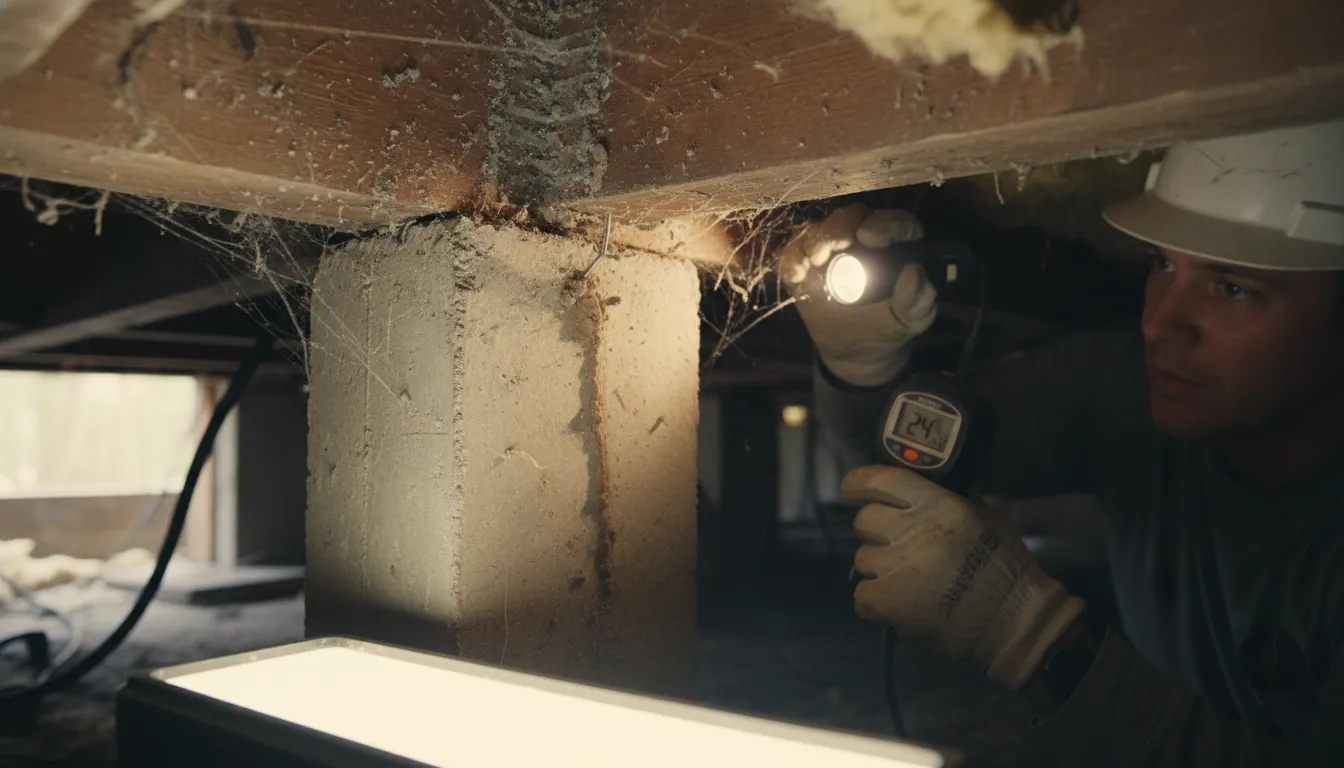
2. Interior and Structural Inspection: Inside, the inspector will access key areas like basements, crawl spaces, and attics. They examine floor joists, sill plates, support posts, and subflooring. Areas around plumbing penetrations, under sinks, and in bathrooms are closely checked due to higher moisture levels 2.
3. Use of Specialized Tools: Beyond a flashlight and probing tool, professionals often employ technology. Moisture meters detect elevated moisture levels within walls. Infrared cameras can sometimes identify temperature differences caused by moisture from termite activity hidden inside walls 3.
4. Reporting and Recommendations: After the assessment, you should receive a detailed written report. This document outlines any findings, identifies areas of concern (like moisture issues), and provides clear recommendations for treatment if needed, as well as preventative measures to protect your property going forward.
Find the perfect termite inspection companies for your needs
Get personalized recommendations and expert advice
Common Wood-Destroying Insects in Cincinnati
While subterranean termites are the primary target, a thorough WDO inspection also covers other pests that can damage the structural wood of your home.
- Subterranean Termites: The most significant threat. They live in underground colonies and require contact with soil moisture.
- Carpenter Ants: Unlike termites, carpenter ants do not eat wood; they excavate it to create nests. Their presence indicates a moisture problem, and they leave behind piles of sawdust-like frass.
- Powderpost Beetles and Old House Borers: These beetles infest hardwood, leaving behind tiny, round exit holes and a fine, powdery frass. They can damage flooring, furniture, and structural timbers 4 5.
Understanding Inspection Costs and Treatment Options
The cost for a standard termite inspection in Cincinnati typically ranges from $100 to $200, though it can start lower for promotional offers or be higher for very large or complex properties 6 7 8. This fee covers the inspector's time, expertise, and the detailed report.
If an infestation is found, treatment costs are separate and vary significantly based on the method and the extent of the problem:
- Localized or Spot Treatments: For small, accessible infestations, costs may range from $300 to $900.
- Comprehensive Liquid Soil Treatments: This common method creates a chemical barrier around the foundation and can cost between $1,000 and $2,500 or more, depending on the home's linear footage.
- Bait Systems: These involve placing monitoring stations around the property that are checked regularly. Installation and monitoring contracts are a long-term investment.
- Fumigation (Tenting): Used for severe drywood termite infestations (less common in Ohio), this is the most expensive option, often costing several thousand dollars.
Preparing for Your Termite Inspection
To ensure the inspection is as thorough and efficient as possible, homeowners can take a few simple steps:
- Clear Access: Ensure the inspector can easily access your attic, crawl space, basement, and garage. Move stored items away from foundation walls.
- Trim Landscaping: Trim back shrubs, vines, and tree branches that touch the house to allow for a clear view of the exterior walls.
- Address Moisture: Note any areas where you have noticed leaks, condensation, or standing water.
When to Schedule an Inspection
- Spring Swarming Season: The peak time for termite activity in Ohio is typically March through May, when reproductive swarmers emerge. This is an excellent time for a proactive check 9.
- During Real Estate Transactions: A termite inspection is often a required contingency in home purchase agreements to identify any existing issues before the sale is finalized 10.
- Routine Prevention: Industry experts recommend a professional termite inspection at least once every 1-3 years as a preventative measure, even if you have no visible signs of trouble.
Frequently asked questions
Sources
Footnotes
-
8 Key Areas in Your Home to Check During a Termite Inspection - https://cleardefensepest.com/termite-inspection-checklist/ ↩
-
5 Things Exterminators Check During Termite Inspections - https://home.howstuffworks.com/home-improvement/household-hints-tips/insect-control/5-things-exterminators-check-during-termite-inspections.htm ↩
-
Cincinnati Termite Inspections - https://npiweb.com/redden/services/termite-inspections/ ↩
-
Termite Inspections: What to Expect and How to Prepare - https://www.actionpestcontrol.com/2025/01/15/termite-inspections-what-to-expect-and-how-to-prepare/ ↩
-
Dayton's Ultimate Guide To Commercial Termite Protection For Facilities - myshyft.com - https://www.myshyft.com/blog/commercial-termite-treatment-dayton-ohio/ ↩
-
Termite Inspection Cincinnati - https://inspectionplusgroup.com/termite-inspection-cincinnati/ ↩
-
Termite Inspections: Cost and What to Expect - U.S. News Real Estate - https://realestate.usnews.com/real-estate/articles/termite-inspections-cost-and-what-to-expect ↩
-
How Much Does a Termite Inspection Cost? - https://patriotinspect.com/how-much-does-a-termite-inspection-cost/ ↩
-
Termite Inspection & Wood Destroying Organisms - http://www.cai-ohio.com/termite-inspection.html ↩
-
Termite Inspections for Homebuyers: Requirements & Costs - https://www.freedommortgage.com/learning-center/articles/termite-inspection-home-purchase ↩