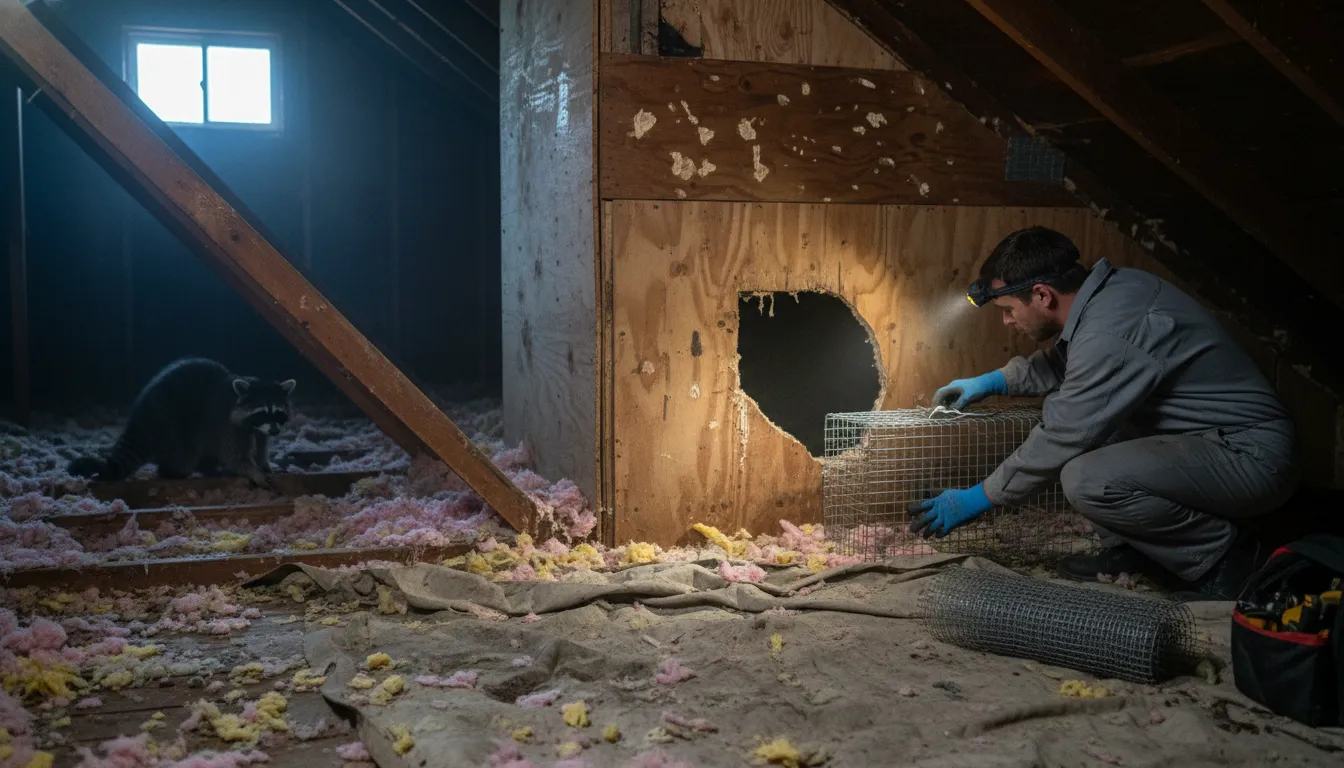
Find the Best Wildlife Removal Companies for Your Business
No obligation • Fast responses • Nationwide coverage
Why you can trust Pest Crews
Pest Crews is a leading U.S. resource for finding and evaluating residential and commercial pest control services. Our team researches providers, reviews treatment approaches, and organizes unbiased information to help you make informed decisions. Companies cannot pay to change our editorial content or influence how they appear.
Search providers near you
Top Wildlife Removal Companies in Kokomo, Indiana Ranked
When raccoons rummage through your trash or squirrels take up residence in your attic, it's more than a nuisance-it can pose health risks and cause significant property damage. Wildlife removal is the process of safely and legally addressing unwanted animals on your property, which is crucial for protecting your home and family. This guide explains the common wildlife issues in Kokomo, outlines your options from do-it-yourself prevention to professional intervention, and helps you understand the local regulations and services available to resolve these problems effectively.
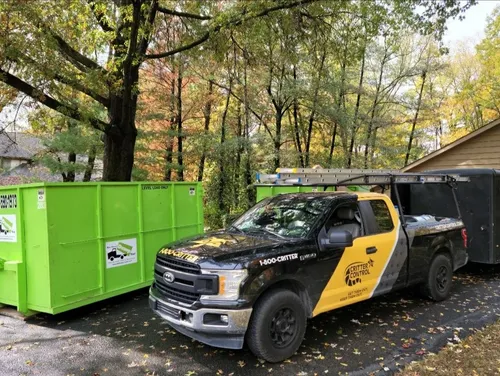
Common Nuisance Wildlife in Howard County
Kokomo's mix of suburban neighborhoods, parks, and nearby rural areas creates an ideal habitat for many species that can become problematic for homeowners. Knowing what you're dealing with is the first step.
Frequent Mammalian Visitors:
- Raccoons: Intelligent and dexterous, they are notorious for tipping over trash cans and seeking shelter in attics, chimneys, or under decks.
- Squirrels: Both gray and fox squirrels can chew through siding, roof vents, and electrical wiring to build nests in attics, creating fire hazards.
- Skunks & Opossums: Often attracted by pet food or accessible garbage, they may den under sheds or porches. Skunks, of course, present a potent defensive challenge.
- Groundhogs (Woodchucks): Their extensive burrowing can undermine foundations, sidewalks, and sheds.
- Coyotes: While generally wary of humans, their presence has increased in many Indiana communities. They may prey on small pets and can be attracted by unsecured food sources.
Other Problematic Critters:
- Bats: Small colonies may roost in attics. While beneficial for insect control, their droppings (guano) can pose health risks and require specific, regulated removal methods.
- Rodents: Mice and rats are common year-round invaders seeking food and shelter.
- Birds: Species like crows, grackles, and starlings can create noise and mess, while woodpeckers may damage siding.
Understanding Indiana Wildlife Regulations
Before taking action, it's essential to know the rules. The Indiana Department of Natural Resources (DNR) regulates wildlife, and laws differ by species and situation.
What Homeowners Can Do Themselves: Indiana law allows a property owner or tenant to trap or euthanize certain common nuisance animals-including raccoons, skunks, opossums, groundhogs, and squirrels-without a permit if the animal is causing damage to property. 1 However, there are critical stipulations:
- You must report the lethal take of these animals to a DNR Conservation Officer within 72 hours.
- Animals must be disposed of properly, not simply left on the landscape.
- For bats, a property owner may remove up to five individual bats from a dwelling without a permit if there is a demonstrated safety threat.
When Permits or Professionals Are Required: A Nuisance Wild Animal Control Permit is required for many other species or specific scenarios. This includes:
- The removal of most native reptiles and amphibians.
- Trapping and relocating animals (rather than euthanizing them on-site).
- Commercial activities; anyone trapping wildlife for payment must be licensed. 2
- Complex situations, like a maternal bat colony in an attic, often require a licensed professional with the proper permits.
DIY Prevention and Control Strategies
The most effective and humane approach to wildlife control is to make your property less attractive in the first place.
Exclusion is Key: The goal is to seal potential entry points. Conduct a thorough inspection of your home's exterior, paying close attention to:
- Roof vents, soffits, and fascia boards.
- Gaps around utility lines and pipes.
- Chimney openings (install a cap).
- Cracks in the foundation and gaps around basement windows or doors.
- Vents for dryers and crawl spaces (cover with sturdy, animal-proof mesh). 3
Remove Attractants: Animals are driven by the search for food, water, and shelter.
- Secure trash cans with tight-fitting lids or bungee cords.
- Never leave pet food outdoors overnight.
- Pick up fallen fruit from trees.
- Keep compost bins covered and well-managed.
- Trim tree branches that overhang or touch your roof to limit access for squirrels and raccoons.
Safe DIY Removal Tactics: If an animal is already inside a confined space like a garage, you may be able to encourage it to leave by providing an exit while ensuring all other doors are closed. For animals in attics or walls, the process is more complex and often involves installing a one-way exclusion door over the main entry hole after ensuring all young have left the nest. Always wear heavy gloves and avoid direct contact. Live-trapping requires daily checks and a plan for lawful and humane dispatch, as relocating wildlife is illegal without a permit and often simply moves the problem to another property. 4
Find the perfect wildlife removal companies for your needs
Get personalized recommendations and expert advice
When to Call a Professional Wildlife Removal Service
While some situations can be handled independently, there are clear signs that it's time to bring in an expert.
Call a Professional If:
- The animal is inaccessible or dangerous: Animals in deep wall voids, chimneys, or close to living spaces. Any animal behaving erratically (a potential rabies risk) should be reported immediately.
- There is significant damage or contamination: Extensive droppings (like from bats or rodents), chewed wiring, or compromised insulation requires not just removal but also cleanup and repair.
- You suspect a colony or family group: Removing a mother raccoon or squirrel while leaving young behind creates a worse problem. Professionals know how to identify and handle these situations.
- DIY methods have failed: If the animal keeps returning, a professional can find and seal all potential entry points you may have missed.
- The species is protected or permit-required: As noted, certain animals and all commercial removal activities require specific licenses. 5
What Professional Services Include: A comprehensive wildlife control company does more than just trap an animal. Their process typically involves:
- Inspection: A thorough assessment to identify the species, entry points, and extent of the problem.
- Removal: Using species-appropriate, legal methods to remove the animals.
- Exclusion: Sealing all identified entry points with durable materials to prevent re-entry. This is the most critical step for a permanent solution.
- Cleanup & Sanitation: Removing contaminated insulation, droppings, and nesting materials, followed by disinfecting and deodorizing the area.
- Restoration: Repairing damage caused by the animals, such as chewed wood, torn vents, or damaged insulation.
Understanding Wildlife Removal Costs in Kokomo
The cost for professional animal control services varies widely based on the job's complexity, the species involved, and the company you hire.
Price Ranges:
- Basic Service Call & Removal: For a single animal like a groundhog or skunk in a trap-accessible location, you might expect costs starting in the $200 to $400 range. 6 7
- Standard Attic or Wall Removal: For removing squirrels or raccoons from an attic, including initial trapping and basic exclusion work, prices often begin around $300 and can go higher depending on the number of animals and accessibility. 8
- Complex Exclusion & Cleanup: A full attic job-which includes removing all animals, sealing every potential entry point on the roofline, and cleaning/deodorizing the affected space-is a more significant investment. These jobs can range from $400 to over $1,000, with the higher end reflecting extensive damage, large colonies (like bats), or major restoration needs. 9 10
Always request a detailed, written estimate that breaks down inspection, removal, exclusion, and cleanup costs. The most affordable option is rarely the best if it doesn't include permanent exclusion.
Local Resources and Final Steps
Kokomo Animal Care & Control: It's important to know that this local agency, operated by the Kokomo Humane Society, primarily handles domestic animal issues such as stray dogs, leash law violations, and bite reports. They are generally not equipped for nuisance wildlife removal on private property. 11 For true wildlife conflicts, you will need to contact a private licensed operator.
Your Action Plan:
- Identify: Try to safely determine what animal you're dealing with based on sounds, droppings, or damage.
- Research: Visit the Indiana DNR's "Living with Wildlife" pages to understand the specific regulations for that species. 12 13
- Prevent: Immediately implement exclusion and sanitation measures to stop the problem from worsening.
- Decide: Honestly assess your comfort level, the legal requirements, and the complexity of the situation. Can you handle this safely and legally, or is it a job for a pro?
- Contact: If hiring a professional, seek out licensed and insured wildlife removal specialists in the Kokomo area. Look for companies with strong reviews that emphasize humane methods and, most importantly, permanent exclusion guarantees. 14
Frequently asked questions
Sources
Footnotes
-
How do you eliminate a nuisance animal on your property? - https://faqs.in.gov/hc/en-us/articles/115005069367-How-do-you-eliminate-a-nuisance-animal-on-your-property ↩
-
indiana nuisance wild animal control permit regulations - IN.gov - https://www.in.gov/dnr/fish-and-wildlife/files/fw-NuisanceControlPermitReg.pdf ↩
-
DNR: Fish & Wildlife: Living with Wildlife: Interactions - IN.gov - https://www.in.gov/dnr/fish-and-wildlife/wildlife-resources/living-with-wildlife/interactions/ ↩
-
Trapping Nuisance Wildlife | Purdue Extension Forestry & Natural Resources - https://www.purdue.edu/fnr/extension/trapping-nuisance-wildlife/ ↩
-
Kokomo Wildlife Control / Indiana Animal Removal - http://www.aaanimalcontrol.com/professional-trapper/city/IN-Kokomo.htm ↩
-
Prices for Kokomo Wildlife Pest Control Animal Trapping - http://www.aaanimalcontrol.com/Professional-Trapper/prices/IN-Kokomo-prices.htm ↩
-
Professional Trapping for Wildlife Intrusion | Rusty's Animal Control - https://rustysanimalcontrol.com/trapping-service/ ↩
-
Kokomo Wildlife Animal Control - Critter Trappers and Pest ... - http://www.wildlifeanimalcontrol.com/Kokomo.html ↩
-
Kokomo Wildlife Removal, Pest Animal Control IN - http://www.wildlife-removal.com/city/IN-Kokomo.htm ↩
-
How Much Does Wildlife Removal Cost? [2026 Data] - Angie's List - https://www.angi.com/articles/what-cost-animal-removal.htm ↩
-
Animal Care & Control | Kokomo Humane Society - https://kokomohumane.org/animal-care-control/ ↩
-
Living with Wildlife - https://www.in.gov/dnr/fish-and-wildlife/wildlife-resources/living-with-wildlife/ ↩
-
Wildlife Removal Permits - https://www.in.gov/dnr/fish-and-wildlife/wildlife-resources/living-with-wildlife/wildlife-removal-permits/ ↩
-
Top 10 Best Animal removal specialists in Kokomo, IN - Angie's List - https://www.angi.com/companylist/us/in/kokomo/animal-removal.htm ↩