Find the Best Wildlife Removal Companies for Your Business
No obligation • Fast responses • Nationwide coverage

Why you can trust Pest Crews
Pest Crews is a leading U.S. resource for finding and evaluating residential and commercial pest control services. Our team researches providers, reviews treatment approaches, and organizes unbiased information to help you make informed decisions. Companies cannot pay to change our editorial content or influence how they appear.
Search providers near you
Top Wildlife Removal Companies in South Bend, Indiana Ranked
When raccoons rummage through your trash, squirrels nest in your attic, or skunks take up residence under your deck, it's more than a nuisance-it's a potential threat to your property and health. Wildlife removal is the process of safely and humanely addressing these unwelcome animal intrusions. In South Bend, navigating local regulations and choosing the right approach is key. This guide explains the common wildlife issues homeowners face, outlines Indiana's rules for animal control, and helps you understand when to handle it yourself and when to call a professional for humane exclusion and repair services.

Common Nuisance Wildlife in South Bend
South Bend's mix of urban neighborhoods, riverfront areas, and proximity to woodlots creates ideal habitats for several adaptable species. Understanding which animals you're dealing with is the first step toward an effective solution.
- Raccoons: Intelligent and dexterous, raccoons are notorious for tipping over garbage cans, raiding pet food, and seeking shelter in attics, chimneys, and crawl spaces. They can cause significant damage while searching for food or denning sites.
- Squirrels (Gray & Fox): These agile climbers often enter homes through small gaps in rooflines, vents, or soffits to build nests in attics. The constant gnawing can damage electrical wiring, insulation, and structural wood, creating a fire hazard.
- Skunks: Known for their potent defensive spray, skunks often dig burrows under porches, sheds, or decks. While they help control insect populations, an encounter with a pet or an infestation under your home is highly undesirable due to the smell and potential for rabies.
- Opossums, Groundhogs, & Chipmunks: Opossums may rummage for food at night, while groundhogs (woodchucks) can undermine foundations with their burrowing. Chipmunks, though small, can dig extensive tunnel systems in landscaped areas.
- Rodents (Rats & Mice): While often considered general pests, rats and mice are also classified as nuisance wildlife. They contaminate food, chew through materials, and pose serious health risks.
- Birds (Crows, Starlings, Sparrows): Flocks of certain birds can create noise and mess problems. More critically, birds like woodpeckers (which are protected) or starlings may damage siding or nest in vents, leading to blockages and parasites.
Indiana Wildlife Removal Laws and Regulations
Before taking action, it's crucial to understand the legal framework. Indiana's Department of Natural Resources (DNR) sets regulations to balance human needs with wildlife conservation 1.
Animals You Can Trap Without a Permit: As a landowner or tenant in South Bend, you do not need a state permit to trap the following common nuisance animals on your property: raccoons, skunks, opossums, groundhogs, squirrels (gray and fox), chipmunks, rats, mice, moles, voles, crows, grackles, European starlings, and house sparrows.
Key Rules for Legal Trapping (No Permit Required):
- Permission: You must have the legal right to trap on the property (i.e., you own or lease it).
- Release Location: You must have written permission from the landowner to release a trapped animal on any property that is not your own. Releasing an animal on public land or without permission is illegal 2.
- Possession Time: You cannot hold a live-trapped animal for more than 24 hours without a permit. In practice, this means you must release or humanely euthanize the animal within a day of capture 3.
Animals That Require a DNR Permit: A permit from the Indiana DNR is required to trap or handle protected species. This includes:
- Coyotes (unless you are a landowner taking a coyote on your own land)
- White-tailed deer
- Most native birds, including Canada geese, woodpeckers, hawks, and owls (protected under federal law)
- Bats (all species are protected in Indiana)
If you have a protected species causing a problem, you must contact the DNR or hire a licensed wildlife control professional who holds the necessary permits.
DIY Prevention and Control Methods
For common, non-protected wildlife, many South Bend residents start with do-it-yourself strategies focused on prevention and safe removal.
Exclusion and Habitat Modification: This is the most effective long-term solution and involves making your property less attractive to wildlife.
- Seal Entry Points: Carefully inspect your home's exterior for gaps, holes, or loose vents. Use heavy-duty materials like hardware cloth, steel wool, or metal flashing to seal potential entryways, especially along rooflines, foundations, and around utility pipes.
- Secure Food Sources: Use locking lids on trash cans, store pet food indoors, and clean up fallen birdseed or fruit from trees.
- Modify Landscaping: Trim tree branches away from your roof (at least 6-8 feet) to limit squirrel and raccoon access. Clear away dense brush and woodpiles near your home's foundation.
Safe and Humane Trapping: For animals already inside, live trapping may be an option.
- Trap Selection: Use appropriately sized live cage traps. Place them along travel paths or near entry points, baited with appealing food (e.g., peanut butter for squirrels, canned fish for raccoons).
- Check Traps Frequently: It is inhumane and illegal to leave an animal in a trap for extended periods. Check traps at least twice daily, preferably in the early morning and evening.
- Disposition: Once trapped, you have three legal options: release the animal on your own property (if local ordinances allow), humanely euthanize it (methods must comply with state law), or contact a professional. Remember the rule: you cannot relocate it to another property without the owner's written permission 4.
Special Consideration: Skunks Due to their potent spray and higher disease risk, direct trapping of skunks is often discouraged for DIYers. Focus on exclusion-sealing off the den entrance after you are sure the animal has left-or call a professional who has the equipment to handle them safely 5 6.
Find the perfect wildlife removal companies for your needs
Get personalized recommendations and expert advice
When to Call a Professional Wildlife Removal Service
While DIY methods work for some, many situations in South Bend warrant expert intervention. Professional wildlife control operators have the experience, tools, and legal permits to handle complex problems safely and permanently.
You Should Consider a Professional For:
- Protected Species: Issues involving bats, birds of prey, or coyotes (if you're not the landowner).
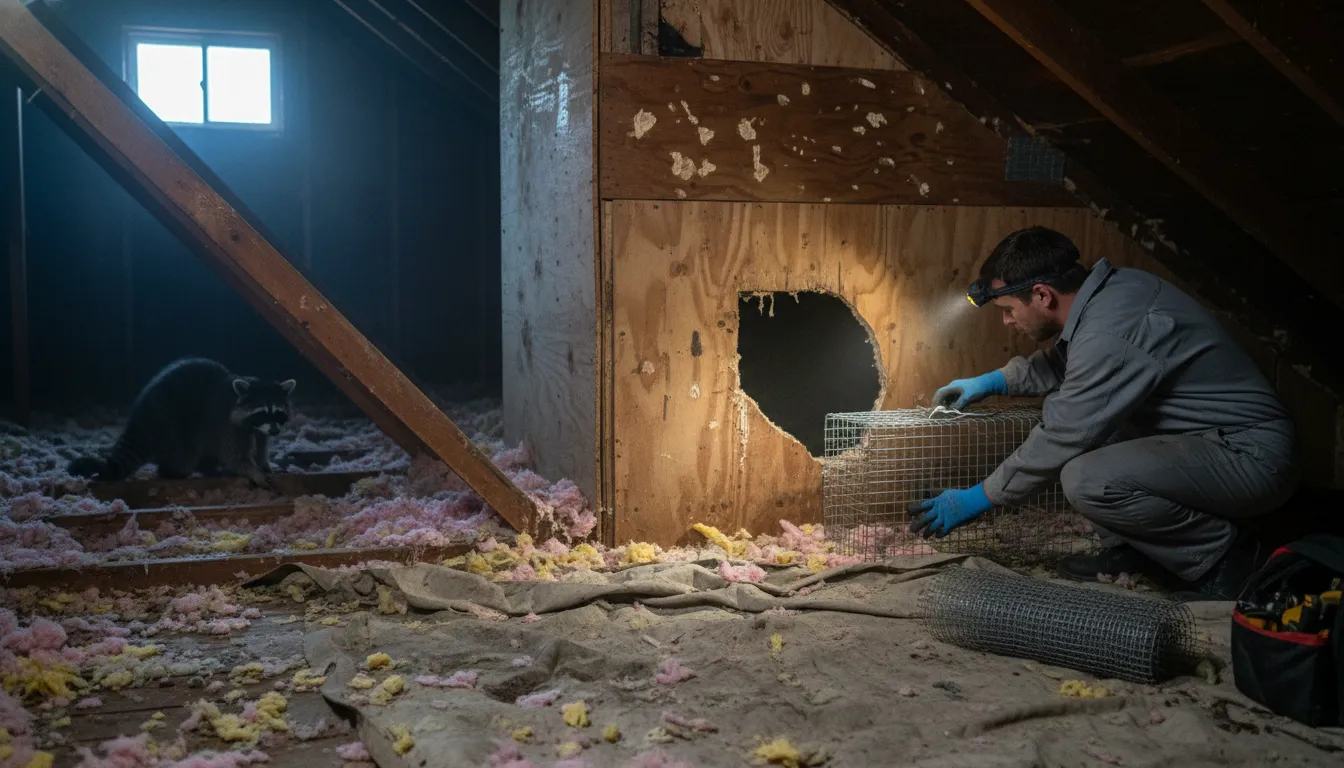
- Large or Dangerous Infestations: A mother raccoon with young in the attic or a colony of bats requires specialized removal techniques.
- Inaccessible Areas: Animals trapped inside walls, chimneys, or deep under concrete slabs.
- Health and Safety Concerns: If you are unsure about handling wildlife, concerned about diseases like rabies or histoplasmosis (from bat guano), or dealing with aggressive animals.
- Prevention and Repair: Professionals don't just remove animals; they find and seal entry points and can repair damage caused by wildlife, such as torn insulation, chewed wires, or soiled ductwork 7.
What Professional Services Include: A comprehensive service typically follows an integrated process:
- Inspection: A thorough assessment to identify the animal species, entry points, and extent of the problem.
- Humane Removal: Using specialized traps or exclusion devices (like one-way doors) that allow animals to leave but not re-enter.
- Exclusion: Sealing all potential entry points with durable materials to prevent future intrusions.
- Clean-up and Restoration: Removing contaminated insulation, droppings, and nesting materials, followed by sanitizing the area and making necessary repairs 8.
Understanding Costs: The price for professional wildlife removal in South Bend varies based on the animal, location, and extent of damage. For example, removing squirrels from an attic with basic exclusion repairs might start around a few hundred dollars 9 10. More complex jobs, like removing a raccoon family and repairing significant structural damage, will cost more. Always request a detailed, written estimate.
Local Resources and Emergency Contacts
Knowing who to call in different scenarios can save time and ensure the right response.
- Injured, Stray, or Aggressive Domestic Animals: Contact the South Bend Animal Resource Center (SBARC). They handle calls for stray dogs/cats, animal bites, and injured domestic animals within city limits. For non-emergencies, call 311. For emergencies, call 574-235-9303.
- Dead Animals on Public Property: Report dead animals on city streets or public rights-of-way to South Bend's 311 service 11.
- Protected Wildlife & Permits: For questions about coyotes, deer, protected birds, or to obtain a nuisance wildlife control permit, contact the Indiana Department of Natural Resources (DNR), Division of Fish & Wildlife 12 13.
- Immediate Wildlife Danger: If a wild animal is inside your living space and posing an immediate threat, contact local law enforcement or a wildlife removal professional directly.
Frequently asked questions
Sources
Footnotes
-
Living with Wildlife - IN.gov - https://www.in.gov/dnr/fish-and-wildlife/wildlife-resources/living-with-wildlife/ ↩
-
312 17-436 | IARP - http://www.in.gov/legislative/iac/20180214-IR-312170436EIA.xml.pdf ↩
-
Nuisance Wild Animal Control Permit Information - IN.gov - https://www.in.gov/dnr/fish-and-wildlife/files/fw-NuisancePermitInfo.pdf ↩
-
Trapping Nuisance Wildlife | Purdue Extension Forestry & Natural Resources - https://www.purdue.edu/fnr/extension/trapping-nuisance-wildlife/ ↩
-
South Bend Wildlife Animal Control - Wildlife Animal Control - http://www.wildlifeanimalcontrol.com/South-Bend.html ↩
-
indiana nuisance wild animal control permit regulations - IN.gov - https://www.in.gov/dnr/fish-and-wildlife/files/fw-NuisanceControlPermitReg.pdf ↩
-
Wildlife & Animal Removal In South Bend IN - https://platinumwildliferemoval.com/animal-removal-south-bend-in/ ↩
-
Why Hire A Wildlife Removal Professional? - https://coastalwildlifeservices.com/why-hire-a-wildlife-removal-professional/ ↩
-
Prices for South Bend Wildlife Pest Control Animal Trapping - http://www.aaanimalcontrol.com/professional-trapper/prices/IN-South-Bend-prices.htm ↩
-
South Bend Wildlife in Indiana Squirrel Snake Rodent Removal ... - http://www.aaanimalcontrol.com/professional-trapper/wildlife/IN-South-Bend-Wildlife.htm ↩
-
Animal Welfare and Ordinances - South Bend, Indiana - https://southbendin.gov/department/animal-resource-center/animal-welfare-and-ordinances/ ↩
-
Wildlife Removal Permits - https://www.in.gov/dnr/fish-and-wildlife/wildlife-resources/living-with-wildlife/wildlife-removal-permits/ ↩
-
DNR: Fish & Wildlife: Living with Wildlife: Interactions - IN.gov - https://www.in.gov/dnr/fish-and-wildlife/wildlife-resources/living-with-wildlife/interactions/ ↩