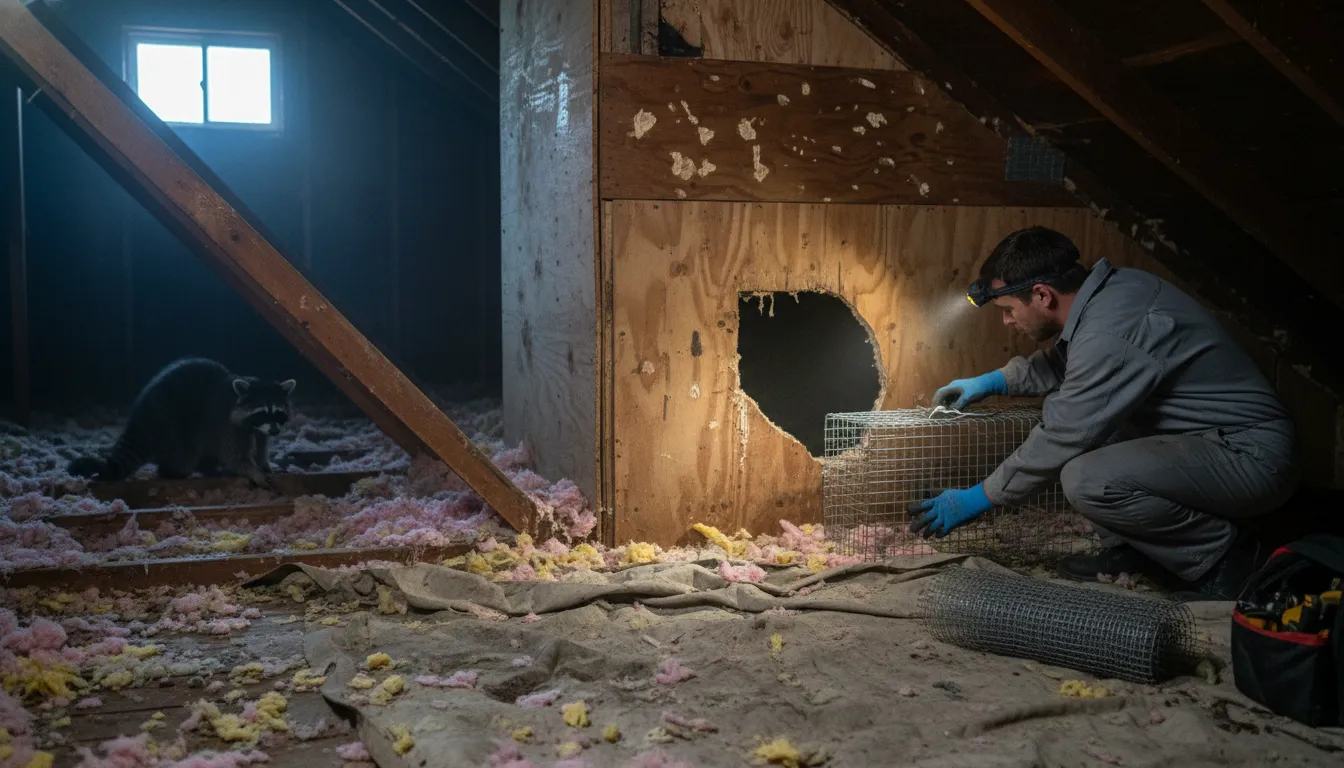
Find the Best Wildlife Removal Companies for Your Business
No obligation • Fast responses • Nationwide coverage

Why you can trust Pest Crews
Pest Crews is a leading U.S. resource for finding and evaluating residential and commercial pest control services. Our team researches providers, reviews treatment approaches, and organizes unbiased information to help you make informed decisions. Companies cannot pay to change our editorial content or influence how they appear.
Search providers near you
Top Wildlife Removal Companies in Boston, Massachusetts Ranked
Discovering an uninvited animal in your home or business can be unsettling. Wildlife removal is the professional service of safely and legally evicting nuisance animals from human-inhabited structures and preventing their return. In a historic city like Boston, where older buildings meet green spaces, encounters with urban wildlife are common. This guide explains the local wildlife you might encounter, the legal framework for their removal, how to choose the right professional, and steps you can take to protect your property.
Clancy Brothers Pest Control
288 Willard St, Quincy, MA 02169
Clancy Brothers Pest Control is a family-owned pest control company serving Boston, MA. They specialize in residential and commercial pest control, including rodent control, termite inspections, wildlife removal, and bed bug treatment. With over 64 years of experience, they offer safe and effective pest elimination solutions.
Freedom Pest Control
58 Pulaski St Unit Business 2, Peabody, MA 01960
Freedom Pest Control is a pest management company serving Boston, MA, with over 30 years of experience since 1994. They provide a wide range of pest control services including ant, rodent, bed bug, termite, mosquito, and wildlife removal. Their approach involves thorough inspections and customized treatment plans to address the root causes of infestations. The company also offers specialized services such as stinging insect control and eco-friendly mosquito and tick management. With a focus on safety and effective solutions, Freedom Pest Control helps homeowners protect their properties from various pests.
Assurance Pest Solutions
93 West St, Medfield, MA 02052
Assurance Pest Solutions is a family-owned pest control company serving Boston, MA, and surrounding areas in Massachusetts and Rhode Island. With over 40 years of experience, they provide residential and commercial pest management services including bed bug treatment, ant control, rodent control, termite inspection, mosquito control, bee and wasp removal, and wildlife removal. Their certified technicians use environmentally conscious Integrated Pest Management strategies to address infestations by targeting root causes such as entry points and nesting areas. The company also offers humane wildlife removal and exclusion services to protect properties while ensuring animal safety.
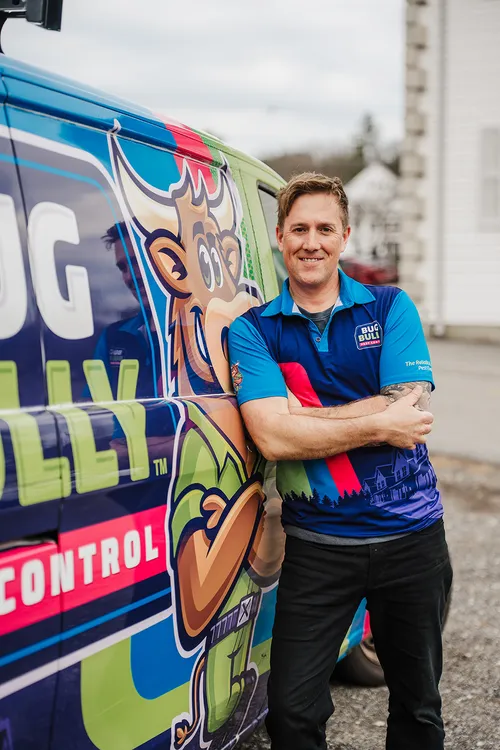
Bug Bully Pest Control - Concord, MA
191 Sudbury Rd Unit 26, Concord, MA 01742
Bug Bully Pest Control - Concord, MA offers comprehensive pest management services in Boston, MA, specializing in controlling ants, mice, mosquitoes, roaches, termites, and other pests. Established in 2006, the company provides both residential and commercial pest control solutions tailored to each client's needs. Their Quad Defense System targets critical zones around properties to prevent and eliminate infestations effectively. Bug Bully is fully licensed in Massachusetts and offers services within 24 hours of contact, focusing on safe and eco-friendly treatment methods.
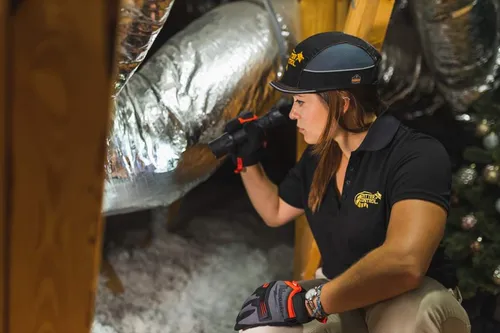
Critter Control of Greater Boston
28 Thayer Rd Unit B, Waltham, MA 02453
Critter Control of Greater Boston provides wildlife removal services throughout Boston, MA, and surrounding northern and local communities. The company handles a variety of wildlife control needs across many neighborhoods and towns, including Cambridge, Quincy, Waltham, and Lowell. They specialize in humane wildlife removal and exclusion techniques to manage common urban and suburban wildlife issues. This franchise operates independently under Master Home Services, Inc., serving a broad area with a focus on effective wildlife control solutions.
Common Wildlife Pests in Boston
Boston's mix of dense neighborhoods, parks, and proximity to water creates ideal habitats for a variety of adaptable animals. Knowing which creature you're dealing with is the first step toward a solution.
- Mammals: The most frequent culprits include raccoons, squirrels (both gray and flying), bats, opossums, skunks, groundhogs (woodchucks), rats, mice, moles, muskrats, coyotes, foxes, rabbits, and weasels.
- Birds: Pigeons, starlings, and house sparrows often nest in vents, attics, and under eaves, causing noise, mess, and potential damage.
These animals are typically seeking shelter, food, or a place to raise their young. An attic, chimney, crawlspace, or wall void can seem like a perfect den to them.
Massachusetts Laws and Regulations: Why Professional Help is Essential
Massachusetts has strict regulations governing nuisance animal control to protect both public health and the animals themselves. Understanding these laws is critical before taking any action.
- No Relocation Allowed: It is illegal to trap and relocate wildlife to another location in Massachusetts 1 2. This practice can spread disease, disrupt established animal populations, and is considered inhumane, as relocated animals often struggle to survive in unfamiliar territory.
- Licensed Professionals Required: For the trapping and removal of most nuisance wildlife, you must hire a licensed Problem Animal Control (PAC) agent. These specialists are trained in legal, ethical, and effective animal eviction techniques. They understand the life cycles and behaviors of local wildlife, ensuring the job is done correctly and legally.
- Immediate Threats vs. Nuisance Wildlife: It's important to distinguish between an emergency and a persistent problem. Boston Animal Control should be contacted for animals inside your primary living space (like a kitchen or living room) or for immediate threats, such as sick or injured animals. For animals in attics, crawlspaces, or causing persistent damage, a licensed PAC agent is the appropriate resource.
When to Call a Professional for Animal Eviction
While some minor prevention can be DIY, wildlife extraction from your home or business is almost always a job for a pro. Here are clear signs you need expert critter control:
- You hear persistent noises (scratching, scurrying, thumping) in walls, ceilings, or under floors, especially at night or dawn.
- You find droppings, nesting materials, or evidence of chewing on wires, wood, or insulation.
- You see an animal entering or exiting a specific hole in your roofline, siding, or foundation.
- You detect a strong, musky odor that could indicate an animal living or deceased within the structure.
- A bird or bat is flying inside your living areas.
Attempting to handle these situations yourself, especially with species like raccoons or bats (which can carry rabies), poses significant health and safety risks.
The Professional Wildlife Removal Process
A reputable wildlife control operator will follow a comprehensive, multi-step process focused on permanent resolution, not just a quick catch.
- Inspection and Assessment: The specialist will perform a thorough inspection of your property, inside and out, to identify the pest species, locate all entry points, and assess the extent of the damage or contamination.
- Humane Removal and Eviction: Using methods appropriate for the species, the professional will remove the animals. This may involve live trapping (followed by legal, on-site euthanasia if necessary and permitted), or the use of one-way exclusion doors that allow animals to leave but not re-enter.
- Clean-up and Sanitation: This critical step involves removing contaminated insulation, droppings, urine, and nesting materials. Professionals use industrial-grade cleaners and disinfectants to eliminate health hazards and odors that might attract new wildlife.
- Exclusion and Repair: The core of permanent wildlife prevention is sealing every identified entry point with durable materials like steel mesh, hardware cloth, or chimney caps. This prevents future infestations.
- Restoration: The service may include repairing structural damage, replacing insulation, and fixing chewed wires to restore your property to its pre-infestation condition.
Find the perfect wildlife removal companies for your needs
Get personalized recommendations and expert advice
Cost of Wildlife Removal Services in Boston
The price for professional wildlife management in Boston varies widely based on the complexity of the job. It's an investment in permanently securing your property.
- Basic Removal: For a single animal with simple access (e.g., a raccoon from a chimney), costs typically range from $150 to $400.
- Full Service (Attic/Crawlspace Infestation): A complete service for an attic infestation-including removal of all animals, a full clean-up and decontamination, and comprehensive exclusion work-can range from $500 to over $2,0003 4. The higher end accounts for severe damage, large colonies (like bats or squirrels), or complex architectural features.
- Emergency/After-Hours Service: For removals required on weekends, holidays, or after standard business hours, expect a premium, often a 50-150% markup on the standard rate5.
Always get a detailed, written estimate that breaks down inspection, removal, clean-up, exclusion, and any repair costs.
DIY Prevention Tips for Boston Homeowners
Before wildlife becomes a problem, you can take proactive steps to make your property less inviting. Animal proofing is the most cost-effective strategy.
- Secure Food Sources: Never intentionally feed wildlife. Use locking lids on trash and compost bins, remove fallen fruit from yards, and keep pet food indoors.
- Eliminate Shelter: Trim tree branches back at least 6-8 feet from your roofline. Keep shrubs and vegetation trimmed away from the foundation. Seal off crawlspace openings with sturdy vent covers 6 7.
- Conduct Seasonal Inspections: Twice a year (spring and fall), walk around your home and look for new gaps, holes, or damaged vents. Pay special attention to areas where different building materials meet, like roof joints and siding corners.
- For Minor Non-Living Space Issues: You can seal small holes in sheds or decks yourself. If you discover a non-urgent entry to a non-living space (like under a deck), consult local regulations, as a one-way exclusion door might be a legal option you can install8 9 10.
Choosing a Wildlife Removal Company in Boston
Selecting the right provider is crucial. Look for these key attributes:
- Massachusetts PAC License: Verify the company employs licensed Problem Animal Control agents. This is your assurance of legal compliance11 12.
- Insurance and Warranties: The company should carry liability insurance and offer a warranty on their exclusion work (often 1-5 years).
- Comprehensive Service Model: Avoid "trappers" who only remove animals. Choose companies that emphasize inspection, removal, clean-up, and exclusion as a complete package.
- Humane Methods and Transparency: Ask about their removal techniques and their policy on euthanasia. A reputable company will be transparent about their methods and focus on humane eviction.
- Local Experience and References: Choose a company with extensive experience in the Boston area. They will understand local architecture and animal behaviors. Don't hesitate to ask for references.
Frequently asked questions
Sources
Footnotes
-
General Wildlife Information | Brookline, MA - Official Website - https://www.brooklinema.gov/700/General-Wildlife-Information ↩
-
Wildlife Regulations | Hingham Police Department, MA - https://hpd.org/227/Wildlife-Regulations ↩
-
How to Choose the Best Wildlife Removal Service in Massachusetts ... - https://www.harveysanimalevictions.com/post/how-to-choose-the-best-wildlife-removal-service-in-massachusetts-compared ↩
-
Wildlife Control & Removal Services - Critter Control of Boston - https://www.crittercontrol.com/office-finder/massachusetts/boston/ ↩
-
Nuisance Animal Control in Massachusetts - https://bestknownpest.com/nuisance-animal-control-in-massachusetts/ ↩
-
Wildlife Information | Nuisance Animal Removal - https://www.wildliferemovalma.com/wildlife-info ↩
-
Legal regulations when dealing with problem wildlife - https://wmwildliferemoval.com/blog/legal-regulations-when-dealing-with-problem-wildlife ↩
-
Moving wildlife - Mass.gov - https://www.mass.gov/info-details/moving-wildlife ↩
-
Wildlife problems and solutions | Boston.gov - https://www.boston.gov/departments/animal-care-and-control/wildlife-problems-and-solutions ↩
-
Problems with Wildlife - Mass.gov - https://www.mass.gov/problems-with-wildlife ↩
-
Problem Animal Control agents - Mass.gov - https://www.mass.gov/info-details/problem-animal-control-agents ↩
-
Understanding Massachusetts Laws on Wildlife Trapping and ... - https://www.fordshometown.com/2023/12/08/understanding-massachusetts-laws-on-wildlife-trapping-and-removal/ ↩