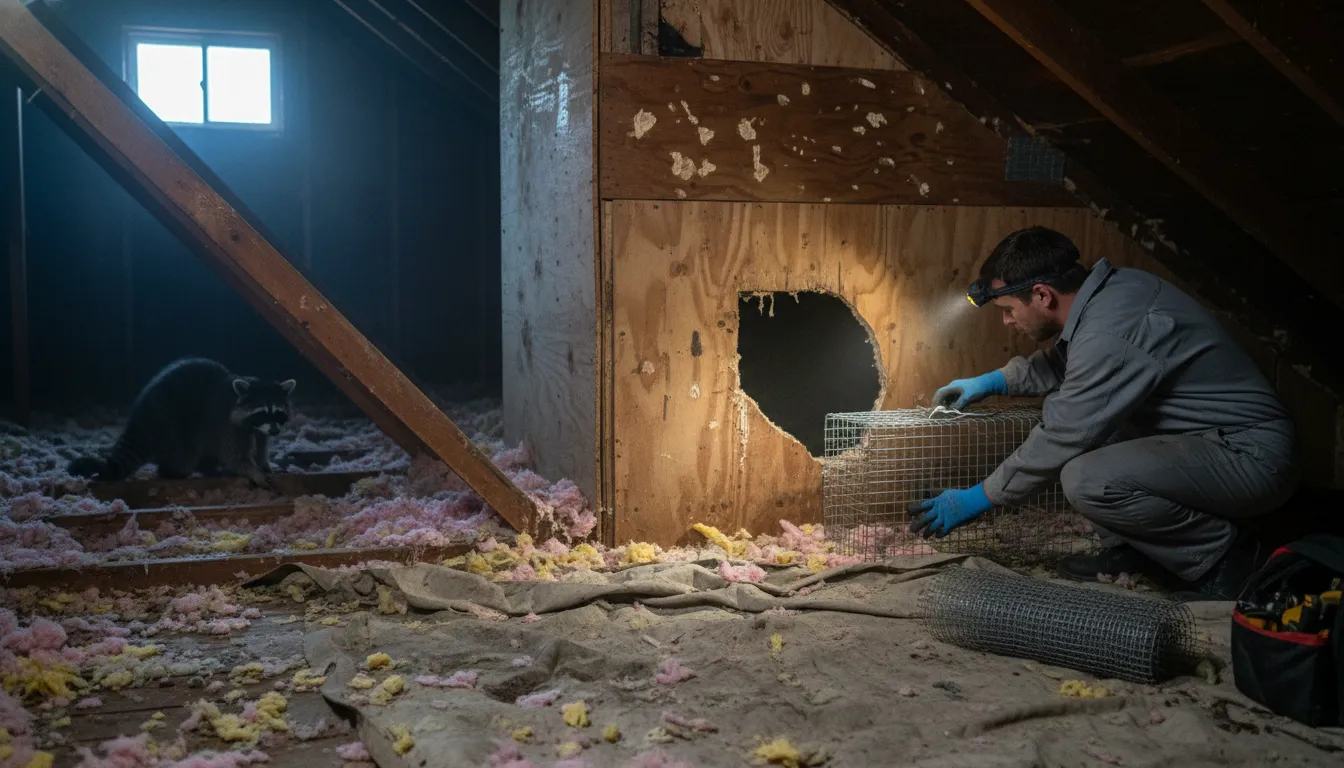
Find the Best Wildlife Removal Companies for Your Business
No obligation • Fast responses • Nationwide coverage

Why you can trust Pest Crews
Pest Crews is a leading U.S. resource for finding and evaluating residential and commercial pest control services. Our team researches providers, reviews treatment approaches, and organizes unbiased information to help you make informed decisions. Companies cannot pay to change our editorial content or influence how they appear.
Search providers near you
Top Wildlife Removal Companies in Freeport, New York Ranked
Discovering an uninvited animal in your attic, chimney, or yard can be unsettling. In Freeport, managing conflicts with local wildlife requires a blend of practical know-how and an understanding of New York State's specific regulations. This guide explains the common nuisance species in the area, outlines your legal options for removal, and provides clear steps for resolving wildlife issues safely and humanely. Whether you're considering a do-it-yourself approach or need to hire a professional, having the right information is the first step to reclaiming your space.
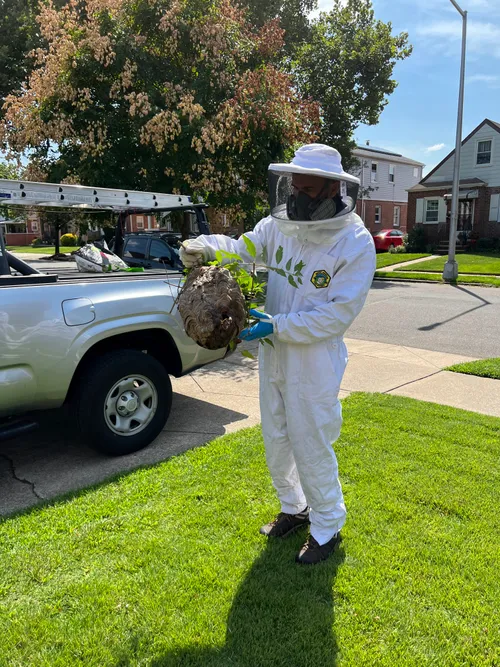
GoSafe Pest Control LLC
264-07 Langston Ave unit B, Glen Oaks, NY 11004
GoSafe Pest Control LLC is a locally owned pest control company serving New York, NY. They provide a range of pest management services including bed bug treatment, cockroach and ant control, rodent control, termite inspections, mosquito control, bee and wasp removal, bird and pigeon control, and wildlife removal. The company offers eco-friendly solutions tailored to client schedules, with options for weekly to seasonal visits.
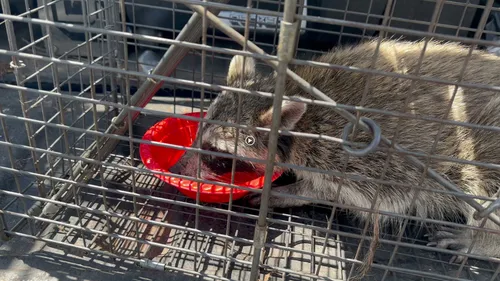
800-Raccoon Pest & Wildlife Control
32-07 Astoria Blvd N, Astoria, NY 11102
800-Raccoon Pest & Wildlife Control is a family-owned pest control company serving New York, NY, with over 45 years of experience. They offer comprehensive pest management services including rodent control, termite inspections, mosquito control, and humane wildlife removal for both residential and commercial properties. Their approach covers all aspects of pest prevention and treatment to protect homes and businesses effectively. The company emphasizes a thorough, multi-step process to ensure complete pest protection and peace of mind for their clients.
Optimum Pest Control
2444 Boston Post Rd Suite 1020, Larchmont, NY 10538
Optimum Pest Control is a pest control company serving Yonkers, NY, and the broader Westchester region. They offer services including cockroach, ant, rodent, termite, bird, and wildlife removal. The company provides personalized pest management plans and uses green, family- and pet-friendly treatments with integrated pest management techniques. A notable capability is their use of video monitoring to enhance rodent control programs. With over 20 years of experience, Optimum Pest Control combines advanced methods with environmental awareness to address pest issues effectively.
Excel Pest Services
1020 Teaneck Rd, Teaneck, NJ 07666
Excel Pest Services is a pest control company based near New York, NY, specializing in comprehensive pest management for both residential and commercial clients in Bergen County. With over 30 years of experience, they address common local pests including ants, rodents, termites, bed bugs, mosquitoes, and wildlife. Their termite control includes thorough inspections and tailored treatments such as liquid barriers and bait stations. Rodent control involves detailed inspections, sealing entry points, and strategic trapping or baiting. Bed bug services feature thorough inspections and treatments targeting all life stages, with follow-up visits to ensure effectiveness. They use eco-friendly methods and integrated pest management strategies to provide long-term protection.
Titan Pest Services
263 Herbert Ave, Closter, NJ 07624
Titan Pest Services is a family-owned pest control company based near Yonkers, NY, serving residential and commercial clients in the area. They offer personalized pest management plans tailored to specific needs, including one-time, monthly, seasonal, and yearly treatments. Their services cover a wide range of pests such as bed bugs, termites, rodents, mosquitoes, bees, wasps, and wildlife. Titan Pest Services employs licensed professionals who use specialized equipment and safe pesticide application techniques to manage infestations effectively. Established in 2007, the company also provides green and organic product options upon request.
Common Nuisance Wildlife in Freeport
Freeport's mix of residential neighborhoods, waterfront properties, and green spaces creates ideal habitats for various animals seeking food and shelter. The most frequent offenders include mammals like raccoons, squirrels (both gray and flying varieties), opossums, skunks, bats, and groundhogs (woodchucks). Rodents such as rats and mice are also pervasive problems. For birds, residents often contend with pigeons, starlings, crows, and blackbirds, which can cause damage and unsanitary conditions with their nesting and droppings.
Understanding which animal you're dealing with is crucial, as it determines the legal methods available for removal. For instance, the presence of bats triggers specific health and legal considerations, while dealing with a woodchuck under your shed may allow for more direct action. Many of these animals are most active in the spring and fall, seeking den sites or preparing for winter, which is when most calls for animal control services occur.
New York State Laws and Your Property
New York State Department of Environmental Conservation (NYSDEC) regulations strictly govern wildlife removal to ensure humane treatment and ecological balance. The law categorizes animals as either "protected" or "unprotected." Protected species include raccoons, bats, skunks, foxes, and most other native mammals and birds. For these animals, you generally cannot trap and relocate them yourself; this work must be done by a licensed professional 1.
Unprotected species in New York include rats, mice, moles, woodchucks, red squirrels, and chipmunks 2 3. For these species, homeowners have more flexibility. You may legally trap and remove them, but with important restrictions: you cannot release an unprotected animal elsewhere on your own property. The legal options are to release it on-site where it was caught or to humanely euthanize it and then bury or cremate the remains 4. This law is designed to prevent simply transferring a problem to a neighbor's yard.
It is illegal to poison most wildlife in New York, and relocating any animal-even an unprotected one-to state lands, parks, or another person's property without permission is prohibited. These laws underscore the state's emphasis on solving wildlife conflicts at the source through exclusion and habitat modification rather than lethal control alone.
When to Call a Professional Wildlife Control Operator
For situations involving protected species, immediate danger, or complex infestations, hiring a professional is not just advisable-it's often legally required. You should contact a NYSDEC-licensed Nuisance Wildlife Control Operator (NWCO) for:
- Removing raccoons, bats, skunks, or foxes.
- Any situation requiring the animal to be relocated off your property.
- Euthanasia of a trapped animal.
- Dealing with wildlife inside the living spaces of your home, especially if there are young present.
- If DIY methods have failed.
An NWCO has completed state-approved training in humane capture techniques, exclusion methods, and relevant laws 5. They will typically start with a thorough inspection to identify entry points, the species involved, and the extent of the problem. Their primary goal is to implement a permanent solution, which usually involves live-trapping (where legal), installing one-way exclusion doors that let animals out but not back in, and then sealing all potential entry points with durable materials.
Find the perfect wildlife removal companies for your needs
Get personalized recommendations and expert advice
DIY Wildlife Control: What You Can Do
For unprotected species or as a preventive measure, homeowners can take several effective actions. The cornerstone of DIY wildlife control is exclusion-physically blocking animals from entering your home. This involves inspecting your roofline, siding, vents, and foundation for gaps and sealing them with hardware cloth, steel wool, or caulk. Chimney caps and vent covers are essential installations.
Habitat modification is equally important. This means securing trash cans with tight-fitting lids, removing pet food from outdoors, picking up fallen fruit from trees, and clearing away brush piles or woodpiles that provide shelter 6. For burrowing animals like woodchucks, installing a fence that extends underground can deter them.
Non-lethal deterrents can provide temporary relief. Motion-activated lights or sprinklers, ultrasonic devices, and placing ammonia-soaked rags near a den site can encourage an animal to move on. However, deterrents are rarely a permanent fix if attractive food and shelter remain available. Always prioritize safe, long-term exclusion over short-term scare tactics.
Understanding Costs and Services
The cost of professional wildlife removal in Freeport varies based on the animal, the severity of the infestation, and the complexity of the exclusion work needed. Most companies charge for an initial inspection and assessment, which typically ranges from $100 to $200, though this fee is often waived if you proceed with their service.
For common jobs, you can expect the following general price ranges:
- Squirrel or Raccoon Removal & Exclusion: $250 to $500 or more. This usually includes trapping/removal, sealing the primary entry point, and a basic warranty 7.
- Bat Exclusion: $400 to $800+. This is a more specialized service involving installing one-way doors at all exit points after a pup-rearing season, followed by meticulous sealing of even the smallest gaps 8.
- Bird Control: Costs vary widely. Installing deterrents like netting or spikes on a residential porch may be a few hundred dollars, while protecting a large commercial eaves can cost significantly more.
When you contact a professional, they should provide a detailed written estimate that breaks down inspection, removal, exclusion, cleanup (if needed), and any warranty period. Be wary of operators who offer unusually low prices or suggest immediately lethal measures without discussing exclusion.
Health, Safety, and Emergency Contacts
Wildlife can pose serious health risks. Bats are a primary rabies vector in New York; if you find a bat in a room with a sleeping person, a child, or a disabled individual, you should safely contain the bat (if possible) and contact the Nassau County Department of Health immediately for testing guidance. Raccoons, skunks, and foxes can also carry rabies. Avoid contact with any animal acting strangely-such as being overly aggressive, disoriented, or paralyzed.
For an immediate public safety threat-like a rabid animal in a schoolyard or a cornered animal attacking-call 911 9. For non-emergency sick, injured, or dangerously aggressive wildlife, you can contact the NYSDEC regional wildlife office or local animal control for guidance on how to proceed 10 11.
Remember, cleanup is a critical final step after removal. Droppings from rodents, bats, and birds can harbor pathogens. Wear protective gear (gloves, N95 mask) when cleaning affected areas and consider professional biohazard cleanup for large accumulations in attics or ducts.
Finding Licensed Help in Freeport
To ensure legal and humane service, always verify that a wildlife removal company holds a current NYSDEC Nuisance Wildlife Control Operator (NWCO) license. You can search for licensed operators in Nassau County directly on the NYSDEC website. Local review platforms like Yelp also list highly-rated wildlife control services near Freeport, such as Able Wildlife and 800Raccoon, but always confirm their state license before hiring 12.
A reputable operator will be knowledgeable about state laws, offer clear explanations of their process, emphasize permanent exclusion, and provide references or proof of insurance. By choosing a licensed professional, you protect yourself, the animals, and your property, ensuring the solution is effective and compliant with New York's wildlife regulations.
Frequently asked questions
Sources
Footnotes
-
New York State Laws and Regulations - https://nwco.net/training-modules/new-york-state-laws-and-regulations/ ↩
-
Nuisance Wildlife in New York - Identification & Control - https://pestech.com/blog/new-york-pest-wildlife/ ↩
-
Dealing With Wildlife and the Laws That Protect Them - Cornell blogs - https://blogs.cornell.edu/nysipm/2014/12/05/dealing-with-wildlife-and-the-laws-that-protect-them/ ↩
-
Remove Or "Take" Nuisance Animals Legally - NYSDEC - https://dec.ny.gov/nature/animals-fish-plants/nuisance-wildlife-species/remove-take-legally ↩
-
Nuisance Wildlife Removal - Turner Pest Control - https://www.turnerpest.com/nuisance-wildlife-removal/ ↩
-
Tips To Eliminate Wildlife Conflicts - NYSDEC - https://dec.ny.gov/nature/animals-fish-plants/nuisance-wildlife-species/tips-to-eliminate-wildlife-conflicts ↩
-
Nuisance Wildlife Control Operator - NYSDEC - https://dec.ny.gov/regulatory/permits-licenses/fish-wildlife-plant/special-licenses/nuisance-wildlife-control ↩
-
SECTION 11-0524 Nuisance wildlife control operators - https://www.nysenate.gov/legislation/laws/ENV/11-0524 ↩
-
Wild Animal · NYC311 - https://portal.311.nyc.gov/article/?kanumber=KA-01790 ↩
-
State Laws - Wildlife Damage Management - https://wildlife-damage-management.extension.org/state-laws/ ↩
-
Dealing with Wildlife and the New York Laws That Protect Them - https://ecommons.cornell.edu/bitstreams/7e128507-1b23-4102-ae9b-abe6dad7f2c2/download ↩
-
TOP 10 BEST Wildlife Removal near Freeport, NY 11520 - Yelp - https://www.yelp.com/search?find_desc=Wildlife+Removal&find_loc=Freeport%2C+NY+11520 ↩