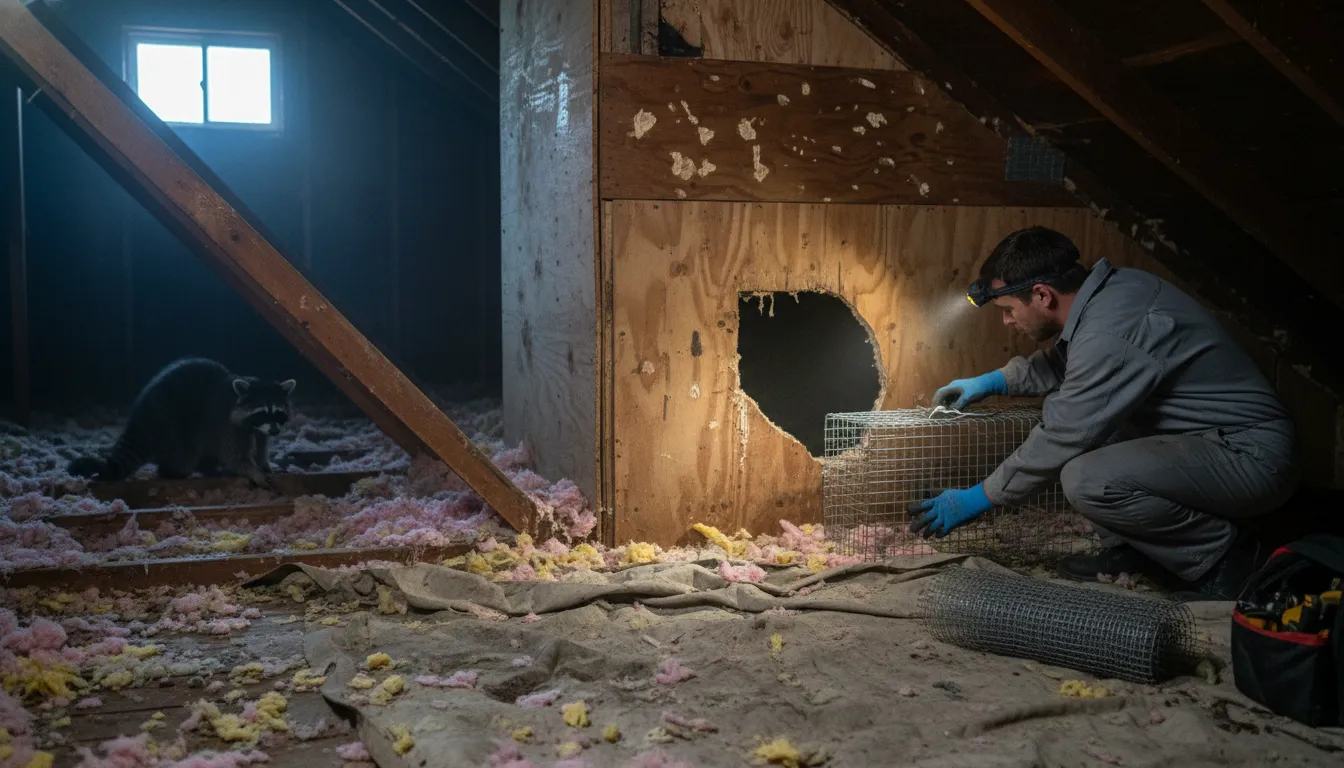
Find the Best Wildlife Removal Companies for Your Business
No obligation • Fast responses • Nationwide coverage

Why you can trust Pest Crews
Pest Crews is a leading U.S. resource for finding and evaluating residential and commercial pest control services. Our team researches providers, reviews treatment approaches, and organizes unbiased information to help you make informed decisions. Companies cannot pay to change our editorial content or influence how they appear.
Search providers near you
Top Wildlife Removal Companies in Mount Vernon, New York Ranked
Discovering a wild animal in your home or on your property can be unsettling. Wildlife removal is the process of safely and legally addressing conflicts with animals like raccoons, squirrels, bats, and rodents. It matters because improper handling can be dangerous, illegal, and ineffective. This guide helps you understand your options, from do-it-yourself steps for common pests to knowing when you must call a licensed professional in Mount Vernon.
Universal Pest Control
118 Locust St, Roselle, NJ 07203
Universal Pest Control is a family owned and operated pest control company serving Newark, NJ, and the surrounding Union County area. They offer a wide range of pest management services including cockroach, ant, termite, bee and wasp removal, as well as wildlife control. Their licensed and trained technicians use up-to-date methods to address pest infestations safely and effectively. With years of experience, Universal Pest Control provides free consultations and estimates to help customers find tailored solutions for their pest issues.
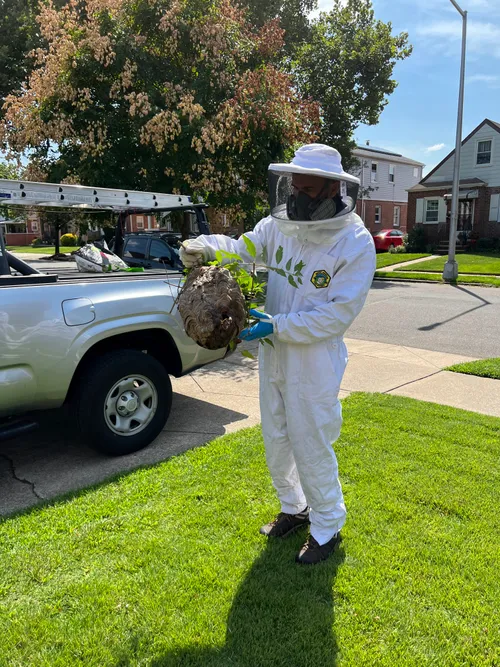
GoSafe Pest Control LLC
264-07 Langston Ave unit B, Glen Oaks, NY 11004
GoSafe Pest Control LLC is a locally owned pest control company serving New York, NY. They provide a range of pest management services including bed bug treatment, cockroach and ant control, rodent control, termite inspections, mosquito control, bee and wasp removal, bird and pigeon control, and wildlife removal. The company offers eco-friendly solutions tailored to client schedules, with options for weekly to seasonal visits.
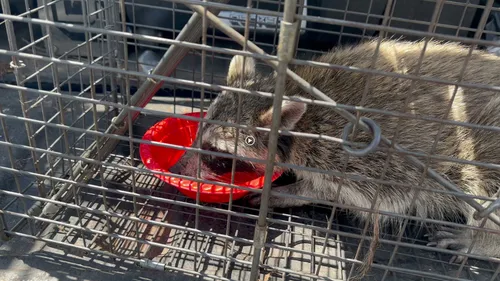
800-Raccoon Pest & Wildlife Control
32-07 Astoria Blvd N, Astoria, NY 11102
800-Raccoon Pest & Wildlife Control is a family-owned pest control company serving New York, NY, with over 45 years of experience. They offer comprehensive pest management services including rodent control, termite inspections, mosquito control, and humane wildlife removal for both residential and commercial properties. Their approach covers all aspects of pest prevention and treatment to protect homes and businesses effectively. The company emphasizes a thorough, multi-step process to ensure complete pest protection and peace of mind for their clients.
Optimum Pest Control
2444 Boston Post Rd Suite 1020, Larchmont, NY 10538
Optimum Pest Control is a pest control company serving Yonkers, NY, and the broader Westchester region. They offer services including cockroach, ant, rodent, termite, bird, and wildlife removal. The company provides personalized pest management plans and uses green, family- and pet-friendly treatments with integrated pest management techniques. A notable capability is their use of video monitoring to enhance rodent control programs. With over 20 years of experience, Optimum Pest Control combines advanced methods with environmental awareness to address pest issues effectively.
Horizon Pest Control
45 Cross Ave, Midland Park, NJ 07432
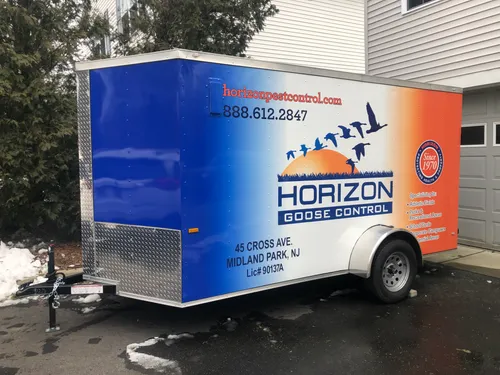
Horizon Pest Control is a family-owned pest control company serving New York, NY, and New Jersey. Established in 1970, they provide residential and commercial pest management services including bed bug treatment, ant control, rodent removal, termite inspections, mosquito control, and wildlife removal. Their licensed technicians use advanced, EPA-approved products to ensure safe and effective pest control. Horizon Pest Control offers comprehensive protection plans covering over 40 common pests and guarantees follow-up service if pests return. They serve multiple counties in New Jersey and New York, including Bronx, Manhattan, Brooklyn, and Queens.
Understanding New York's Wildlife Laws
The first step in any wildlife conflict is understanding the law. New York State classifies wildlife into two broad categories: unprotected and protected species. This distinction is critical because it dictates whether you can legally handle the situation yourself or if you must hire a licensed Nuisance Wildlife Control Operator (NWCO).
Unprotected species are typically non-native or abundant animals that can be a significant nuisance. In Mount Vernon, this includes:
- Rats and house mice
- Moles, shrews, and voles
- Pigeons, starlings, and house sparrows
- Woodchucks (groundhogs), chipmunks, and red squirrels
For these animals, homeowners are generally allowed to use live traps or lethal means to remove them from their property. However, even for unprotected wildlife, there are rules. For instance, it is illegal to trap and relocate an animal to another property without a permit; they must be released on-site or humanely dispatched.
Protected species include most native mammals, birds, and reptiles. These animals are regulated by the New York State Department of Environmental Conservation (NYSDEC), and it is illegal to harm, trap, or possess them without specific authorization. Common protected wildlife in our area includes:
- Raccoons, gray squirrels, and fox squirrels
- Bats (all species except the federally endangered Indiana bat)
- Skunks, opossums, and deer
- Most snakes and turtles
- Migratory birds, including woodpeckers and birds of prey
For any issue involving a protected species, you are required by law to contact a licensed NWCO 1. Attempting DIY removal for these animals can result in hefty fines.
Common Wildlife Issues in Mount Vernon Homes
Urban and suburban areas like Mount Vernon provide perfect habitats for wildlife seeking food and shelter. Each animal presents unique challenges and signs of infestation.
Raccoons are intelligent, dexterous scavengers often drawn to unsecured trash. They seek warm, enclosed spaces for denning, making attics, chimneys, and crawl spaces prime targets. Signs include torn roof vents, loud thumping noises at night, and scattered garbage.
Squirrels, particularly gray squirrels, are agile climbers that can chew through wood, vinyl siding, and electrical wiring to enter attics. This chewing behavior poses a significant fire hazard. You may hear scurrying during daylight hours and find nesting materials like shredded insulation.
Bats are protected, beneficial insect-eaters that sometimes roost in attics or wall voids. A colony is often detected by the sound of chirping or scratching at dusk, or by finding guano (droppings) that resembles mouse droppings but crumbles into a fine powder. A single bat flying inside a living space is also common. Important Note: Due to rabies concerns, never handle a bat with bare hands.
Rodents like rats and mice are year-round pests. They contaminate food, chew through wires and pipes, and can spread disease. Signs include droppings, gnaw marks, greasy rub marks along walls, and scratching sounds in walls or ceilings at night.
When to Handle It Yourself vs. Call a Professional
Making the right call between DIY and professional intervention saves time, money, and ensures legal compliance.
Scenarios for DIY Wildlife Control
You may consider handling the problem yourself if:
- The animal is an unprotected species (e.g., mouse, rat, pigeon).
- The issue is outdoors and not an immediate threat (e.g., woodchuck in the garden).
- You are comfortable using traps and implementing exclusion techniques.
- It is a one-time, simple intrusion (e.g., a single bat in a room).
For DIY, focus on exclusion and prevention. This involves:
- Identification: Correctly identify the animal.
- Removal: Use appropriate, legal traps. Remember, relocating trapped animals off your property is illegal.
- Exclusion: Once the animal is gone, seal all potential entry points with durable materials like steel wool, hardware cloth, or metal flashing.
- Sanitation: Remove attractants like pet food, fallen fruit, and unsecured garbage cans.
When You Must Call a Licensed NWCO
Immediately contact a licensed Nuisance Wildlife Control Operator for:
- Any protected species (raccoon, squirrel, bat, etc.) inside your home or causing damage.
- Animals living in your attic, walls, or chimney.
- Suspected rabies exposure, especially from a bat.
- A large or established infestation (e.g., a colony of bats, a family of raccoons).
- If the animal is sick, injured, or acting aggressively (in which case, call 911 if there's an immediate public safety threat).
- When you are unsure of the laws or uncomfortable handling the situation.
Find the perfect wildlife removal companies for your needs
Get personalized recommendations and expert advice
The Professional Wildlife Removal Process
Hiring a professional NWCO ensures the job is done safely, humanely, and legally. A reputable service will follow a comprehensive process.
1. Inspection and Assessment: The professional will conduct a thorough inspection of your property to identify the animal species, entry points, and the extent of the infestation.
2. Removal and Trapping: Using methods approved by the NYSDEC, the NWCO will remove the animals. This may involve one-way exclusion doors, live traps, or other techniques. They understand the legal protocols for handling and, if necessary, euthanizing protected wildlife.
3. Exclusion and Repair: This is the most critical step to prevent recurrence. The professional will seal all entry points with permanent materials. This may involve repairing chewed vents, installing chimney caps, or reinforcing soffits.
4. Cleanup and Decontamination: Wildlife leaves behind droppings, urine, and nesting materials that can harbor parasites and pose health risks. Professionals will clean and sanitize the affected area, and in the case of bats, may recommend guano removal.
5. Follow-up and Prevention Advice: A good NWCO will offer advice on long-term prevention, such as trimming tree branches away from the roof and securing trash, to make your property less attractive to wildlife.
Cost of Wildlife Removal in Mount Vernon
The cost for animal control services in Mount Vernon varies widely based on the species, location of the animal, and the extent of the work required. DIY costs are limited to traps and materials, but professional services provide a guaranteed, legal solution.
- Simple/Single Animal Removal: For a one-off job like removing a squirrel from an attic or a raccoon from a chimney, you can expect costs to range from $200 to over $500 2.
- Complex or Multi-Stage Removal: Situations involving a mother with young, multiple animals, or those requiring extensive trapping over several days will be more expensive, typically ranging from $500 to $1,000 or more 3.
- Full Service with Exclusion and Cleanup: Complete jobs that include permanent sealing of entry points, repair of damage, and cleanup of waste (like bat guano removal) are project-based and often cost several hundred to several thousand dollars, depending on the scope 4.
Always get a detailed, written estimate from any NWCO before work begins.
Safety, Health, and Emergency Contacts
Wildlife can pose health risks through diseases like rabies, leptospirosis, and histoplasmosis (from bat guano). Always wear gloves and a mask if cleaning up after wildlife, and never handle a live animal with bare hands.
For immediate emergencies, call 911 if a wild animal is acting aggressively and poses a direct threat to public safety.
For non-emergency guidance and reporting:
- Mount Vernon Animal Control: Contact for issues with stray domestic animals (dogs, cats).
- NYSDEC Regional Office: For questions about protected wildlife, to report a dead deer or raptor, or to verify the license of an NWCO 5. The NYSDEC website is the ultimate resource for regulations 6 7 8.
- NYC311: While Mount Vernon is not part of NYC, the NYC311 wildlife article provides relevant general guidance for the metro area 9.
Frequently asked questions
Sources
Footnotes
-
Nuisance Wildlife in New York - Identification & Control - https://pestech.com/blog/new-york-pest-wildlife/ ↩
-
Prices for Mount Vernon Wildlife Pest Control Animal Trapping - http://www.aaanimalcontrol.com/professional-trapper/prices/NY-Mount-Vernon-prices.htm ↩
-
Mount Vernon Wildlife Removal, Pest Animal Control NY - http://www.wildlife-removal.com/city/NY-Mount-Vernon.htm ↩
-
Dealing With Wildlife and the Laws That Protect Them - Cornell blogs - https://blogs.cornell.edu/nysipm/2014/12/05/dealing-with-wildlife-and-the-laws-that-protect-them/ ↩
-
Reporting Dead Wildlife - NYSDEC - https://dec.ny.gov/nature/wildlife-health/reporting-dead-wildlife ↩
-
Remove Or "Take" Nuisance Animals Legally - NYSDEC - https://dec.ny.gov/nature/animals-fish-plants/nuisance-wildlife-species/remove-take-legally ↩
-
Nuisance Wildlife Control Operator - NYSDEC - https://dec.ny.gov/regulatory/permits-licenses/fish-wildlife-plant/special-licenses/nuisance-wildlife-control ↩
-
Nuisance Wildlife Species - NYSDEC - https://dec.ny.gov/nature/animals-fish-plants/nuisance-wildlife-species ↩
-
Wild Animal · NYC311 - https://portal.311.nyc.gov/article/?kanumber=KA-01790 ↩