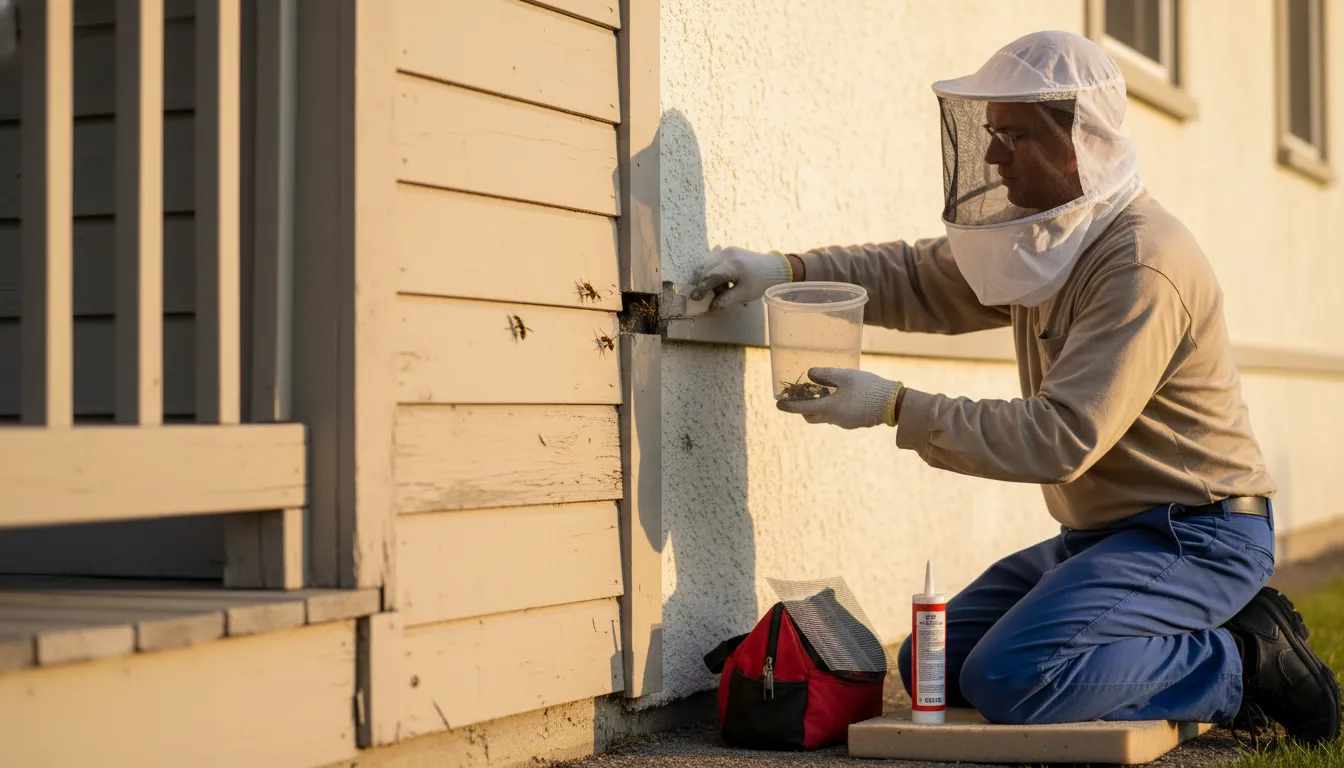
Find the Best Wasp & Hornet Removal Companies for Your Business
No obligation • Fast responses • Nationwide coverage

Why you can trust Pest Crews
Pest Crews is a leading U.S. resource for finding and evaluating residential and commercial pest control services. Our team researches providers, reviews treatment approaches, and organizes unbiased information to help you make informed decisions. Companies cannot pay to change our editorial content or influence how they appear.
Search providers near you
Top Wasp & Hornet Removal Companies in Apex, North Carolina Ranked
Finding a stinging insect nest on your Apex property can be unsettling. Professional bee and wasp removal services provide safe, effective solutions to manage these pests, protecting your family from painful stings and potential allergic reactions. This guide will help you understand the local stinging insect landscape, removal options, and how to connect with qualified experts in the Apex area to resolve your issue.

Kind Pest Control
6516 Old Wake Forest Rd, Raleigh, NC 27616
Kind Pest Control offers environmentally responsible pest control services in Raleigh, NC, and surrounding communities. They handle a variety of pests including cockroaches, ants, rodents, termites, and stinging insects for both residential and commercial properties. Their approach emphasizes eco-friendly methods that are safe for pets and children, using EPA-registered products. Kind Pest Control serves the broader Triangle area, including Durham, Cary, and Wake Forest. They provide a 100% satisfaction guarantee with re-treatment if pests return between visits and offer a two-year price lock guarantee. The company also supports environmental sustainability by planting a tree for every service provided.

Kind Pest Control
10421 Ligon Mill Rd, Wake Forest, NC 27587
Kind Pest Control is a pest control company based in Raleigh, NC, offering environmentally responsible services for homes and businesses. They provide treatments for a variety of pests including cockroaches, ants, rodents, termites, and stinging insects, using EPA-registered products that are safe for pets and children. Kind Pest Control serves the greater Triangle area, including Raleigh and nearby communities. Their services include both residential and commercial pest control with a focus on eco-friendly methods. The company also supports reforestation by planting a tree for every service provided. They offer a 100% satisfaction guarantee with free re-treatment if pests return between scheduled visits and a 2-year price lock guarantee.

Kind Pest Control
1155 Kildaire Farm Rd Suite 212, Cary, NC 27511
Kind Pest Control is a pest control company serving Raleigh, NC, and the surrounding Triangle area, including Durham, Cary, and Apex. They provide environmentally responsible pest management for residential and commercial properties, handling pests such as cockroaches, ants, rodents, termites, and stinging insects. Their services focus on eco-friendly methods that are safe for pets and children, using EPA-registered products. Kind Pest Control offers a 100% satisfaction guarantee with free re-service if pests return between scheduled visits. They also support environmental efforts by planting a tree for every service provided.

Innovative Pest Solutions
5854 Faringdon Pl #2, Raleigh, NC 27609
Innovative Pest Solutions is a locally owned pest control company serving Raleigh, NC, and the greater Triangle communities including Durham and Chapel Hill. Since 2002, they have provided pest management services targeting ants, cockroaches, rodents, termites, mosquitoes, and stinging insects. Their offerings include termite inspections and year-round protection plans with scheduled treatments and follow-up services. The company uses EPA-approved, environmentally friendly products designed to be safe for families and pets. With over 20 years of experience, Innovative Pest Solutions combines local knowledge with trained technicians to address pest problems effectively.

TruX Pest Control
25 Plantation Dr Suite 101, Clayton, NC 27527
TruX Pest Control is a pest control company serving Raleigh, NC, specializing in managing a wide range of pests including cockroaches, ants, rodents, bees, and wasps. Their services include thorough interior and exterior inspections and treatments, with a focus on integrated pest management to maintain a sustainable environment. TruX offers quarterly pest control plans that cover home structures, detached garages, sheds, and play areas, including fire ant treatment and wasp nest removal. With over 20 years of experience, TruX Pest Control employs certified technicians who follow responsible pest control practices to protect homes and families.
Understanding Stinging Insects in Apex
The warm climate of central North Carolina makes Apex a hospitable environment for a variety of bees and wasps. While some species are beneficial pollinators, others can become aggressive pests when they build nests too close to human activity. Proper identification is the first step toward a safe and appropriate response.
Common species encountered in Apex include:
- Honey Bees: Vital pollinators that live in large, social colonies. They are generally docile unless their hive is threatened. Due to their ecological importance, live removal and relocation is the preferred method when feasible.
- Yellow Jackets: Aggressive wasps that often nest in the ground or structural voids. They are attracted to food and can sting repeatedly, making them a significant nuisance and hazard.
- Paper Wasps: Build distinctive, open-celled, umbrella-shaped nests under eaves and porch ceilings. They are less aggressive than yellow jackets but will defend their nest.
- Bald-Faced Hornets: Build large, enclosed, football-shaped aerial nests in trees and shrubs. They are highly protective of their nest and can be very aggressive.
- Carpenter Bees: Solitary bees that bore into wooden structures like decks, siding, and eaves to create nesting galleries. While males are territorial (but cannot sting), the females' tunneling can cause structural damage over time.
- Bumblebees & Mud Daubers: Bumblebees are large, fuzzy, and often nest in abandoned rodent burrows. Mud daubers are solitary wasps that build mud tube nests; they are rarely aggressive and are actually beneficial as they hunt spiders.
Why Professional Extermination is Recommended
Attempting DIY wasp or bee control can be dangerous. Aggressive species like yellow jackets and hornets will vigorously defend their nest, leading to multiple stings. Allergic reactions to stings can be severe and require immediate medical attention. Professionals have the training, protective equipment, and professional-grade insecticides to handle the job safely and effectively 1.
Local Apex pest control companies, such as Dimino Pest Control, Economy Exterminators, and Bug Out Service, specialize in identifying the specific species and implementing a targeted removal plan 2 3 4. Their services often include:
- Safe Nest Elimination: Using methods and products that minimize risk to people, pets, and non-target insects.
- Preventative Treatments: Applying barriers or treatments to discourage re-nesting in the same area.
- Follow-up Inspections: Ensuring the colony is completely eradicated.
- Structural Repair Guidance: Advising on how to seal entry points after a nest is removed from a wall or attic void.
The Case for Humane Bee Relocation
For honeybees, which are crucial for our ecosystem, extermination should be a last resort. If the hive is in an accessible location, such as a detached shed or a tree branch, live removal and relocation is often possible. Some local beekeepers or specialized pest services may offer this service, sometimes for free or a reduced fee if they can collect the swarm or established hive 5. This process involves carefully transferring the bees and their comb into a managed hive box and moving them to an apiary where they can continue their pollinating work.
Common Nest Locations Around Your Home
Bees and wasps seek sheltered, low-traffic spots to build their nests 6. Knowing where to look can help you spot a problem early.
- Ground Nests: Yellow jackets and bumblebees frequently take over abandoned rodent burrows, dig into loose soil in landscaped beds, or nest under piles of logs or debris 7.
- Structural Voids: This is a prime location for yellow jackets, hornets, and sometimes honeybees. Common spots include inside wall cavities, attics, behind siding or soffits, in chimney flues, and under porches or decks 8.
- Sheltered Aerial Locations: Eaves, porch ceilings, the underside of roof overhangs, and dense bushes or trees are favored by paper wasps and bald-faced hornets 9 10.
- Wooden Structures: Carpenter bees bore perfectly round holes into unpainted or weathered wood, such as deck railings, fascia boards, and outdoor furniture 11.
Find the perfect wasp & hornet removal companies for your needs
Get personalized recommendations and expert advice
Seasonal Activity in Apex
Stinging insect activity in Apex follows a predictable seasonal pattern driven by temperature 12. Understanding this cycle helps explain when problems are most likely to arise.
- Spring (March - May): Overwintering queens emerge as temperatures rise to begin searching for new nest sites. Activity starts low but increases steadily. This is also when honeybee colonies grow rapidly and may swarm to establish new hives 13 14.
- Summer (June - August): This is peak activity season. Colonies expand quickly, with constant foraging. Nests become large and more noticeable, and insect aggression increases as they work to protect their growing home and food stores 15.
- Fall (September - November): Colonies reach their maximum size, which can number in the thousands for some wasp species. Defensive behavior is at its highest as the colony prepares for winter. New queens mate and seek sheltered spots to overwinter, while the rest of the colony dies off with the first hard frost 16 17.
- Winter (December - February): Visible activity is minimal. Only mated queens survive, hibernating in protected locations like woodpiles, attics, or under tree bark. Established honeybee hives cluster together inside their hive to stay warm 18.
What Determines the Cost of Removal?
The cost for professional bee or wasp control in Apex varies significantly based on several key factors 19 20. While prices generally range from $150 to over $1,000, the final quote will depend on your specific situation.
Primary Cost Factors:
- Nest Location: A nest on a low tree branch is far easier and cheaper to treat than one inside a wall void or deep in an attic, which may require cutting access holes and subsequent repairs.
- Nest Size & Species: A small, nascent paper wasp nest costs less to eliminate than a large, established yellow jacket nest with thousands of aggressive insects. The species dictates the method and risk involved.
- Accessibility: Is the nest at ground level or three stories up on the roof line? Difficult access requires more time and safety precautions.
- Service Type: Standard extermination differs in price from humane honeybee relocation, which is a more labor-intensive process.
- Emergency Service: Requiring immediate, after-hours, or weekend service typically incurs a significant premium.
To provide a general reference, here is a breakdown of typical price ranges based on common scenarios in the Apex area 21 22:
| Nest Type / Service Required | Typical Price Range | Key Considerations |
|---|---|---|
| Small, Accessible Aerial Nest | $100 - $250+ | Common for early-season paper wasp nests under eaves. |
| Standard Ground or Aerial Nest | $300 - $700+ | The most common range for average-sized yellow jacket, hornet, or established wasp nests. |
| Large or Complex Nest (Wall, Attic) | $600 - $1,200+ | Requires specialized equipment, labor for access, and may include repair costs. |
| Emergency / After-Hours Service | Adds $150 - $350 | Premium for immediate response outside normal business hours. |
| Humane Honeybee Relocation | $0 - $1,000+ | Cost varies widely; may be free if a beekeeper wants the hive, or comparable to extermination for difficult removals. |
Preventing Future Infestations
After a nest is removed, taking preventative steps can help avoid a recurrence.
- Seal Entry Points: In the fall or winter (when activity is low), carefully inspect and seal cracks, gaps, and holes in your home's exterior, especially around rooflines, siding, and utility penetrations.
- Manage Attractants: Keep trash cans tightly sealed, clean up fallen fruit, and avoid leaving sugary drinks or food uncovered outdoors.
- Reduce Nesting Sites: Fill in abandoned rodent burrows in lawns, remove piles of debris or unused yard items, and consider treating potential wooden nesting sites for carpenter bees.
- Perform Regular Inspections: Periodically check common nesting areas in the spring and early summer to catch new nests when they are small and easier to manage.
Frequently asked questions
Sources
Footnotes
-
Bee, Wasps & Hornet Removal - Bug Out - https://www.bugoutservice.com/bees-wasps-exterminators/ ↩
-
Bug Out Apex NC's Pest Control Company - https://www.bugoutservice.com/wake-county/apex/ ↩
-
Dimino Pest Control - https://www.google.com/viewer/place?mid=/g/11j6cbr585 ↩
-
Economy Exterminators - https://www.google.com/viewer/place?mid=/g/1xn_p7lg ↩
-
Bees & Wasps - Apex Pest Control - https://apexpestcontrol.net/pest-library/bees-wasps-apex-pest-control/ ↩
-
Stinging insects in NC - Terminix Triad - https://www.terminix-triad.com/learning-center/stinging-insects/ ↩
-
What Hive Is It?: Identifying Bee and Wasp Nests - Groundworks - https://www.groundworks.com/resources/what-hive-is-it/ ↩
-
Where Yellow Jackets Hide - Apex Pest Control Asheville - https://apexpestcontrolwnc.com/where-yellow-jackets-will-hide/ ↩
-
How to Protect Yourself from Wasps and Hornets in NC - Carolina Pest - https://www.carolinapest.com/how-to-protect-yourself-from-wasps-and-hornets-in-nc/ ↩
-
How to Get Rid of Paper & Mud Wasp Nests Above & Underground | Orkin - https://www.orkin.com/pests/stinging-pests/wasps/wasp-nests ↩
-
Non-Honey Bee Stinging Insects in North Carolina - https://content.ces.ncsu.edu/non-honeybee-stinging-insects-in-north-carolina ↩
-
It's the Season for Busy Ground-Nesting Bees! - https://pdic.ces.ncsu.edu/2022/03/its-the-season-for-busy-ground-nesting-bees/ ↩
-
Non-Honey Bee Stinging Insects in North Carolina - https://content.ces.ncsu.edu/non-honeybee-stinging-insects-in-north-carolina ↩
-
Late Spring Beekeeping in Western North Carolina: Splits ... - https://www.beehoneyandhive.com/blogs/the-buzz/late-spring-beekeeping-in-western-north-carolina-splits-swarm-prevention-setting-up-for-summer-success ↩
-
When Are Bees Most Active? And Other FAQs - Bizzy Bee Exterminators - https://www.bizzybeeexterminators.com/blog/post/when-are-bees-most-active-and-other-faqs ↩
-
Yellow jacket exterminator cost 2025: Top 5 Proven Savings - https://bigginsexterminating.com/yellow-jacket-exterminator-cost/ ↩
-
North Carolina Pollinator Identification Guide www.ncwf.org - https://ncwf.org/wp-content/uploads/NCWF-Pollinator-ID-Guide.pdf ↩
-
Wasp Control Apex: Extermination & Nest Removal - https://diminopestcontrol.com/wasp-control/ ↩
-
Wasp Nest Removal Cost [2026 Data] | Angi - https://www.angi.com/articles/how-much-does-wasp-removal-cost.htm ↩
-
Breaking Down the Bee Control Cost - https://proguardpest.com/breaking-down-the-bee-control-cost/ ↩
-
How Much Does Bee Removal Cost? | Compare Prices Now - https://pestextinct.com/bee-removal/ ↩
-
How Much Does Beehive Removal Cost in 2026? - Lawn Love - https://lawnlove.com/blog/beehive-removal-cost/ ↩