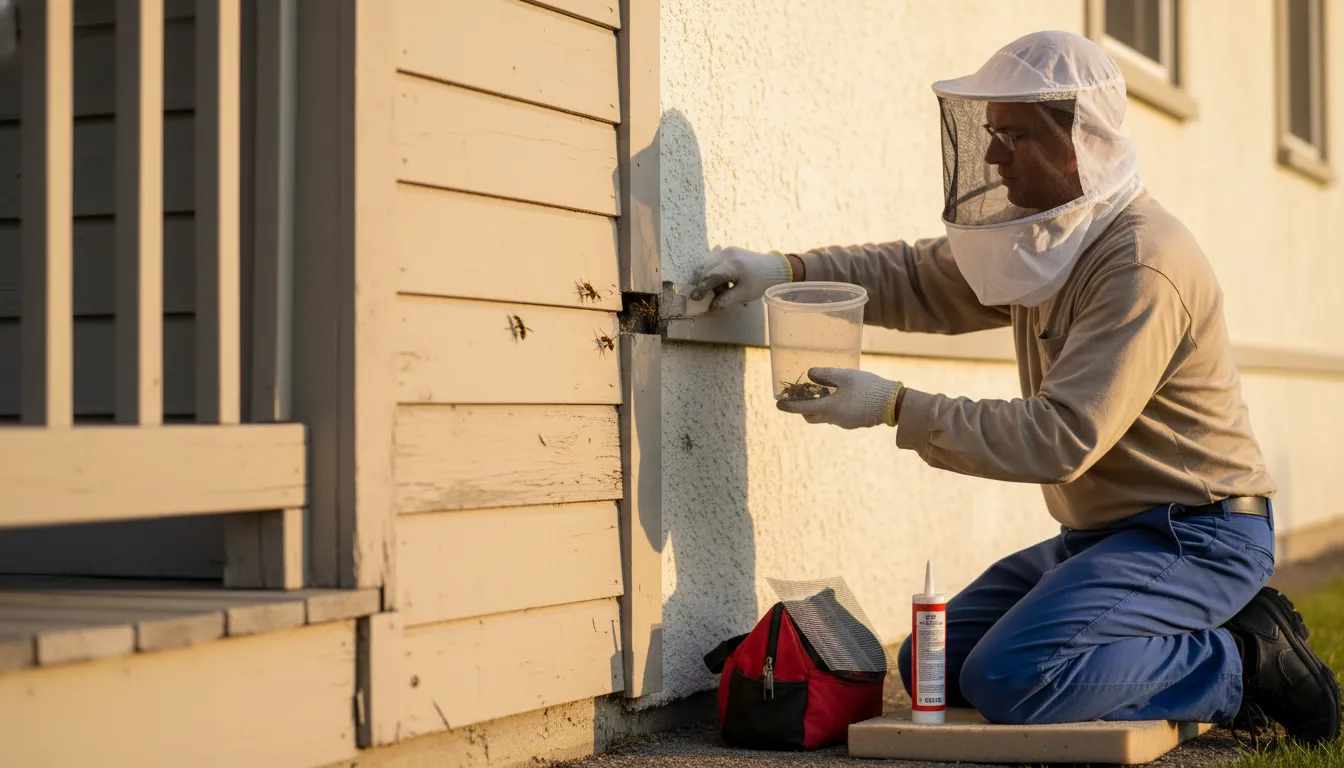
Find the Best Wasp & Hornet Removal Companies for Your Business
No obligation • Fast responses • Nationwide coverage

Why you can trust Pest Crews
Pest Crews is a leading U.S. resource for finding and evaluating residential and commercial pest control services. Our team researches providers, reviews treatment approaches, and organizes unbiased information to help you make informed decisions. Companies cannot pay to change our editorial content or influence how they appear.
Search providers near you
Top Wasp & Hornet Removal Companies in Burlington, North Carolina Ranked
Discovering a buzzing nest of stinging insects on your Burlington property can be unsettling. Professional bee and wasp removal services provide safe, effective solutions to address these pests, whether you're dealing with aggressive yellow jackets in a wall void or a beneficial honey bee swarm in a tree. This guide explains your local options, from extermination to live relocation, and helps you understand what to expect throughout the process so you can make an informed decision for your home or business.

ClearDefense Pest Control
7347 W Friendly Ave Suite F, Greensboro, NC 27410
ClearDefense Pest Control provides environmentally responsible pest control services in Winston Salem, NC. They use a micro-crystallized formula that releases treatment slowly over time, targeting pests based on their behavior, habitats, and lifecycle. Their approach includes establishing anti-bug barriers, baiting, wall injections, and nest removal to address a variety of pests including cockroaches, ants, rodents, bees, and wasps. ClearDefense serves multiple nearby communities and emphasizes ongoing treatments to maintain pest control throughout all seasons.

Four Seasons Pest Control
2411 S Scales St #2, Reidsville, NC 27320
Four Seasons Pest Control is a family-owned pest control company serving Winston Salem, NC, and surrounding areas since 1998. They offer customized treatments for common pests such as ants, cockroaches, rodents, termites, mosquitoes, and bed bugs. Their services include thorough termite inspections and commercial pest control tailored to various industries. The company emphasizes long-term prevention and uses methods mindful of homes, families, and pets.
1 Pest Solution LLC
Winston Salem, NC
1 Pest Solution LLC is a pest control company serving Winston Salem, NC, and the surrounding Piedmont Triad area. With over 30 years of experience, they offer a wide range of services including pest control, rodent and wildlife removal, mosquito treatments, and crawl space encapsulation. Their humane wildlife removal uses trap-and-release methods to safely relocate animals, and their rodent control includes identifying and sealing entry points to prevent future infestations. The company provides flexible service plans tailored to different needs and schedules.
Scott's Turf and Pest Services
Greensboro, NC
Scott's Turf and Pest Services is a family-owned pest control company serving Greensboro, NC. With over 27 years of experience, they offer a range of pest management solutions including ant, bed bug, cockroach, rodent, termite, mosquito, and stinging insect control. The company uses Integrated Pest Management strategies to provide safe and effective treatments tailored to each pest problem. They recommend annual termite inspections and focus on prevention and exclusion for rodent control to protect homes from infestations.

Mosquito Squad of the Triad
1405 Yanceyville St Ste A, Greensboro, NC 27405
Mosquito Squad of the Triad offers pest control services in Winston Salem, NC, and the surrounding Triad area including Greensboro and High Point. They specialize in mosquito control, tick treatment, and removal of stinging insects such as wasps, hornets, and yellow jackets. Their approach uses eco-friendly barrier treatments designed to reduce pest populations while minimizing impact on pollinators. The company provides year-round solutions tailored to the local climate and pest challenges, helping both residential and commercial properties maintain comfortable outdoor spaces.
Understanding Your Stinging Insect Problem
Before contacting a professional, it helps to identify the type of insect you're facing. Different species require different approaches, especially when considering the ecological importance of pollinators like honey bees.
Common Stinging Insects in Burlington
- Honey Bees: These vital pollinators are typically fuzzy and golden-brown. They live in large, wax-comb hives and are generally not aggressive unless their hive is threatened. Swarms-temporary clusters of bees looking for a new home-are common in spring and are usually docile.
- Yellow Jackets: Smooth, bright yellow and black wasps that are highly aggressive, especially in late summer and fall. They often build paper nests underground in old rodent burrows or inside wall voids and attics.
- Paper Wasps: Identified by their long legs and narrow waists, they build distinctive, open-celled, umbrella-shaped nests from paper-like material, often under eaves, porch ceilings, or in sheds.
- Bald-Faced Hornets: Larger, black and white wasps that build large, enclosed, football-shaped paper nests, frequently in trees, shrubs, or on building overhangs. They are very defensive of their nest.
- Carpenter Bees: Large, solitary bees that resemble bumblebees but have a shiny, hairless abdomen. They bore into untreated wood to create nesting galleries, which can cause structural damage over time.
Local Bee and Wasp Removal Options in Burlington
Homeowners and business managers in Burlington have two primary paths for dealing with stinging insects: professional pest control for extermination or contacting a beekeeper for live removal of honey bees.
Professional Pest Control Services
For aggressive species like yellow jackets, hornets, and wasps-or for any nest in a difficult or dangerous location-licensed pest control professionals are the recommended choice. Local companies such as ClearDefense Pest Control, Sawyer Exterminating, and Pest-X Exterminating offer specialized extermination services for stinging insects1 2 3. These experts have the protective gear, specialized insecticides, and tools to safely eliminate a nest, often in a single visit. This is typically the fastest and most definitive solution for non-bee species or when human safety is the top priority.
Live Bee Removal and Relocation
If you've identified honey bees on your property, contacting a local beekeeper is an excellent, environmentally conscious option. Specialists associated with groups like the Alamance County Beekeepers often provide live removal and relocation services. A beekeeper will carefully remove the colony and its wax comb, relocating it to an apiary where it can continue its vital role as a pollinator. It's important to note that swarm removal (for a temporary cluster of bees) is frequently offered for free by beekeepers, while removing an established hive from within a structure may involve a service charge due to the labor and potential need for carpentry 4.
Where to Look for Nests and Hives
Stinging insects are adept at finding sheltered spots to build their homes. Knowing common nesting sites can help you identify a problem early.
- Eaves, Soffits, and Overhangs: This is a prime location for paper wasps and hornets, which build their distinctive paper nests in these protected ledges5.
- Wall Voids and Attics: Bees and yellow jackets frequently enter through small exterior cracks to establish colonies inside walls, ceilings, and attics. Removal often requires a professional to locate and access the nest, which may involve cutting into drywall 6.
- Underground: Yellow jackets commonly repurpose old rodent burrows, hollows in rock walls, or other ground cavities for their nests, which can be a hidden hazard in lawns and gardens7.
- Trees and Dense Shrubs: Hornets and some paper wasps will suspend their nests in the branches of trees or within thick shrubbery8.
- Sheds, Garages, and Porches: Mud daubers construct small, tubular nests from mud in these sheltered areas, while carpenter bees may bore into untreated wooden beams and fascia boards9.
Find the perfect wasp & hornet removal companies for your needs
Get personalized recommendations and expert advice
The Seasonal Activity of Bees and Wasps
Insect activity in North Carolina follows a predictable annual cycle, which influences when you're most likely to encounter problems and when removal is most critical10 11.
- Spring (March-May): Overwintering queens emerge to start new colonies. You may see solitary queens scouting for nest sites. Activity is building but generally moderate.
- Summer (June-August): This is peak season. Nests grow rapidly, housing hundreds of workers. While food is abundant, the high population increases the likelihood of encounters. Wasps can become more defensive as they protect their growing young12.
- Fall (September-November): Activity remains high into early fall. Wasps, particularly yellow jackets, often become more aggressive as natural food sources like insects and nectar dwindle and their life cycle nears its end13. Workers die off after the first consistent frosts.
- Winter (December-February): Most colonies die out, with only new, fertilized queens surviving by hibernating in protected spots like leaf litter or rotting wood. Visible activity is minimal unless unseasonably warm weather triggers temporary activity.
Understanding Removal Costs in Burlington
The cost for professional bee or wasp removal in Burlington varies based on the nest's location, size, and the species involved14 15. Below is a general guide to help you understand potential pricing, though local providers will give a precise quote after an inspection 16.
| Service Type | Average Price Range | Key Considerations |
|---|---|---|
| General Wasp/Hornet Nest Removal | $300 - $700 | Price increases for hard-to-reach areas (e.g., high peaks, inside walls). |
| Paper Wasp Nest Removal | $100 - $200 | Typically lower cost due to accessible, exposed nesting sites. |
| Yellow Jacket or Bald-Faced Hornet Removal | $500 - $750 | Higher cost reflects aggressive nature and often difficult nest locations (ground, walls). |
| Honey Bee Hive Removal (Live Relocation) | $100 - $700+ | Cost depends heavily on whether structural demolition (e.g., cutting into a wall) and repair is needed. |
| Honey Bee Swarm Collection | Usually Free | Swarms are temporary and easy for beekeepers to collect, so this service is often complimentary17. |
| Preventive Service Plans | $300 - $500 annually | Quarterly or annual treatments to deter nest establishment around your property. |
Note: These are estimated ranges. The final price from a Burlington provider will be based on a site-specific assessment. Any necessary repairs to structures after nest removal are typically an additional charge18 19.
Why Professional Removal is Recommended
Attempting a DIY solution for a bee or wasp nest can be dangerous. Professionals have the experience to correctly identify the species, which dictates the removal method. They use industry-grade products and application techniques that are more effective and longer-lasting than retail options. Most importantly, they have the proper safety equipment-including bee suits, gloves, and veils-to protect against stings, which is crucial for individuals with allergies or for dealing with large, aggressive colonies. A professional also ensures the nest is completely eliminated, not just the visible adults, preventing a quick resurgence.
Preparing for a Service Visit
To help your chosen professional provide efficient service, you can take a few preparatory steps. If it's safe to do so, try to note the exact location of the nest entrance and the insect's flight path. Clear a safe access path to the area by moving patio furniture, grills, or potted plants. Keep pets and family members indoors during the scheduled service time. Be prepared to answer questions about when you first noticed the activity and if anyone in the household has a known insect sting allergy.
Preventing Future Infestations
After removal, consider preventive measures to make your property less attractive to stinging insects. Seal cracks and gaps in your home's siding, around windows, and along the roofline to block entry points. Keep trash cans tightly sealed and clean up fallen fruit promptly. Regularly inspect eaves, sheds, and play structures in the spring and early summer for signs of new, small nests, which are easier to address early. For persistent problems, inquire with your pest control provider about ongoing exterior treatment plans designed to deter nest building20 21.
Frequently asked questions
Sources
Footnotes
-
ClearDefense Pest Control - https://www.google.com/viewer/place?mid=/g/11wmy9yhr3 ↩
-
Sawyer Exterminating - Burlington - https://www.google.com/viewer/place?mid=/g/11cm0fr8xn ↩
-
Pest-X Exterminating - https://www.google.com/viewer/place?mid=/g/11h3bhxt8t ↩
-
Sawyer Exterminating - Burlington NC Pest & Termite Control Services - https://www.sawyerexterminating.com/ ↩
-
Bee, Wasp & Hornet Removal Service - https://www.flapest.com/bees-wasps-exterminators/ ↩
-
Bee or Wasp Removal Cost - https://usalivebeeremoval.com/bee-or-wasp-removal-cost/ ↩
-
Blue Ridge Bee Removal - https://www.google.com/viewer/place?mid=/g/11h71hxw7v ↩
-
Top 3 Stinging Insects in Raleigh: Essential Insights - https://www.innovativepest.com/stinging-insects-in-raleigh/ ↩
-
Wasp and Hornet Control in North Carolina - AAA Exterminating - https://aaaexterminatingonline.com/wasp-hornet-control/ ↩
-
What Month Do Wasps Go Away? - Lookout Pest Control - https://www.lookoutpestcontrol.com/blog/what-seasons-are-wasps-most-active/ ↩
-
What You Need to Know About Seasonal Bugs in Massachusetts - Spartan Animal & Pest Control - https://spartananimalandpestcontrol.com/what-you-need-to-know-about-seasonal-bugs-in-massachusetts/ ↩
-
Why Are Bees Suddenly So Aggressive? It's Angry Bee Season! - https://www.afcurgentcare.com/torrington/blog/why-are-bees-suddenly-so-aggressive-its-angry-bee-season/ ↩
-
North Carolina Pollinator Identification Guide www.ncwf.org - https://ncwf.org/wp-content/uploads/NCWF-Pollinator-ID-Guide.pdf ↩
-
How Much Does Wasp Nest Removal Cost in 2026? - Lawn Love - https://lawnlove.com/blog/wasp-nest-removal-cost/ ↩
-
Bee and Wasp Removal: Top 2025 Effective Solutions - https://bigginsexterminating.com/bee-and-wasp-removal/ ↩
-
Wasp Nest Removal Cost [2026 Data] | Angi - https://www.angi.com/articles/how-much-does-wasp-removal-cost.htm ↩
-
Swarm and Bee Removal - Alamance County Beekeepers - https://www.alamancebeekeepers.org/swarm-and-bee-removal/ ↩
-
How Much Does Wasp Nest Removal Cost in 2025? - HomeAdvisor - https://www.homeadvisor.com/cost/environmental-safety/hornet-wasp-removal/ ↩
-
A Wasp Nest Removal Price Guide by Fantastic Services UK - https://blog.fantasticservices.com/wasp-nest-removal-cost-guide/ ↩
-
Buzz Off: A Comprehensive Guide to Bee Nest Removal - https://peststopboys.co.uk/blog/buzz-off-a-comprehensive-guide-to-bee-nest-removal/ ↩
-
How Much Does Wasp Nest Removal Cost? - Pest in Peace - https://pestinpeace.co.uk/wasp-nest-removal-cost/ ↩