Find the Best Wasp & Hornet Removal Companies for Your Business
No obligation • Fast responses • Nationwide coverage
Why you can trust Pest Crews
Pest Crews is a leading U.S. resource for finding and evaluating residential and commercial pest control services. Our team researches providers, reviews treatment approaches, and organizes unbiased information to help you make informed decisions. Companies cannot pay to change our editorial content or influence how they appear.
Search providers near you
Top Wasp & Hornet Removal Companies in Gastonia, North Carolina Ranked
Dealing with a bee or wasp problem can be stressful and potentially dangerous. These stinging insects can establish nests in inconvenient or hazardous locations around your home, posing a risk to your family and pets. In Gastonia, you have access to specialized local professionals who can safely address these infestations, whether through humane relocation for beneficial bees or effective extermination for aggressive wasps. This guide will help you understand your options, the local service landscape, and what to expect when you need to resolve a stinging insect issue.

ClearDefense Pest Control
501 Penman St Suite 301, Charlotte, NC 28203
ClearDefense Pest Control is a pest control company based in Charlotte, NC, specializing in environmentally responsible pest management. They provide targeted treatments for cockroaches, ants, rodents, bees, wasps, and other pests using a micro-crystallized formula that releases treatment slowly for ongoing effectiveness. Their services include establishing anti-bug barriers, baiting, trapping, wall injections, and nest removal to control and prevent pest activity year-round. ClearDefense Pest Control serves Charlotte and surrounding areas, applying methods designed to minimize exposure to people and pets while maintaining environmental safety.
ClearDefense Pest Control
1383 Old Springdale Rd, Rock Hill, SC 29730
ClearDefense Pest Control is a pest control company serving Charlotte, NC, and surrounding areas. They specialize in environmentally responsible pest management, including cockroach, ant, rodent control, and bee and wasp removal. Their approach uses a micro-crystallized formula that releases treatment slowly for ongoing effectiveness, focusing on targeted applications based on pest behavior and habitats. ClearDefense serves multiple nearby cities and maintains pest barriers year-round to address seasonal pest activity. Their services include web and nest removal as well as precision treatments at entry points to homes.
Noosa Pest Management LLC
6916 Rea Croft Dr, Charlotte, NC 28226
Noosa Pest Management LLC is a locally owned pest control company serving Charlotte, NC. They provide a range of residential and commercial pest management services including bed bug treatment, ant and rodent control, termite inspections, mosquito control, bee and wasp removal, bird and wildlife control, and crawl space encapsulation. Their approach emphasizes environmentally friendly and botanical pest control solutions, integrating natural treatments and comprehensive inspections to address pest issues effectively. Noosa Pest Management also offers specialized termite control and uses heat treatment for bed bugs. They participate in the EPA's Pesticide Environmental Stewardship Program and focus on minimizing chemical use. The company is known for its thorough inspections, customized treatment plans, and ongoing maintenance visits. Noosa Pest Management is family-operated and prioritizes eco-conscious methods while covering a wide range of pests common in the Charlotte area.

Go-Forth Pest Control
1974 Carolina Pl Ste 120, Fort Mill, SC 29708
Go-Forth Pest Control is a pest management company based in Charlotte, NC, serving the Fort Mill area and nearby towns. They provide a wide range of pest control services including ant, cockroach, flea, mosquito, rodent, bed bug, termite, bee, wasp, and wildlife removal. The company uses pet- and kid-friendly products and applies the latest pest management technologies to protect homes and businesses. Established in 1959, Go-Forth Pest Control has decades of experience and offers same-day service to address pest issues promptly.
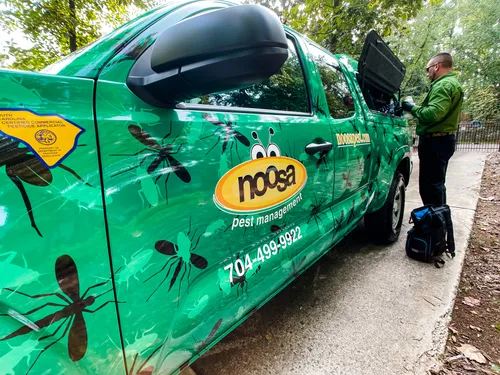
Noosa Pest Management LLC
19720 Jetton Rd First Floor, Suite D, Cornelius, NC 28031
Noosa Pest Management LLC provides comprehensive pest control services in Charlotte, NC, specializing in residential and commercial pest management. Their approach emphasizes integrated pest management (IPM) with a focus on non-chemical and botanical treatments to minimize environmental impact. Services include termite inspections and control, mosquito treatments, bed bug heat treatments, fire ant and general ant control, rodent and cockroach extermination, as well as bee, wasp, bird, and wildlife removal. They also offer crawl space vapor barrier and encapsulation services to reduce termite-friendly conditions. With over a decade of experience in heat treatments for bed bugs, Noosa Pest Management applies expertise and environmentally conscious methods to address pest issues effectively.
Understanding Your Stinging Insect Problem
Correctly identifying the insect is the first step toward a safe and effective solution. Gastonia is home to a variety of stinging insects, each with distinct behaviors and nesting preferences. Honey bees are crucial pollinators and are often protected; a swarm resting temporarily on a tree branch is different from an established hive inside a wall. In contrast, wasps like paper wasps, yellow jackets, and hornets can be more aggressive, especially when their nest is disturbed. Knowing what you're dealing with helps determine whether a beekeeper's assistance or a pest control professional's intervention is most appropriate.
Local Service Options in Gastonia
Homeowners in Gastonia typically have two primary avenues for addressing bee and wasp issues: professional pest control companies and local beekeeper associations.
Professional Pest Control Services: Many local exterminators, such as Terminix, Bug Busters LLC, and Envirosafe Termite and Pest, offer dedicated stinging insect removal 1 2 3. These companies are equipped to handle aggressive species like yellow jackets and hornets, using methods such as insecticidal sprays, dusts, or foams to eliminate colonies. Some, like Envirosafe, also emphasize environmentally conscious and humane practices where possible 3. These professionals are trained to access difficult nest locations safely and can often provide guarantees against the colony's return.
Beekeeper Associations: For honey bee swarms or accessible hives, the Gaston County Beekeepers Association is an invaluable resource. They maintain a swarm removal list of local beekeepers who may be willing to collect a swarm of honey bees, often for free or a minimal fee, especially if the bees have not yet built comb inside a structure 4. This humane relocation preserves these important pollinators. However, if honey bees have already established a hive inside a wall or attic, removal becomes a complex construction project, and costs can rise significantly as it involves opening the structure, removing comb, and sealing entry points.
Common Nesting Sites Around Your Home
Stinging insects seek out protected spots to build their colonies. Being aware of these common locations can help with early detection 5 6.
- Eaves, Soffits, and Overhangs: These are prime real estate for paper wasps, which construct their characteristic umbrella-shaped nests from chewed wood pulp. Hornets may also build large, enclosed paper nests in these elevated spots.
- Ground Cavities: Yellow jackets frequently nest underground in old rodent burrows, under landscaping, or in other soil cavities. Their hidden entrance can make them a surprising and dangerous hazard during yard work.
- Wall Voids and Attics: Both bees and wasps can exploit tiny cracks or gaps to enter a wall cavity or attic space. An interior nest like this often requires professional removal and subsequent repairs to prevent future issues 7.
- Trees and Shrubs: Dense foliage and tree branches provide shelter for the large, basketball-sized nests of bald-faced hornets and other aerial nesters.
- Outdoor Structures: Don't overlook utility boxes, grills, children's play sets, unused yard equipment, or gaps in deck railings. These sheltered spots can be attractive to a queen starting a new colony.
Seasonal Activity in North Carolina
The threat from stinging insects in Gastonia is highly seasonal, which influences both the likelihood of an encounter and the approach to removal 8 9.
- Spring (March-May): This is the start of the season. Mated queen wasps and hornets that hibernated through winter become active and begin scouting for nesting sites. Early spring is an ideal time for preventative measures, as colonies are just starting.
- Summer (June-August): Activity peaks during the hot summer months. Colonies grow rapidly, with worker numbers reaching into the hundreds or thousands. Nests are at their largest and most active by late summer, and insects are constantly foraging.
- Fall (September-November): Wasps and hornets can become particularly aggressive in the fall as natural food sources dwindle and they are attracted to human foods. This is when new queens and males are produced. Activity continues until temperatures drop consistently below 50°F 10.
- Winter (December-February): Most worker wasps and hornets die off. The mated queens find sheltered spots to hibernate, such as under tree bark or inside attic insulation, waiting to start the cycle again in spring 11.
Find the perfect wasp & hornet removal companies for your needs
Get personalized recommendations and expert advice
Factors Influencing Removal Costs in Gastonia
The cost for professional bee or wasp removal in Gastonia is not a flat fee; it varies based on several key factors. Understanding these can help you interpret estimates from service providers.
- Species and Aggressiveness: Dealing with a docile paper wasp nest is generally less expensive than eliminating a ground nest of highly defensive yellow jackets, which requires more caution and specialized techniques 12.
- Nest Location and Accessibility: A nest on a high eave or inside a wall void requires more time, specialized equipment (like ladders or extension tools), and skill to treat safely than one on a low shrub.
- Colony Size: A large, established colony with thousands of insects will require more product and labor to eradicate completely than a small, newly founded nest.
- Need for Structural Repair: If honey bees have been living inside a wall, removal is only part of the job. The cavity must be cleaned of honey and comb to prevent decay and attract other pests, and the entry point must be sealed. This repair work adds significantly to the total cost 13.
Estimated Cost Ranges
Based on local service data, here are typical cost ranges for different scenarios in the Gastonia area 14 15 16 17:
| Insect Type | Typical Cost Range | Key Considerations |
|---|---|---|
| Honey Bees | Free to $700+ | Swarm collection may be free. Established hive removal from a structure involves carpentry and cleanup, raising costs substantially. |
| Paper Wasps | $100 - $400 | For open, accessible nests. Generally less aggressive but should still be handled professionally. |
| Yellow Jackets | $500 - $1,200+ | High cost due to aggression and difficult nest locations (ground, wall voids). Often requires multiple visits or advanced treatment. |
| Bald-faced Hornets | $400 - $800 | For large, aerial nests. Cost reflects the danger of working at height and dealing with an aggressive colony. |
Pro Tip: Early detection and action are among the most effective ways to manage cost and risk. A small nest in spring is far less expensive and dangerous to remove than a massive colony in late summer 18 19.
Why Professional Removal is Recommended
While DIY solutions exist, hiring a local professional for bee and wasp extermination or relocation offers significant advantages, particularly for species known for their aggression or for nests in difficult locations.
- Safety: Professionals have the personal protective equipment (PPE) and training to approach and treat nests without getting stung. They also know how to apply treatments in a way that minimizes risk to your family and pets.
- Effectiveness: Over-the-counter sprays often only kill insects on contact and may not eliminate the entire colony, especially if the nest is hidden. Professionals use commercial-grade products and application methods designed for complete colony control 20.
- Prevention of Reinfestation: A key part of professional service is identifying and sealing potential entry points to prevent future queens from starting a nest in the same spot.
- Proper Handling of Beneficial Species: A reputable professional will know when to call in a local beekeeper for a honey bee swarm, ensuring these important insects are preserved when possible.
Frequently asked questions
Sources
Footnotes
-
Bug Busters LLC - https://www.google.com/viewer/place?mid=/g/1hc6sl1mw ↩
-
Terminix - https://www.google.com/viewer/place?mid=/g/1tt8czz3 ↩
-
Envirosafe Termite and Pest - https://www.google.com/viewer/place?mid=/g/1tc_x9gs ↩ ↩2
-
Swarm Removal List - Gaston County Beekeepers Association - https://www.gastonbee.org/swarm-removal-list/ ↩
-
Common Places You Find Bee and Wasp Nests - Abarb Pest Services - https://abarbpest.com/common-places-you-find-bee-and-wasp-nests/ ↩
-
Stinging insects in NC - Terminix Triad - https://www.terminix-triad.com/learning-center/stinging-insects/ ↩
-
How much does Wasp extermination cost? - Yelp - https://www.yelp.com/costs/wasp_extermination ↩
-
Non-Honey Bee Stinging Insects in North Carolina - https://content.ces.ncsu.edu/non-honeybee-stinging-insects-in-north-carolina ↩
-
What Month Do Wasps Go Away? - Lookout Pest Control - https://www.lookoutpestcontrol.com/blog/what-seasons-are-wasps-most-active/ ↩
-
November Wasp and Hornet Activity in North Carolina - https://www.sawyerexterminating.com/2025/11/november-wasp-and-hornet-activity-in-north-carolina-what-to-expect/ ↩
-
Paper Wasp Queen vs Worker: What You Need to Know - https://bettertermite.com/paper-wasp-queen-vs-worker/ ↩
-
Yellow jacket exterminator cost 2025: Top 5 Proven Savings - https://bigginsexterminating.com/yellow-jacket-exterminator-cost/ ↩
-
Honey Bee Removal From Residential & Commercial Sites - https://content.ces.ncsu.edu/frequently-asked-questions-about-removing-honey-bees-from-structures ↩
-
How Much Does Bee Removal Cost? | Compare Prices Now - https://pestextinct.com/bee-removal/ ↩
-
Average Cost to Remove Hornets Nest: 7 Best Factors in 2025 - https://bigginsexterminating.com/average-cost-to-remove-hornets-nest/ ↩
-
Yellow jacket exterminator cost 2025: Top 5 Proven Savings - https://bigginsexterminating.com/yellow-jacket-exterminator-cost/ ↩
-
How Much Wasp and Hornet Removal and Treatment Costs - https://www.terminix.com/stinging-pest-control/cost/ ↩
-
Yellow jacket exterminator cost 2025: Top 5 Proven Savings - https://bigginsexterminating.com/yellow-jacket-exterminator-cost/ ↩
-
Average Cost to Remove Hornets Nest: 7 Best Factors in 2025 - https://bigginsexterminating.com/average-cost-to-remove-hornets-nest/ ↩
-
Wasp Nest Removal: Why Professionals Prevent Return Visits - https://bettertermite.com/wasp-nest-removal/ ↩