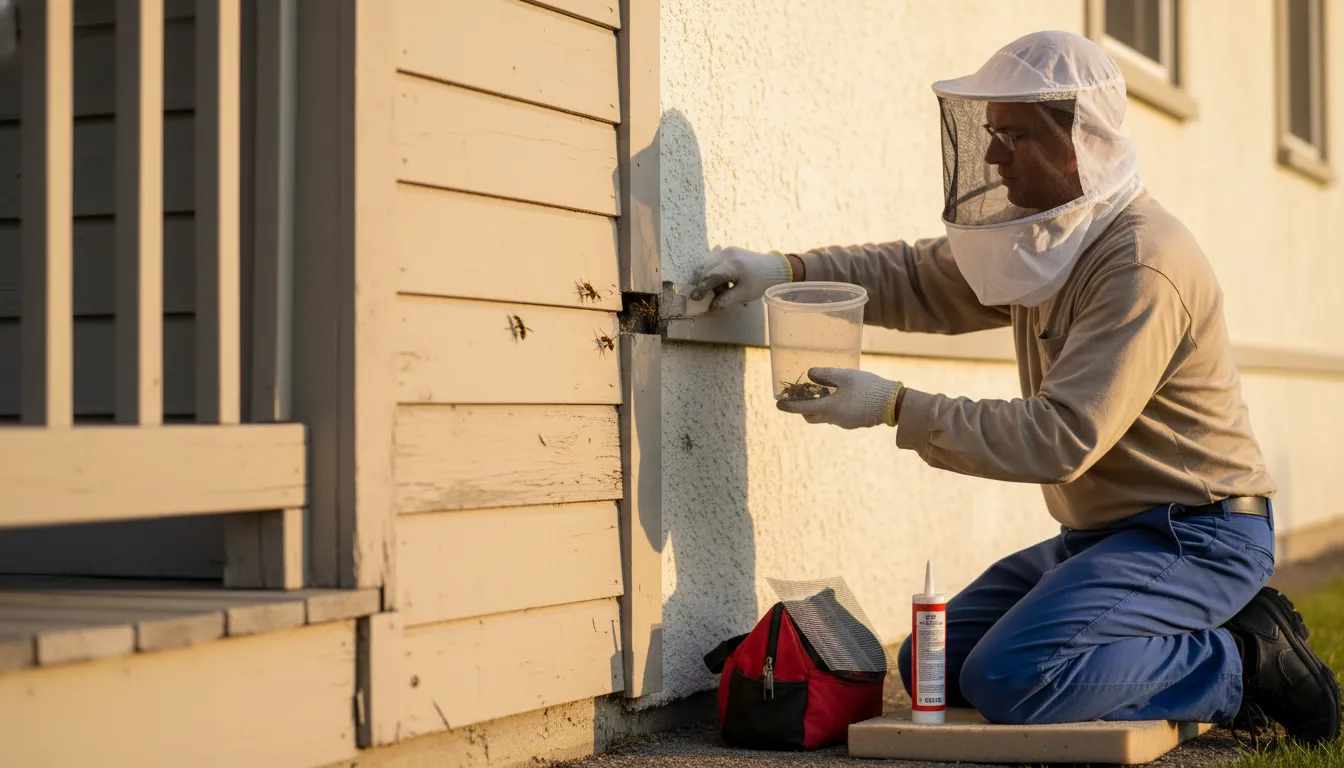
Find the Best Wasp & Hornet Removal Companies for Your Business
No obligation • Fast responses • Nationwide coverage

Why you can trust Pest Crews
Pest Crews is a leading U.S. resource for finding and evaluating residential and commercial pest control services. Our team researches providers, reviews treatment approaches, and organizes unbiased information to help you make informed decisions. Companies cannot pay to change our editorial content or influence how they appear.
Search providers near you
Top Wasp & Hornet Removal Companies in Amarillo, Texas Ranked
Discovering a buzzing nest on your property can be alarming. In Amarillo, professional bee and wasp removal is a critical service for protecting your family, pets, and property from painful stings and potential structural damage. This guide explains the local stinging insect control landscape, helping you understand your options, from ethical honeybee relocation to aggressive wasp extermination, so you can make an informed decision to resolve your pest issue safely and effectively.
Orkin
1700 SE 14th Ave, Amarillo, TX 79102
Orkin provides residential and commercial pest control services in Amarillo, TX. With over 120 years of experience, they handle common local pests such as bed bugs, termites, rodents, ants, cockroaches, mosquitoes, and wildlife. Orkin offers specialized termite treatments including dry foam void filler, Sentricon® bait, and liquid barriers to protect buildings from damage. They also provide lifecycle-based bed bug control and seasonal pest management tailored to Amarillo's climate. Orkin is available for next-day scheduling and answers calls 24/7 to assist with pest control needs.

Terminix
12206 I-27, Amarillo, TX 79119
Terminix provides comprehensive pest control services in Amarillo, TX, addressing common local pests such as bed bugs, termites, mosquitoes, rodents, and wasps. The company offers tailored pest management plans, including regular inspections and treatments to protect homes from structural damage and infestations. Terminix is equipped to handle termite control with continuous protection systems and guarantees that cover termite damage repairs. Their technicians are familiar with the specific pest challenges in the Amarillo area and surrounding communities, ensuring effective and localized service.
Understanding Your Stinging Insect Problem
The first step in addressing any infestation is proper identification. Amarillo is home to various stinging insects, each with distinct behaviors and nesting preferences. Knowing what you're dealing with is crucial for determining the right removal strategy.
Common Bees in Amarillo:
- Honeybees: These vital pollinators are typically fuzzy and amber-colored. They often swarm in spring as a colony splits, temporarily clustering on a tree branch or structure before moving to a permanent home like a hollow tree or wall void. Their nests are made of wax comb. Due to their ecological importance, live removal and relocation by a beekeeper is the preferred method.
- Bumble Bees: Larger and hairier than honeybees, bumble bees are generally less aggressive. They often nest in small, ground-level cavities like abandoned rodent burrows. While they are important pollinators, a nest near a high-traffic area may require professional attention.
Common Wasps and Hornets in Amarillo:
- Paper Wasps: Identified by their long legs and narrow waists, they build characteristic open-celled, umbrella-shaped nests from chewed wood fibers. These are often found under eaves, porch ceilings, and railings. They can be defensive of their nest.
- Yellow Jackets: These aggressive wasps have black and yellow markings and build enclosed paper nests. They frequently nest underground in old rodent burrows or within wall cavities, making them particularly dangerous as they can swarm if disturbed 1 2.
- Bald-Faced Hornets: Actually a type of yellow jacket, these black and white insects build large, football-shaped aerial nests in trees, shrubs, or on buildings. They are highly protective of their nest.
Where to Look for Nests in Amarillo Homes
Stinging insects are opportunistic and will build nests in any sheltered location that offers protection from the elements. In the Amarillo area, common nesting sites include 3 4:
- Eaves, Soffits, and Roof Overhangs: These are prime real estate for paper wasps, offering shelter from rain.
- Wall Voids and Attics: Small gaps in siding or around utility lines provide perfect entry points for bees and wasps to build hidden nests inside your home's structure. These are among the most complex and costly to address.
- Ground Burrows and Landscaping: Yellow jackets frequently take over abandoned rodent holes in lawns, garden beds, or under shrubs. Mowing or landscaping can accidentally provoke an attack.
- Sheds, Garages, and Play Structures: Undisturbed corners, rafters, and even inside unused grills or furniture are attractive nesting spots.
- Chimneys and Vents: These offer a protected, hollow space that is highly attractive to swarming honeybees.
- Trees and Dense Shrubs: Bald-faced hornets and some paper wasps will suspend their nests from tree branches.
Regular inspection of these areas, especially in the spring, is key to early detection and easier, less expensive removal.
The Amarillo Stinging Insect Season: What to Expect When
The activity of bees and wasps in the Texas Panhandle follows a predictable annual cycle driven by temperature 5 6 7. Understanding this "wasp season" can help you anticipate and prevent problems.
- Spring (March-May): This is the most critical time for prevention. Overwintered queens emerge and begin scouting for nesting sites to build small "starter" colonies. Honeybee swarming is also most common during this period. Removing a small, early-season nest is far simpler and safer than dealing with a mature colony later 8 9.
- Summer (June-August): Colonies expand rapidly. Worker populations boom, and nests can grow significantly in size. You'll see peak foraging activity as workers gather food for the growing larvae. This is when nests become more noticeable.
- Late Summer to Fall (August-October): Colonies reach their maximum size and wasps become notably more aggressive. As natural food sources like insects and nectar dwindle, they are drawn to human food and drinks. This is the peak time for nuisance issues and stings. In the fall, new queens and drones are produced to mate before winter.
- Winter (November-February): Most worker wasps and bees die off. Fertilized new queens seek sheltered spots to hibernate, such as under loose bark, inside logs, or within the walls of your home, waiting to restart the cycle in spring.
Find the perfect wasp & hornet removal companies for your needs
Get personalized recommendations and expert advice
Professional Removal Options in Amarillo
When you discover a nest, it's strongly advised to contact a professional. DIY removal is dangerous and often ineffective, potentially aggravating the insects and causing them to attack or relocate deeper into your home's structure 10. Amarillo residents have two primary professional avenues:
1. Pest Control Extermination: Local pest management companies like Ace Pest Control, Terminix, and Yellow City Pest Control specialize in the safe elimination of wasp, hornet, and yellow jacket nests 11 12 13. Their process typically involves:
- Inspection: Identifying the insect species and locating all nests.
- Treatment: Applying professional-grade insecticides, often during cooler evening hours when insects are less active and more likely to be inside the nest.
- Removal/Disposal: Physically removing the treated nest to prevent secondary pest issues (like carpet beetles attracted to dead larvae) and to deter future queens from using the same spot. This method is fast, effective, and recommended for aggressive wasp species or nests in dangerous locations.
2. Bee Relocation by Beekeepers: For honeybee swarms or established colonies, live removal is the ethical and environmentally responsible choice. Honeybees are crucial pollinators, and their populations are under stress. Many local beekeepers, including those associated with the Texas Beekeepers Association, offer swarm capture and colony relocation services 14 15.
- Swarm Removal: A clustered swarm of bees (often hanging from a branch) is relatively docile and can sometimes be removed by a beekeeper for little to no cost, as the bees are highly desirable.
- Established Colony Removal: If bees have already built comb inside a wall or structure, the process is more involved. It requires carefully extracting the comb and vacuuming the bees into a transport box so they can be rehomed in an apiary. This skilled service comes at a cost but preserves the colony.
Cost of Bee & Wasp Removal in Amarillo
The price for professional stinging insect control in Amarillo varies widely based on the species, nest location, size, and accessibility. Below is a general cost breakdown based on local and national data 16 17 18.
| Factor | Typical Cost Range | Details |
|---|---|---|
| Basic Wasp/Hornet Removal | $100 - $500 | For a single, easily accessible nest (e.g., under an eave). Includes inspection and treatment. |
| General Wasp Removal Average | $212 - $875 | The mid-range for most standard wasp nest eliminations, depending on severity. |
| Yellow Jacket Extermination | $500 - $1,200 | Higher due to aggressive nature and complex nest locations (ground, walls). May require multiple treatments. |
| Honeybee Relocation | $125 - $1,000+ | Price scales with size and difficulty. Simple swarm capture may be low-cost or free; cutting into a wall to remove an established colony is more expensive. |
| Difficult Access (Walls, Attics) | Up to $2,000+ | Requires minor demolition (drilling, cutting drywall) to access the nest, plus subsequent repair costs. |
| Follow-up Services | $40 - $70 per visit | May be recommended for severe infestations or as part of an ongoing prevention plan. |
It is highly recommended to obtain multiple quotes from reputable local providers to get an accurate estimate tailored to your specific situation 19. Always ask what the quote includes (inspection, treatment, nest removal, repairs, guarantees).
Preventing Future Infestations
After a nest is removed, taking preventive steps can help keep your property from becoming a target again:
- Seal Entry Points: In late winter or early spring, inspect and seal cracks in your home's exterior, gaps around windows/doors, and openings where utility lines enter. Use caulk, steel wool, or hardware cloth.
- Manage Attractants: Keep trash cans tightly sealed, clean up fallen fruit, and avoid leaving sugary drinks or food uncovered outdoors.
- Reduce Nesting Sites: Fill in abandoned rodent burrows in your yard. Keep sheds and garages organized and clutter-free to eliminate sheltered corners.
- Perform Regular Inspections: Routinely check the common nesting spots listed earlier, especially from early spring through summer.
Frequently asked questions
Sources
Footnotes
-
Yellow jacket exterminator cost 2025: Top 5 Proven Savings - https://bigginsexterminating.com/yellow-jacket-exterminator-cost/ ↩
-
Keeping Your Property Safe From Wasps in North Texas - https://www.littlegiantbeekeepers.com/keeping-your-property-safe-from-wasps-in-north-texas/ ↩
-
Where Wasps Build Nests - Tyler's Bee Removal - https://tylersbeeremoval.com/uncategorized/where-wasps-build-nests/ ↩
-
Why Your Doorway is Wasp Territory: A North Texas ... - https://villagegreen-inc.com/why-your-doorway-is-wasp-territory-a-north-texas-homeowners-guide/ ↩
-
The Complete Guide to Wasp Control and Prevention in East Texas - https://thebugsend.com/2025/06/24/the-complete-guide-to-wasp-control-and-prevention-in-east-texas/ ↩
-
Understanding Seasonal Pest Patterns in Texas - https://killum.com/understanding-seasonal-pest-patterns-in-texas/ ↩
-
Wasp Season Has Started-Here's What to Watch For (And ... - https://www.bugzonepest.com/post/wasp-season-has-started-here-s-what-to-watch-for-and-what-to-do-about-it ↩
-
Bee Season: When Do Bees Come Out? - Terminix - https://www.terminix.com/bees/season/ ↩
-
When Do Wasps Swarm In North Texas? - Adams Exterminating - https://www.adamspest.com/when-do-wasps-swarm-in-north-texas/ ↩
-
5 Common Places You Find Wasp Nests - Dustin Pest Control - https://dustinpestcontrol.com/5-common-places-you-find-wasp-nests/ ↩
-
Ace Pest Control - https://www.google.com/viewer/place?mid=/g/1wk6_6kx ↩
-
Pest & Termite Control in Amarillo - Exterminators - Terminix - https://www.terminix.com/exterminators/tx/amarillo-2192/ ↩
-
Yellow City Pest Control - https://www.google.com/viewer/place?mid=/g/11crz_2sw3 ↩
-
How Much Does Bee Removal Cost? (2026) - HomeGuide - https://homeguide.com/costs/bee-removal-cost ↩
-
Swarms - Removal Services Locator from TBA - https://texasbeekeepers.org/swarms/ ↩
-
How Much Does Bee Removal Cost? [2026 Data] | Angi - https://www.angi.com/articles/how-much-does-bee-removal-cost.htm ↩
-
How Much Bee Removal and Treatment Costs - Terminix - https://www.terminix.com/bee-control/cost/ ↩
-
How Much Does Wasp Nest Removal Cost in 2026? - https://lawnlove.com/blog/wasp-nest-removal-cost/ ↩
-
Wasp Nest Removal Services | Effective Wasp Control Solutions - https://tylersbeeremoval.com/services/wasp-nest-removal/ ↩