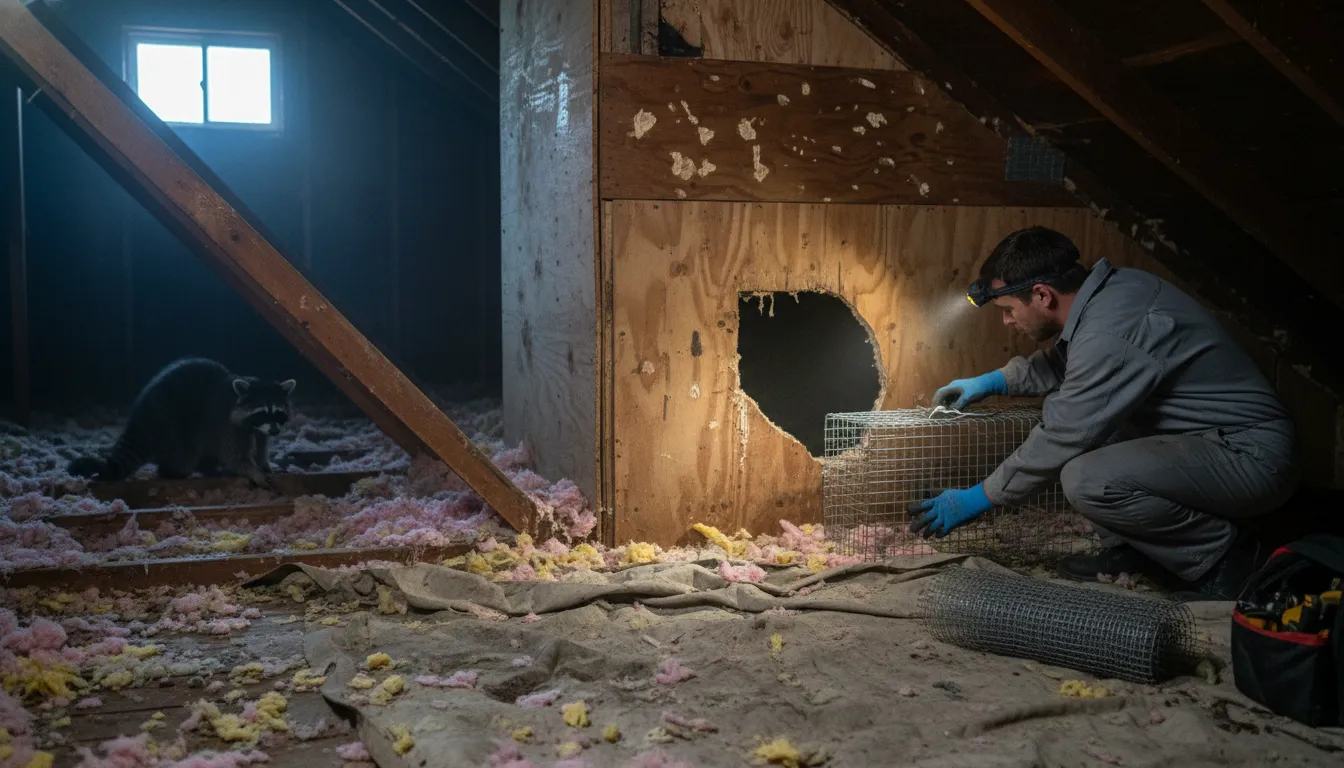
Find the Best Wildlife Removal Companies for Your Business
No obligation • Fast responses • Nationwide coverage

Why you can trust Pest Crews
Pest Crews is a leading U.S. resource for finding and evaluating residential and commercial pest control services. Our team researches providers, reviews treatment approaches, and organizes unbiased information to help you make informed decisions. Companies cannot pay to change our editorial content or influence how they appear.
Search providers near you
Top Wildlife Removal Companies in Olympia, Washington Ranked
When raccoons rummage through your trash, squirrels nest in your attic, or bats roost in your eaves, you're dealing with a wildlife conflict. In Olympia, where urban spaces meet lush forests, these encounters are common. Professional wildlife removal and animal control services are essential for safely and humanely resolving these issues, protecting both your property and the animals involved. This guide will help you understand the local nuisance species, when to call a professional, and how to navigate Washington's regulations to find the right expert for your situation.
Insight Pest Solutions
3635 S Cedar St Suite F, Tacoma, WA 98409
Insight Pest Solutions is a pest control company based in Tacoma, WA, specializing in the removal of ants, spiders, rodents, and other wildlife. They offer comprehensive pest control services including inspections and treatments to prevent and address infestations. Their team of certified local exterminators uses methods they trust in their own homes to ensure effective and safe pest management.
Bulwark Exterminating
3417 Pacific Ave, Tacoma, WA 98418
Bulwark Exterminating is a pest control company based in Tacoma, WA, offering services to manage pests in and around homes. Their expertise includes termite inspections, mosquito control, wildlife removal, and general pest extermination. They focus on integrated pest management (IPM) using natural solutions to address issues such as lawn pests, fleas on indoor pets, mosquitoes, wood-destroying termites, and animal control.
Terminix
10111 S Tacoma Way # D7, Lakewood, WA 98499
Terminix is a pest control company serving Tacoma, WA, and the surrounding areas. They offer a range of pest management services including bed bug treatment, termite inspections, rodent control, and removal of bees, wasps, and other wildlife. Their technicians are familiar with local pest challenges and provide customized plans to protect homes from ants, spiders, termites, rodents, and more. Terminix also specializes in termite control to prevent structural damage and offers rodent prevention services to safeguard property. Their expertise is supported by a nationwide network, ensuring comprehensive pest solutions.
Issaquah Pest Control - Tacoma
5401 S Tacoma Way, Tacoma, WA 98409
Issaquah Pest Control - Tacoma is a family-owned and operated pest control company serving Tacoma, WA. They offer a wide range of pest and wildlife control services including treatment for ants, bed bugs, rodents, termites, wasps, and more. The company is certified and licensed, using safe and quality products to address pest issues efficiently. With over eight years of experience, they specialize in rodent control and provide comprehensive solutions tailored to each customer's needs. Their services also include attic and crawlspace insulation to improve home comfort and energy efficiency.
Pest Pros
Tacoma, WA
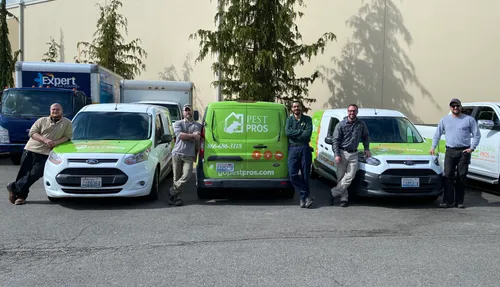
Pest Pros is a pest control company based in Tacoma, WA, specializing in ant control, rodent extermination, bee and wasp removal, and wildlife removal for both residential and commercial properties. They use environmentally responsible pesticides and exclusion techniques to manage infestations and prevent pests from returning. Their services include sealing homes to keep pests out and regular maintenance treatments to maintain a pest-free environment. With over 50 years of combined experience, their licensed and bonded technicians focus on safe and effective pest elimination methods.
Common Nuisance Wildlife in Olympia
Olympia's unique environment, bordered by water and forest, supports a diverse array of wildlife. While wonderful to observe in nature, some species frequently become problematic for homeowners and businesses. Knowing which animal you're dealing with is the first critical step toward an effective solution 1.
The most common mammals requiring removal services in the area include:
- Raccoons: Intelligent and dexterous, they are notorious for tipping over garbage cans, tearing up roofs to access attics, and can carry diseases like rabies and raccoon roundworm.
- Squirrels: Both Eastern gray squirrels and Douglas squirrels can become persistent attic pests, chewing on wires, insulation, and structural wood, creating fire hazards and significant damage.
- Rats: Norway and roof rats are prolific breeders that infiltrate crawl spaces and walls, contaminating food supplies and gnawing on virtually anything.
- Bats: Several species, like the little brown bat, may colonize attics or wall voids. Their guano (droppings) can pose serious health risks, and they are protected by law, requiring special care during exclusion.
- Other Frequent Visitors: Opossums, skunks, and even the occasional coyote can also become nuisances, particularly when seeking food or shelter under decks and sheds.
Bird conflicts are equally prevalent:
- Pigeons and Starlings: These birds often nest on building ledges, in vents, or in warehouses, where their acidic droppings can damage property and create slip hazards.
- Woodpeckers: They may drum on siding or gutters to communicate or to excavate nesting cavities, leading to costly exterior damage 2 3.
DIY Wildlife Control vs. Professional Removal
For minor issues, a do-it-yourself approach can sometimes be effective. However, understanding the limits of DIY is crucial for your safety and the animal's welfare.
When DIY May Be Appropriate: DIY methods are best suited for prevention and simple exclusion. This includes tasks like sealing small entry points with sturdy materials (steel wool, hardware cloth, or caulk), securing trash cans with locking lids, and removing outdoor pet food or bird feeders that attract animals. Using motion-activated lights or sprinklers can also deter some wildlife from frequenting your yard.
The Risks and Limitations of DIY: Attempting to handle or trap wildlife yourself carries significant risks. You could be bitten or scratched, exposing you to diseases like rabies, leptospirosis, or histoplasmosis (from bat guano). Improper trapping can separate mother animals from their young, leading to orphans dying in your walls and creating odor problems. Furthermore, many species in Washington, including bats and certain birds, are protected by state and federal laws. Using the wrong removal method or harming them can result in legal penalties.
When to Call a Professional Wildlife Control Operator (WCO): Professional intervention is strongly recommended in these scenarios:
- An animal is inside your living spaces, attic, or walls.
- You suspect the animal is sick, injured, or behaving unusually.
- The infestation involves a large colony, such as bats or rats.
- There are significant health risks present, like large accumulations of droppings.
- The animal is in a dangerous location (e.g., a chimney or high roof).
- Previous DIY attempts have failed.
Find the perfect wildlife removal companies for your needs
Get personalized recommendations and expert advice
Understanding Washington State Regulations
Wildlife management in Olympia is governed by specific rules designed to balance human needs with animal welfare. The primary authority is the Washington Department of Fish and Wildlife (WDFW). They license all professional Wildlife Control Operators (WCOs) and set the regulations for humane removal.
Key Regulations Homeowners Should Know:
- Trapping Permits: In most cases, you or a professional will need a special trapping permit from WDFW to trap and relocate or euthanize nuisance wildlife. The WDFW typically requires that non-lethal methods be attempted first before authorizing lethal control 4.
- Humane Standards: State law mandates that wildlife be treated humanely. This includes regulations on trap types, checking intervals, and methods of euthanasia. Licensed WCOs are trained in these standards.
- Protected Species: Special rules apply to species like bats, which are protected due to declining populations. Their removal is often restricted to specific times of the year when young are not present.
Who to Call and When:
- For Wildlife Issues: Contact a WDFW-licensed Wildlife Control Operator. The WDFW website provides a directory of these licensed professionals. They are trained to handle everything from raccoons in the chimney to bats in the belfry.
- For Domestic Animals: If the problem involves a stray dog, cat, or other domestic pet, you should contact Thurston County Animal Services 5.
- For Immediate Danger: In the rare case of a large, aggressive animal like a bear or cougar on your property, you should contact the WDFW enforcement office directly.
Local Olympia ordinances also emphasize the humane treatment of animals, including provisions about the use of traps within city limits 6.
The Professional Wildlife Removal Process
When you hire a licensed WCO in Olympia, they follow a systematic, ethical approach to resolve your wildlife conflict.
- Inspection and Assessment: The professional will conduct a thorough inspection of your property to identify the species, locate all entry and exit points, assess the extent of the infestation, and look for any young animals.
- Customized Removal Plan: Based on the inspection, they will recommend a plan. This often involves exclusion techniques-installing one-way doors that allow animals to leave but prevent re-entry, rather than trapping and relocating. For birds, this may involve installing netting, spikes, or other deterrents.
- Humane Eviction and Control: The WCO will execute the removal plan, which may involve live trapping (if permitted and appropriate) or exclusion. They ensure that dependent young are cared for and that animals are not unnecessarily harmed.
- Clean-up and Sanitation: This is a critical step, especially after rodents or bats. Professionals will safely remove contaminated insulation, droppings, and nesting materials, then disinfect the area to eliminate health hazards and odors.
- Repair and Exclusion: The final, and most important, step is to seal up all entry points with durable materials to prevent future invasions. This may include repairing chewed vents, installing chimney caps, or sealing gaps in the roofline 7.
Cost of Wildlife Removal Services in Olympia
The cost for animal removal and wildlife control services in Olympia varies widely based on the complexity of the job. It's important to view this as an investment in permanently solving the problem and protecting your property's value.
- Small, Simple Jobs: For a single animal trapped in a fireplace or removed from a yard, you might expect costs starting around $100 to $200.
- Standard Residential Removal: A more common job, like removing squirrels from an attic, performing a basic clean-up, and making exclusion repairs, often falls in the range of $300 to $500.
- Large or Complex Projects: For extensive infestations (like a large rat colony or a bat maternity colony), jobs requiring multiple visits, significant damage repair, or full attic restoration, costs can easily exceed $500 and go into the thousands 8.
Most reputable companies offer free inspections and quotes. Be wary of prices that seem unusually low, as they may not include essential steps like clean-up or permanent exclusion, leading to recurring problems.
Prevention: Your First Line of Defense
The best and most cost-effective strategy is to make your property less attractive to wildlife in the first place.
- Seal Entry Points: Conduct seasonal inspections of your home's exterior. Look for gaps in siding, loose roof vents, holes in soffits, and spaces around utility lines. Seal them with appropriate materials.
- Manage Food Sources: Use locking lids on trash and compost bins. Avoid leaving pet food outdoors overnight. Pick up fallen fruit from trees and consider removing bird feeders if they are attracting rodents or bears.
- Modify Habitat: Trim tree branches that overhang your roof. Keep woodpiles and dense shrubbery away from your home's foundation. Ensure crawl space vents are intact.
- Install Deterrents: Chimney caps, vent guards, and wire mesh over potential entry points are excellent preventive investments 9 10 11 12.
By taking these proactive steps and knowing when to call a licensed professional, you can coexist peacefully with Olympia's wildlife while keeping your home safe and secure.
Frequently asked questions
Sources
Footnotes
-
Trapping nuisance wildlife | Washington Department of Fish & ... - https://wdfw.wa.gov/species-habitats/living/nuisance-wildlife/trapping ↩
-
Hiring a Wildlife Control Operator | Washington Department of ... - https://wdfw.wa.gov/species-habitats/living/nuisance-wildlife/wildlife-control-operators ↩
-
Olympia Wildlife in Washington Squirrel Bird Skunk Rodent Rat - http://www.aaanimalcontrol.com/professional-trapper/wildlife/WA-Olympia-Wildlife.htm ↩
-
Special trapping permit for a nuisance wildlife problem | Washington ... - https://wdfw.wa.gov/licenses/hunting/trapping ↩
-
Olympia Wildlife Control Company, WA - AAAnimal Control - http://www.aaanimalcontrol.com/professional-trapper/city/WA-Olympia.htm ↩
-
Chapter 6.04 ANIMAL SERVICES - Olympia - General Code - https://www.codepublishing.com/WA/Olympia/html/Olympia06/Olympia0604.html ↩
-
Wildlife Exclusion Services: Expert Techniques for Home and Business - https://san-antonio.aaacwildliferemoval.com/services/wildlife-exclusion-services-san-antonio/ ↩
-
Olympia Wildlife Animal Control - Removal, Trappers - http://www.wildlifeanimalcontrol.com/Olympia.html ↩
-
Evicting animals from buildings | Washington Department of Fish & ... - https://wdfw.wa.gov/species-habitats/living/nuisance-wildlife/evicting ↩
-
Nuisance wildlife | Washington Department of Fish & Wildlife - https://wdfw.wa.gov/species-habitats/living/nuisance-wildlife ↩
-
Critter Control in Olympia - https://www.crittercontrol.com/office-finder/washington/olympia/ ↩
-
AAAC Wildlife Removal of Olympia - A All Animal Control - https://aallanimalcontrol.com/olympia/ ↩