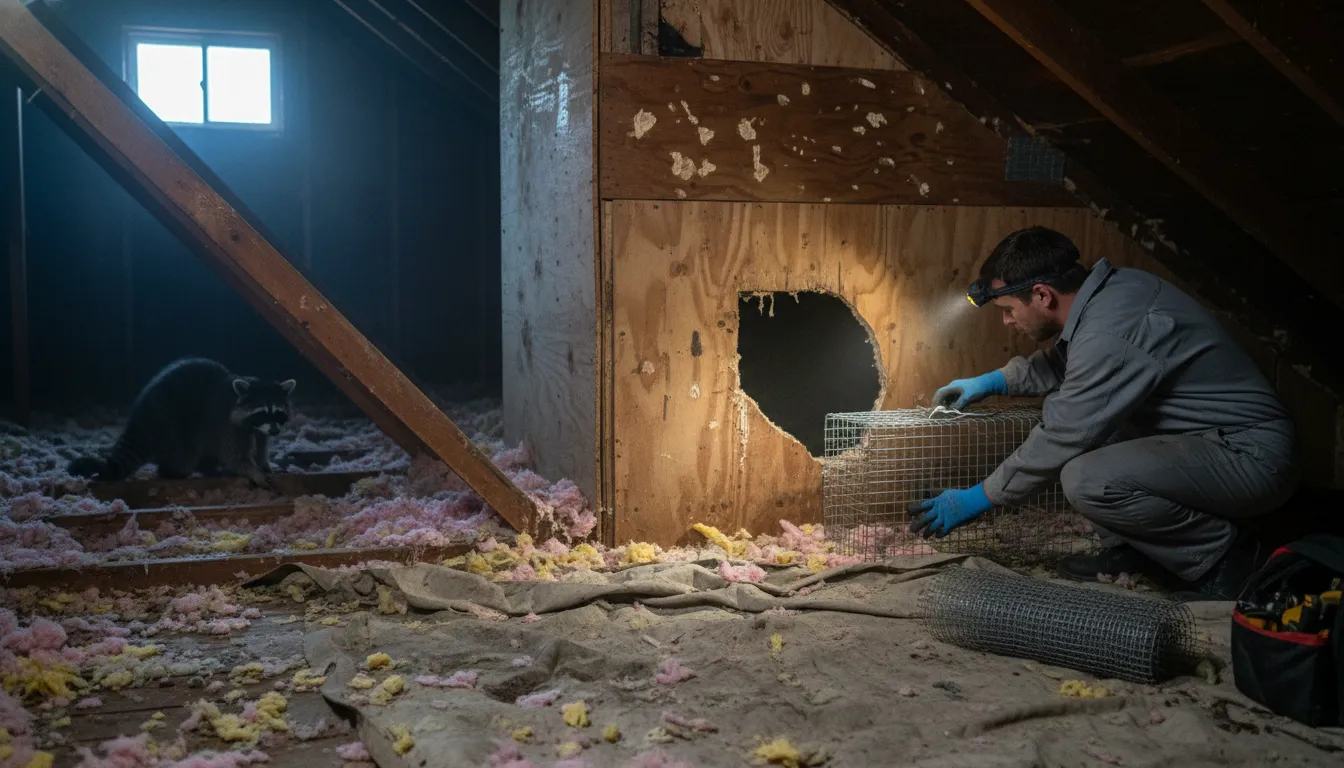
Find the Best Wildlife Removal Companies for Your Business
No obligation • Fast responses • Nationwide coverage

Why you can trust Pest Crews
Pest Crews is a leading U.S. resource for finding and evaluating residential and commercial pest control services. Our team researches providers, reviews treatment approaches, and organizes unbiased information to help you make informed decisions. Companies cannot pay to change our editorial content or influence how they appear.
Search providers near you
Top Wildlife Removal Companies in Spokane Valley, Washington Ranked
Discovering a wild animal in your attic, under your deck, or rummaging through your trash can be a startling experience. In Spokane Valley, where urban spaces meet natural habitats, encounters with nuisance wildlife are common. Professional wildlife removal and animal control services are essential for resolving these conflicts safely, humanely, and in accordance with Washington state law. This guide explains the local wildlife you might encounter, outlines your options from do-it-yourself prevention to hiring a certified professional, and provides the critical contacts you need to handle the situation correctly.
Orkin
111 N Vista Rd #6, Spokane Valley, WA 99212
Orkin provides residential and commercial pest control services in Spokane, WA. They handle a wide range of pests including bed bugs, cockroaches, ants, rodents, termites, mosquitoes, bees, wasps, birds, and wildlife. Orkin offers customized pest plans and uses treatments such as liquid termite barriers, Sentricon® bait, and dry foam void filler to address infestations. With over 120 years of experience, Orkin supports year-round pest management and offers 24/7 availability for pest control needs in Spokane.
Alta Pest Control
9514 E Montgomery Ave #20, Spokane Valley, WA 99206
Alta Pest Control is a family-owned pest control company serving Spokane, WA, and surrounding areas. They offer year-round pest management with quarterly treatments targeting a wide range of pests including ants, rodents, termites, bed bugs, and stinging insects. Their services also include rodent exclusion, attic insulation, and moisture control to provide comprehensive protection. Alta Pest Control uses certified methods such as Sentricon® termite bait stations and emphasizes clear communication about each treatment. They provide ongoing service with a satisfaction guarantee and a 48-hour response commitment.
Castle Wildlife and Specialty Services
Spokane, WA
Castle Wildlife and Specialty Services is a wildlife removal and bird pigeon control company based in Spokane, WA. They specialize in managing and removing various wildlife including bats, birds, squirrels, raccoons, and more from homes and businesses. Their services include wildlife exclusion, removal, sealing, and remediation such as sanitizing and insulation replacement. They follow best management practices and governmental guidelines to handle protected species in the region. One notable capability is their expertise in bat management, addressing health concerns like rabies and histoplasmosis while preserving ecological balance.

Terminix
15320 E Marietta Ave SUIte #7, Spokane Valley, WA 99216
Terminix is a pest control company serving Spokane, WA, specializing in managing a wide range of pests including bed bugs, ants, rodents, termites, and wasps. The Spokane Valley branch offers customized pest inspections and treatments tailored to local pest issues, with expertise in termite control and rodent prevention. Their services include interior and exterior inspections, regular treatments, and guarantees on termite damage repair. Terminix technicians are familiar with seasonal pest patterns in the area and use EPA-approved products to ensure safe treatment around pets.
Common Wildlife Issues in Spokane Valley
Spokane Valley's proximity to forests, rivers, and open spaces means residents often share their neighborhoods with a variety of native species. Understanding which animals are most likely to cause problems is the first step in managing them.
Small Mammals and Unclassified Wildlife: These are the most frequent culprits for home invasions and property damage. They seek shelter, food, and nesting sites, especially as seasons change. Common species include:
- Raccoons: Intelligent and dexterous, they raid trash cans, tear up insulation in attics, and can carry diseases.
- Squirrels (Tree and Ground): Chew on wiring, siding, and soffits to enter attics, creating fire hazards and structural damage.
- Skunks & Opossums: Often take up residence under porches, sheds, or decks, and can spray or hiss when threatened.
- Bats: Small colonies may roost in attics or wall voids; their guano poses health risks and they are protected by state regulations.
- Rats and Mice: While often considered general pests, their control frequently falls under wildlife exclusion services due to similar entry points and damage.
Larger and Potentially Dangerous Wildlife: Encounters with these animals are less common within city limits but do occur, particularly on the edges of developed areas. They require extreme caution and specific protocols.
- Coyotes: Adaptable and increasingly seen in suburban areas, they may prey on small pets.
- Black Bears & Cougars (Mountain Lions): While more prevalent in the surrounding wilderness, sightings in outlying neighborhoods do happen and are considered a public safety concern.
- Deer & Elk: Can cause significant damage to landscaping, gardens, and ornamental shrubs.
Your First Steps: Prevention and Non-Lethal Solutions
The Washington Department of Fish and Wildlife (WDFW) strongly encourages non-lethal methods as the first and most effective course of action for managing nuisance wildlife 1. Before considering trapping or removal, every homeowner should implement these strategies.
Exclusion is Key: The most permanent solution is to make your property inaccessible. This involves:
- Sealing Entry Points: Conduct a thorough inspection of your home's exterior. Look for gaps in rooflines, loose vent covers, holes in siding, and spaces around utility lines. Use sturdy materials like hardware cloth, steel wool, or metal flashing to seal them.
- Installing Barriers: Use chimney caps, vent covers, and wire mesh over crawl space openings.
- Habitat Modification: Remove the attractions that draw animals to your yard. Secure trash cans with locking lids, bring pet food indoors overnight, clean up fallen fruit from trees, and consider removing bird feeders if they are attracting bears or raccoons.
Eviction Techniques: If an animal is already living in a structure (like a raccoon in a chimney or squirrels in an attic), you can encourage them to leave on their own.
- Harassment: Use bright lights, loud radios, or strong-smelling repellents (like ammonia-soaked rags) in the denning area. Important: Ensure the animal is not raising young, as this can trap babies inside.
- One-Way Doors: Professionals often install these devices over the main entry hole, allowing animals to exit but not re-enter. This is highly effective for certain species when done correctly 2 3.
When and How to Trap Nuisance Wildlife
Trapping is a complex last resort in Washington State, governed by specific regulations to ensure humane treatment. It is generally recommended only for targeted problem animals or when other methods have failed.
Critical Regulations to Know:
- Live Trapping: For most common nuisance animals (raccoons, squirrels, opossums), live cage traps are the primary legal tool for residents. You must check traps at least once every 24 hours.
- Restricted Traps: The use of body-gripping traps (like Conibear traps, padded foothold traps, or non-strangling foot snares) for nuisance wildlife is largely prohibited unless you first obtain a Special Trapping Permit from the WDFW 4. This rule is in place to prevent non-target catches and ensure humane practices.
- Relocation: It is illegal to trap and relocate most wildlife in Washington without a permit. Relocated animals often struggle to survive, can spread disease, and simply move the problem to another property. The WDFW advises that euthanasia may be the only legal and ethical outcome for a trapped nuisance animal 5.
Given these complexities, trapping is an area where consulting or hiring a professional is often the wisest choice.
Find the perfect wildlife removal companies for your needs
Get personalized recommendations and expert advice
Hiring a Professional Wildlife Control Operator (WCO)
For situations that are dangerous, complex, or require handling protected species, hiring a WDFW-certified Wildlife Control Operator (WCO) is the recommended path. These professionals are trained in state laws, humane techniques, and effective exclusion methods.
Why Hire a Certified WCO?
- Legal Compliance: They understand and adhere to all state trapping and handling regulations.
- Safety: They have the tools and experience to handle animals without risk of injury or disease transmission.
- Humane Solutions: Certified WCOs are trained in the most current, effective, and humane eviction and control methods.
- Complete Service: They don't just remove the animal; they identify how it got in and provide repairs (exclusion work) to prevent a recurrence 6 7.
- Health Hazards: They can safely clean up hazardous waste like bat guano or raccoon latrines.
What to Expect and Cost Factors: The WDFW does not provide removal services or set prices; costs are the responsibility of the property owner and vary by company 8 9. When contacting WCOs in the Spokane Valley area for a quote, consider these variables:
- Species: Removing a colony of bats has different protocols and costs than evicting a single raccoon.
- Extent of Infestation: The number of animals and the size of the affected area.
- Location of Entry: An animal in an easily accessible crawl space is simpler to address than one in a high attic or wall void.
- Exclusion/Repair Work: The most valuable service is permanent exclusion. The cost of materials and labor for sealing the home will be a significant part of the quote.
- Inspection Fees: Some companies charge for an initial assessment, which may be waived if you hire them for the job.
Always get multiple estimates and ask what specific services are included (inspection, trapping, removal, exclusion repairs, cleanup, warranty).
Emergency Contacts and Critical Resources
Knowing who to call-and for what situation-is crucial. Spokane County Regional Animal Protection Service (SCRAPS) handles domestic animals only (stray dogs, animal cruelty) and does not respond to wildlife calls 10.
For General Wildlife Questions & Non-Emergency Complaints:
- Washington Department of Fish and Wildlife (WDFW): (509) 892-1001 (Spokane Regional Office). You can also file a non-emergency dangerous wildlife complaint or report violations online through WILDCOMM.
For Injured or Orphaned Wildlife:
- Find a Rehabilitator: If you find a sick or injured wild animal, you are legally considered a "Good Samaritan" for 24 hours. It is unlawful to attempt to treat or keep it. Use the WDFW's directory to find a permitted wildlife rehabilitator near you 11 12.
- If a Rehabilitator Cannot Be Reached: For an injured wildlife emergency, you can contact the Washington State Patrol at (509) 456-4101 13.
For an Immediate Public Safety Threat:
- Call 911 if there is an immediate danger to human safety from a wild animal (e.g., a cougar in a schoolyard, a bear that will not leave a populated area, an aggressive coyote) 14.
To Find a Certified Professional:
- Use the official WDFW Wildlife Control Operator list to search for certified professionals serving Spokane County.
Handling Specific Wildlife Situations
Bats: Bats are protected in Washington. If you have a bat colony in your home, you cannot exclude them during the maternity season (typically June through August) to avoid trapping flightless young inside. A professional WCO will know the legal timing and proper exclusion techniques 15.
Bird Nests: Many birds, their nests, and eggs are protected by federal law. It is illegal to disturb active nests. Prevention (installing netting or spikes before nesting season) is the best approach.
Dead Wildlife: For removal of a dead animal on your private property, you are responsible for disposal. On public roadways, you can contact city or county public works departments.
Frequently asked questions
Sources
Footnotes
-
Killing of Native Wildlife by Federal 'Wildlife Services' Declined Sharply in 2020 - https://biologicaldiversity.org/w/news/press-releases/killing-of-native-wildlife-by-federal-wildlife-services-declined-sharply-in-2020-2021-03-17/ ↩
-
Evicting animals from buildings | Washington Department of ... - https://wdfw.wa.gov/species-habitats/living/nuisance-wildlife/evicting ↩
-
Evicting Animals from Buildings - https://wdfw.wa.gov/sites/default/files/publications/00615/wdfw00615.pdf ↩
-
Special trapping permit for a nuisance wildlife problem | Washington Department of Fish & Wildlife - https://wdfw.wa.gov/licenses/hunting/trapping ↩
-
Trapping nuisance wildlife | Washington Department of Fish ... - https://wdfw.wa.gov/species-habitats/living/nuisance-wildlife/trapping ↩
-
Evicting animals from buildings | Washington Department of Fish & Wildlife - https://wdfw.wa.gov/species-habitats/living/nuisance-wildlife/evicting ↩
-
Wildlife Trapping vs Exclusion: Whats The Difference? - https://pestprotectionplus.com/blog/wildlife-trapping-vs-exclusion/ ↩
-
Hiring a Wildlife Control Operator | Washington Department of Fish & Wildlife - https://wdfw.wa.gov/species-habitats/living/nuisance-wildlife/wildlife-control-operators ↩
-
Evicting animals from buildings | Washington Department of Fish & Wildlife - https://wdfw.wa.gov/species-habitats/living/nuisance-wildlife/evicting ↩
-
Animal Enforcement | Spokane County, WA - https://www.spokanecounty.gov/568/Animal-Enforcement ↩
-
Injured or orphaned wildlife | Washington Department of Fish ... - https://wdfw.wa.gov/species-habitats/living/injured-wildlife ↩
-
How to find a permitted wildlife rehabilitator - https://wdfw.wa.gov/species-habitats/living/injured-wildlife/rehabilitation/find ↩
-
Spokane County Regional Animal Protection Services - https://www.spokanevalleywa.gov/519/SCRAPS--Animal-Protection ↩
-
Dangerous wildlife | Washington Department of Fish & Wildlife - https://wdfw.wa.gov/species-habitats/living/dangerous-wildlife ↩
-
Nuisance wildlife | Washington Department of Fish & Wildlife - https://wdfw.wa.gov/species-habitats/living/nuisance-wildlife ↩