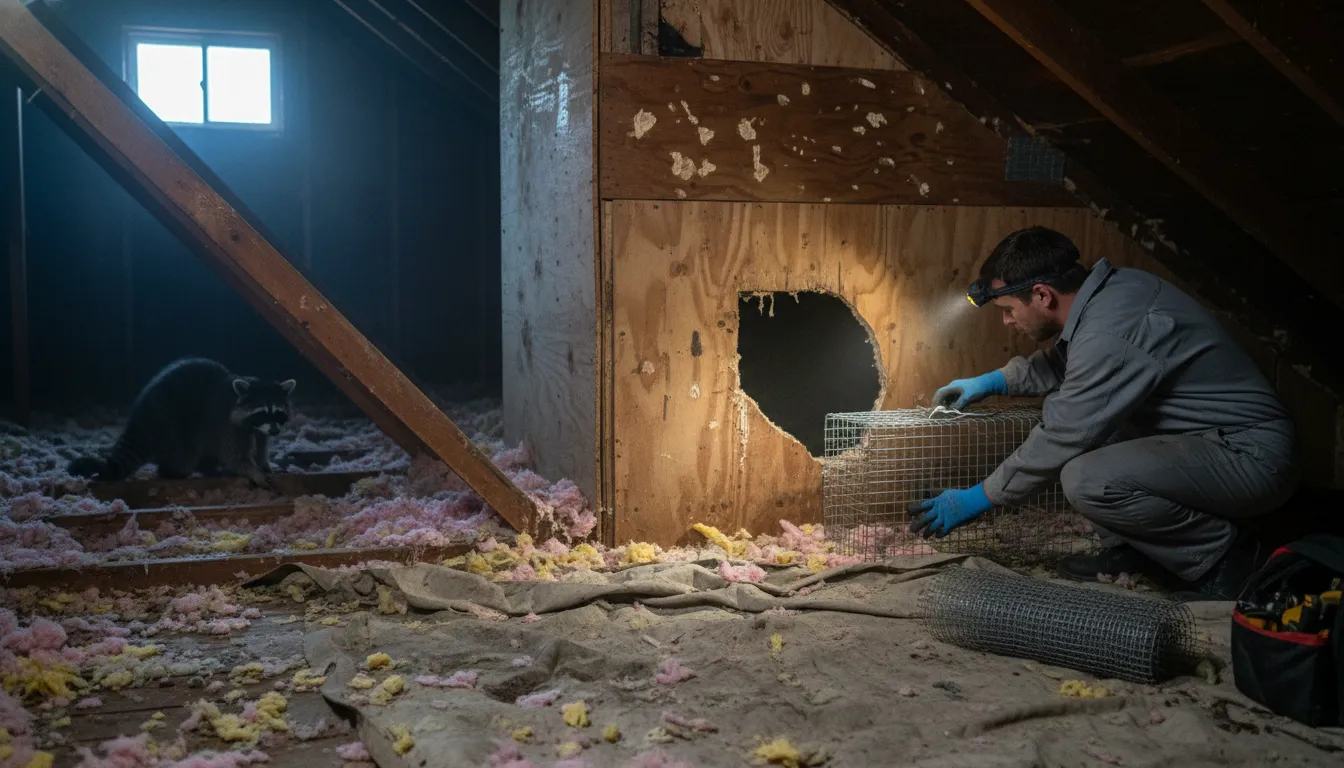
Find the Best Wildlife Removal Companies for Your Business
No obligation • Fast responses • Nationwide coverage

Why you can trust Pest Crews
Pest Crews is a leading U.S. resource for finding and evaluating residential and commercial pest control services. Our team researches providers, reviews treatment approaches, and organizes unbiased information to help you make informed decisions. Companies cannot pay to change our editorial content or influence how they appear.
Search providers near you
Top Wildlife Removal Companies in Colton, California Ranked
Discovering an uninvited animal in your attic, under your deck, or rummaging through your trash can be a startling and stressful experience for any Colton homeowner. Wildlife removal is the specialized service of safely and legally evicting nuisance animals from your property and preventing their return. This process is crucial not only for protecting your home from damage but also for ensuring the safety of your family and the humane treatment of the animals, all while navigating California's strict wildlife regulations. This guide will help you understand the common wildlife issues in the Inland Empire, what you can do yourself, and when it's essential to contact a licensed professional for assistance.
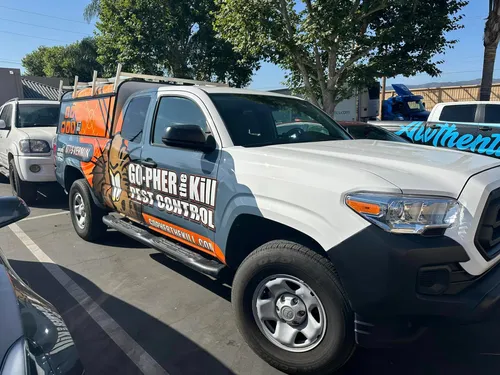
Go-Pher The Kill Pest Control Riverside
9880 Indiana Ave STE 23, Riverside, CA 92503
Go-Pher The Kill Pest Control Riverside offers pest and wildlife removal services in Riverside, CA. The company specializes in gopher control but also handles ants, roaches, spiders, rodents, and other pests for residential, commercial, and agricultural properties. They provide thorough pest inspections and ongoing protection to keep properties pest-free. Known for their expertise in gopher trapping and removal, Go-Pher The Kill has been serving the Riverside area for over seven years. Their licensed and insured team is committed to customer satisfaction with a guarantee to re-treat or refund if problems persist.
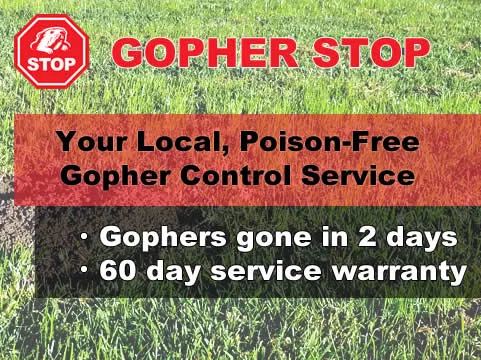
Gopher Stop
1660 Country Club Dr, Riverside, CA 92506
Gopher Stop is a wildlife removal and pest control company based in Riverside, CA, specializing in gopher removal. They focus on identifying and managing gopher infestations that damage lawns, plants, irrigation systems, and concrete structures. Their primary method involves trapping gophers within their tunnels, offering a poison-free approach that is both effective and environmentally conscious. Gopher Stop serves Riverside and nearby areas, providing professional gopher control with a reputation supported by customer reviews.
Compass Pest Management
5925 Rickenbacker Ave, Riverside, CA 92504
Compass Pest Management is a family-owned pest control company serving Los Angeles, CA, and surrounding areas since 1997. They provide a wide range of pest management services including bed bug treatment, termite inspections and fumigation, rodent exclusion, mosquito reduction, and bee and wasp removal. Their team also handles wildlife removal and commercial pest control, using proven methods and premium pesticides. With over 25 years of experience, Compass Pest Management offers ongoing pest prevention and exclusion services, focusing on practical solutions for homes and businesses. They operate Monday through Saturday and hold multiple licenses and certifications in pest control.

Terminix Commercial
1387 Center St, Riverside, CA 92507
Terminix Commercial offers comprehensive pest control services in Los Angeles, CA, specializing in commercial pest management. Their services include treatment and prevention for bed bugs, cockroaches, ants, rodents, termites, bees, wasps, and wildlife removal. The company provides tailored pest control plans such as the PESTFREE365 and termite protection systems to address common and costly pest issues. With a local team familiar with the area's pest challenges and backed by a nationwide network, Terminix Commercial ensures effective pest management solutions for businesses. They also offer termite inspections and continuous protection systems to prevent structural damage. The company serves a wide range of communities around Los Angeles and Riverside, including Ontario and San Bernardino.
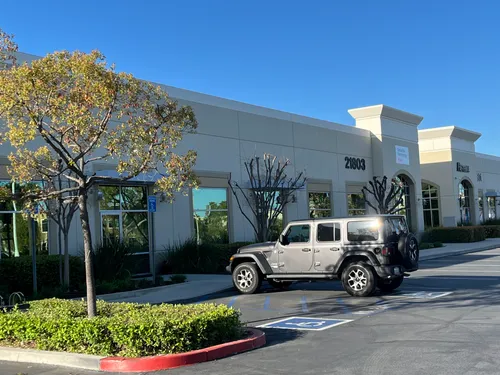
Corky's Pest Control
21803 Cactus Ave Suite E - F, Riverside, CA 92518
Corky's Pest Control is a pest control company serving Los Angeles, CA, offering a wide range of services including bed bug treatment, ant and cockroach control, rodent management, termite inspection and fumigation, mosquito treatment, bee and wasp removal, and wildlife relocation. Established in 1967, the company applies detailed inspections and modern methods to address pest issues effectively. They provide specialized capabilities such as termite fumigation and hive relocation for bees, ensuring safety and environmental care. Corky's Pest Control focuses on long-lasting pest management solutions tailored to residential properties.
Common Nuisance Wildlife in Colton and the Inland Empire
The urban-wildland interface in Colton means our homes often border natural habitats, leading to frequent encounters with adaptable wildlife. Knowing which species are most likely to cause problems is the first step in addressing an issue.
- Raccoons: These intelligent, dexterous mammals are notorious for tearing into attic vents, ripping up roof shingles, and raiding trash cans. They seek warm, sheltered spaces to den, especially when raising young, and can cause significant structural damage and contamination with their droppings.
- Squirrels: Both ground and tree squirrels are common. They often enter attics and crawlspaces through small gaps near rooflines, where they chew on wires (a serious fire hazard), insulation, and wooden beams. Their constant gnawing and scratching can be heard throughout the day.
- Skunks & Opossums: These animals typically seek shelter under sheds, decks, and porches. While opossums are generally less destructive, skunks pose a obvious odor problem and may dig up lawns in search of grubs. Both can carry diseases transmissible to pets.
- Bats: Small colonies of bats may roost in attics, soffits, or chimneys. While beneficial for insect control, their guano (droppings) can accumulate quickly, creating health risks and corrosive odors. Bat removal is highly regulated due to their protected status.
- Coyotes: Common in the Colton area, coyotes are a threat to small pets and can be attracted to yards with accessible food or water. They rarely enter homes but pose a significant outdoor safety concern.
- Birds: Pigeons, starlings, and sparrows often nest in eaves, vents, and other structural cavities. Their nests can block ventilation systems, and their acidic droppings can damage paint, metal, and roofing materials. 1
What You Can Do: DIY Prevention and Deterrence
For minor issues or as a proactive measure, homeowners have several effective, legal strategies to make their property less attractive to wildlife.
Habitat Modification is Key: This is the most effective long-term solution. It involves removing the elements that attract animals in the first place.
- Secure trash cans with locking lids or bungee cords.
- Never leave pet food or water bowls outside overnight.
- Pick up fallen fruit from trees and keep compost bins securely covered.
- Trim back tree branches and dense shrubs that touch or overhang your house, as they provide animal highways to your roof.
Use Repellents and Deterrents Cautiously: Commercial taste or odor repellents can provide a temporary barrier for certain animals like squirrels or rabbits. Motion-activated lights and sprinklers can startle and deter nocturnal visitors like raccoons and coyotes. It's important to note that repellents have mixed results and often need frequent reapplication. 2
Exclusion (The Permanent Fix): This involves physically sealing animals out of your home. Carefully inspect your roofline, vents, soffits, and foundation for gaps, holes, or rotten wood. Seal these entry points with sturdy, animal-proof materials like heavy-gauge hardware cloth, steel wool (for rodents), or metal flashing. Critical Warning: Never seal an entry point if you suspect an animal is still inside, especially during spring when babies may be present, as this leads to worse problems. 3
Find the perfect wildlife removal companies for your needs
Get personalized recommendations and expert advice
When You Must Call a Professional Wildlife Control Operator
While DIY methods work for prevention, actual animal removal and exclusion often require professional expertise. Here are the situations where calling a licensed Wildlife Control Operator (WCO) is not just recommended, but necessary.
1. The Animal is Inside Your Living Structure: If you hear noises in your walls or attic, see signs of droppings, or smell unusual odors, an animal has likely established a den inside. Removing it requires specialized knowledge of animal behavior, safe trapping techniques (if needed), and a thorough inspection to find all entry points. Professionals can also safely handle contaminated insulation and clean affected areas.
2. To Navigate Complex California Wildlife Laws: This is perhaps the most important reason to hire a pro. California has stringent regulations managed by the California Department of Fish and Wildlife (CDFW).
- Relocation is Largely Illegal: State law generally prohibits the trapping and relocation of most wild animals to a new area. Trapped animals must be released on the same property or humanely euthanized. Licensed WCOs understand these laws and have the permits required for any legal relocation. 4
- Protected Species: Many animals, including all native birds (under the federal Migratory Bird Treaty Act), bats, and others, have specific protections. Harming them or disturbing active nests without a permit is a violation. Professionals know how to handle these species legally. 5 6
- Trapping Regulations: There are rules about trap types, placement (e.g., generally not within 150 yards of a residence without permission), and checking frequency. Violations can result in fines. 7
3. For Safety and Health Reasons: Wild animals can be aggressive when cornered, especially if they feel their young are threatened. They can carry diseases such as rabies (in raccoons, skunks, and bats), leptospirosis, and histoplasmosis (from bat guano). Professionals have the protective gear, vaccines, and training to handle these risks safely.
4. When the Problem is Persistent or Extensive: If DIY deterrents have failed, or if you see multiple animals or significant damage, a professional assessment is needed. They can identify why your property is attractive and implement a comprehensive solution that includes removal, exclusion, and cleanup.
Understanding the Process and Cost of Professional Wildlife Control
A professional wildlife removal service in Colton typically follows a multi-step process:
- Inspection: A thorough assessment of your property to identify the animal species, entry points, damage, and level of infestation.
- Removal: Using humane, legal methods appropriate for the species and situation. This may involve one-way exclusion doors (which let animals leave but not return), hand-removal, or trapping in compliance with state law.
- Exclusion & Repair: After all animals are confirmed gone, the technician will seal all entry points with permanent materials and may recommend repairs to damaged vents, soffits, or roofing.
- Cleanup & Sanitation: For areas contaminated by droppings, urine, or nesting materials, professional cleaning and disinfecting may be offered to eliminate health hazards and odors.
Cost Considerations: The price for wildlife control in Colton varies widely based on the animal, the extent of the infestation, and the repairs needed. 8 9 10
- Removal and exclusion for a single animal like an opossum or skunk may start in the $200 - $500 range.
- Squirrel or raccoon removal from an attic, including exclusion and minor repairs, often ranges from $400 to over $1,000.
- Bat exclusion is a specialized, multi-step job that can cost $500 - $2,000+, depending on the size of the colony and the complexity of sealing all potential roost entries.
Always get a detailed, written estimate that breaks down inspection, removal, exclusion, and repair costs before work begins.
Frequently asked questions
Sources
Footnotes
-
California Wildlife Removal & Animal Control - Critter Control - https://www.crittercontrol.com/office-finder/california/ ↩
-
A Guide To Common Nuisance Wildlife In Northern California - https://www.bigtimepestcontrol.com/blog/post/common-wildlife-in-california ↩
-
Wildlife Control Methods | NWCTP - https://wildlifecontroltraining.com/training/wildlife-control-methods/ ↩
-
Living with Wildlife - https://wildlife.ca.gov/Living-with-Wildlife ↩
-
Laws Concerning Wildlife Management - https://pesticidestewardship.org/wildlife-damage-management/laws-concerning-wildlife-management/ ↩
-
Laws & Regulations - Humane Pest Control Inc - https://humanepestpro.com/?page_id=85 ↩
-
Animal trapping and control - Lacounty - https://file.lacounty.gov/SDSInter/acwm/235835_Trappingrequirementspaper.pdf ↩
-
California Wildlife Removal Company Directory - Pro Animal Control - https://pro-animal-control.com/california-wildlife-removal-company/ ↩
-
Animal Capture Wildlife Control: Los Angeles Wildlife Removal - https://www.animalcapturewildlifecontrol.com/ ↩
-
AAAC Wildlife Removal & Control in Colton CA - https://aallanimalcontrol.com/sanbernardino/colton-animal-removal/ ↩