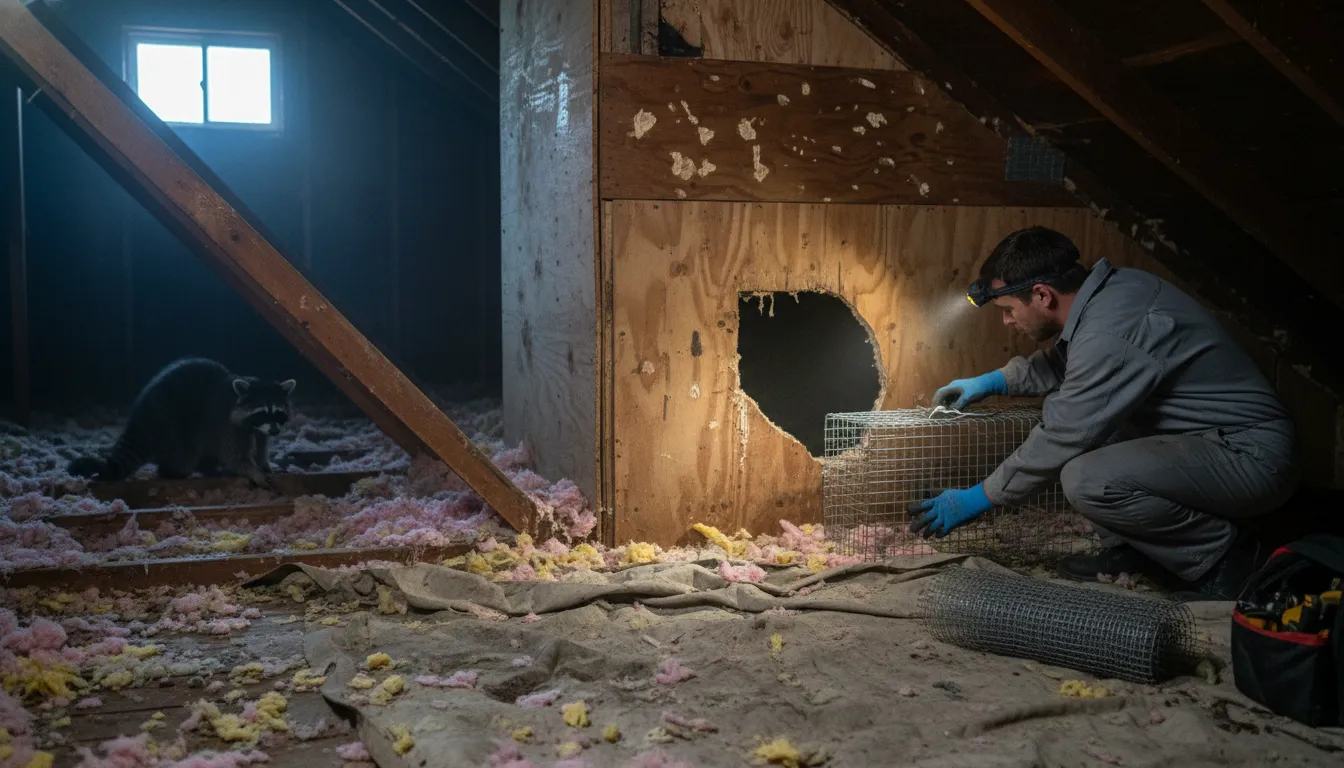
Find the Best Wildlife Removal Companies for Your Business
No obligation • Fast responses • Nationwide coverage

Why you can trust Pest Crews
Pest Crews is a leading U.S. resource for finding and evaluating residential and commercial pest control services. Our team researches providers, reviews treatment approaches, and organizes unbiased information to help you make informed decisions. Companies cannot pay to change our editorial content or influence how they appear.
Search providers near you
Top Wildlife Removal Companies in Ontario, California Ranked
Finding an uninvited animal in your attic, under your deck, or rummaging through your trash can be a startling and stressful experience for any homeowner or business in Ontario. Wildlife removal is the specialized service of safely and legally addressing conflicts with nuisance animals on your property. This process goes beyond simple trapping; it involves expert identification, humane capture techniques, and, most importantly, permanent exclusion to prevent the problem from recurring. With California's strict wildlife laws, navigating a raccoon, squirrel, or skunk issue on your own can be legally complex. This guide will help you understand the common local wildlife challenges, what you can do yourself, when to call a professional, and how to find qualified local experts to resolve your situation effectively and in compliance with state regulations.
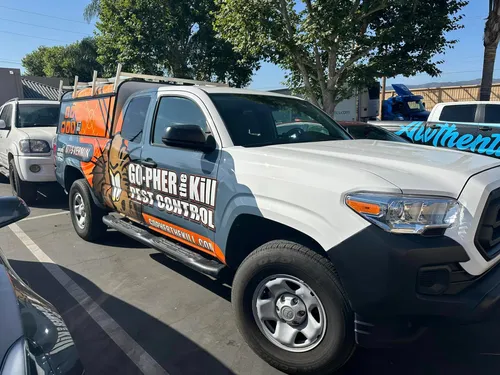
Go-Pher The Kill Pest Control Riverside
9880 Indiana Ave STE 23, Riverside, CA 92503
Go-Pher The Kill Pest Control Riverside offers pest and wildlife removal services in Riverside, CA. The company specializes in gopher control but also handles ants, roaches, spiders, rodents, and other pests for residential, commercial, and agricultural properties. They provide thorough pest inspections and ongoing protection to keep properties pest-free. Known for their expertise in gopher trapping and removal, Go-Pher The Kill has been serving the Riverside area for over seven years. Their licensed and insured team is committed to customer satisfaction with a guarantee to re-treat or refund if problems persist.
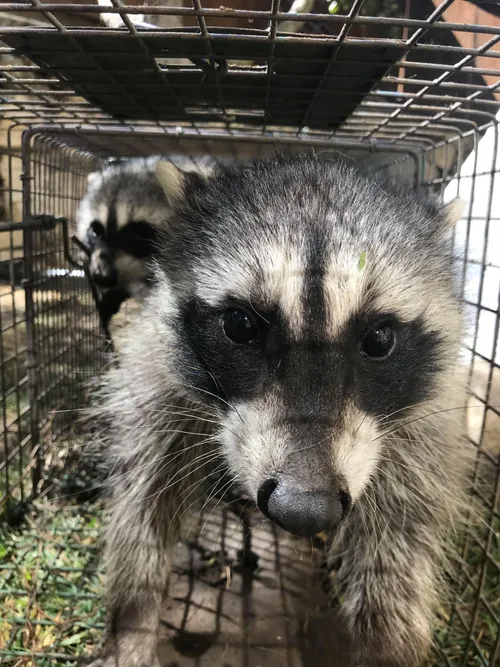
Orchard Inc.
Los Angeles, CA
Orchard Inc. is a pest control company based in Los Angeles, CA, specializing in rodent, bird, and wildlife removal services for both residential and commercial properties. They use humane methods and combine modern techniques with proven approaches to manage infestations while respecting natural ecosystems. Orchard Inc. also offers wildlife fencing as a preventative measure to keep animals off properties. The company serves Los Angeles County and Orange County, handling a wide range of pest control needs with a focus on bird and rodent solutions.
Aesthetic Wildlife Control
Los Angeles, CA
Aesthetic Wildlife Control provides humane and poison-free wildlife and rodent removal services in Los Angeles, CA. Their certified team offers a wide range of pest control solutions including rat, possum, bat, raccoon, skunk, snake, and dead animal removal, along with attic decontamination and bird proofing for solar panels. They use eco-friendly, non-toxic methods and provide thorough inspections with photo and video documentation to ensure effective exclusion and sanitation. The company is licensed by the California Department of Fish and Wildlife and offers 24/7 emergency animal removal services across Los Angeles and Orange County.
Gopher Stop
1660 Country Club Dr, Riverside, CA 92506
Gopher Stop is a wildlife removal and pest control company based in Riverside, CA, specializing in gopher removal. They focus on identifying and managing gopher infestations that damage lawns, plants, irrigation systems, and concrete structures. Their primary method involves trapping gophers within their tunnels, offering a poison-free approach that is both effective and environmentally conscious. Gopher Stop serves Riverside and nearby areas, providing professional gopher control with a reputation supported by customer reviews.
Compass Pest Management
5925 Rickenbacker Ave, Riverside, CA 92504
Compass Pest Management is a family-owned pest control company serving Los Angeles, CA, and surrounding areas since 1997. They provide a wide range of pest management services including bed bug treatment, termite inspections and fumigation, rodent exclusion, mosquito reduction, and bee and wasp removal. Their team also handles wildlife removal and commercial pest control, using proven methods and premium pesticides. With over 25 years of experience, Compass Pest Management offers ongoing pest prevention and exclusion services, focusing on practical solutions for homes and businesses. They operate Monday through Saturday and hold multiple licenses and certifications in pest control.
Common Nuisance Wildlife in Ontario
The urban and suburban landscape of Ontario provides ideal habitat for a variety of adaptable wildlife species. Understanding which animal you're dealing with is the first step toward an effective solution.
Mammals: Raccoons are perhaps the most notorious, known for their dexterous paws and intelligence, which allow them to open trash cans and access attic spaces. Tree squirrels, including the Eastern fox squirrel, frequently enter homes to nest in eaves or attics, often causing significant damage by chewing on wires and wood. Skunks dig for grubs under lawns and decks, while opossums and rats scavenge for food sources around properties. Larger predators like coyotes and foxes are also present in the area, primarily posing concerns for small pets.
Birds: Several bird species can become pests. Pigeons roost on building ledges and create unsanitary messes with their droppings. Woodpeckers may drill into siding in search of insects or to create nesting cavities, causing structural damage. Swallows and starlings often build mud nests in the eaves and vents of homes.
Reptiles: Various snake species, including non-venomous gopher snakes and rattlesnakes in more rural fringes, can enter yards and sometimes structures, causing alarm for residents.
California's Wildlife Laws: What You Must Know
Before attempting any animal control on your own, it is critical to understand the legal framework. California has specific regulations designed to manage wildlife conflicts humanely and responsibly.
- No Relocation: It is illegal to trap and relocate most wild animals in California. State law mandates that any trapped animal must be either released immediately on the property where it was caught or humanely euthanized. Transporting an animal to a park, forest, or another neighborhood is against the law. This prevents the spread of disease and avoids simply transferring a problem to another community.
- Trapping Permissions: If you plan to use a trap, you cannot set it within 150 yards of another occupied dwelling without the written permission of that resident 1. This protects neighbors and their pets.
- Professional Licensing: For many situations, especially those involving entry into structures or complex removal, hiring a licensed wildlife control operator is the best and most legally sound course of action. These professionals understand the regulations, possess the proper equipment, and can handle the required euthanasia if necessary.
Do-It-Yourself (DIY) Prevention and Control
For minor issues or as a proactive measure, there are several effective steps Ontario residents can take.
Exclusion and Prevention: This is the most effective long-term strategy. Seal potential entry points on your home's exterior using materials like heavy-gauge hardware cloth, steel wool (for rodents), or metal flashing. Ensure crawl space vents are intact, chimney tops are capped, and roof soffits are secure. Outdoors, use tightly sealed, animal-proof trash cans, trim tree branches back at least six feet from your roofline, and clear yards of woodpiles or dense brush that provide shelter 2.
Harassment and Deterrents: For animals that are merely visiting your yard, you can often encourage them to leave. Motion-activated lights or sprinklers, loud radios, or commercially available repellents (with varying degrees of effectiveness) can make your property less inviting. For birds, installing physical barriers like netting or spike strips on favored roosting ledges can be effective 3.
Trapping (Proceed with Caution): Homeowners are allowed to trap certain nuisance animals on their own property. However, you must be prepared to deal with the trapped animal in accordance with the law-either releasing it on-site (which may not solve the problem) or humanely euthanizing it. You are also responsible for checking traps frequently, at least once every 24 hours 4 5. Given these legal and ethical responsibilities, many people find DIY trapping to be a challenging last resort.
Find the perfect wildlife removal companies for your needs
Get personalized recommendations and expert advice
When to Call a Professional Wildlife Control Service
Certain situations clearly call for the expertise of a licensed wildlife removal professional.
- Animals Inside Your Home or Business: If you hear noises in your walls or attic, smell odors, or see signs of nesting, a professional can safely locate and remove the animals and then find and seal the entry points they used.
- Risk of Disease or Injury: Animals like raccoons, skunks, and bats can carry diseases such as rabies or leptospirosis. Professionals have the training and protective gear to handle these risks safely.
- Complex or Persistent Problems: If DIY methods have failed, or if you have a recurring issue, a professional can diagnose the root cause and implement a permanent solution.
- Unwillingness to Handle Trapping/Euthanasia: If you are not comfortable or legally able to deal with a trapped animal, a professional service will handle the entire process in compliance with state regulations.
- Immediate Safety Threats: For an aggressive animal or a direct threat, such as a coyote that is not fleeing from people, contact the Ontario Police Department or local animal control for an immediate response 6.
A Note on Animal Control: It's important to know that San Bernardino County Animal Services typically handles domestic animals like dogs, cats, and livestock. For conflicts with wild animals, you will need to contact a private wildlife control company.
Understanding Wildlife Removal and Exclusion Services
A comprehensive professional service involves more than just taking an animal away. The goal is to solve the problem permanently.
- Inspection and Identification: A technician will inspect your property to identify the species, locate entry points, and assess the extent of the infestation or damage.
- Humane Removal: Using specialized traps or exclusion devices, the animals are removed from the structure. As per California law, this is followed by on-site release or humane euthanasia.
- Exclusion and Repair: This is the most critical step. All identified entry points are sealed with durable materials to prevent re-entry. This may also involve installing one-way doors that allow animals to exit but not return.
- Clean-up and Sanitation: Professionals can clean and disinfect contaminated areas (like attics with rodent droppings or urine) to remove health hazards and odors.
- Preventive Recommendations: A good service will provide advice on how to make your property less attractive to wildlife in the future 7.
Cost Considerations for Wildlife Control in Ontario
Costs for animal removal and exclusion can vary widely based on the species, the number of animals, the extent of the damage, and the size of your home. It's always wise to get multiple estimates.
- Trapping Services: For trapping a single animal like a raccoon or squirrel, you might encounter per-animal fees ranging from $150 to over $400, often with a minimum service call charge 8.
- Exclusion Work: The permanent sealing of entry points is where the most significant investment lies, but it's also the most valuable. For squirrel or rat exclusion, costs can range from $500 to $2,000 or more, depending on the linear footage of the roofline and the number of access points that need sealing 9.
- Bird Control: Removing birds and installing exclusion netting, spikes, or other deterrents can cost between $400 and $2,500+, with complex jobs on large commercial buildings costing even more 10.
- Dead Animal Removal: Removing a carcass from a wall, attic, or crawlspace typically costs between $100 and $300 11 12.
Always ensure any company you contact is licensed, insured, and provides a clear, written estimate that details the scope of work, including both removal and exclusion.
Finding the Right Local Provider
When searching for help with a wildlife conflict, look for companies that specialize in wild animal control or nuance wildlife management. Verify that they are familiar with and adhere to California Department of Fish and Wildlife (CDFW) regulations 13. Ask specific questions about their process: Do they offer inspections? Do they guarantee their exclusion work? How do they handle the animals in compliance with state law? Reading local reviews and asking for references can also provide insight into their reliability and customer service. By choosing a knowledgeable and ethical provider, you can ensure your wildlife problem is resolved effectively, humanely, and for the long term.
Frequently asked questions
Sources
Footnotes
-
Laws and Regulations - Humane Wildlife Control Inc - https://humanecontrol.com/laws-and-regulations/ ↩
-
California wildlife relocation laws for pest control - https://www.facebook.com/groups/1594787164103792/posts/3700674206848400/ ↩
-
Nuisance Wildlife, What Can You Do? - https://ofa.on.ca/wp-content/uploads/2019/06/Nuisance-Wildlife-Fact-Sheet_Updated.pdf ↩
-
Animal trapping and control - Lacounty - https://file.lacounty.gov/SDSInter/acwm/235835_Trappingrequirementspaper.pdf ↩
-
Laws & Regulations - Humane Pest Control Inc - https://humanepestpro.com/?page_id=85 ↩
-
Wild animal control: information for municipalities | ontario.ca - https://www.ontario.ca/page/wild-animal-control-information-for-municipalities ↩
-
Our Wildlife Removal and Pest Control Process - https://www.ontariowildliferemoval.ca/process/ ↩
-
Ontario California Pest Wildlife Removal, Animal Trapping and Control - http://www.sanbernardinowildlife.com/Ontario.html ↩
-
Wildlife Exclusion Services - https://www.fullscopepestcontrol.com/what-is-wildlife-exclusion-2/ ↩
-
California Wildlife Removal Company Directory - Pro Animal Control - https://pro-animal-control.com/california-wildlife-removal-company/ ↩
-
Ontario Wildlife Removal, California Raccoon, Rat, Snake, Bird, ... - http://wildliferemovalusa.com/Ontario-CA.html ↩
-
AAAC Wildlife Removal & Control in Ontario California CA - https://aallanimalcontrol.com/sanbernardino/ontario-animal-removal/ ↩
-
Living with Wildlife - https://wildlife.ca.gov/Living-with-Wildlife ↩