Find the Best Wildlife Removal Companies for Your Business
No obligation • Fast responses • Nationwide coverage
Why you can trust Pest Crews
Pest Crews is a leading U.S. resource for finding and evaluating residential and commercial pest control services. Our team researches providers, reviews treatment approaches, and organizes unbiased information to help you make informed decisions. Companies cannot pay to change our editorial content or influence how they appear.
Search providers near you
Top Wildlife Removal Companies in Daly City, California Ranked
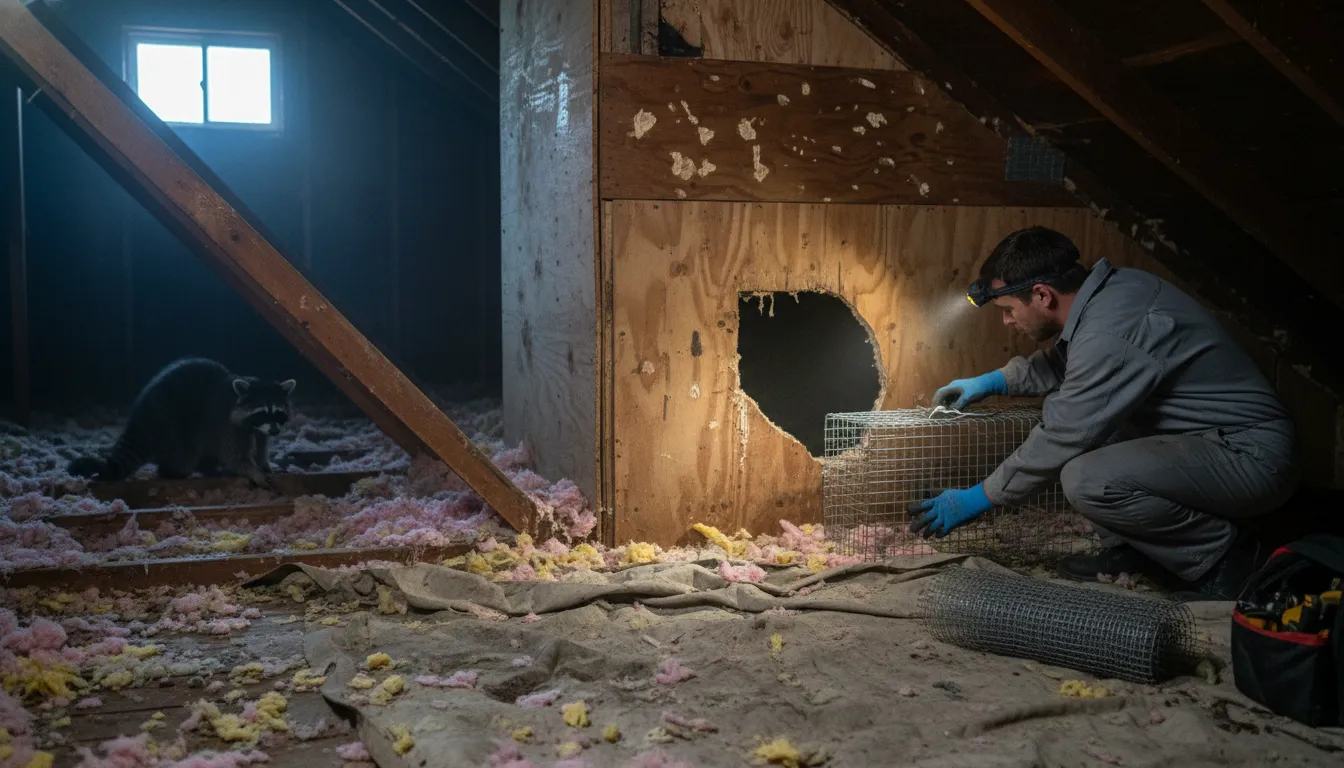
Living in Daly City means enjoying the beautiful Northern California landscape, but it also means sharing that space with a variety of urban wildlife. When raccoons take up residence in your attic, squirrels chew through your eaves, or skunks make a home under your deck, you need safe, effective, and legal solutions. Wildlife removal and animal control services are essential for protecting your property from damage and your family from potential health risks. This guide will help you understand the common nuisance species in the area, what you can do yourself, when to call a professional, and the important California regulations that govern humane wildlife management.

California Exterminating Service
2770 Camino Diablo Suite D, Walnut Creek, CA 94597
California Exterminating Service is a pest control company serving Oakland, CA, and the surrounding East Bay area. With over 71 years of experience, they provide pest management solutions for common local pests such as ants, rodents, termites, cockroaches, and bees. Their approach emphasizes environmentally friendly methods, including natural deterrents and barriers, to protect homes while minimizing chemical use. They also offer wildlife removal and plant healthcare services tailored to the unique needs of Contra Costa and Alameda counties. The company prioritizes preventive treatments starting at the property perimeter to reduce indoor pest issues and maintain a sustainable environment.
Trap N Rodents Rodent Proofers,LLC
Fremont, CA
Trap N Rodents Rodent Proofers, LLC is a rodent control and wildlife removal company serving Fremont, CA. They specialize in comprehensive rodent inspections and rodent-proofing services that identify and seal all potential entry points to prevent rodent infestations. Their approach avoids chemical sprays and poisons, focusing instead on humane trapping and sealing techniques to eliminate rodents safely and effectively. With over 10 years of experience, they offer a two-year guarantee on their services and monitor traps for two weeks to ensure complete rodent removal.
Attic Pros
718 Douglas Ave, Oakland, CA 94603
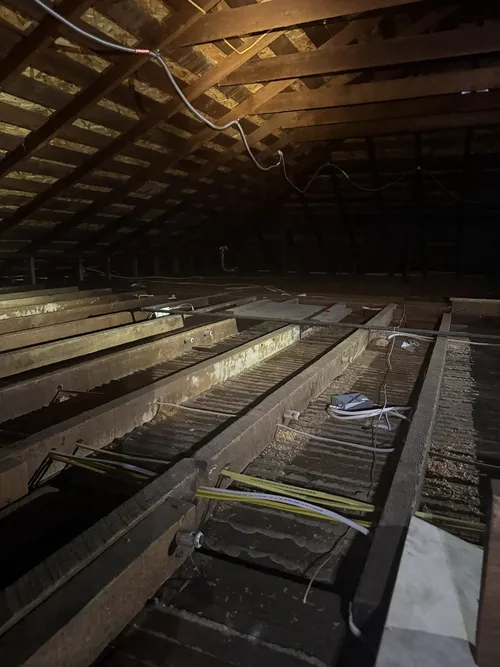
Attic Pros is a pest control and wildlife removal company based in San Jose, CA, specializing in attic and crawl space care. They provide rodent removal, attic cleaning and decontamination, insulation services, and sump pump installation. Their proven process includes thorough inspection, rodent proofing, and follow-up visits to ensure a rodent-free environment. Serving the San Francisco Bay Area, Attic Pros is licensed, bonded, and insured, with a focus on maintaining clean, dry, and safe attic spaces.

Terminix Commercial
32970 Alvarado-Niles Rd #708, Union City, CA 94587
Terminix Commercial provides comprehensive pest control services in San Jose, CA, addressing common local pests such as termites, ants, rodents, bed bugs, mosquitoes, and wildlife. Their team offers both residential and commercial pest management, including termite inspections and continuous termite protection systems. With a focus on tailored pest prevention plans and a nationwide support network, Terminix Commercial is equipped to handle a wide range of pest challenges in the San Jose area. The company offers 24-hour availability and guarantees to return if pests reappear between treatments.
Atticare USA
303 W Joaquin Ave Unit #103, San Leandro, CA 94577
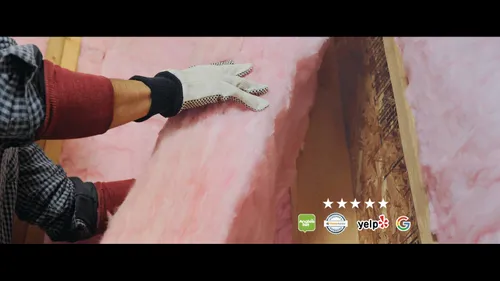
Atticare USA is a family-owned company providing attic and crawl space services in San Francisco, CA. They specialize in rodent control, wildlife removal, and pest control, focusing on sealing entry points, eliminating infestations, and cleaning contaminated areas to improve indoor air quality and energy efficiency. Their services include insulation removal, sanitation, rodent proofing, air sealing, and optional air duct maintenance and ventilation improvements. With over 12 years of experience since 2012, Atticare USA has served more than 11,000 clients nationwide and holds a Diamond Certified rating based on customer satisfaction.
Common Nuisance Wildlife in Daly City
The Daly City and broader Bay Area environment supports a diverse array of mammals, birds, and other creatures that can become problematic when they enter human spaces. Knowing which animals you might encounter is the first step.
- Raccoons: Intelligent and dexterous, raccoons are notorious for raiding trash cans, tearing up roofs to access attics, and creating dens in chimneys or crawl spaces. They can carry diseases like rabies and roundworm.
- Squirrels: Both tree and ground squirrels can cause significant structural damage by gnawing on wood, electrical wiring, and insulation inside walls and attics. Their constant chewing poses a fire hazard.
- Rats and Mice: These rodents are a year-round concern, seeking shelter and food indoors. They contaminate surfaces with droppings and urine and can chew through pipes and wires.
- Opossums & Skunks: Often seeking shelter under porches, decks, or sheds, these animals are generally less destructive but can be a nuisance due to odor (skunks) or creating messes while foraging (opossums).
- Bats: Bats are beneficial for insect control but become a problem when they roost in attics or walls. Their guano (droppings) can accumulate, creating health risks and odors. Special care must be taken due to their protected status and potential for rabies.
- Coyotes: Present in open spaces and sometimes neighborhoods, coyotes are a growing concern for pet owners. They are typically wary of humans but may prey on small pets left unattended.
Effective Prevention: Your First Line of Defense
The most effective and cost-efficient form of animal control is preventing wildlife from being attracted to your property in the first place. Proactive exclusion and habitat modification can solve many issues before they begin.
Remove Food and Shelter Attractants
Wildlife is always searching for reliable food, water, and shelter. By removing these, you make your property less inviting.
- Secure Trash and Compost: Use wildlife-proof bins with locking lids. Keep trash cans in a secured garage or shed until pickup day.
- Manage Pet Food and Water: Never leave pet food bowls outside overnight. Store pet food in sealed containers indoors.
- Clean Up Yard Debris: Pick up fallen fruit from trees, clear away brush piles, and keep woodpiles elevated and away from your home's foundation.
- Trim Vegetation: Keep tree branches trimmed back at least 6-10 feet from your roof and prune dense shrubs near the house to eliminate hiding spots and access routes.
Seal Entry Points (Exclusion)
This is the cornerstone of long-term wildlife control. A thorough inspection of your home's exterior is crucial.
- Chimneys: Install a professionally fitted chimney cap.
- Vents: Cover attic, soffit, and crawl space vents with sturdy, animal-proof mesh or screens.
- Roof and Siding: Seal any holes, gaps, or cracks with high-quality materials like hardware cloth, sheet metal, or concrete. Pay special attention where different building materials meet.
- Foundation and Decks: Seal openings under eaves, porches, and decks. Use skirting or wire mesh to prevent animals from denning underneath 1.
When and How to Seek Professional Wildlife Control
While prevention is key, some situations require expert intervention. Understanding when to handle it yourself and when to call for help is critical for safety and compliance with the law.
Situations Requiring a Licensed Professional
You should contact a licensed wildlife removal operator or trapper for:
- Animals Inside Living Spaces: An animal actively inside your home, attic, walls, or chimney.
- Presence of Young: If you suspect babies (e.g., hearing chirping in the spring), removal becomes more complex and must be handled humanely.
- Structural Damage: Evidence of significant gnawing, nesting, or damage that requires repair.
- Dangerous or Protected Species: Handling bats, larger raccoons, or animals behaving erratically should be left to trained professionals with proper equipment 2.
- Persistent Infestations: When DIY methods have failed to resolve the problem.
Contacting Animal Control Authorities
For certain issues, your first call should be to local government agencies.
- San Mateo County Animal Control & the Peninsula Humane Society & SPCA (PHS/SPCA) handle domestic animal issues, injured wildlife, dead animals on public property, and dangerous animal encounters (bites/attacks on humans or pets) 3 4.
- They typically do not respond to remove healthy wildlife from private property inside a home, which is a job for private wildlife control companies 5.
Find the perfect wildlife removal companies for your needs
Get personalized recommendations and expert advice
Understanding California Wildlife Laws and Regulations
California has strict laws designed to protect wildlife, even nuisance species. These regulations significantly impact what removal professionals and homeowners can legally do. The California Department of Fish and Wildlife (CDFW) sets and enforces these rules.
The Illegality of Relocation
A critical law for Daly City residents to understand is that it is generally illegal to trap and relocate most healthy wildlife in California. Relocating an animal simply moves the problem to another area and can spread disease or cause the animal to die in an unfamiliar territory. For many species, the legal options for a trapped animal are limited to either releasing it on the same property (if legal) or humane euthanasia 6 7 8.
Permits and Licensed Trappers
- Depredation Permits: In some cases, a homeowner may apply for a CDFW depredation permit to trap or kill certain damaging animals themselves, but this process has specific requirements and limitations 9.
- Licensed Professionals: Wildlife control operators must be licensed by the CDFW. They understand the complex regulations, know the legal and humane methods for each species, and can obtain the necessary permits for removal and exclusion work 10. Hiring a licensed professional ensures the job is done legally and ethically.
The Professional Wildlife Removal Process
When you hire a professional service, you are paying for expertise, legal compliance, and a permanent solution. The process typically involves several key steps.
- Inspection and Assessment: A thorough inspection of your property to identify the species, entry points, extent of the infestation, and any damage.
- Humane Removal: Using species-appropriate techniques such as one-way exclusion doors (which let animals leave but not return), live trapping (where legal), or other humane extraction methods. Professionals ensure that dependent young are cared for appropriately 11.
- Exclusion and Prevention: This is the most important step. After removal, all identified entry points are permanently sealed with durable materials to prevent re-entry.
- Cleanup and Sanitation: Removing nesting materials, droppings, and urine-soaked insulation. This may involve disinfecting and deodorizing the area to eliminate health hazards and smells.
- Restoration and Repairs: Repairing damage caused by the animals, such as chewed wires, torn vents, damaged insulation, or compromised structural wood.
Cost of Wildlife Removal Services in Daly City
The cost for professional animal removal and exclusion varies widely based on the species, the location and extent of the infestation, and the amount of repair work needed.
- Basic Removal/Exclusion: For a simple case like removing squirrels from an attic and performing basic exclusion, costs might start in the $500 to $1,500 range.
- Complex Infestations: For larger animals like raccoons, extensive damage, or hard-to-access areas like wall voids, prices can range from $1,500 to $3,500 or more 12.
- Service Breakdown: Costs generally include the service call/inspection, the removal labor, materials for exclusion (sealing, chimney caps, vent covers), and cleanup. Significant repair work (e.g., replacing insulation or drywall) is typically quoted separately 13.
Investing in a comprehensive service that includes expert exclusion is almost always more cost-effective than repeated removal calls for the same problem.
Frequently asked questions
Sources
Footnotes
-
What You Can Do: Wildlife - https://www.smcmvcd.org/what-you-can-do-wildlife ↩
-
California Wildlife Removal Company Directory - Pro Animal Control - https://pro-animal-control.com/california-wildlife-removal-company/ ↩
-
Animal Control - San Mateo County Health - https://www.smchealth.org/animalcontrol ↩
-
Report a Problem: Animals and Pests - San Mateo County Health - https://www.smchealth.org/report-problem-animals-and-pests ↩
-
FAQS about WILDLIFE - https://www.smcmvcd.org/faqs-about-wildlife ↩
-
Living With Urban Wildlife - San Francisco Animal Care and Control - https://www.sfanimalcare.org/living-with-urban-wildlife/ ↩
-
Living with Wildlife - https://wildlife.ca.gov/Living-with-Wildlife ↩
-
California wildlife relocation laws for pest control - https://www.facebook.com/groups/1594787164103792/posts/3700674206848400/ ↩
-
Animal trapping and control - Lacounty - https://file.lacounty.gov/SDSInter/acwm/235835_Trappingrequirementspaper.pdf ↩
-
CALIFORNIA CODE OF REGULATIONS - https://nrm.dfg.ca.gov/FileHandler.ashx?DocumentID=216762&inline ↩
-
Wildlife Control in Daly City, CA - http://dalycitypestpros.com/wildlife-control/ ↩
-
How Much Does Animal & Wildlife Removal Cost? (2026) - HomeGuide - https://homeguide.com/costs/animal-and-wildlife-removal-costs ↩
-
Contact - Norcal Wildlife Removal - https://norcalwildliferemoval.com/contact/ ↩