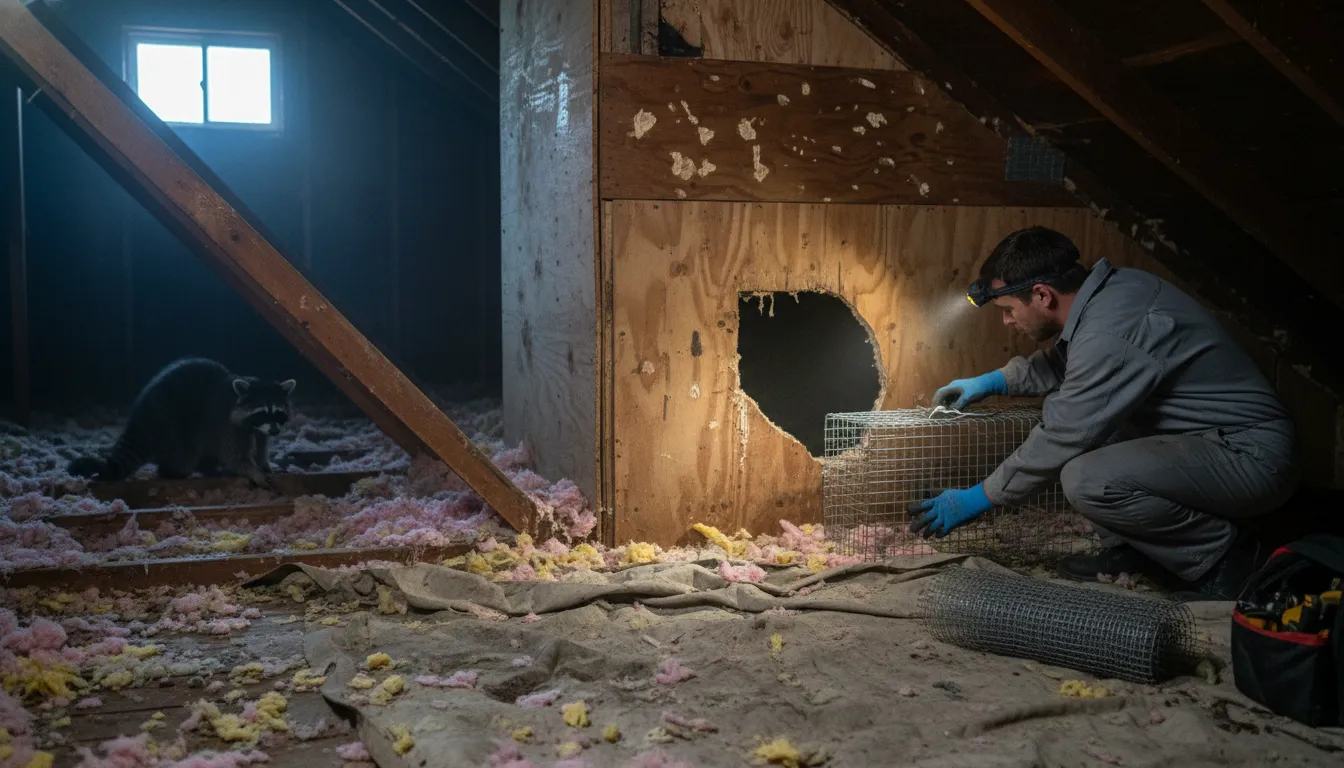
Find the Best Wildlife Removal Companies for Your Business
No obligation • Fast responses • Nationwide coverage
Why you can trust Pest Crews
Pest Crews is a leading U.S. resource for finding and evaluating residential and commercial pest control services. Our team researches providers, reviews treatment approaches, and organizes unbiased information to help you make informed decisions. Companies cannot pay to change our editorial content or influence how they appear.
Search providers near you
Top Wildlife Removal Companies in Lancaster, California Ranked
When uninvited wildlife guests like raccoons, squirrels, or bats decide to move into your attic, garage, or yard, it can quickly escalate from a nuisance to a serious problem. Professional wildlife removal and animal control services are essential for safely and legally resolving these conflicts, protecting your property from damage, and ensuring the humane treatment of the animals involved. This guide provides a detailed look at managing nuisance wildlife in Lancaster, helping you understand local challenges, legal restrictions, and how to find qualified specialists to restore peace to your home.
Orkin
190 Sierra Ct Ste A-5, Palmdale, CA 93550
Orkin provides residential and commercial pest control services in Los Angeles, CA. They handle a wide range of pests including bed bugs, cockroaches, ants, rodents, termites, mosquitoes, and wildlife. Orkin offers specialized termite treatments using methods like Sentricon® bait and liquid barriers to protect homes from structural damage. With over 120 years of experience, Orkin is equipped to manage pest problems year-round and offers 24/7 availability with next-day service options.
Hydrex Pest Control
18345 Sierra Hwy A-20, Canyon Country, CA 91351
Hydrex Pest Control is a family-owned and operated pest control company serving Santa Clarita, CA, and the surrounding Antelope Valley since 1970. They provide a wide range of residential and commercial pest control services, including treatment for ants, spiders, termites, rodents, bed bugs, mosquitoes, and nuisance birds. Their technicians are licensed by the State of California and trained in the latest pest control technologies. Hydrex offers ongoing service plans to maintain pest-free properties and uses EPA-approved materials to ensure safety for homes and businesses.
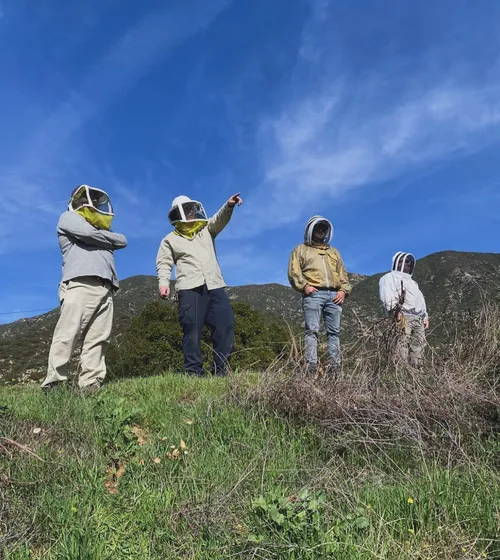
Balding’s Bees & Wildlife
Glendale, CA
Balding's Bees & Wildlife is a removal and control company based in Glendale, CA, specializing in bee and nuisance wildlife management. They serve multiple counties including Los Angeles, San Bernardino, Riverside, and Ventura. The company uses industry-leading technology to locate and remove unwanted animals and also offers repair services to prevent future infestations.
Common Wildlife Issues in Lancaster
The Antelope Valley's unique desert-meets-suburban landscape attracts a variety of mammals and birds that can become problematic for residents. Understanding which animals are most likely to cause issues is the first step in effective wildlife management.
Mammals:
- Squirrels: Often the culprits behind attic noises, squirrels can chew through wiring, insulation, and wood, creating fire hazards and structural damage.
- Raccoons: These intelligent, dexterous animals are notorious for tipping over trash cans and can tear through roof vents or soffits to establish dens in attics, especially when seeking shelter for their young.
- Opossums & Skunks: While they help control insects and rodents, opossums and skunks can take up residence under decks, sheds, or porches. Skunks pose a well-known defensive risk, while opossums may raid pet food left outdoors.
- Rats and Mice: These rodents are a year-round concern, seeking food and shelter indoors. They contaminate surfaces with droppings and cause significant damage by gnawing.
- Bats: Bat colonies in attics or chimneys are a serious concern due to the potential health risks associated with their guano (droppings), which can harbor histoplasmosis spores. Their removal is highly regulated.
- Coyotes: While less common to find inside structures, coyotes are present in the area and can threaten pets and small livestock. They are typically managed for public safety concerns.
Birds:
- Pigeons, Starlings, and Sparrows: These urban-adapted birds often nest in building eaves, vents, and other cavities. Their nests can block ventilation systems, and their droppings are corrosive and unsanitary.
California Laws and Regulations for Wildlife Control
Attempting to handle a wildlife problem on your own can lead to legal trouble. California has strict regulations designed to protect both animals and people.
- No Relocation: It is generally prohibited to trap and relocate most wild animals in California. State law typically requires that trapped animals be released on the property where they were caught or be humanely euthanized; they cannot be taken to a park or other area 1.
- Trapping Restrictions: Trapping on or near another person's property without consent is illegal. For many species, trapping must be performed by the landowner or a licensed professional. Special permits are often required, especially for protected species like certain birds or bats.
- Feeding Prohibitions: It is illegal to feed non-domesticated rodents or predators. The only exception is for temporarily caring for a trapped or injured animal after notifying the proper authorities 2.
These complex regulations make it crucial to involve a licensed professional who understands the legal framework for wildlife exclusion and removal in Los Angeles County.
When to Call a Professional for Animal Control
While some preventative steps are DIY-friendly, certain situations absolutely require expert intervention.
- Sick, Injured, or Aggressive Animals: If you encounter a wild animal that appears disoriented, injured, or is acting aggressively, do not approach it. Contact LA County Animal Care and Control immediately for assistance.
- Structural Infestations: When animals are actively living inside your home's structure-such as squirrels in walls, raccoons in attics, or bats in eaves-professional removal and exclusion are necessary to get them out and keep them out.
- Coyote Encounters: For coyotes that pose an immediate threat to public safety, LA County Animal Care and Control should be notified.
- Licensing-Required Situations: Any situation involving the trapping of most wildlife species, particularly those that are protected or require special handling (like bats), must be handled by a licensed professional to ensure compliance with state and local laws 3.
Find the perfect wildlife removal companies for your needs
Get personalized recommendations and expert advice
DIY Prevention and Deterrence Tips
Before wildlife becomes a resident, homeowners can take proactive, non-lethal steps to make their property less inviting. These methods focus on exclusion and habitat modification.
- Seal Entry Points: Conduct regular inspections of your home's exterior. Seal any cracks, holes, or gaps larger than a quarter-inch using materials like steel wool, hardware cloth, or high-quality caulk. Pay special attention to areas where utility lines enter the home and around roof vents.
- Secure Food and Trash: Use locking lids on trash cans or store them in a secured garage. Avoid leaving pet food outdoors overnight. Pick up fallen fruit from trees and keep barbecue grills clean.
- Remove Attractants and Shelter: Trim tree branches back at least six feet from the roofline. Clear away dense brush, woodpiles, and debris from the foundation of your home. Ensure crawl space vents are intact and secure 4.
- Use Non-Lethal Deterrents: Motion-activated sprinklers or lights can startle animals away from gardens. For some animals, scents like ammonia-soaked rags (for rodents) or citrus peels can act as temporary repellents, though their effectiveness varies 5.
Remember, these are preventative measures. If an animal has already established a nest or den, especially with young, exclusion becomes more complex and often requires professional one-way doors and techniques to ensure the animals leave safely and cannot return.
The Professional Wildlife Removal Process
Licensed wildlife control operators follow a systematic, humane, and legal process to resolve infestations.
- Inspection and Assessment: The professional will conduct a thorough inspection to identify the species involved, locate all entry and exit points, and assess the extent of the infestation and damage.
- Humane Removal/Exclusion: Depending on the species and situation, this may involve installing one-way exclusion doors that allow animals to leave but not re-enter, or using live traps in compliance with California law. They will never simply seal animals inside a structure.
- Clean-up and Sanitation: This critical step involves removing contaminated insulation, droppings, urine, and nesting materials. Professionals use specialized equipment like HEPA vacuums and enzyme cleaners to decontaminate the area, addressing health hazards and odors.
- Repair and Exclusion: After the animals are gone and the area is clean, the technician will permanently seal all identified entry points with durable materials to prevent future invasions.
- Restoration: For severe damage, services may include repairing chewed wires, ductwork, or wood, and replacing insulation to restore your home's safety and energy efficiency.
Understanding Service Costs in Lancaster
The cost for wildlife abatement services in Lancaster varies significantly based on the animal, the location of the infestation, and the extent of the work required. Here is a general overview based on industry standards 6 7 8 9 10:
- Initial Inspection & Minor Exclusion: $200 - $500+. This covers the assessment and sealing of accessible entry points.
- Trapping and Removal Services: $200 - $600+ per animal or trap set. The price depends on the species (raccoons are typically more costly than squirrels) and how difficult they are to access.
- Attic Restoration and Clean-up: $500 - $2,000+. This comprehensive service includes decontamination, removal of soiled insulation, and sanitization. The price scales with the square footage affected.
- Bat Removal and Exclusion: Often starts at $1,000+. Due to the protected status of bats and the complexity of sealing every potential entry point (bats can fit through a hole the size of a dime), this is typically one of the more involved and costly services.
Always request a detailed, written estimate that breaks down inspection, removal, clean-up, and repair costs before work begins.
Frequently asked questions
Sources
Footnotes
-
Living with Wildlife - https://wildlife.ca.gov/Living-with-Wildlife ↩
-
Laws & Regulations - Humane Pest Control Inc - https://humanepestpro.com/?page_id=85 ↩
-
Living With Wildlife - LA County Animal Care & Control - https://animalcare.lacounty.gov/living-with-wildlife/ ↩
-
Animal trapping and control - Lacounty - https://file.lacounty.gov/SDSInter/acwm/235835_Trappingrequirementspaper.pdf ↩
-
Effective, Humane Wildlife Removal and Safe Solutions for ... - https://milliontrees.me/2024/08/07/effective-humane-wildlife-removal-and-safe-solutions-for-coexistence/ ↩
-
Lancaster Wildlife Control / California Animal Removal - http://www.aaanimalcontrol.com/professional-trapper/city/CA-Lancaster.htm ↩
-
Lancaster Wildlife Removal, Pest Animal Control CA - http://www.wildlife-removal.com/city/CA-Lancaster.htm ↩
-
Lancaster Wildlife Animal Control - Pigeon Bat Rat Bird - http://www.wildlifeanimalcontrol.com/Lancaster-CA.html ↩
-
California Wildlife Removal Company Directory - Pro Animal Control - https://pro-animal-control.com/california-wildlife-removal-company/ ↩
-
Expert California Wildlife Removal Services - https://kellyswildlifecontrol.com/california-wildlife-removal/ ↩